|

 |
|
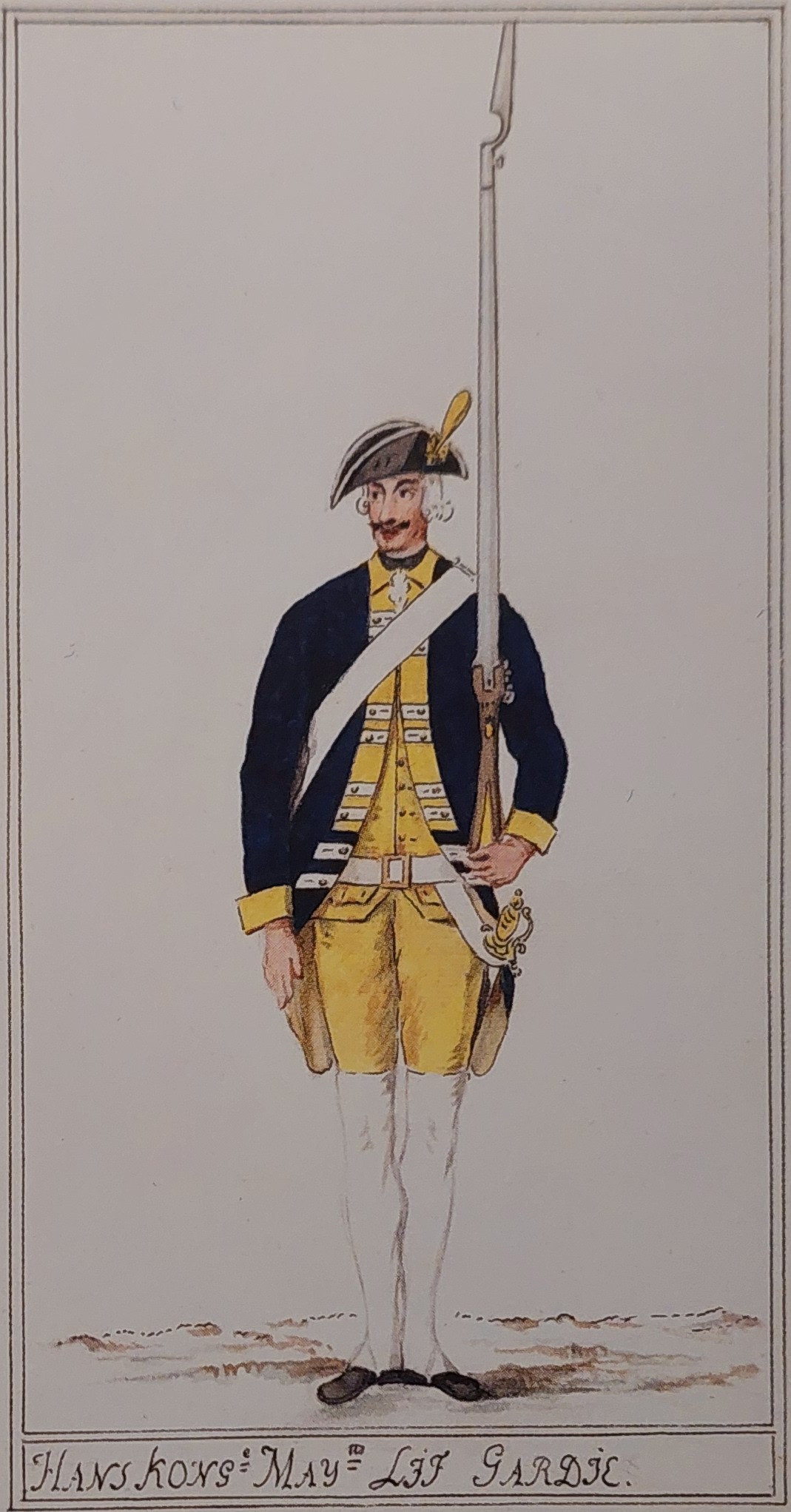
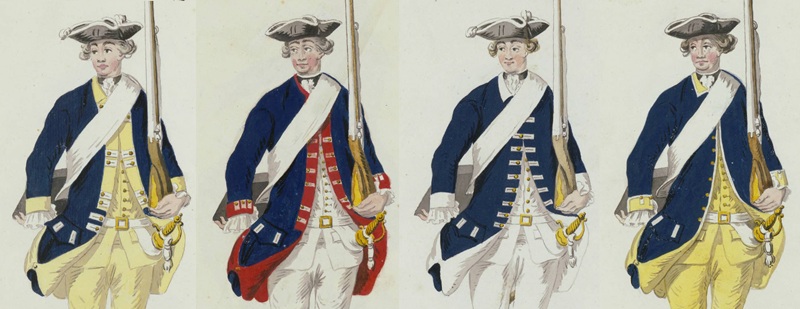
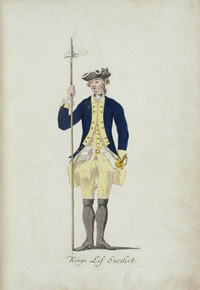
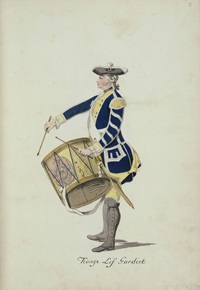
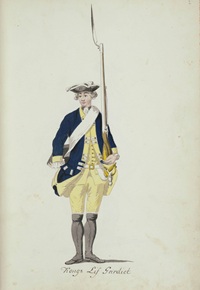
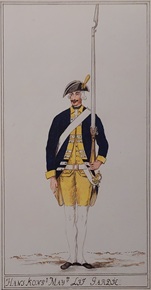
Livgardet (Life Guards)
Hat with tassels, turned-down collar, lapels and no
buttons on the cuffs. |
Sprengtporten's Reg.
Hat without tassels, stand-up collar, lapels and
buttons on the cuffs. |
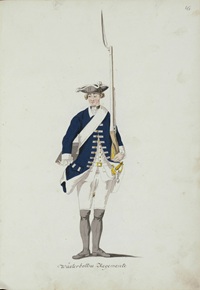
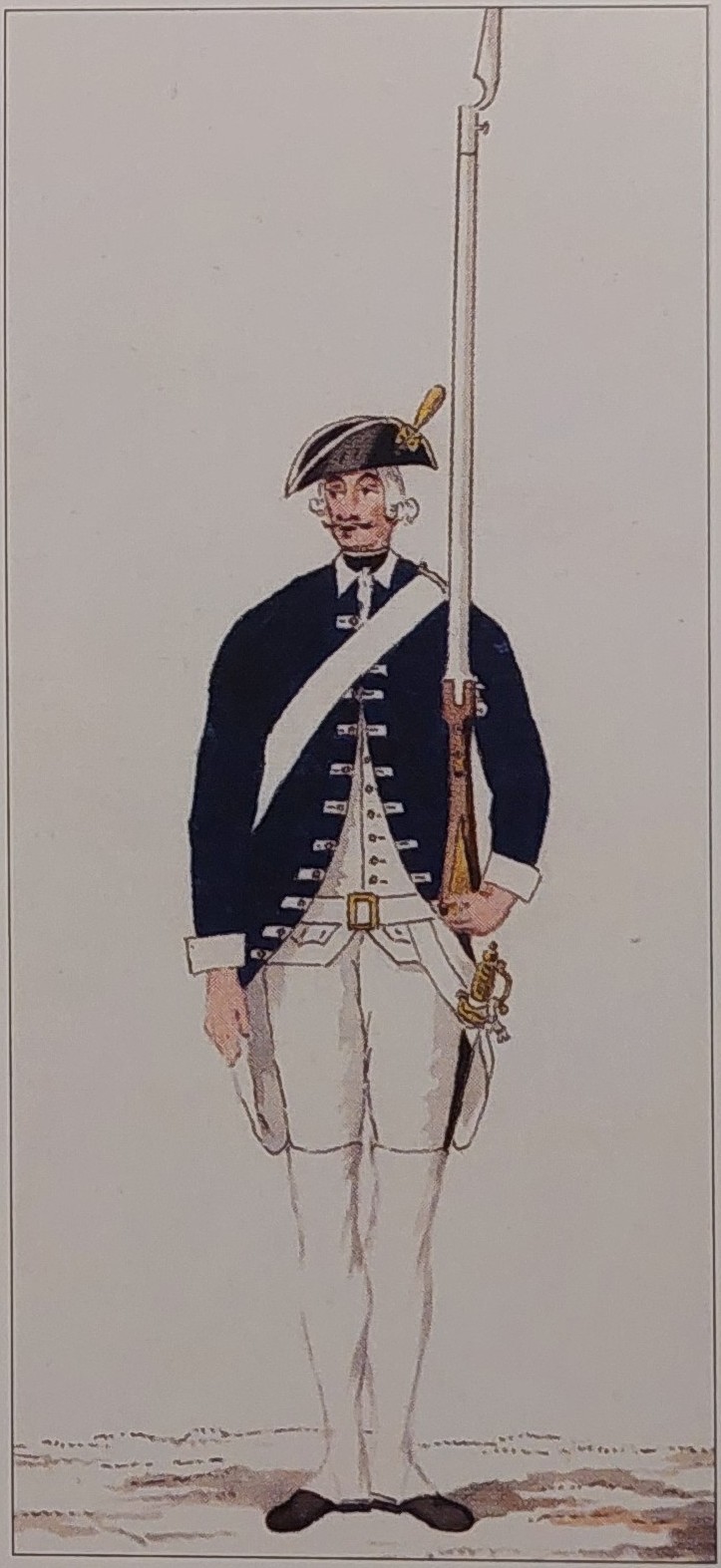
Västerbotten
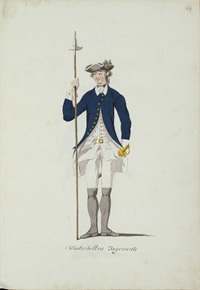
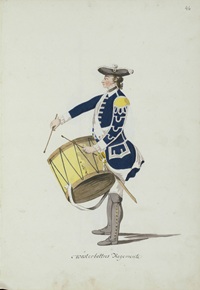
Hat with tassels, turned-down collar, no lapels and
no buttons on the cuff |
Tavastehus
No tassels or lapels but turned-down collar, buttons
on the cuffs and the coat edged with white lace. |
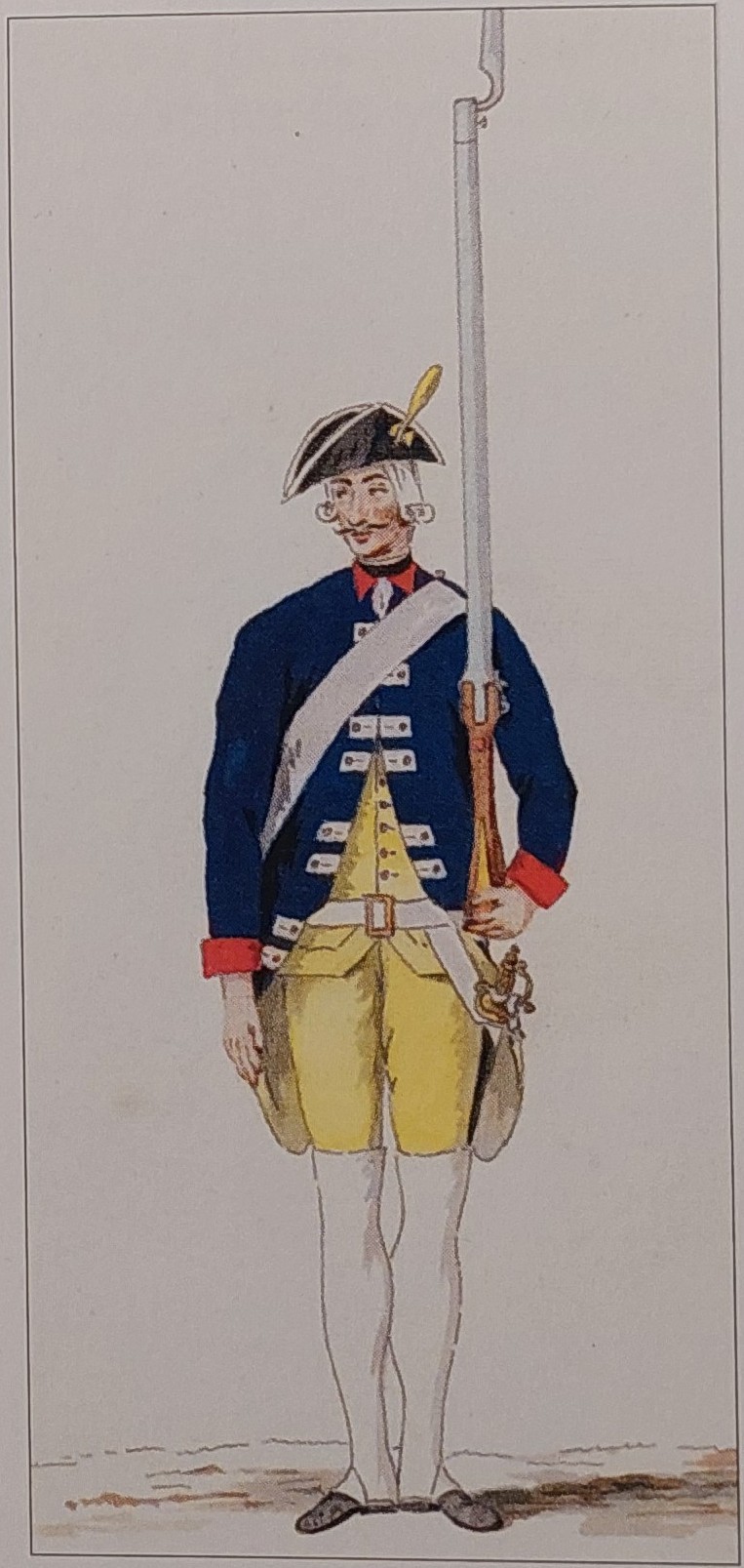
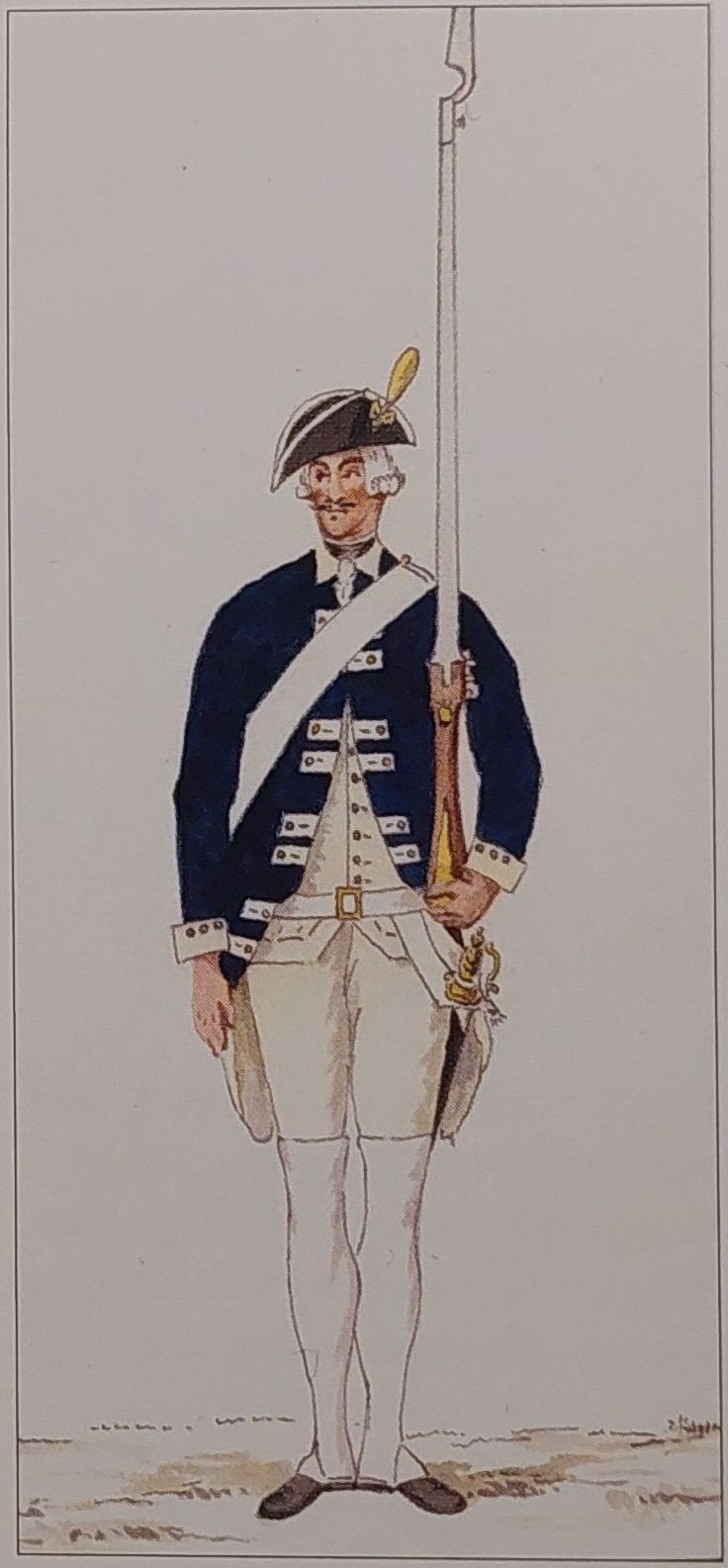
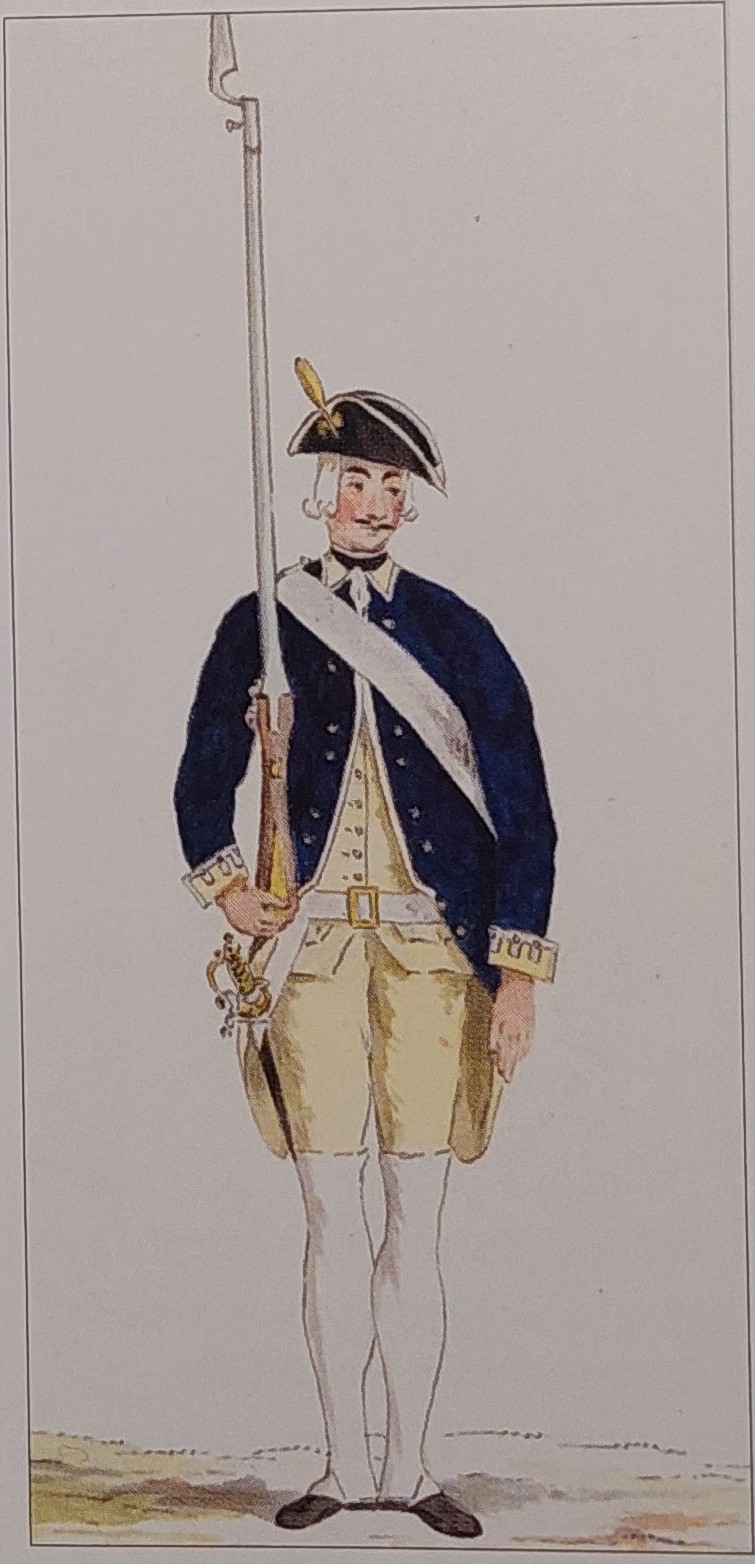
On 30 July 1765, the old Carolean uniform was replaced by a completely new
uniform regulation that was inspired by the uniforms of the Prussian army.
The coat was now double-breasted for almost all regiments. However, the coat
skirt was flared out so that it could not be buttoned all the way down to
the waist, which meant that the now shortened vest was still clearly
visible. Unlike its predecessor, the m/1765 waistcoat had pocket flaps and
did not have sleeves.
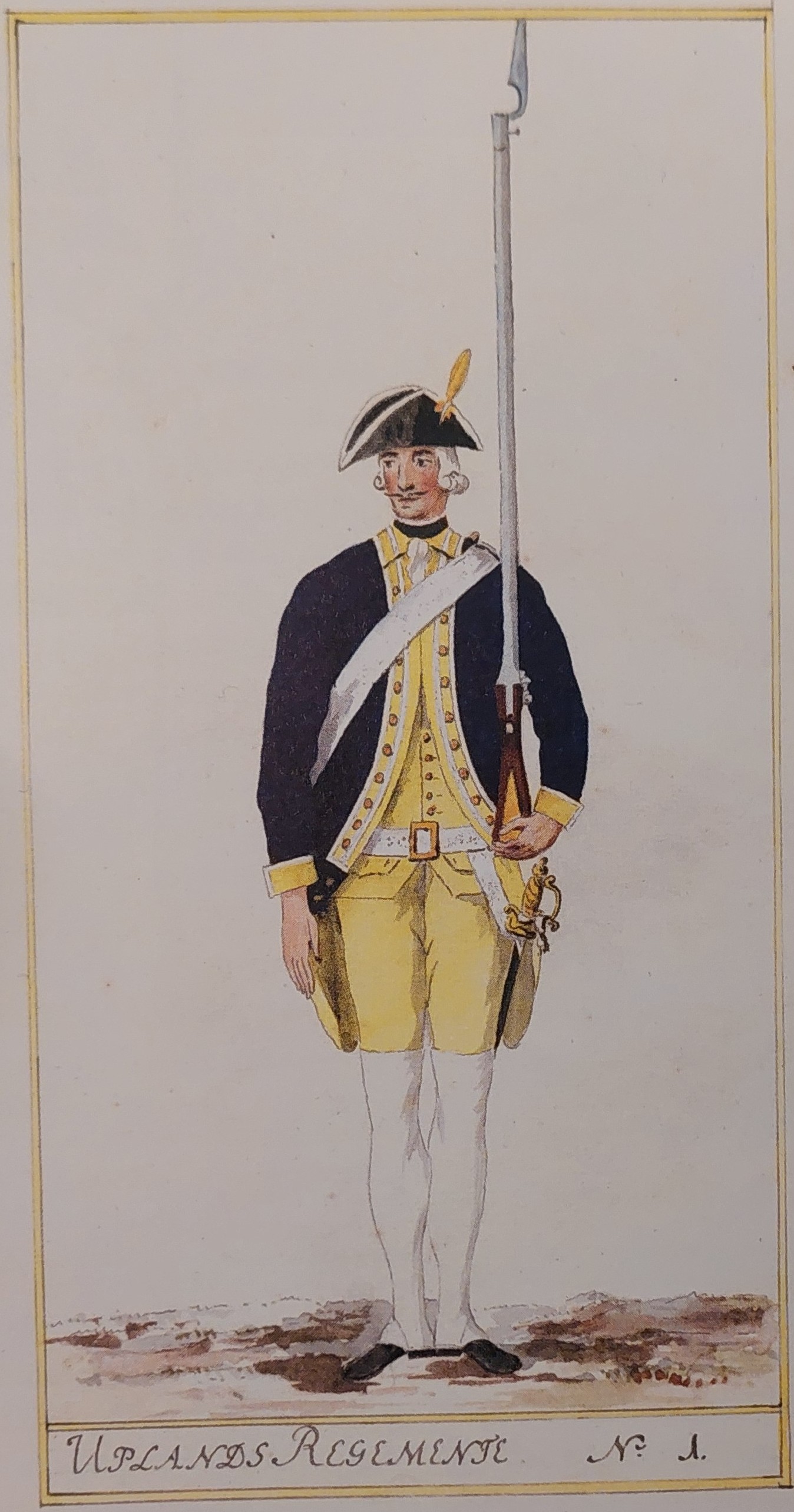
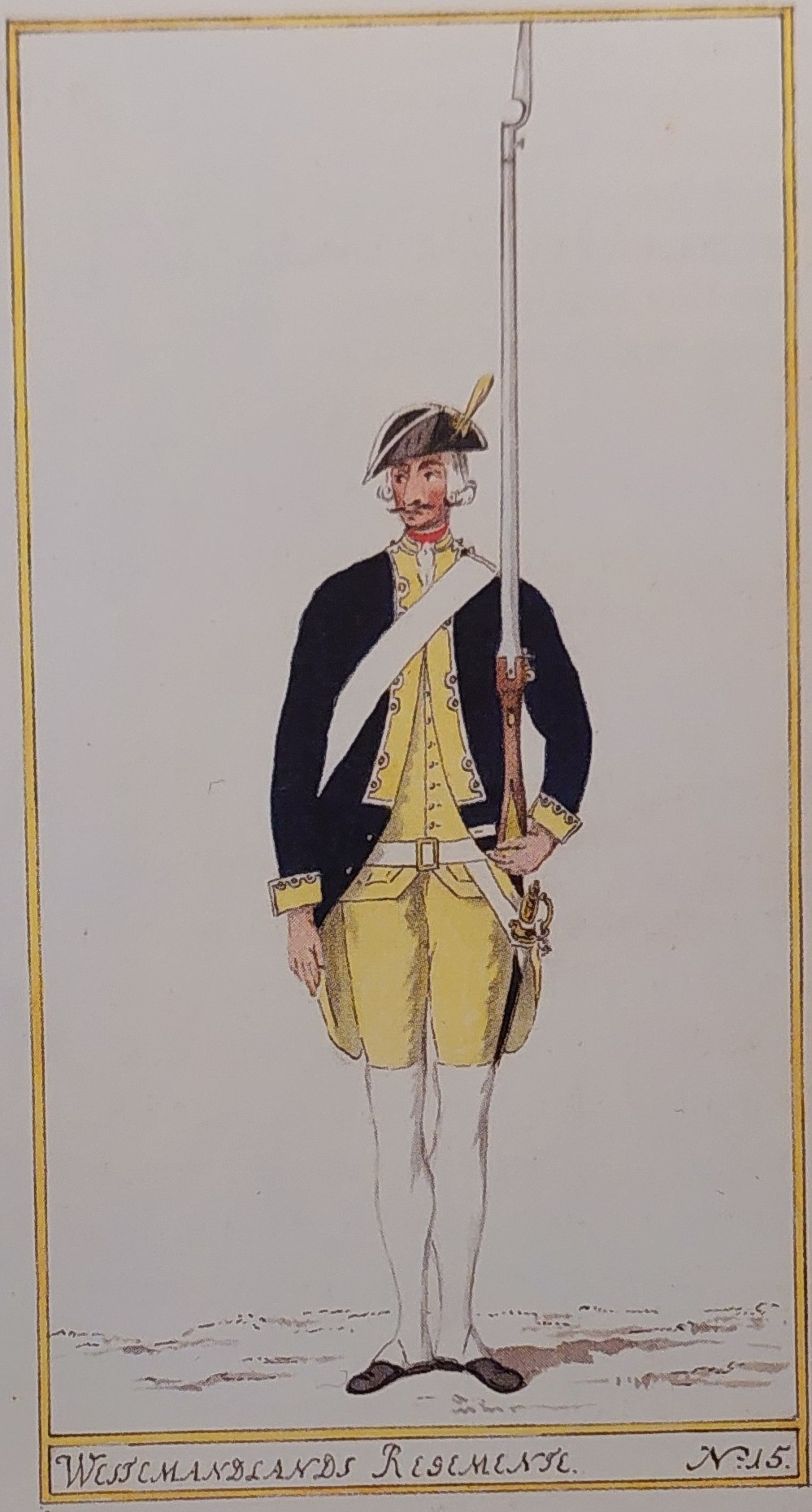
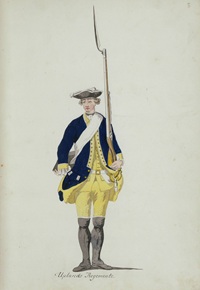
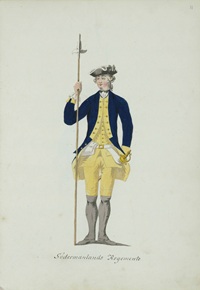
The big change with m/1765, however, was that all regiments would have a
unique uniform, unlike m/1756 where all infantry regiments would have an
identical blue-yellow uniform. The variation in colours thus became greater.
But to achieve completely unique uniforms, several smaller details were made
different. Among other things, hats with or without tassels, turned-down or
stand-up collars, and coats with or without lapels.
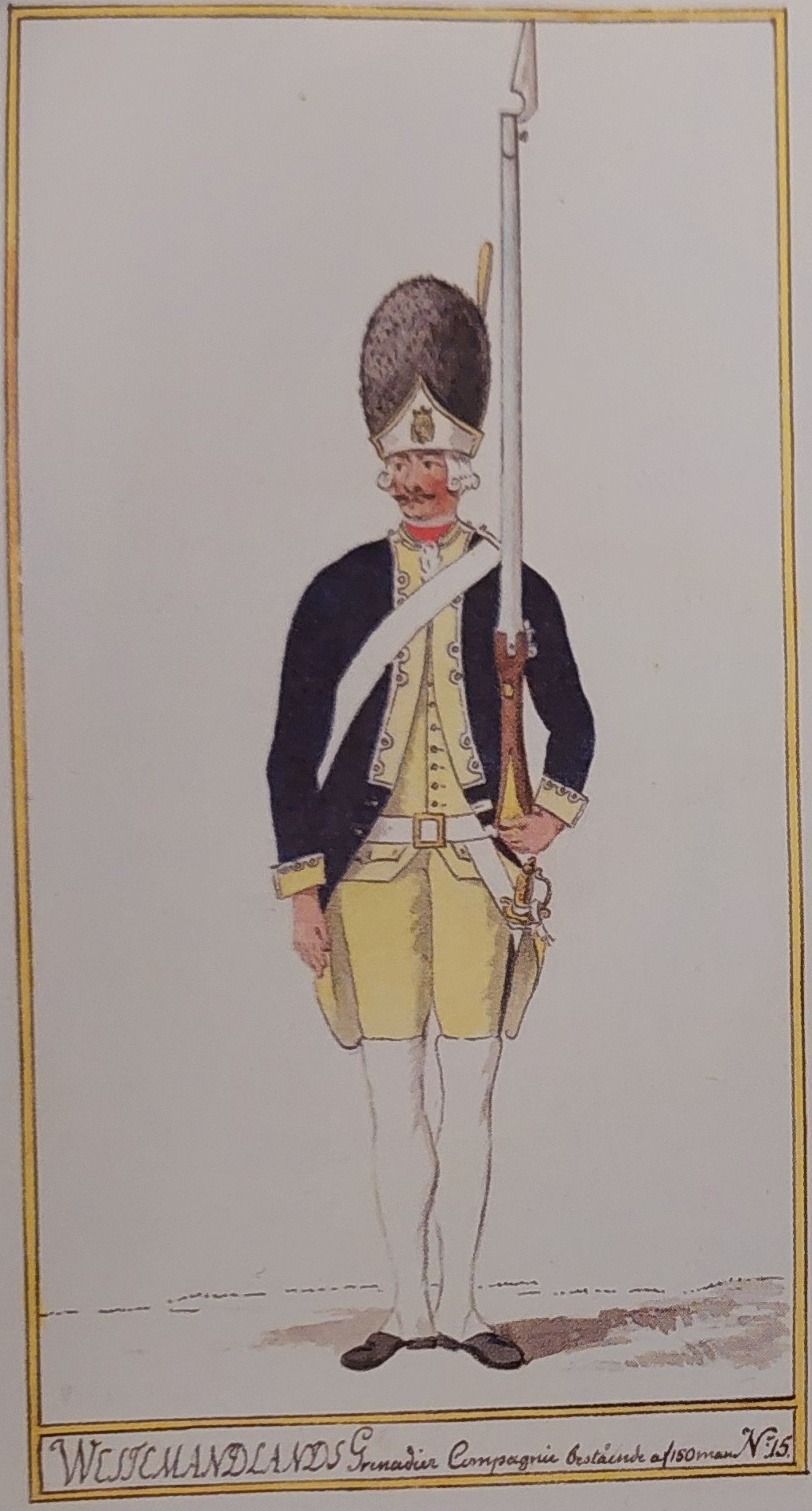
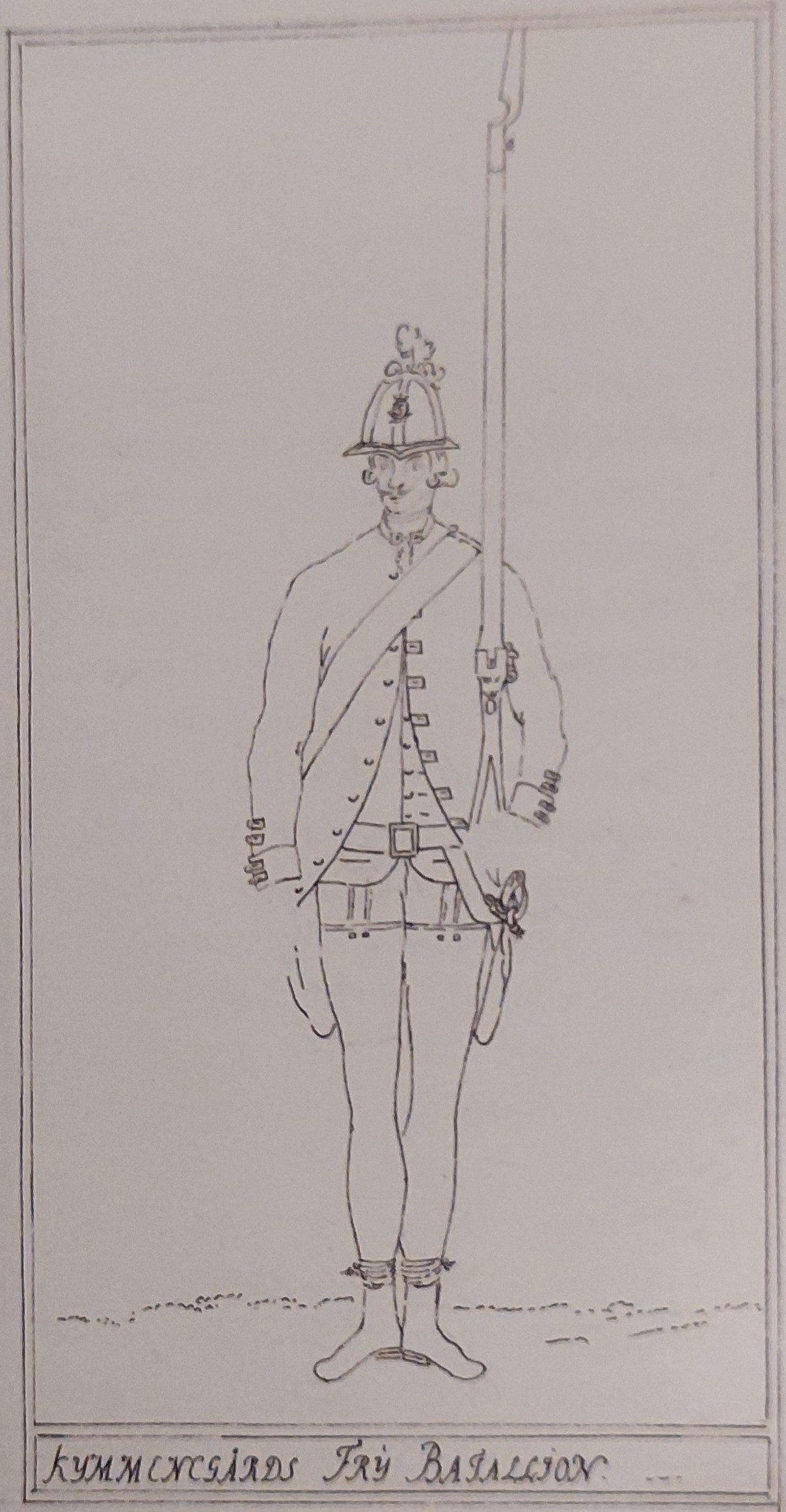
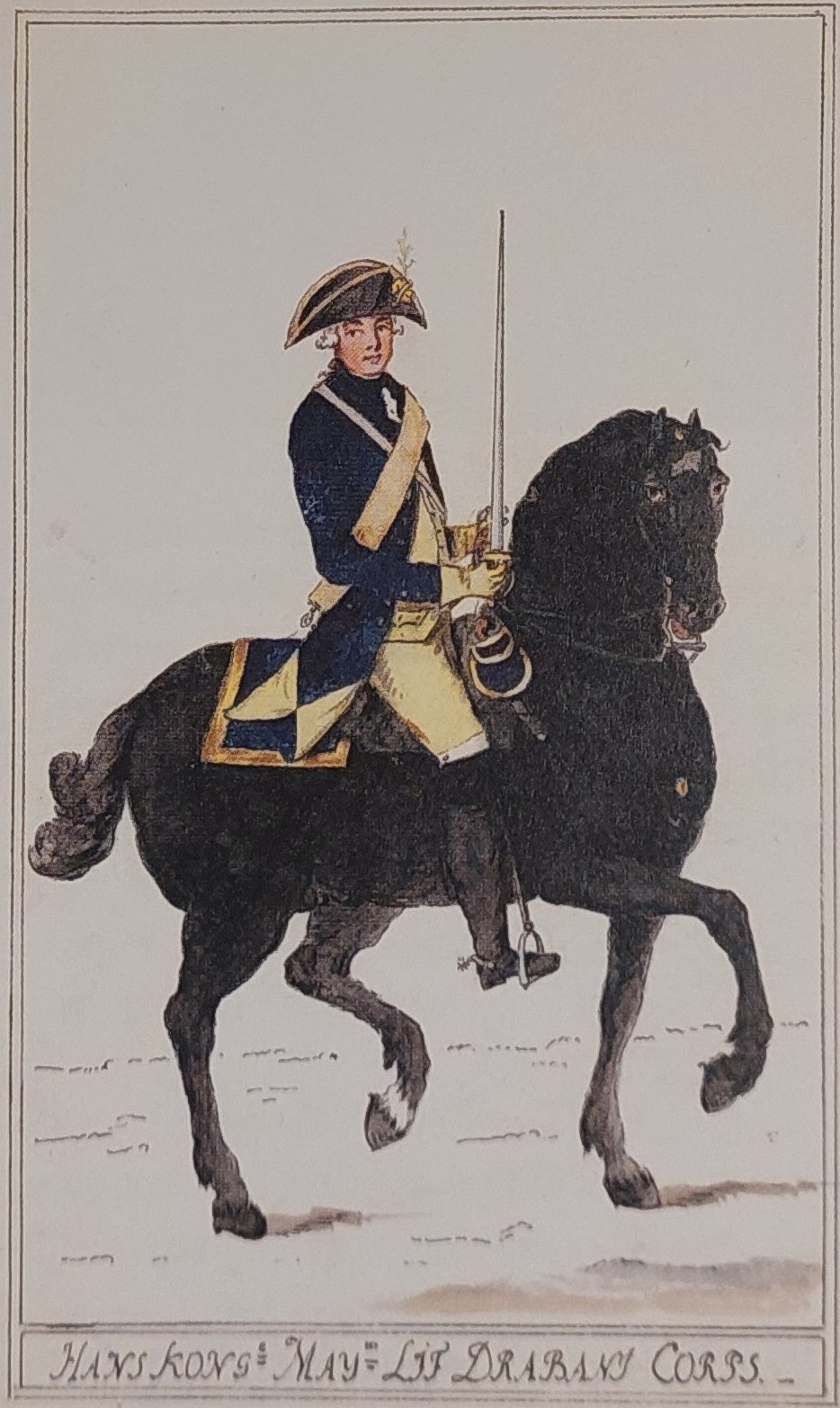
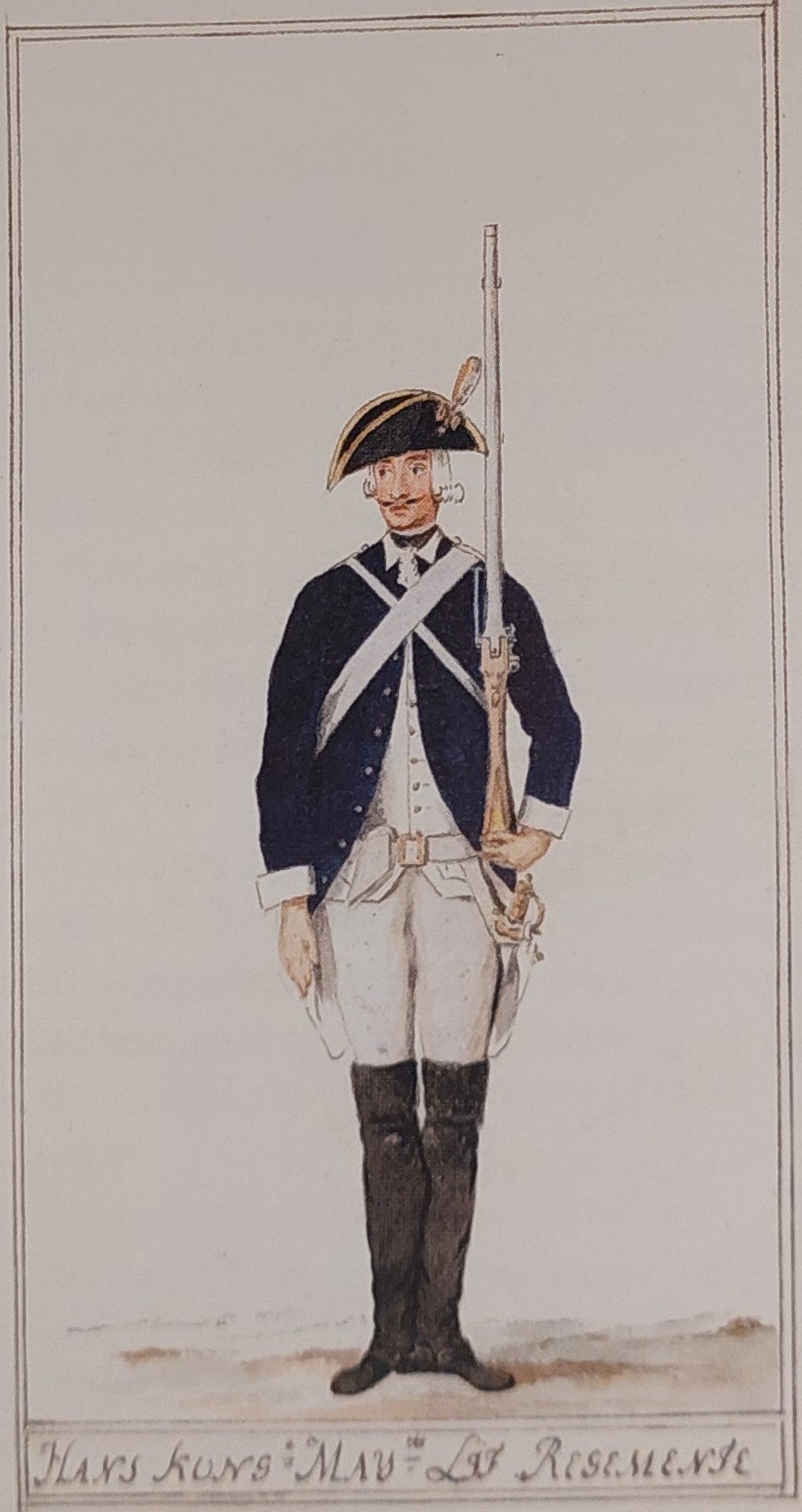
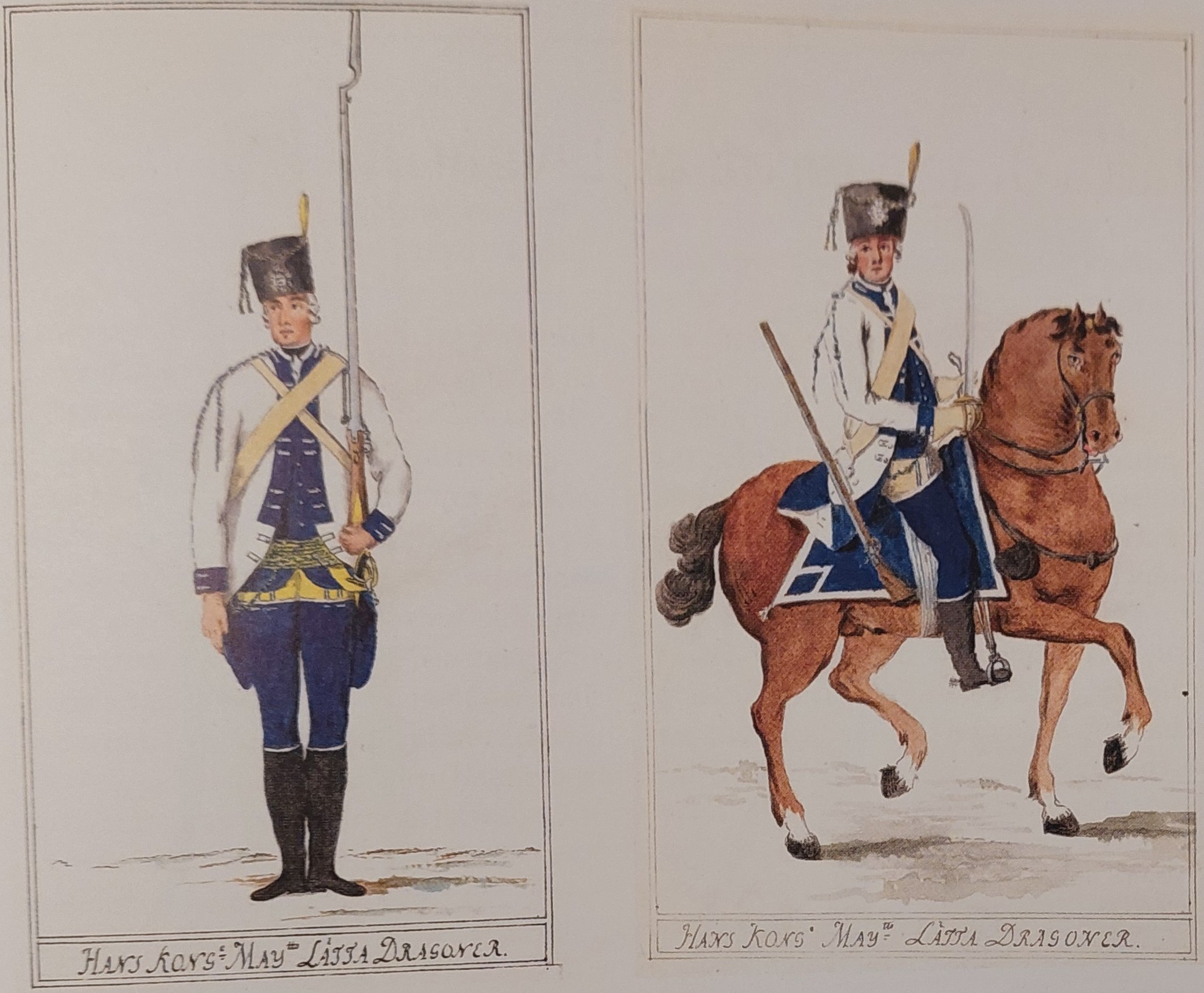
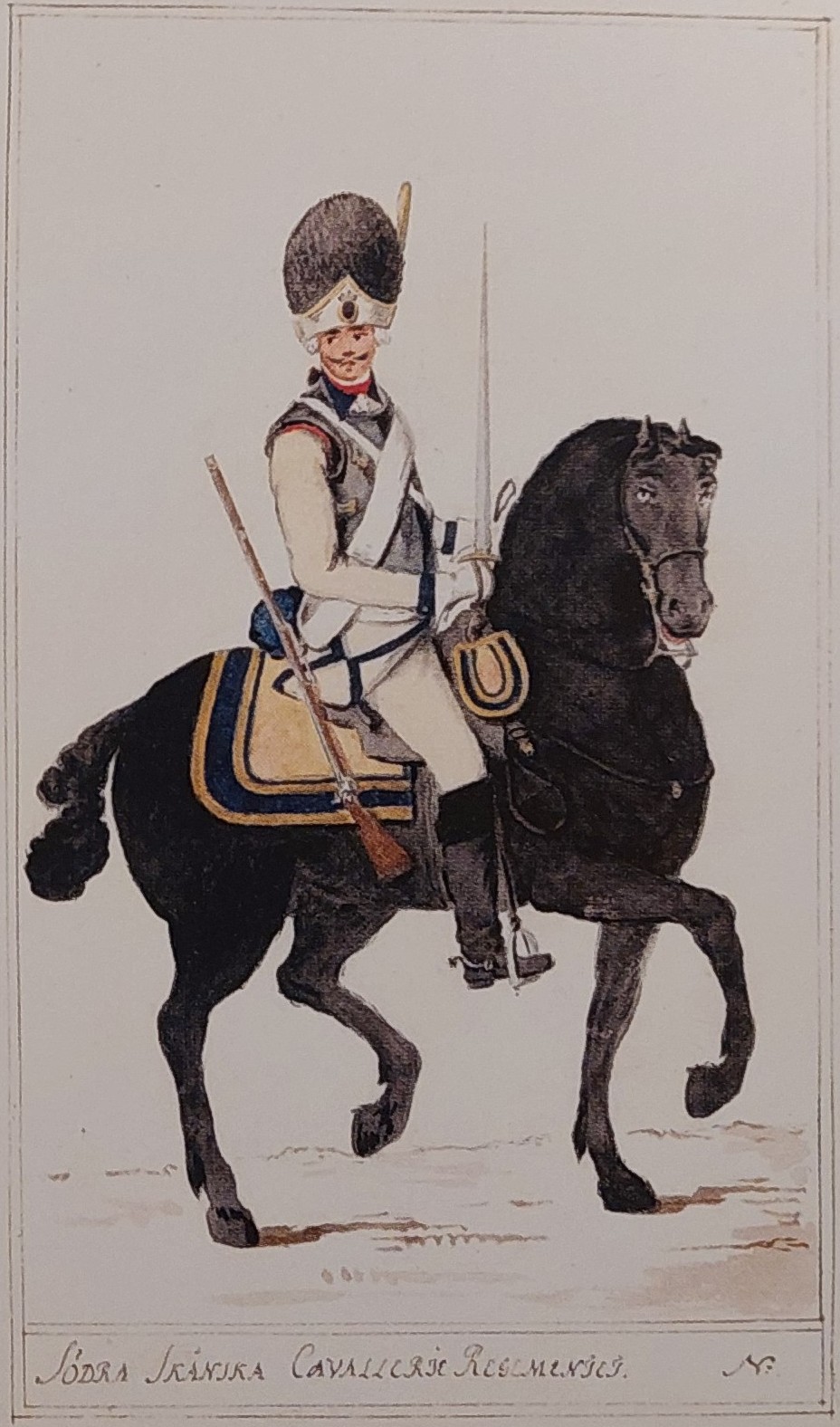
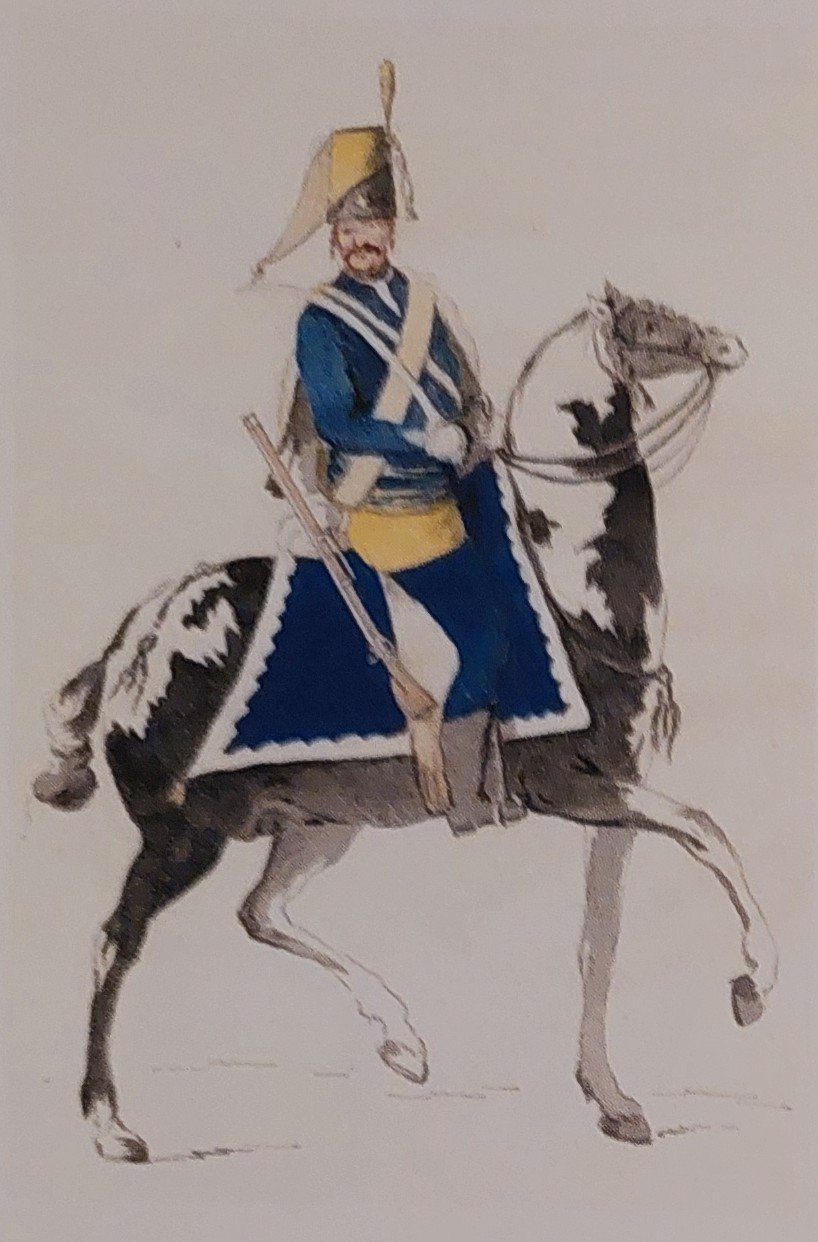
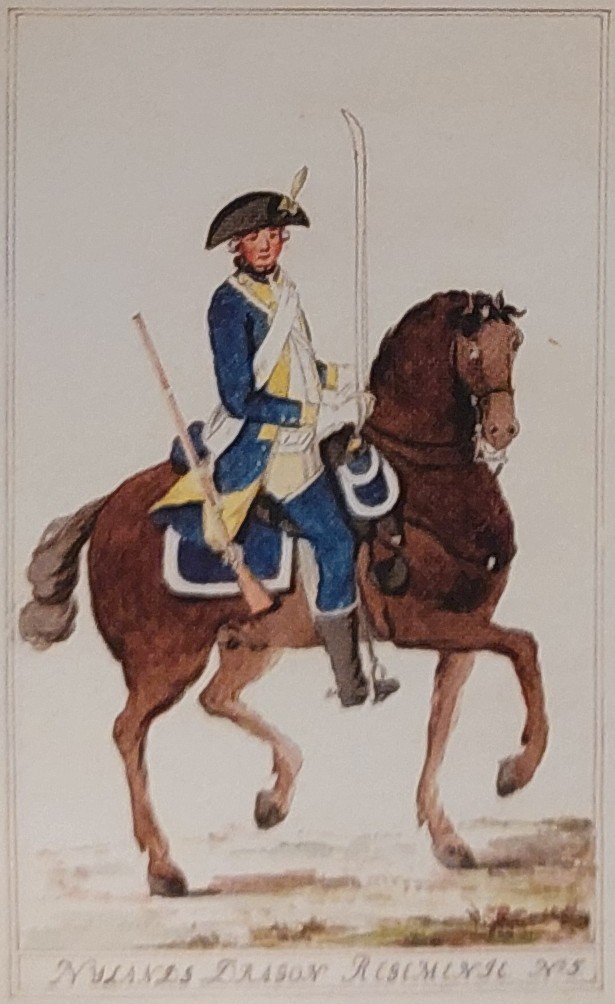
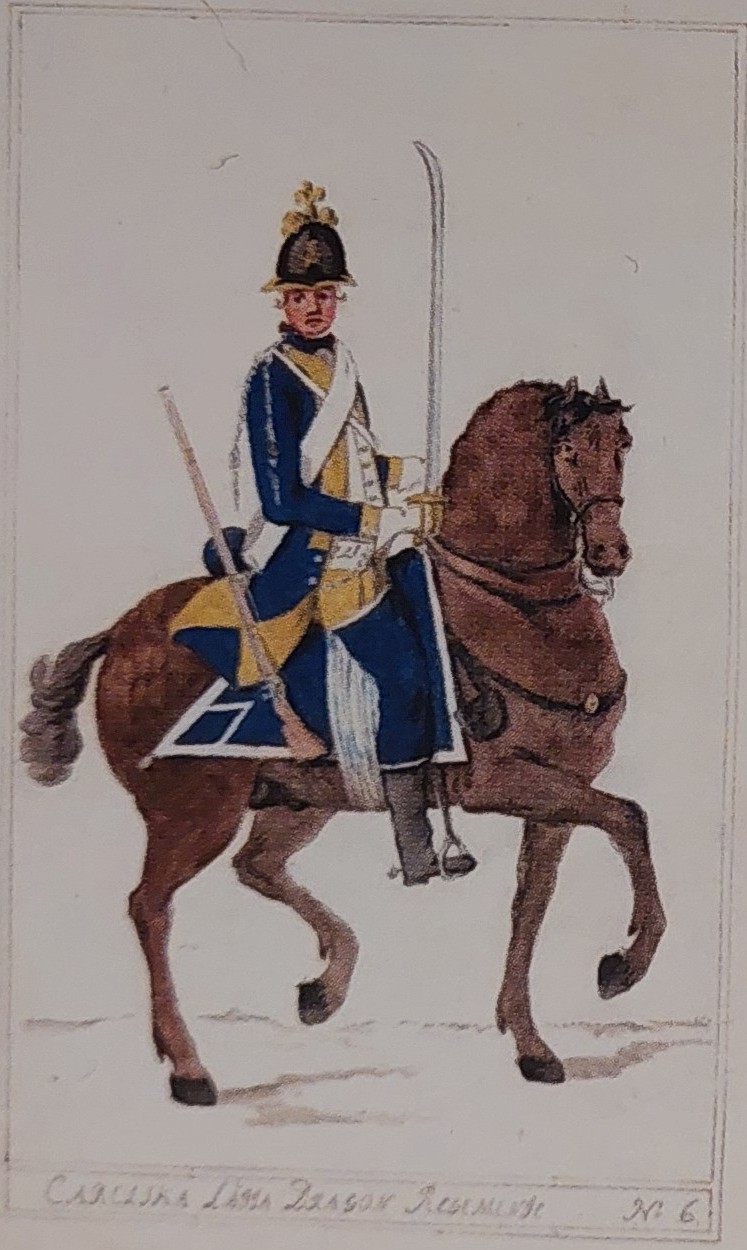
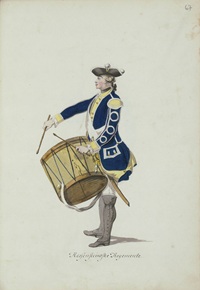
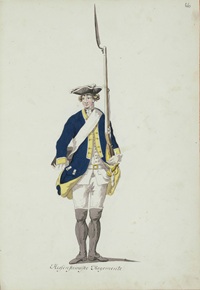
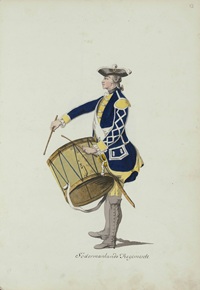
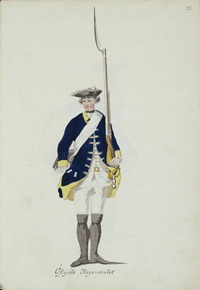
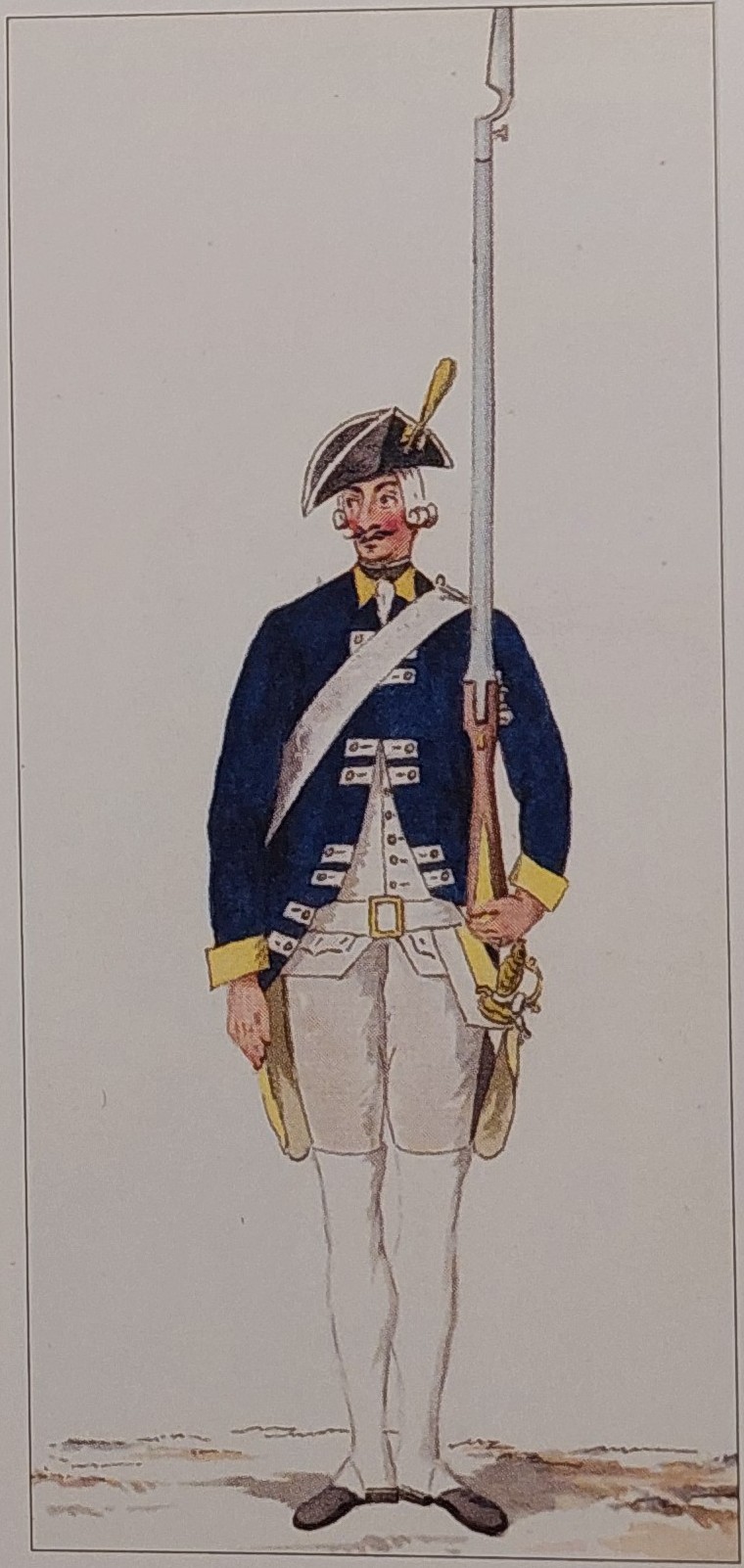
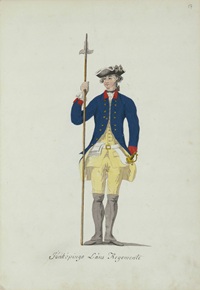
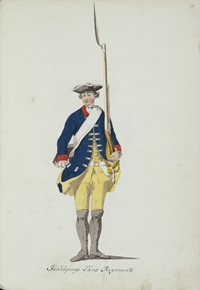
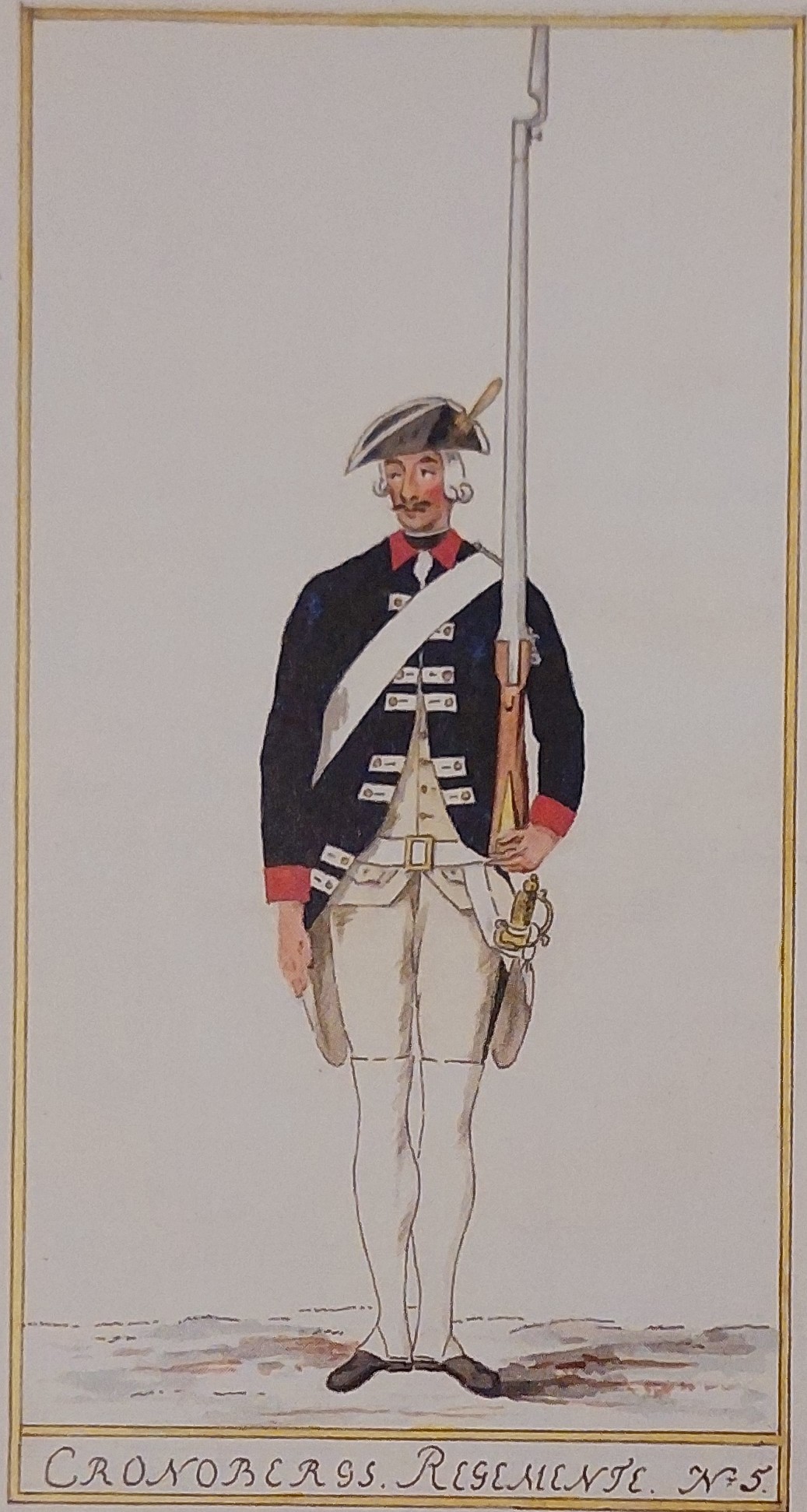
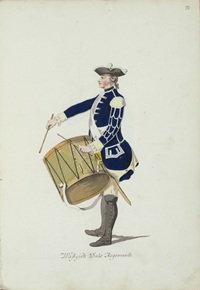
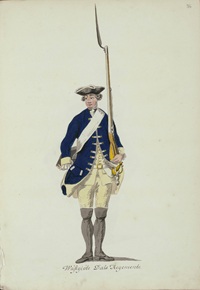
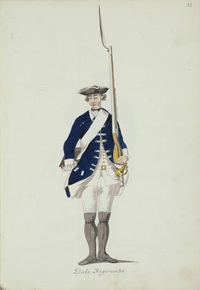
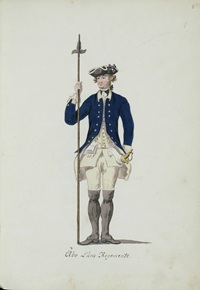
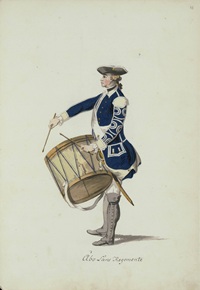
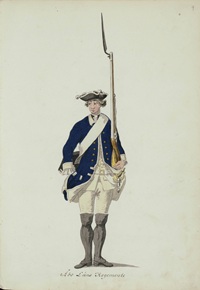
This page presents the model drawings that Jacob Gillbergs made in 1765.
However, these only cover the infantry and are not preserved in their
entirety. For example, the Jämtland regiment is missing entirely. As a
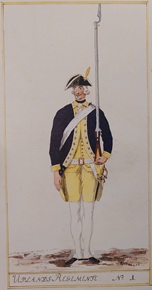
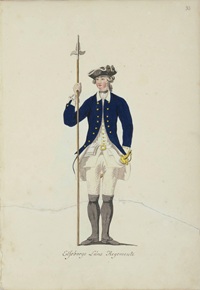
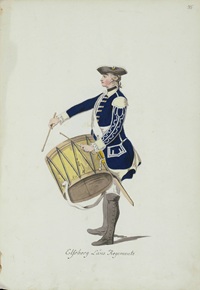
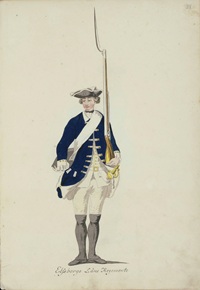
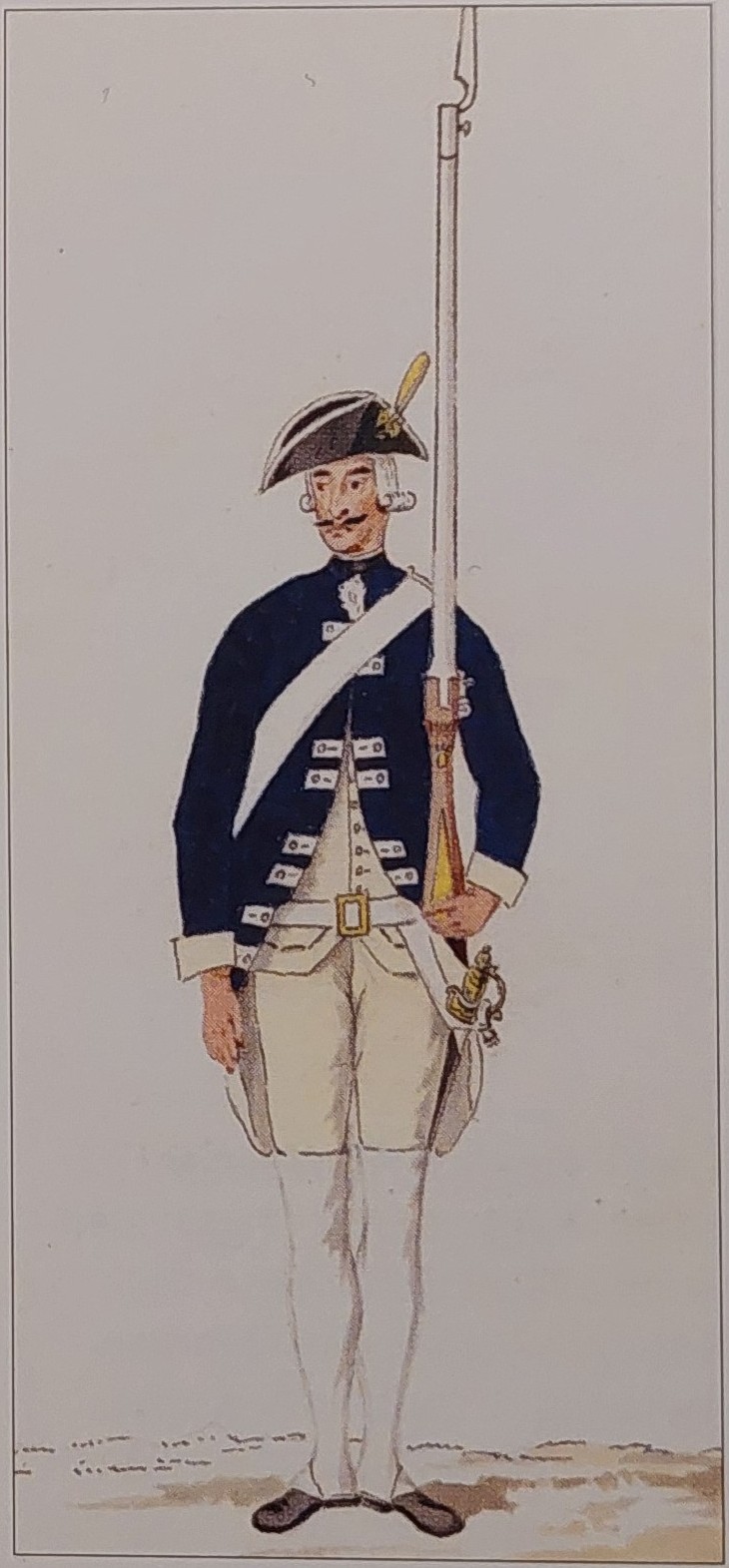
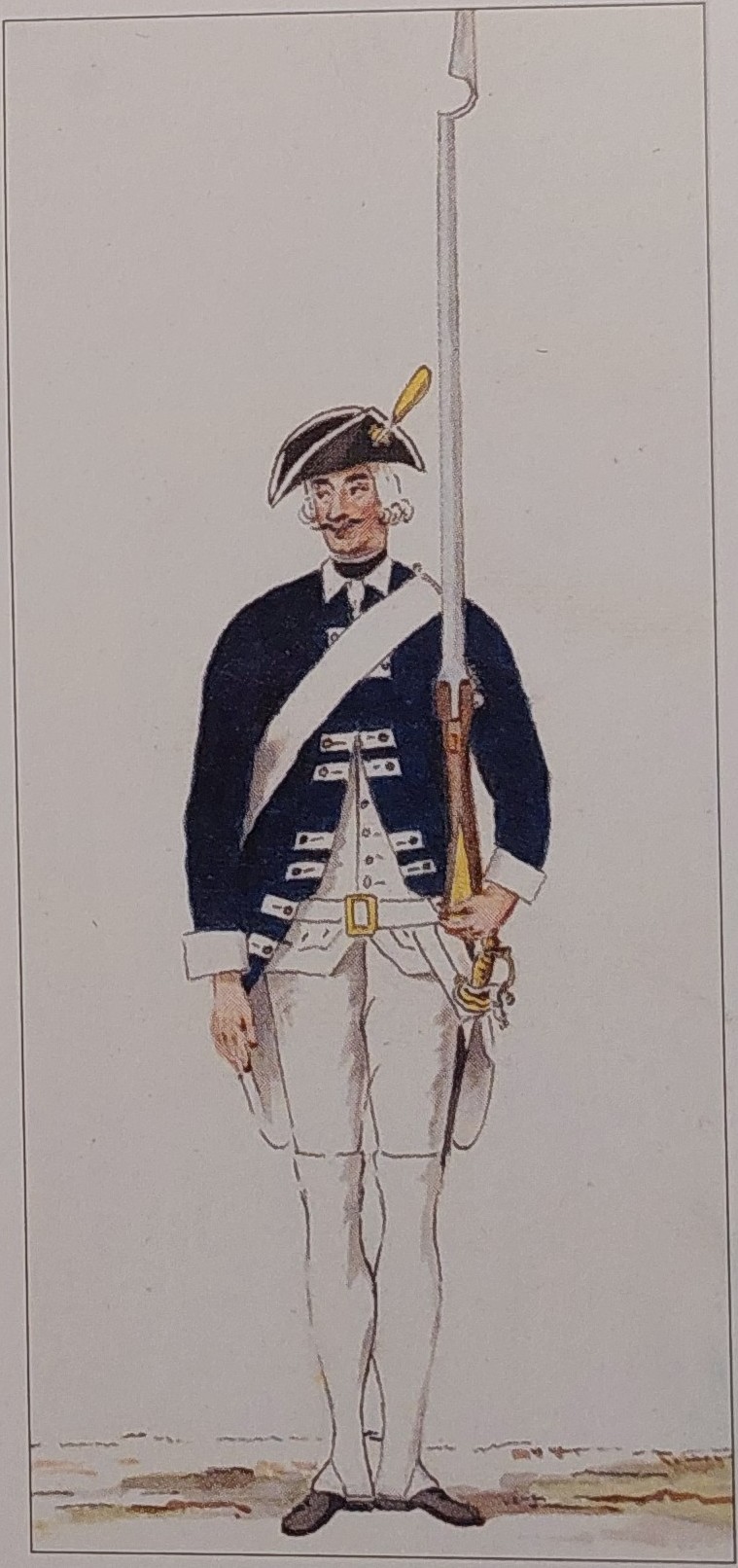
complement to them, I have therefore attached images from a second set of
uniform drawings made by an unknown artist around 1778. These are also not
complete, and many are not coloured, but they show what the uniforms looked
like at the end of the period in which m/1765 was the regular army uniform.
Note, however, that the gaiters were black throughout the period. The white
gaiters in the later images were only intended for parades. One detail that
had changed on the later uniforms, however, is the yellow plume on the hat,
which in the 1770s became a distinctive feature of the Swedish army.
Click on the images to see them in larger format. |
|
Enlisted
Infantry |
|
Livgardet
(Life Guards)
|
|
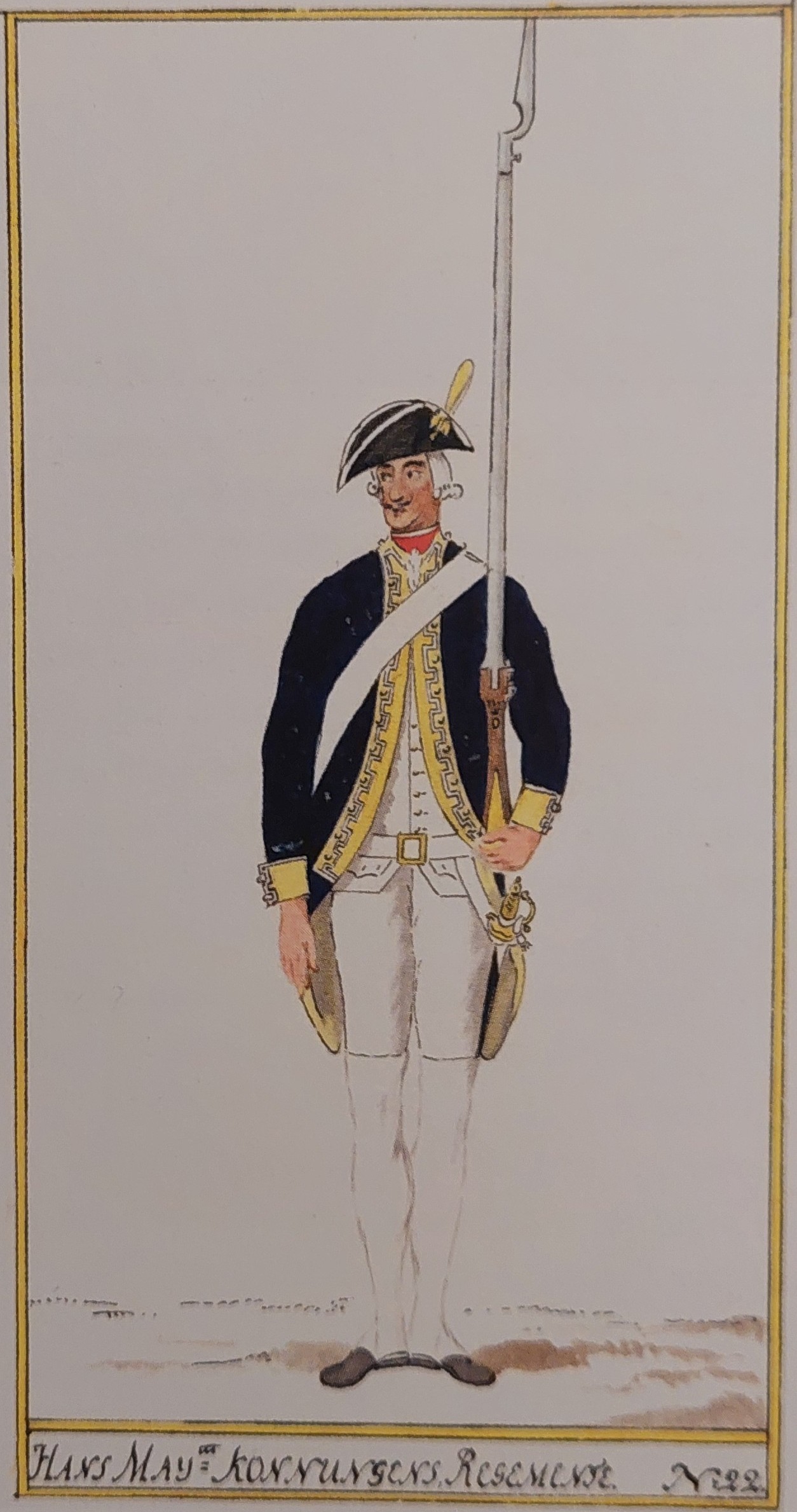
Kronprinsens regemente
(Crown Prince's Regiment)
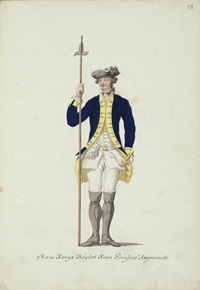
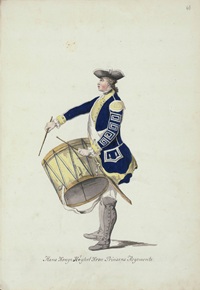
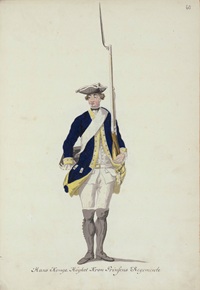
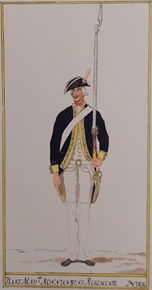
Garrison regiment in Malmö and Landskrona which in
1772 was renamed The King's Own Enlisted Regiment |
|
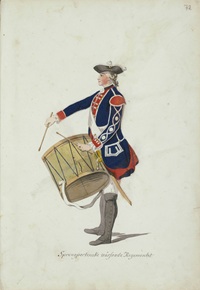
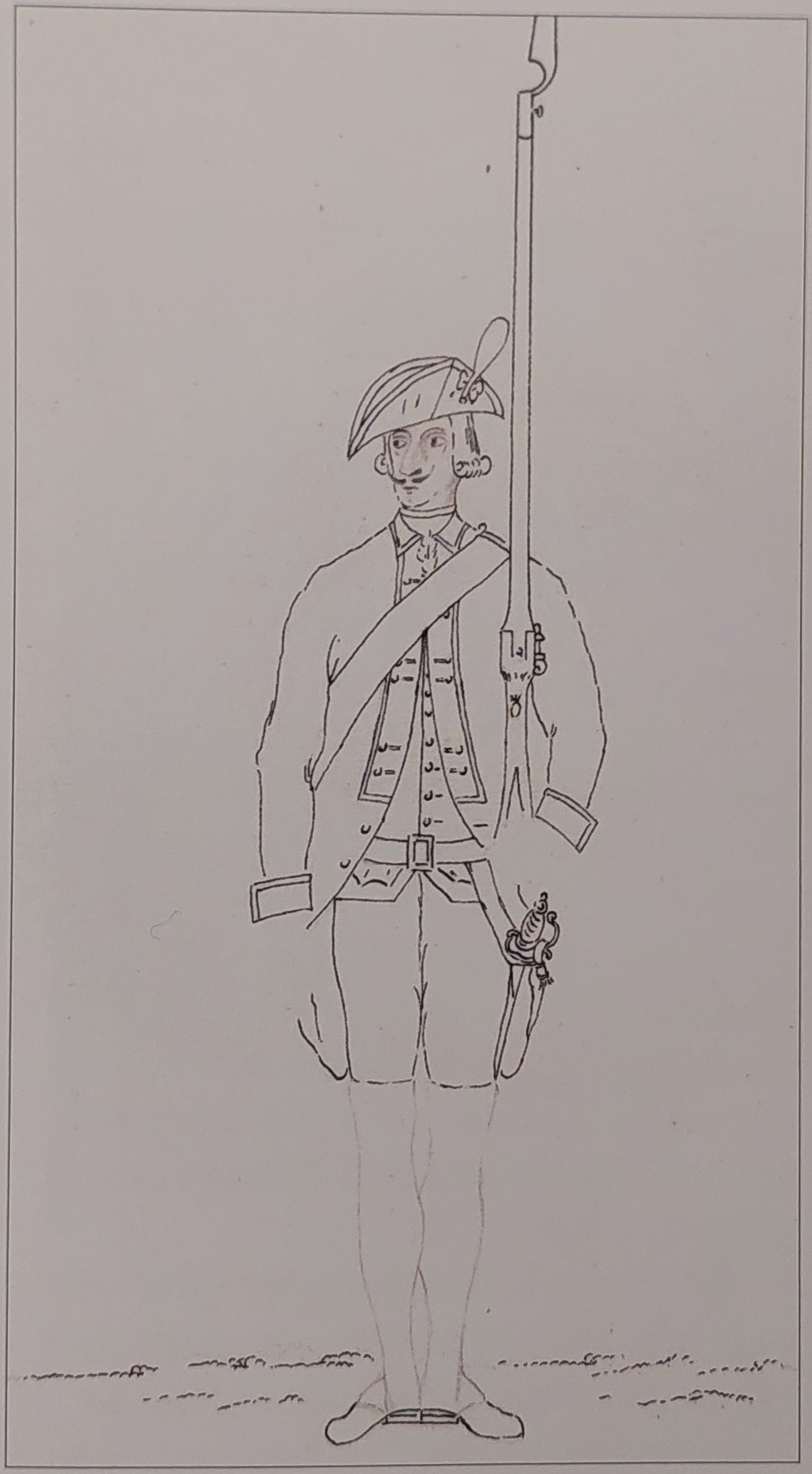
Sprengtporten's Regiment
(garrison regiment in Landskrona)
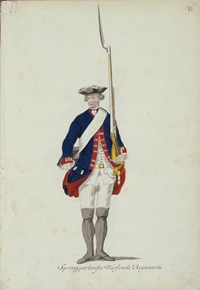
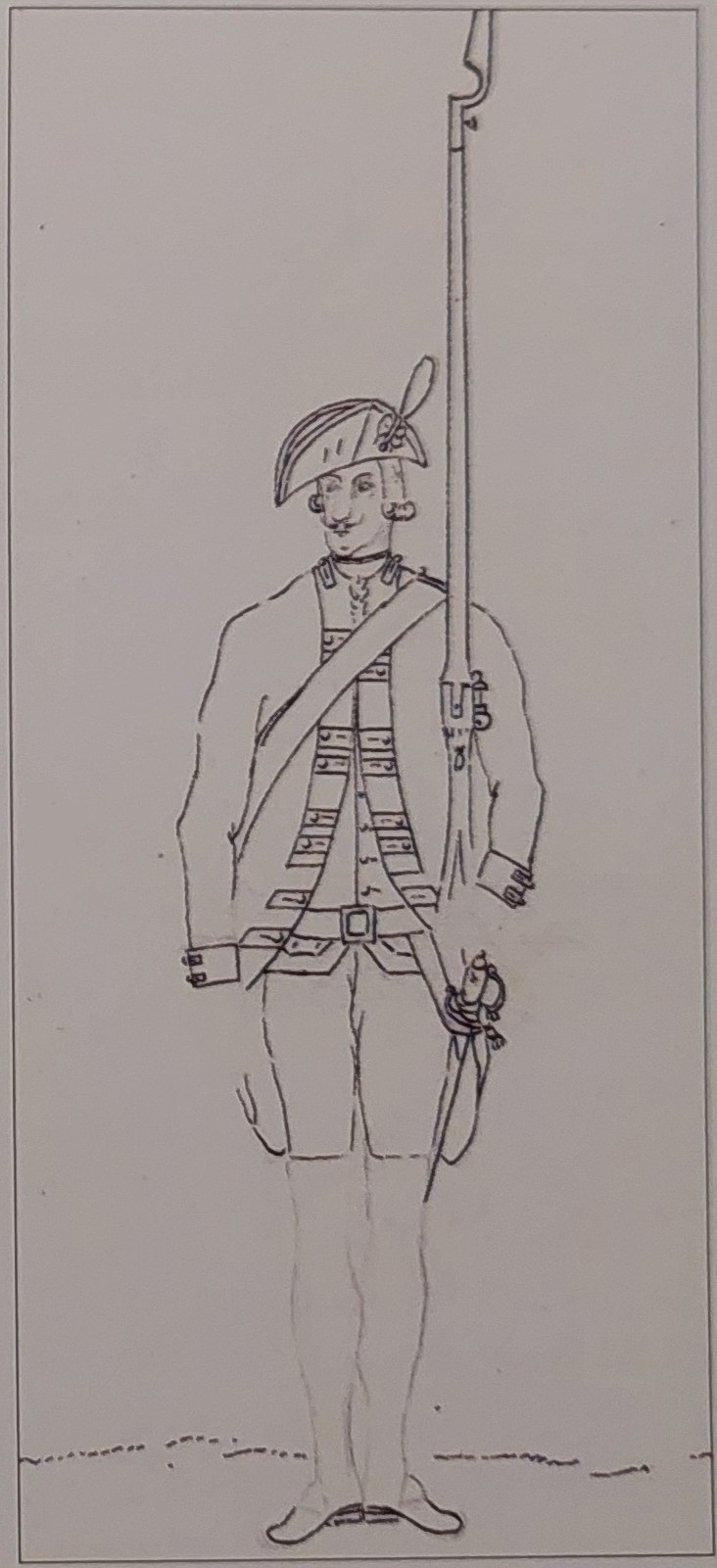
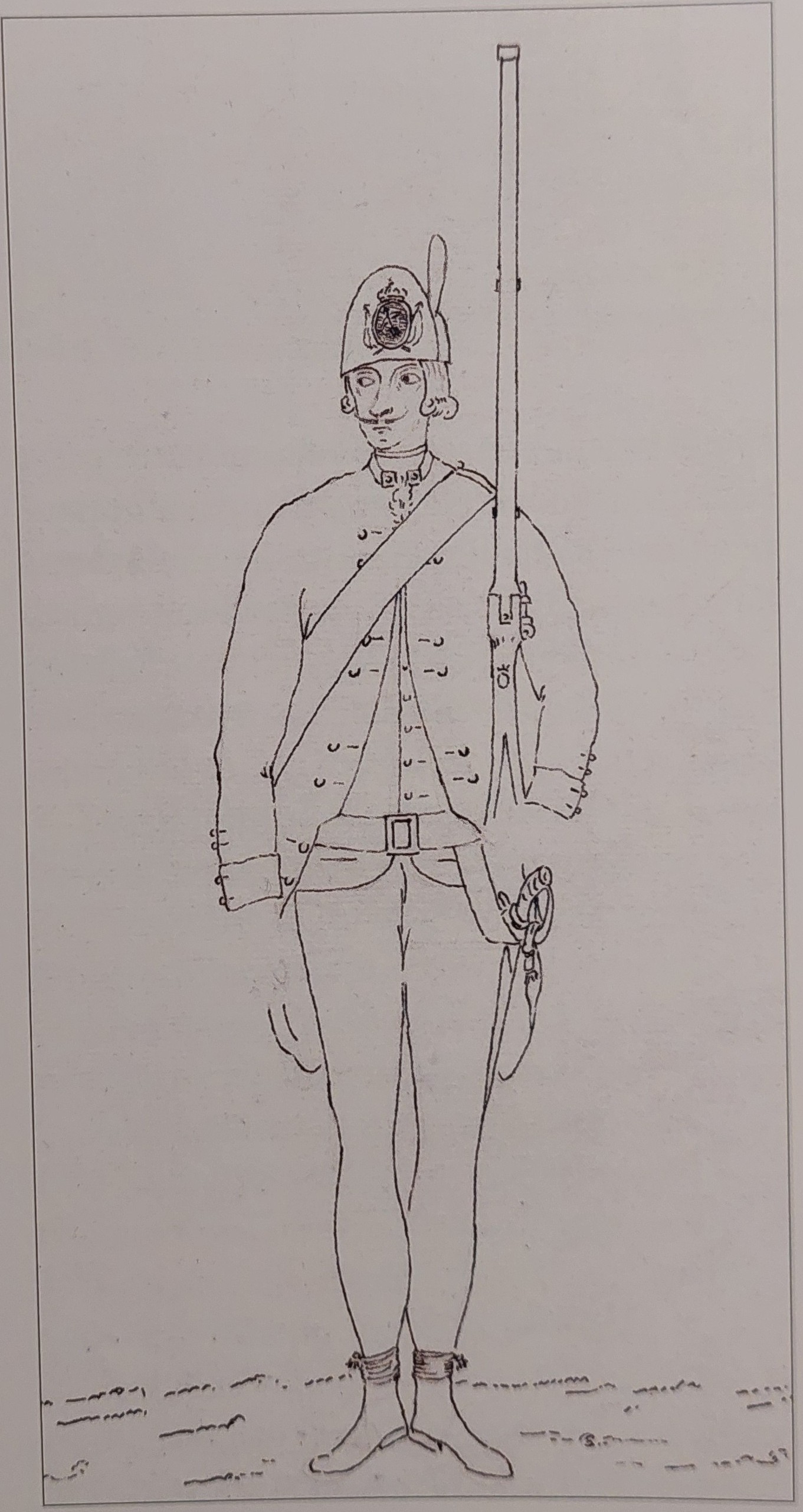
The unknown artist from around 1778 has not coloured his uniform drawing,
but it differs from Gillberg's drawing from 1765 in that it has a
turned-down collar and that the buttons on the lapels are grouped in a
different way.
|
|
Hessenstein's Regiment
(garrison regiment in Gothenburg)
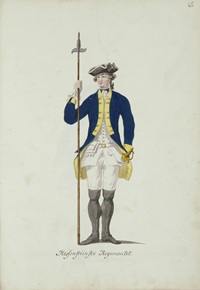
|
|
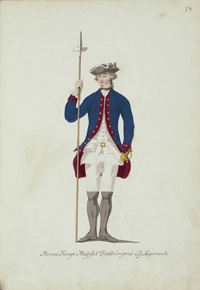 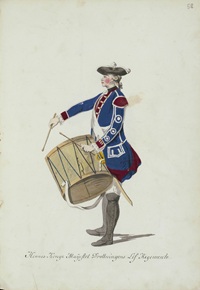 Drottningens livregemente
(Queen's Life Regiment)
Garrison regiment in Stralsund.
|
|
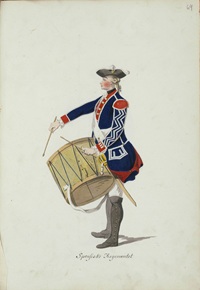
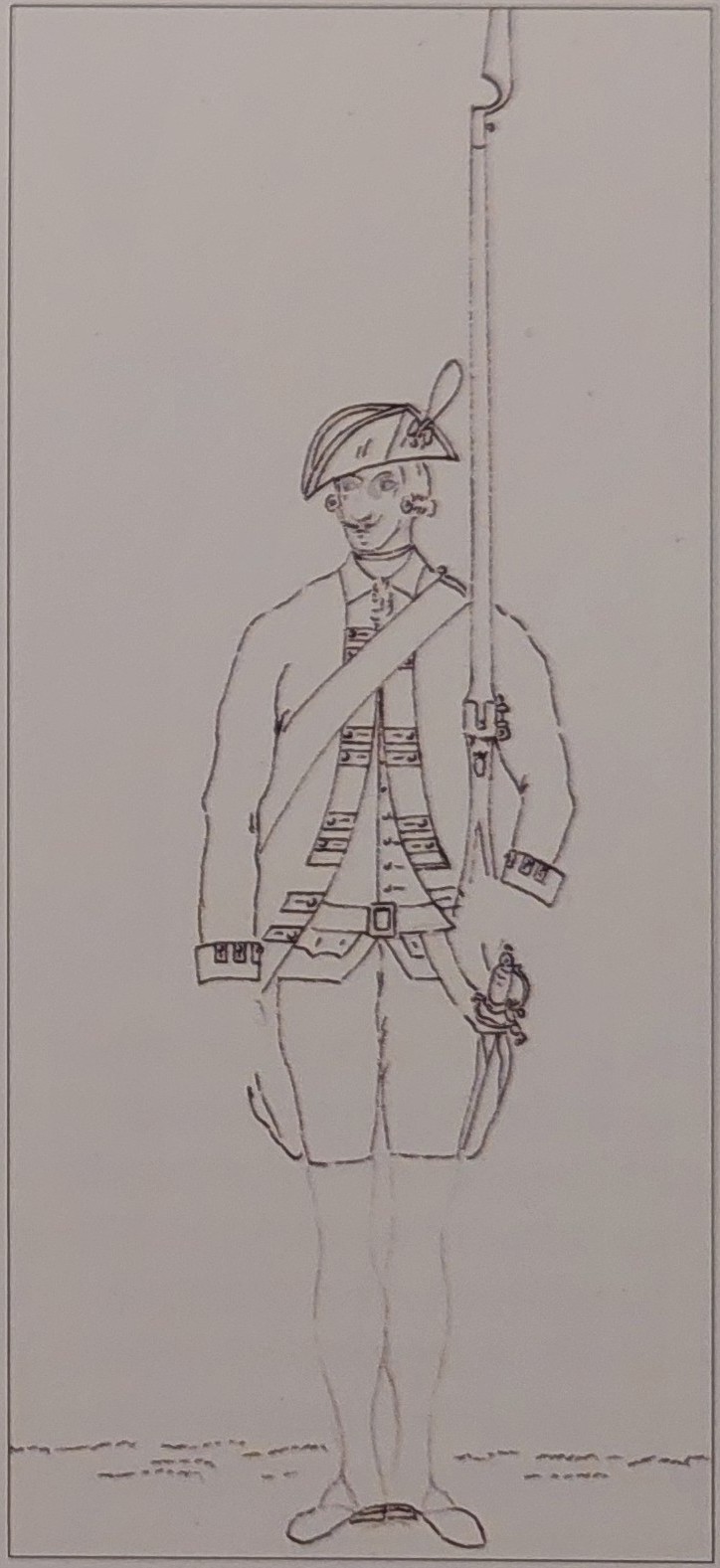 Spens'
Regiment
(garrison regiment in Stralsund)
|
|
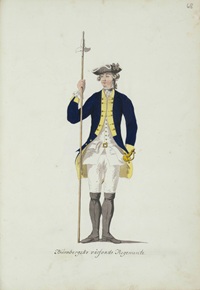
Björnberg's Regiment
(garrison regiment in Sveaborg)
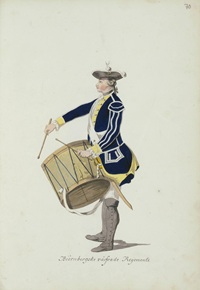
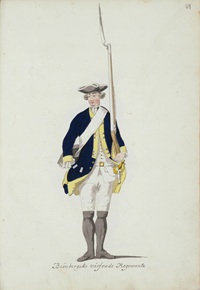
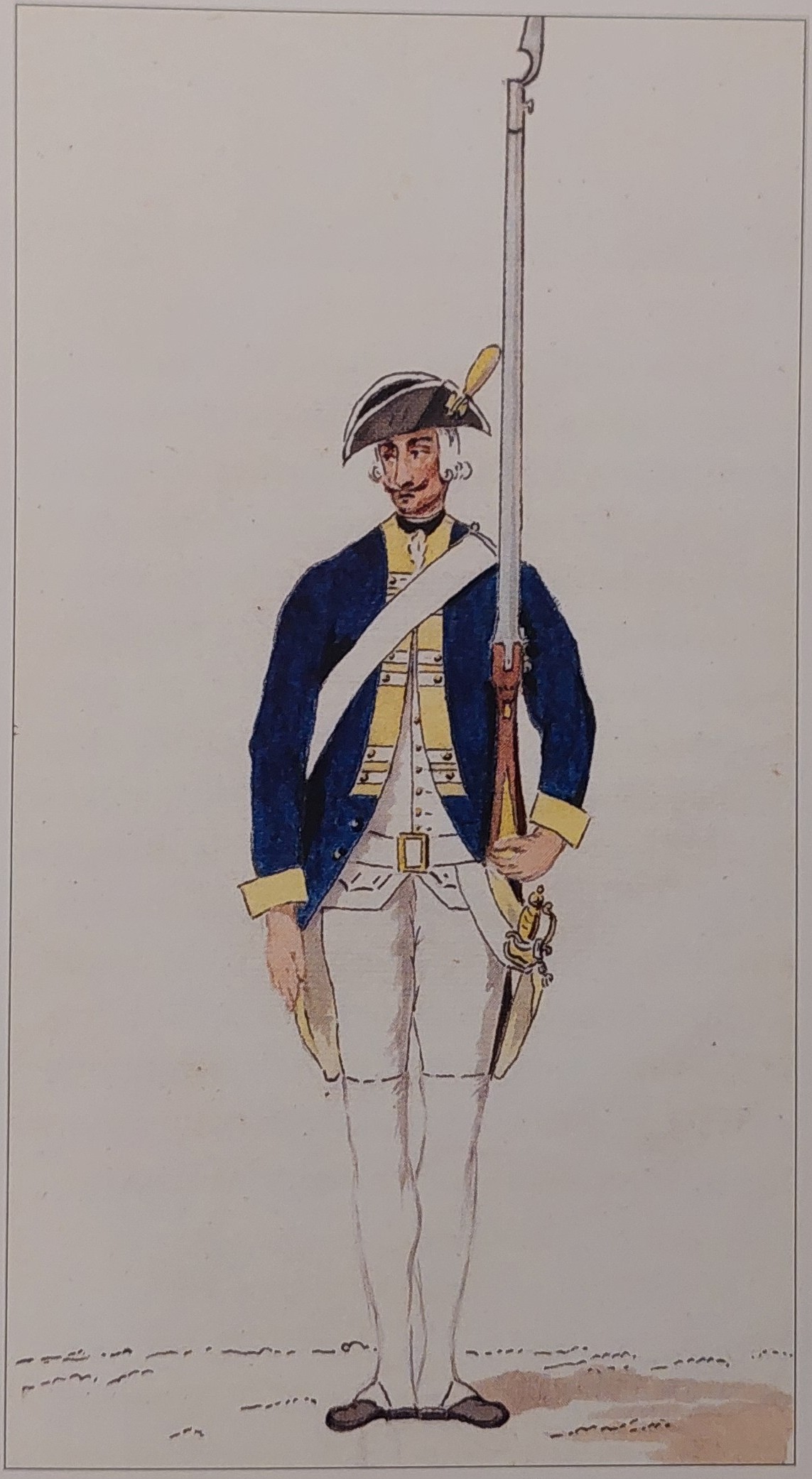 |
|
Prince Fredrik Adolf's Regiment
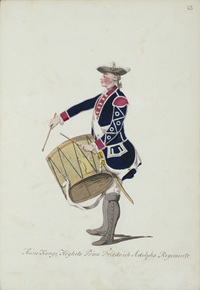
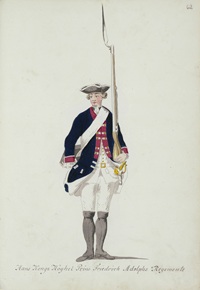
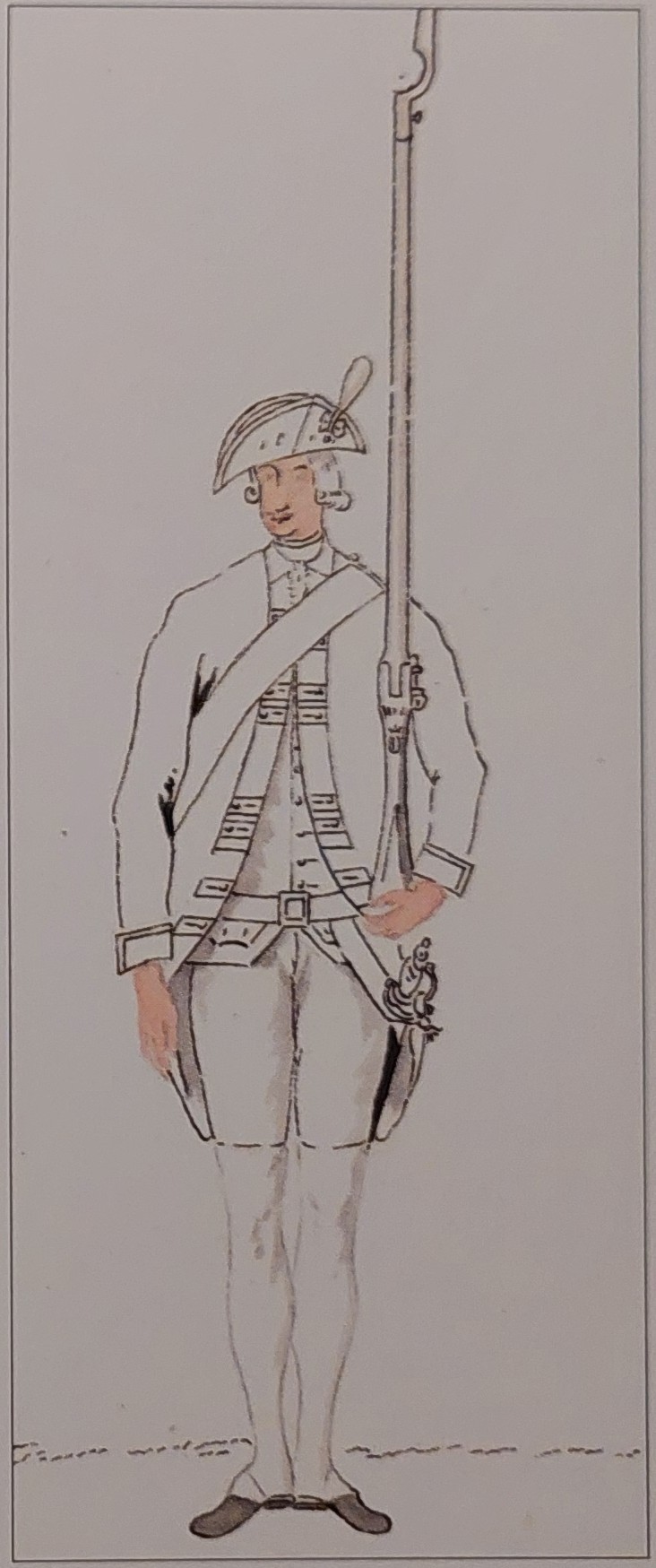
Garrison regiment in Sveaborg. It was renamed "Änkedrottningens
livregemente" in 1772 (Queen Dowager's Life Regiment).
In written sources the regiment's colour is described as red, but in
Gillberg's model drawings it looks more like purple. The drummer's coat has
been described in written sources as “gredelin” (violet) with red
details, but this does not correspond to the model drawing above. The
picture on the right, which was made by an unknown artist around 1778,
unfortunately does not provide any guidance as it is not coloured, except
for the skin. However, later uniform drawings have a pink/purple regimental
colour for the Queen Dowager's Life Regiment. |
|
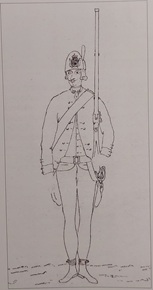 Savolax
Foot Jäger Corps
Raised in 1770 and initially
had the same commander as the Nyland Dragoon Regiment but was included in
the Savolax Brigade from 1775.
The unknown artist who depicted
the corps around 1778 has unfortunately not coloured the picture, but the
coat is said to have been green with a white waistcoat and breeches. The
headgear was a sealskin cap with a yellow plume, and it had a plate with the
Savolax coat of arms on the front. |
|
Provincial
Infantry |
|
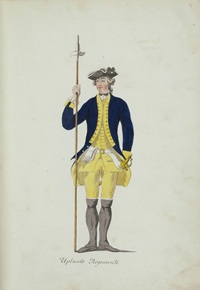
Uppland
 |
|
Södermanland
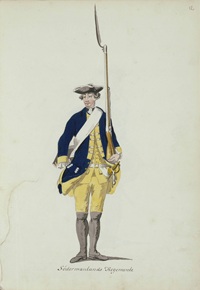
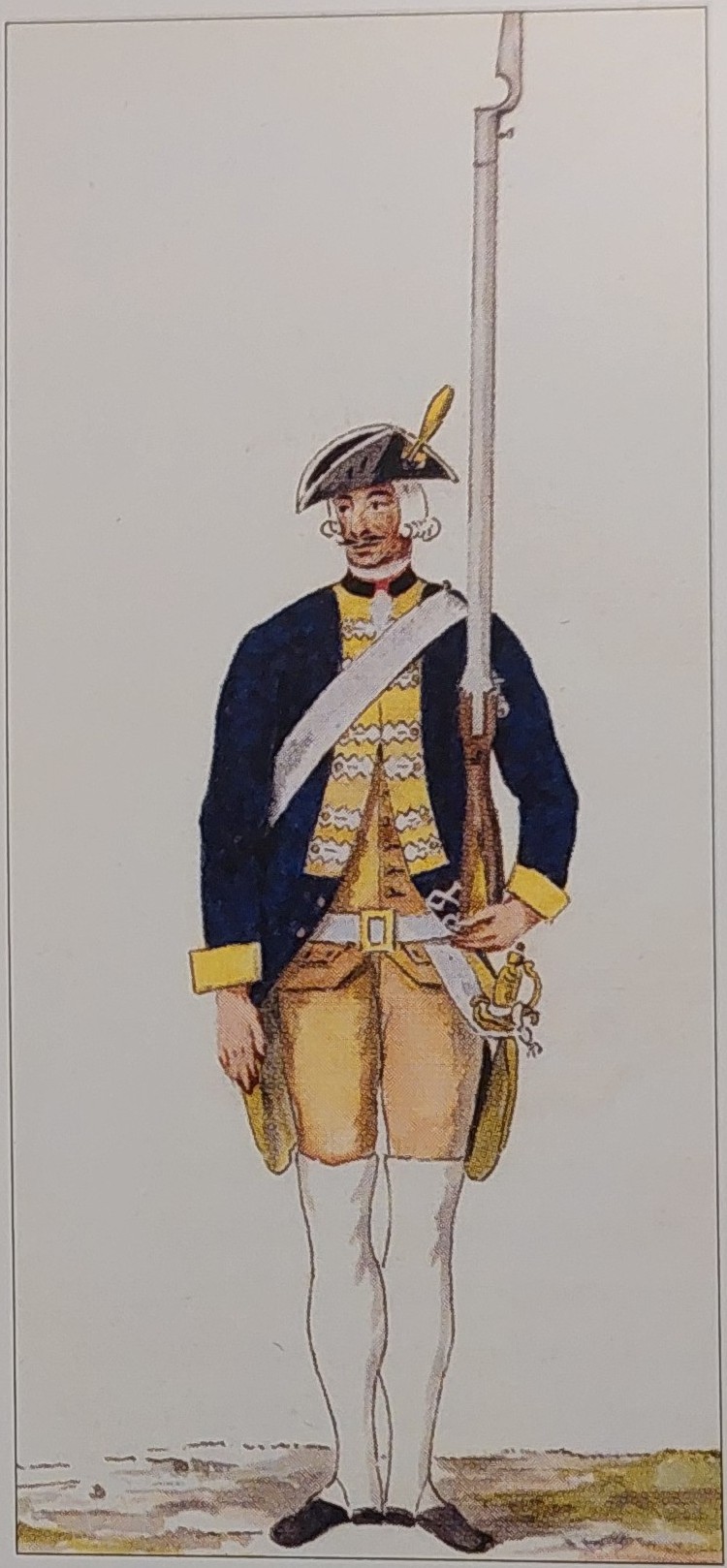 |
|
Östergötland
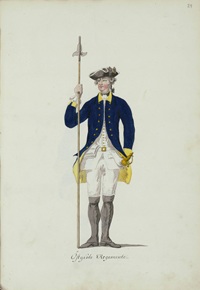
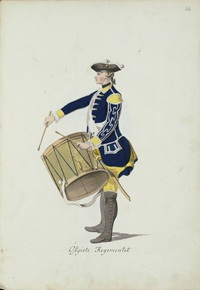
 |
|
Jönköping
 |
|
Kalmar
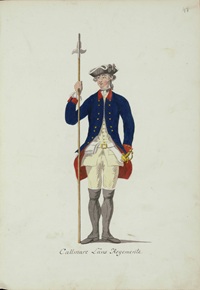
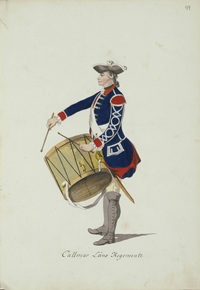
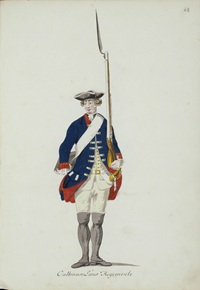
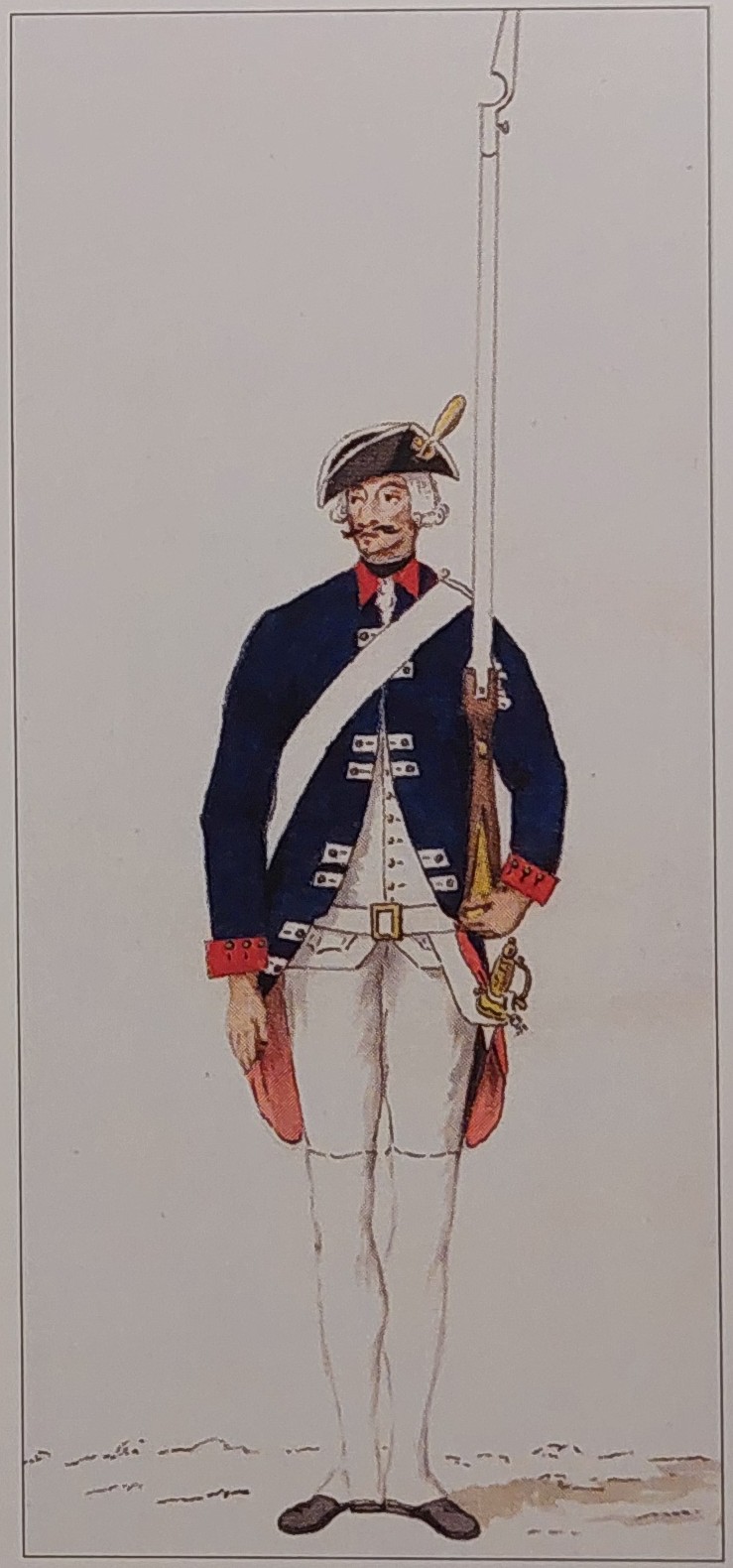
The colour of the coat lining was changed to paille yellow instead of red in
1765. Despite this, the picture on the far right, which is from around 1778,
still has red lining. |
|
Kronoberg
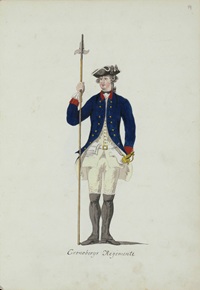
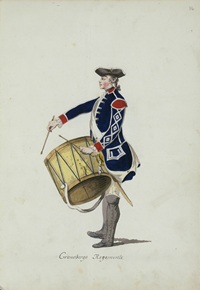
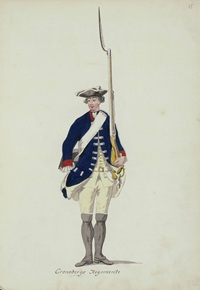
 |
|
Älvsborg
 |
|
Västgöta-Dal
 |
|
Skaraborg
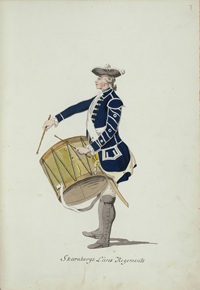
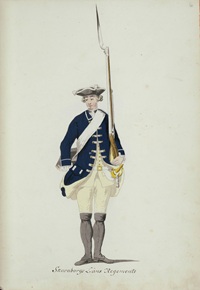
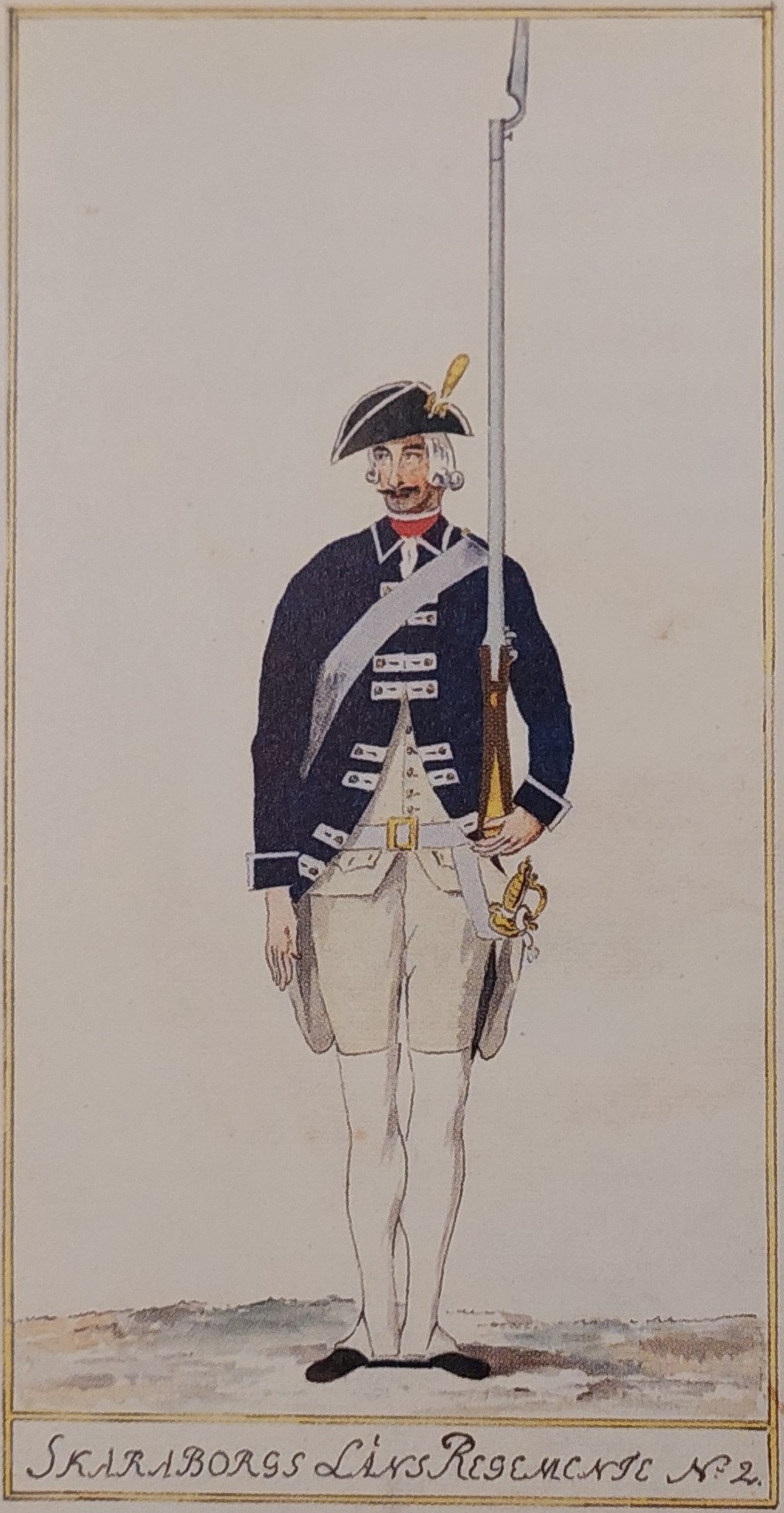 |
|
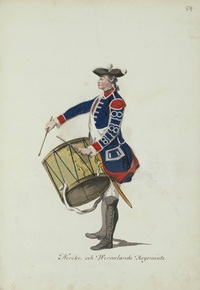
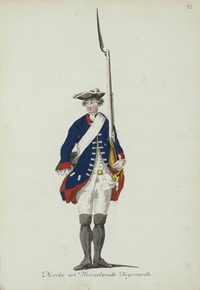
Närke-Värmland
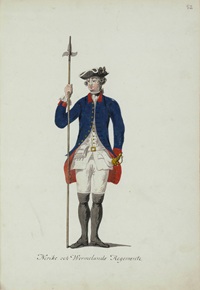
 |
|
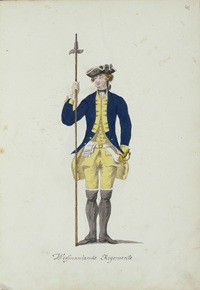
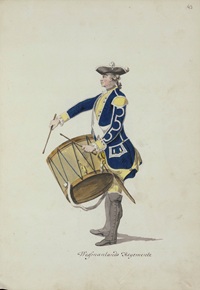
Västmanland
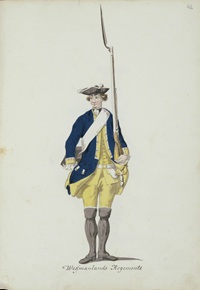
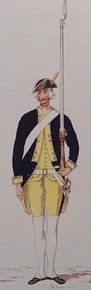
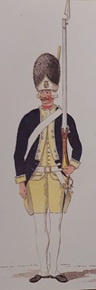 |
|
Dal Regiment
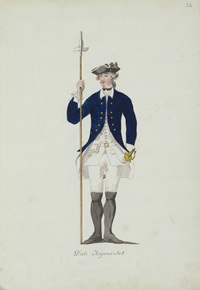
 |
|
Hälsinge
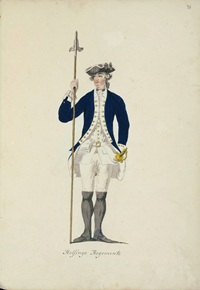
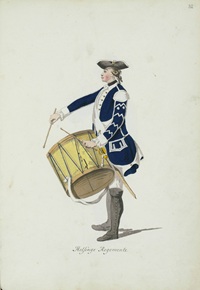
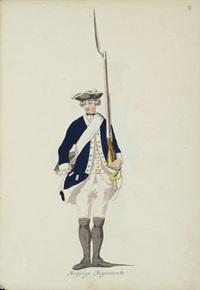
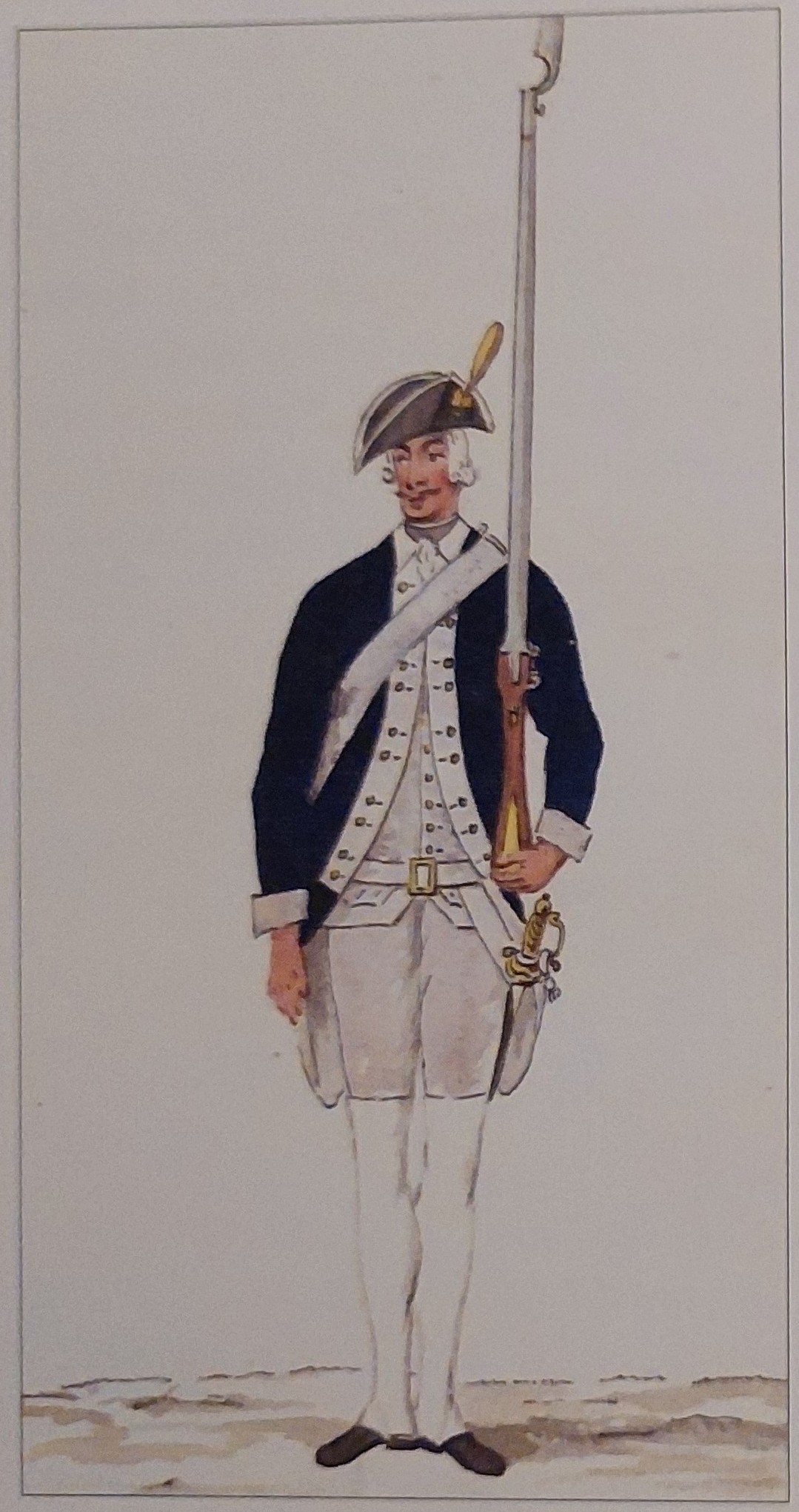
The drummer
here has white "swallow's nests" on his shoulders, but on the preserved
model coat
they are yellow. |
|
Västerbotten
 |
|
Österbotten
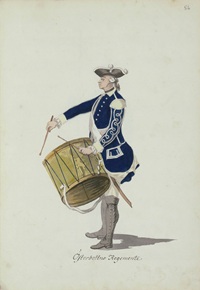
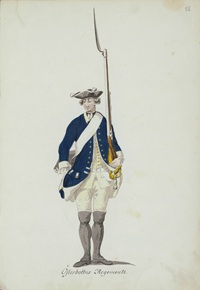
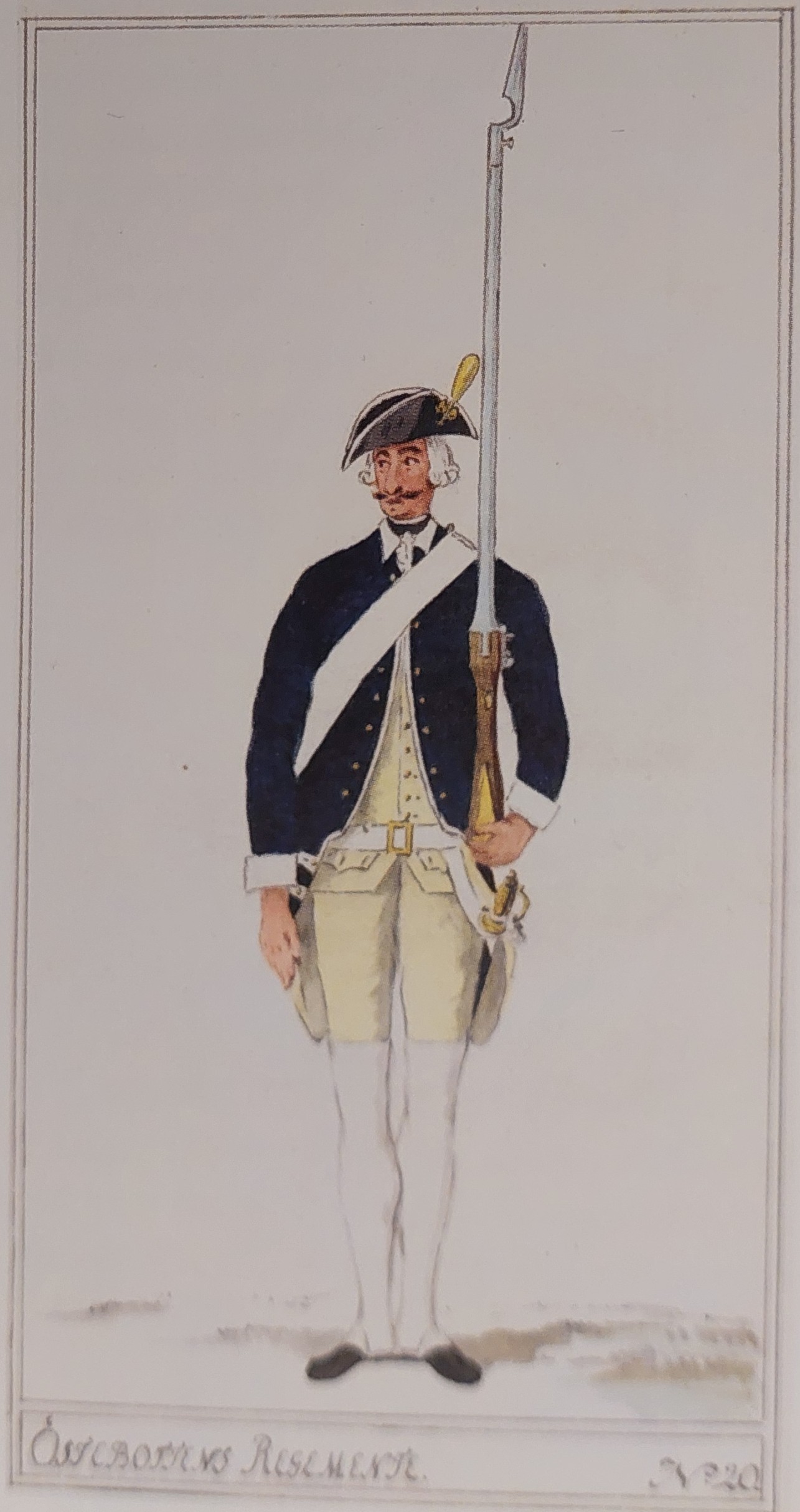
The cuffs and collar were the same colour as the lining, vest, and
breeches. That is, they were paille yellow and not white as in the
picture on the far right. |
|
Björneborg
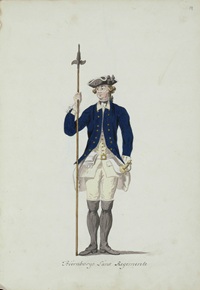
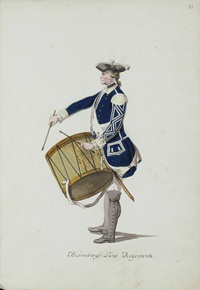
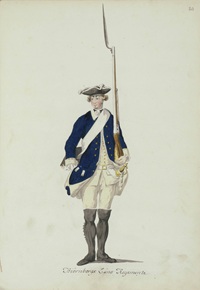
 |
|
Åbo Län
 |
|
Nyland
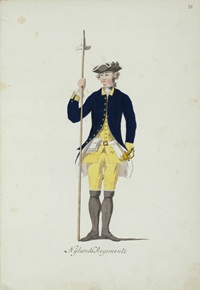
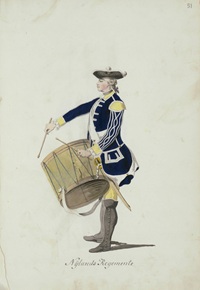
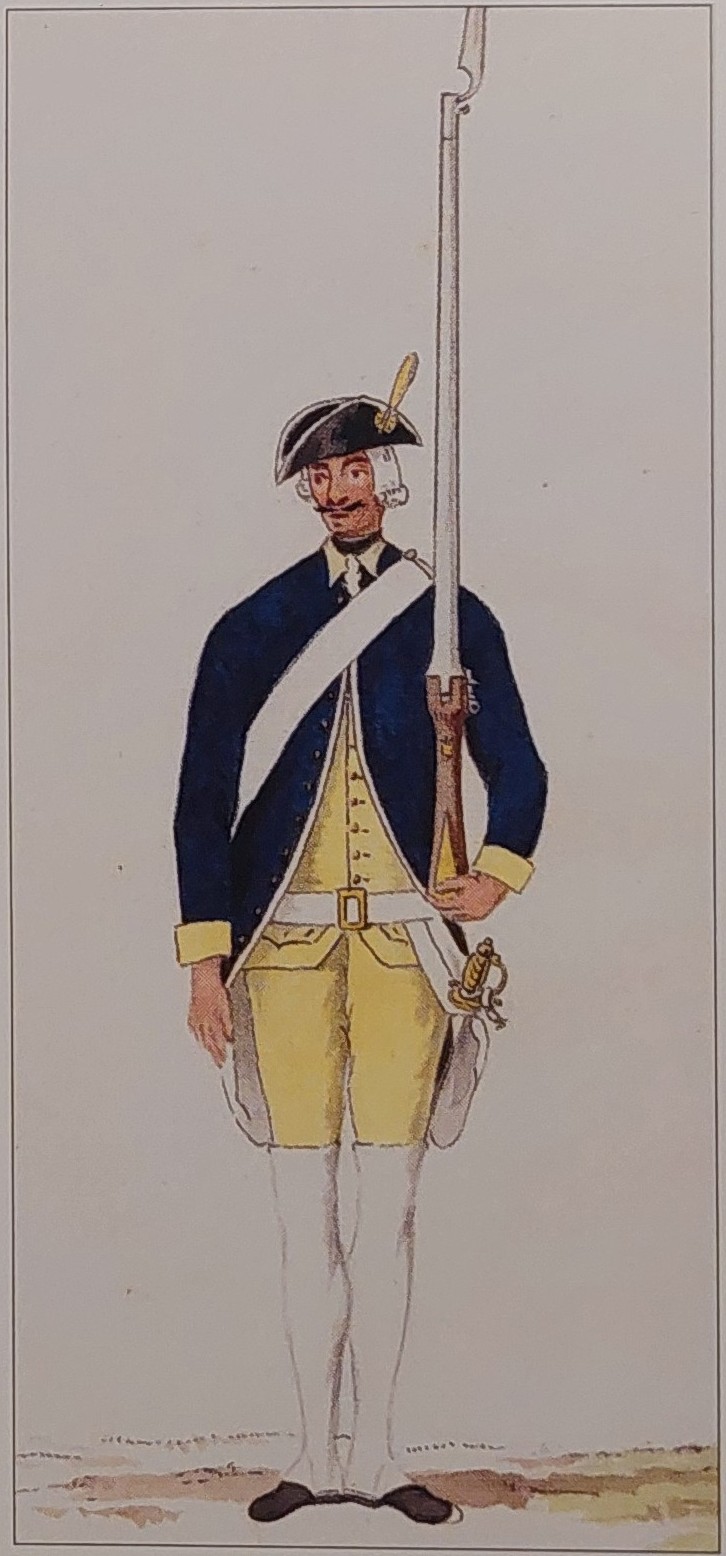 |
|
Tavastehus
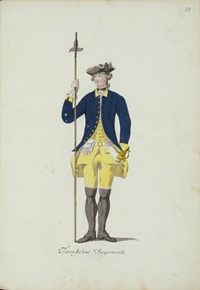
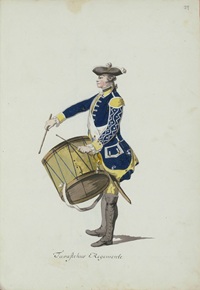
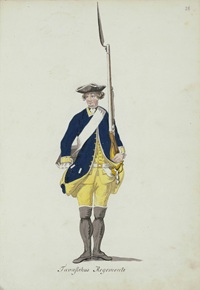
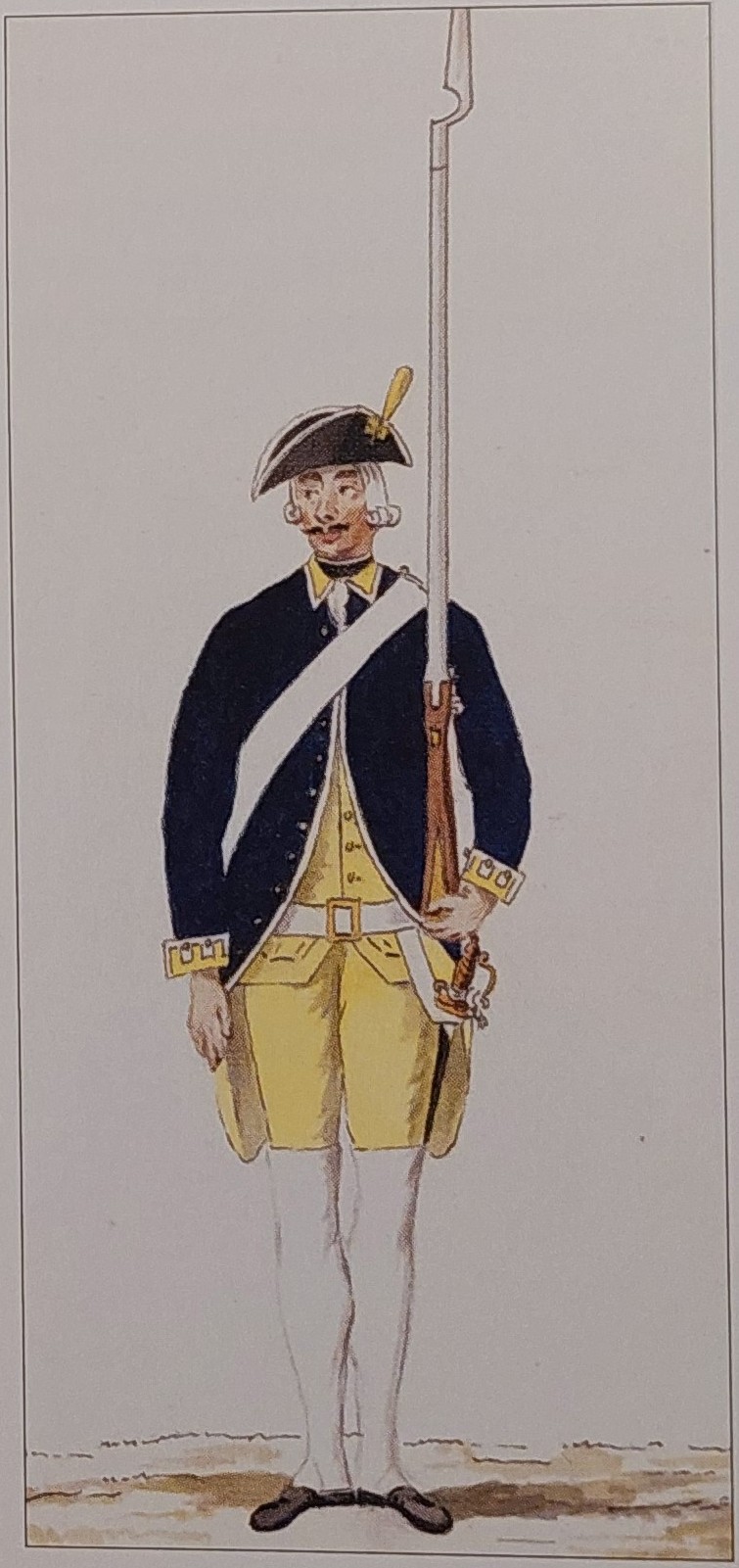 |
|
Savolax
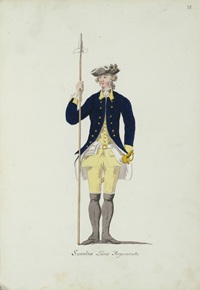
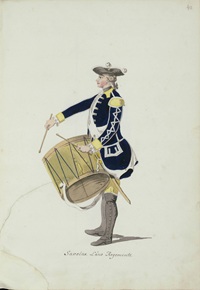
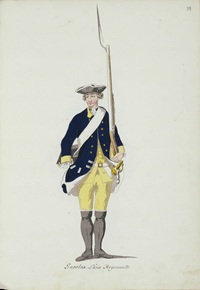
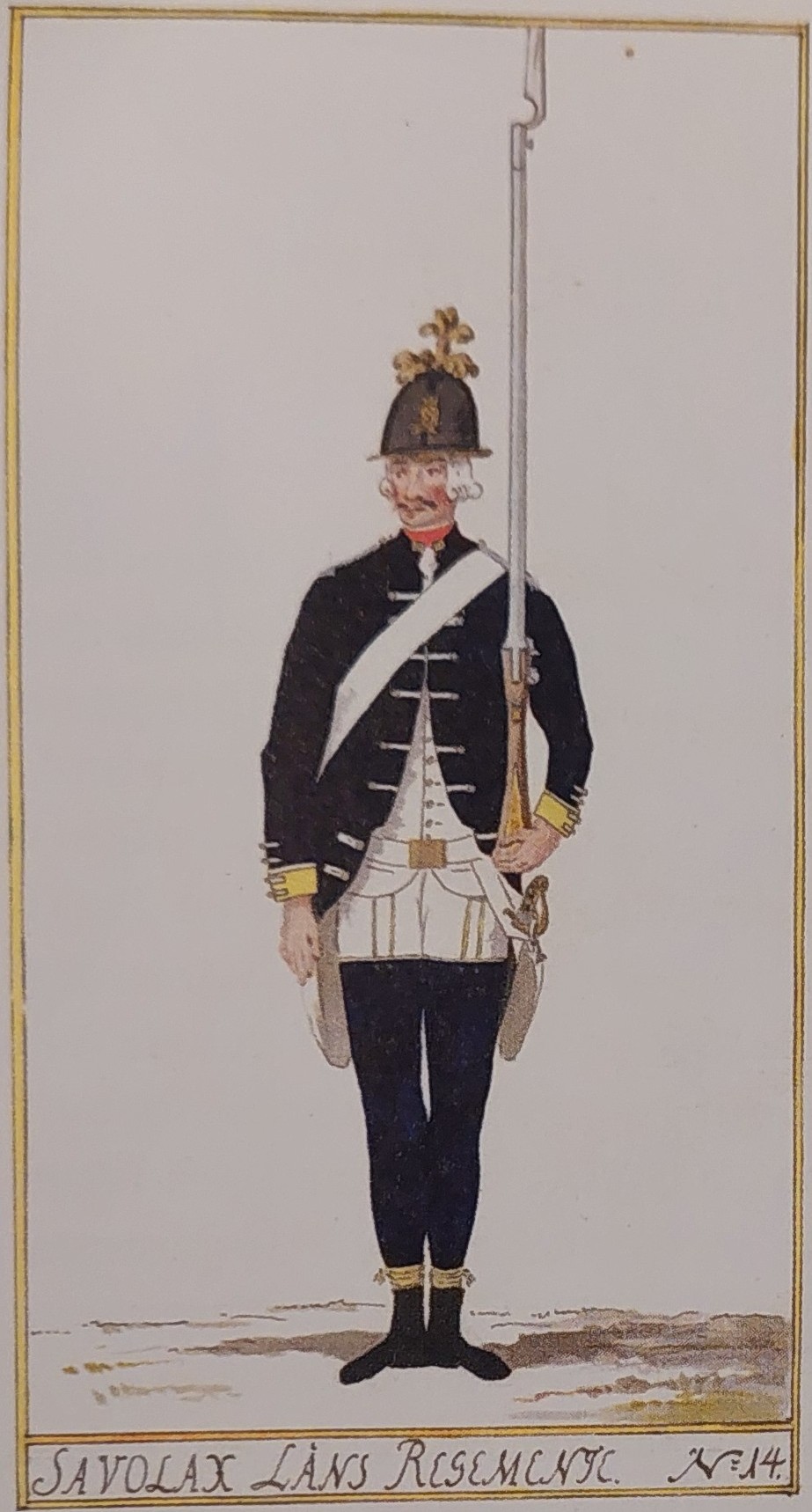
In 1775, Savolax Regiment became part of the newly formed Savolax
Brigade and was given a new uniform with a helmet as headgear (see the
picture on the right, which is from about 1778). |
|
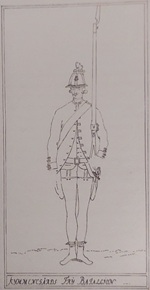 Kymmenegård
Battalion
Kymmenegård "battalion" consisted of only 92 men, which were the
remaining “rotar” (recruitment districts) of the old Viborg
Regiment after the land cessions to Russia in 1721 and 1743. These
rotar formed the Elimä Company from 1756 to 1776, which was part of
Nyland Regiment. The company was transferred to the Savolax Brigade in
1776 under the name "Kymmenegård Light Infantry Battalion". Its uniform
then became similar to that of the Savolax Regiment, which was also part
of the brigade. |
|
|
|
Other
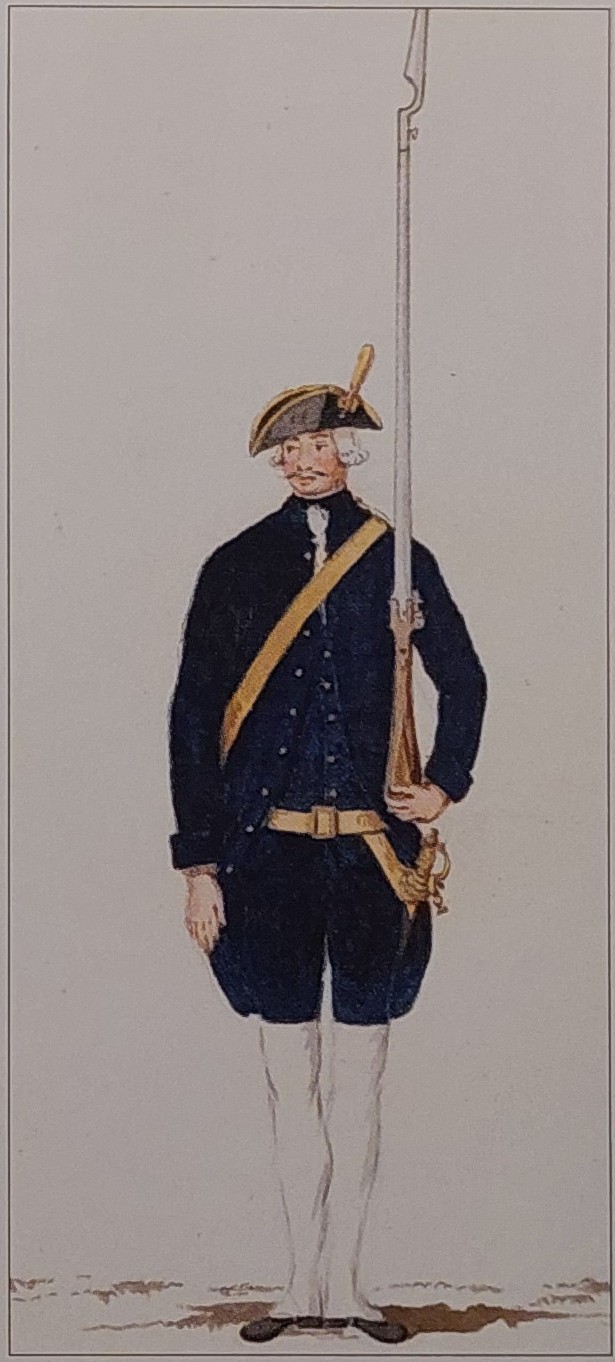
Artillery |
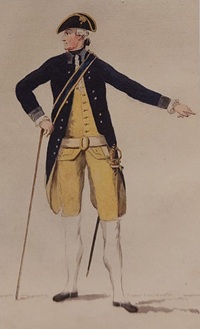
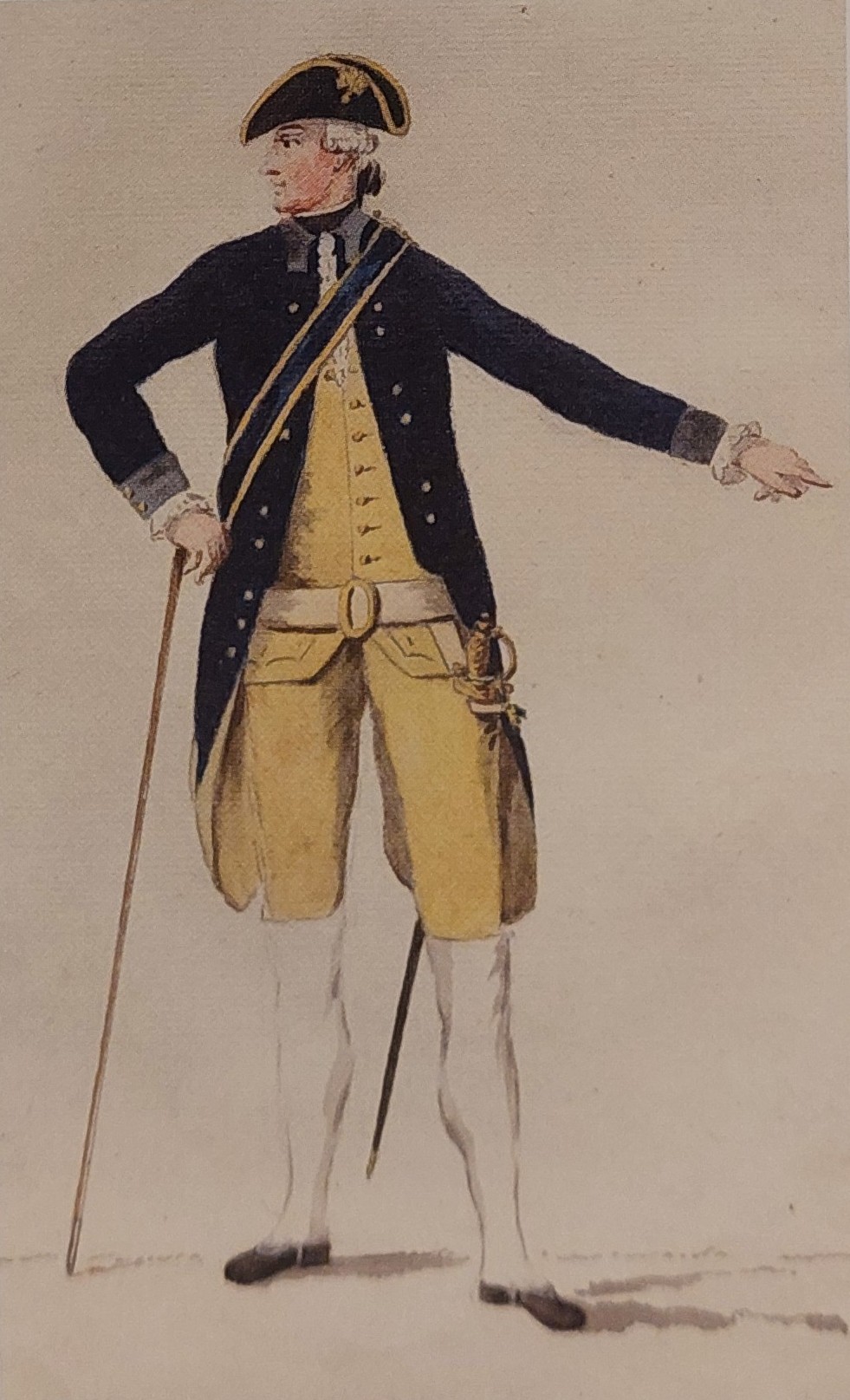
Naval Officer |
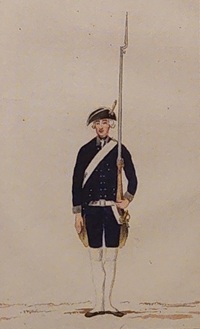
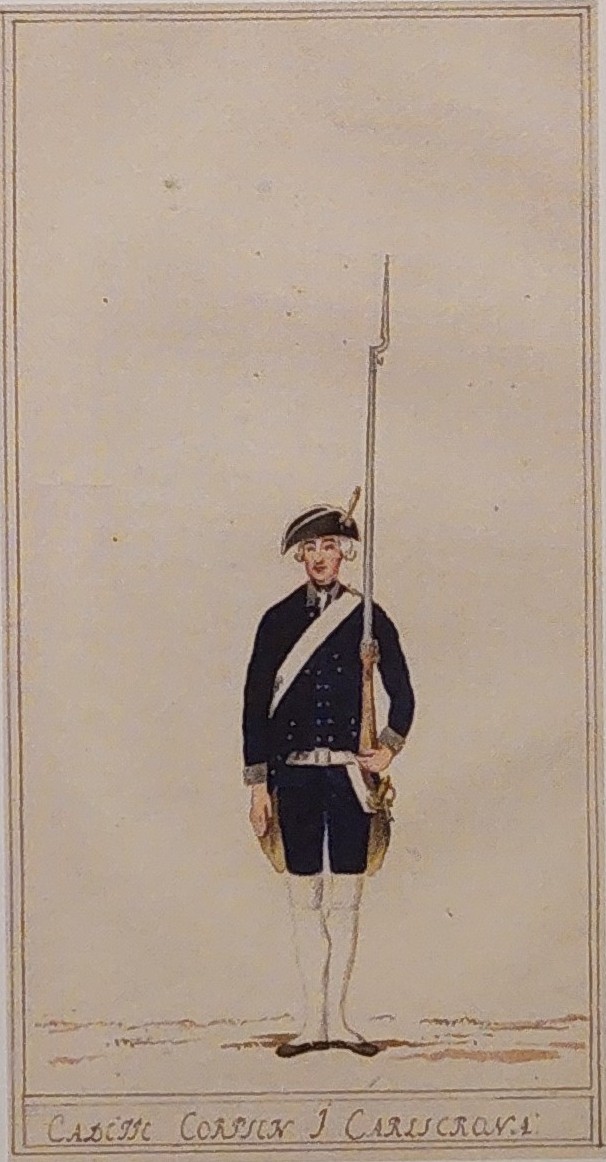
Cadet in Karlskrona |
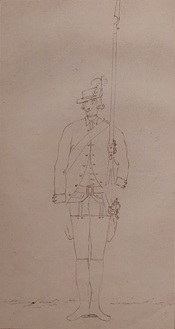
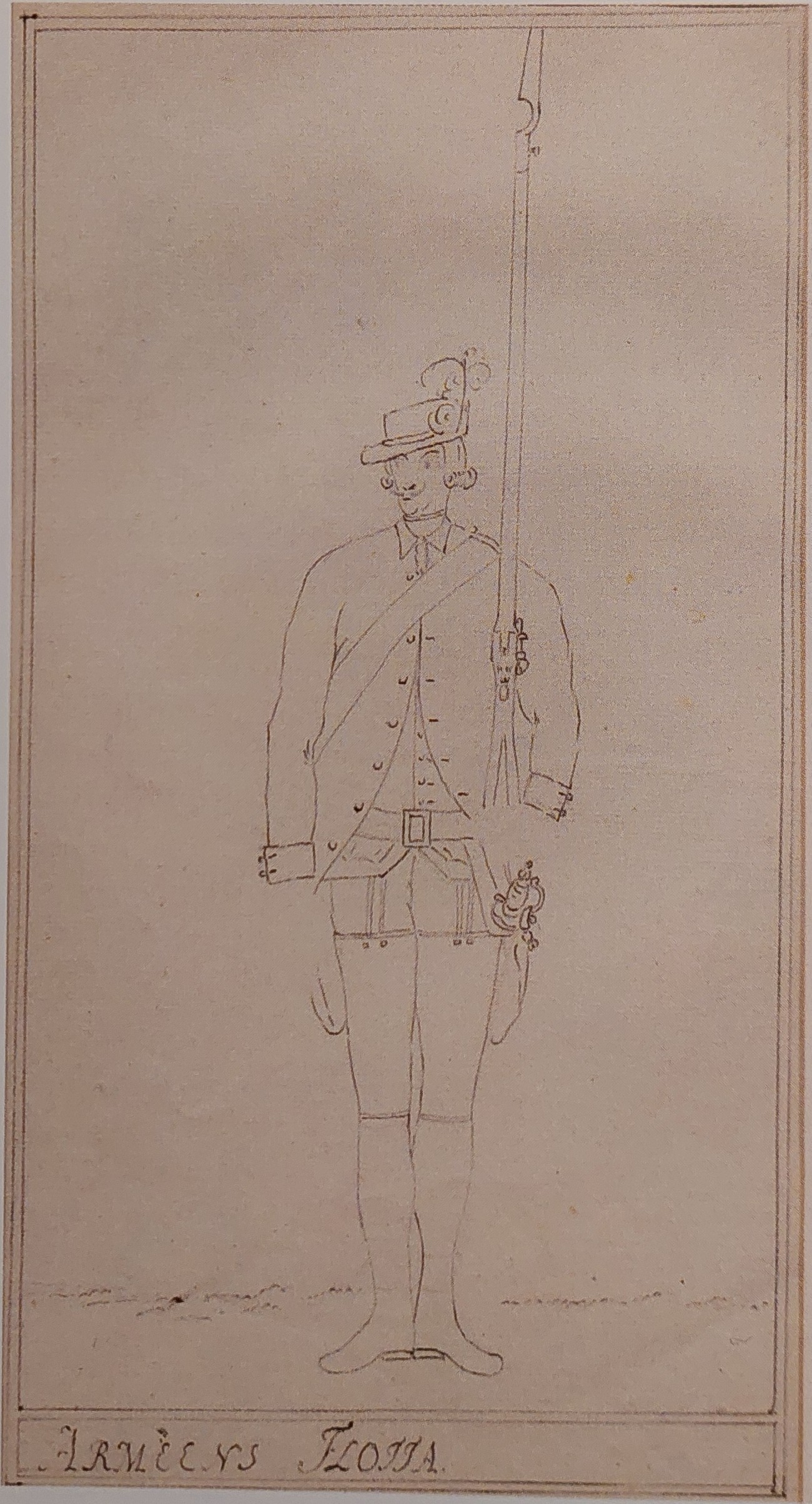
Army Fleet |
The Navy distinguished
itself by having light blue collars with long flaps The Army Fleet
already received the round hat in 1775 that became standard in the
Swedish Army with the m/1779 uniform. |
|
References
Jacob Gillberg's model drawings are kept in the
Swedish War Archives (serie 0429-001).
The pictures of the unknown artist from around 1778 and the naval officer
are taken from Markelius' book.
Bellander, Erik. Dräkt och uniform. Stockholm (1973)
Markelius, Martin. Gustav III:s armé. Stockholm (2020) |