|

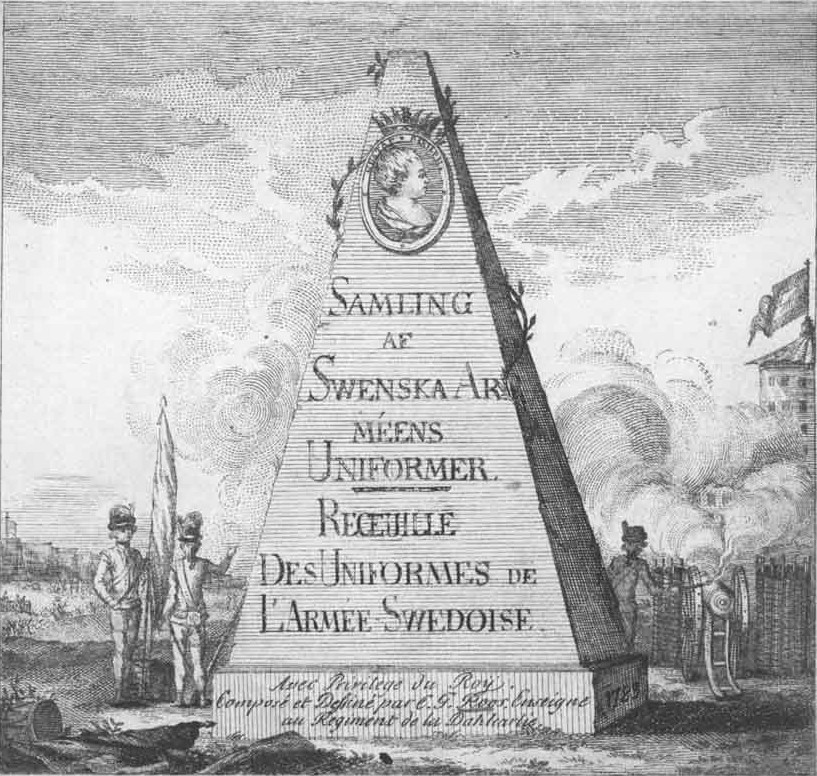
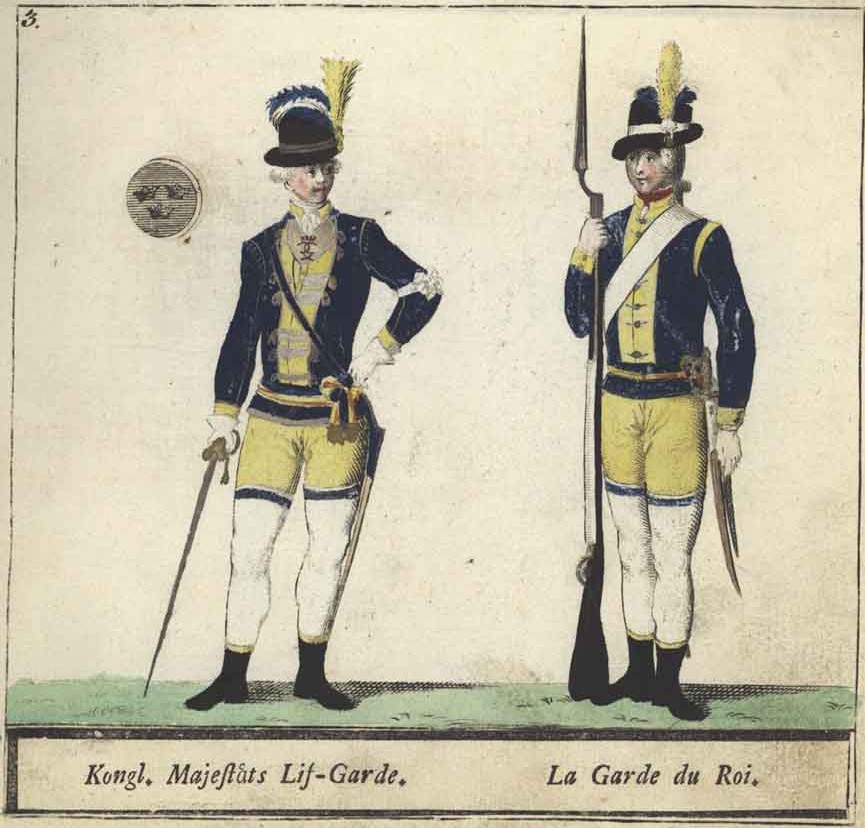
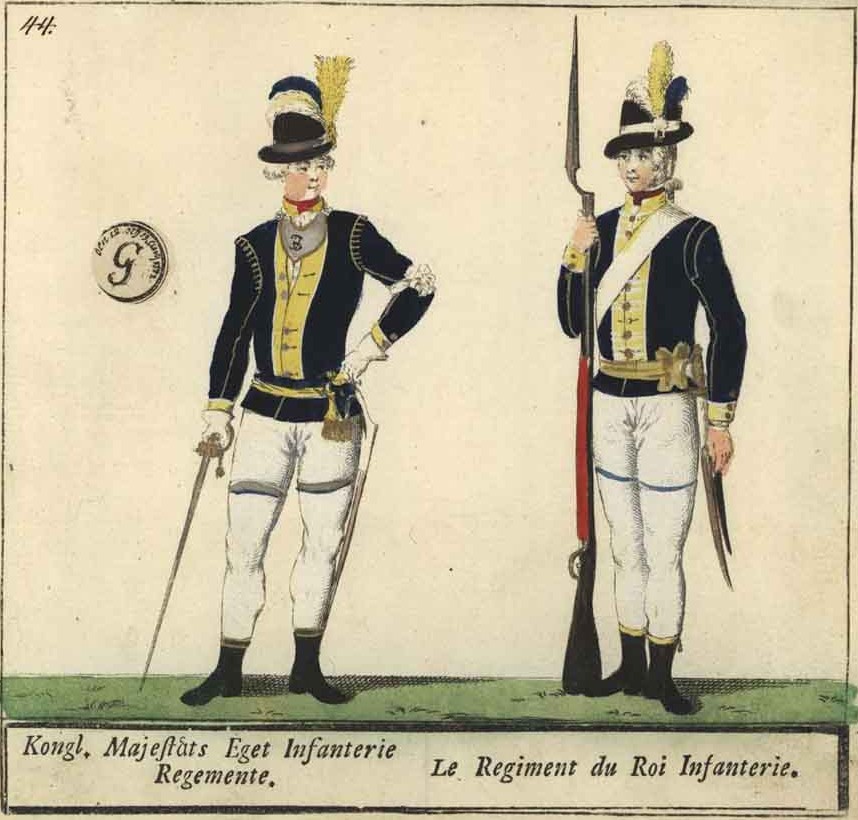
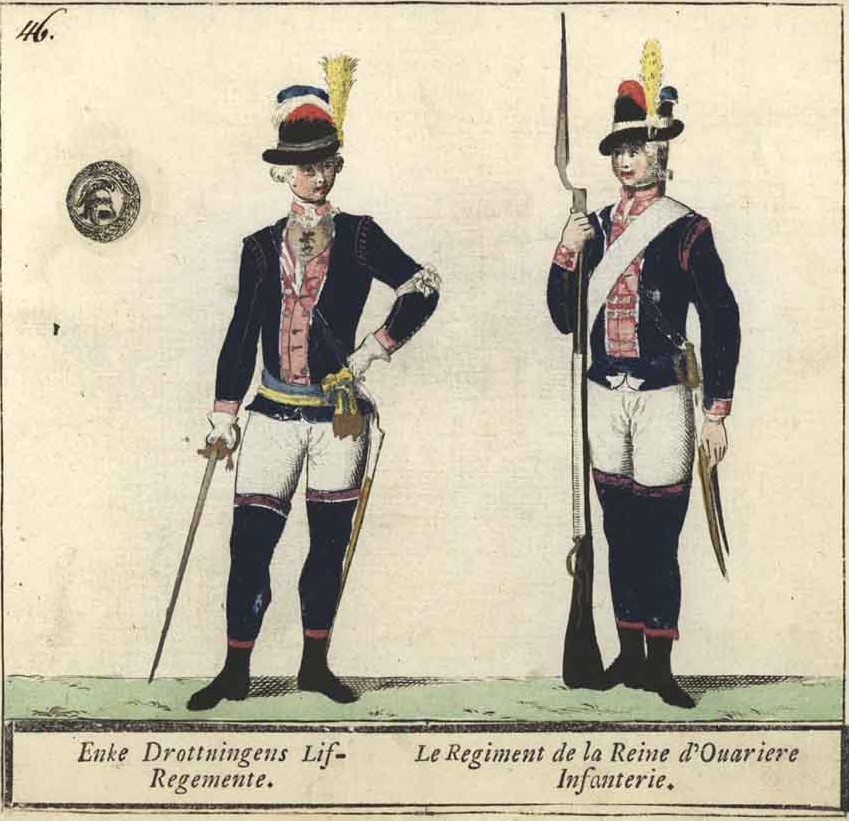
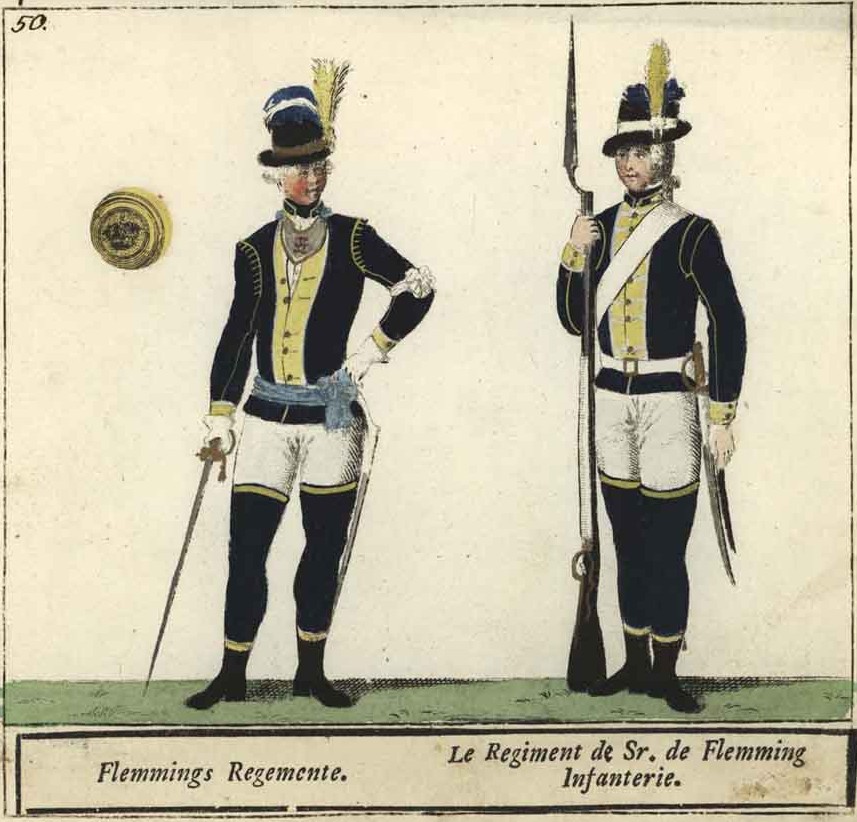
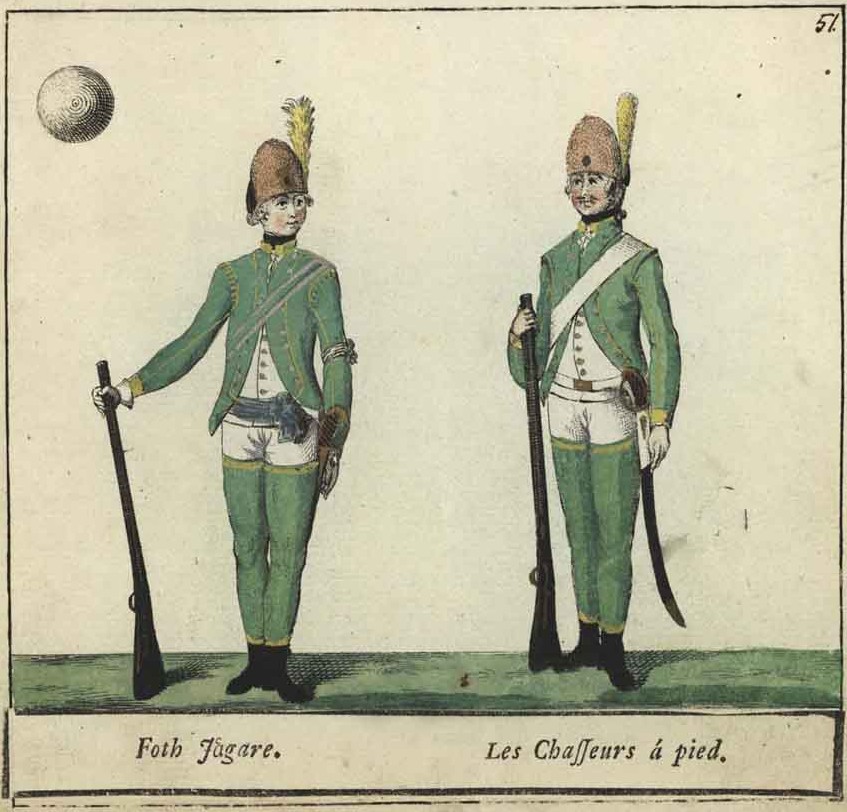
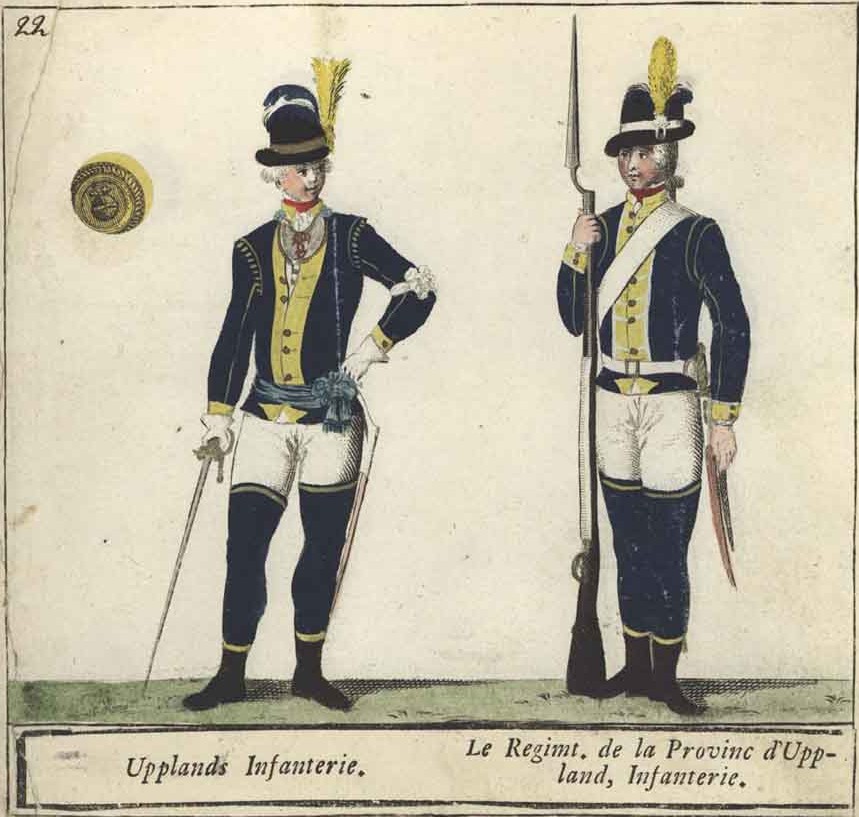
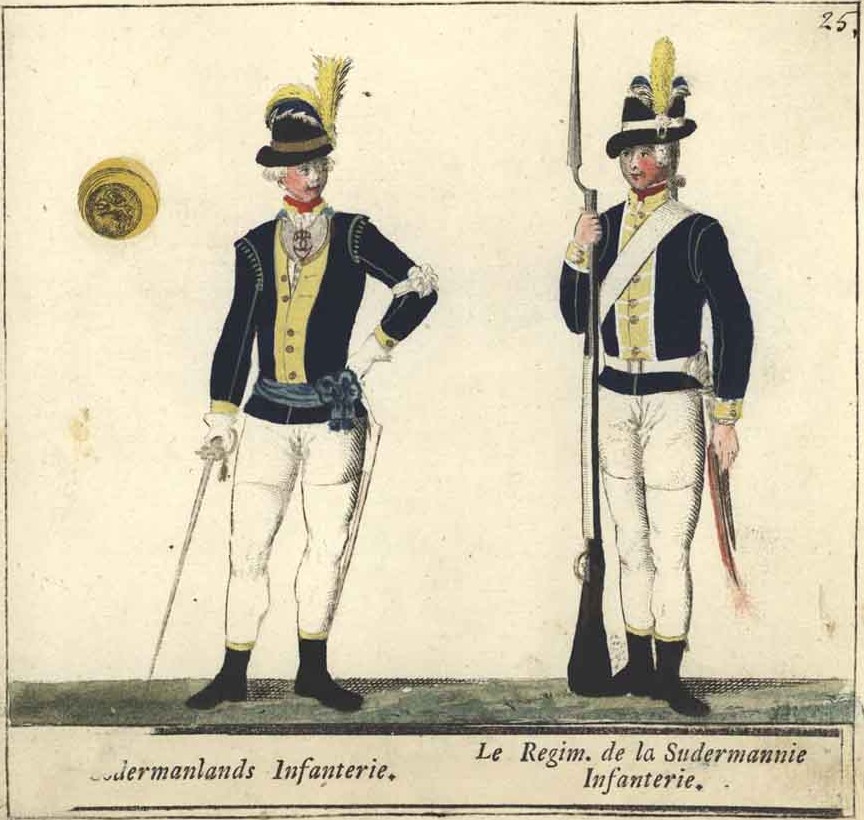
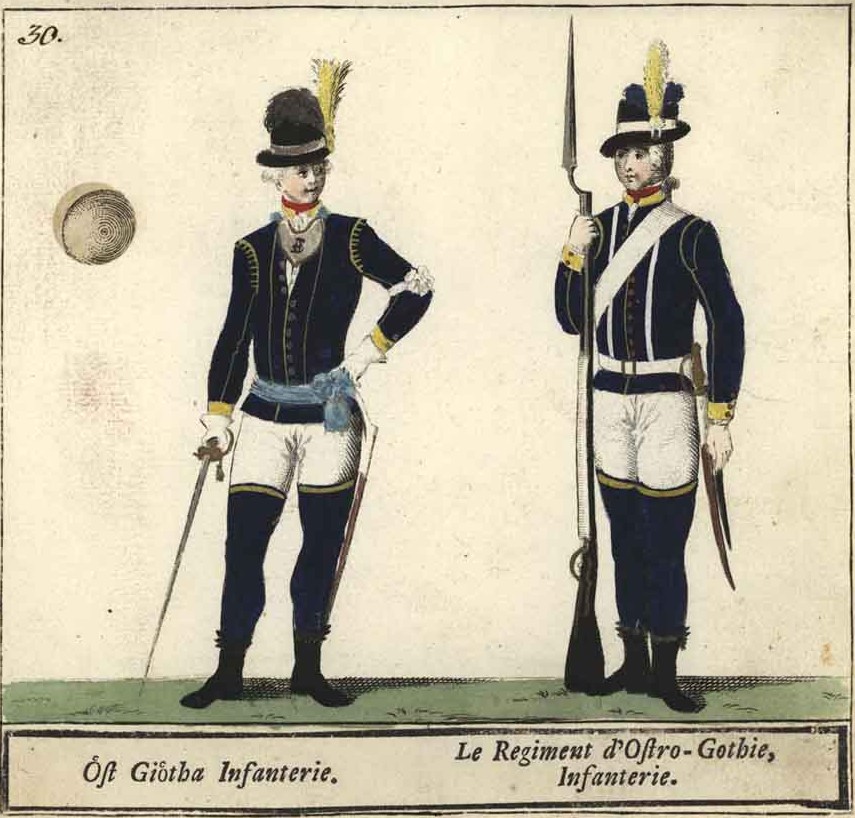
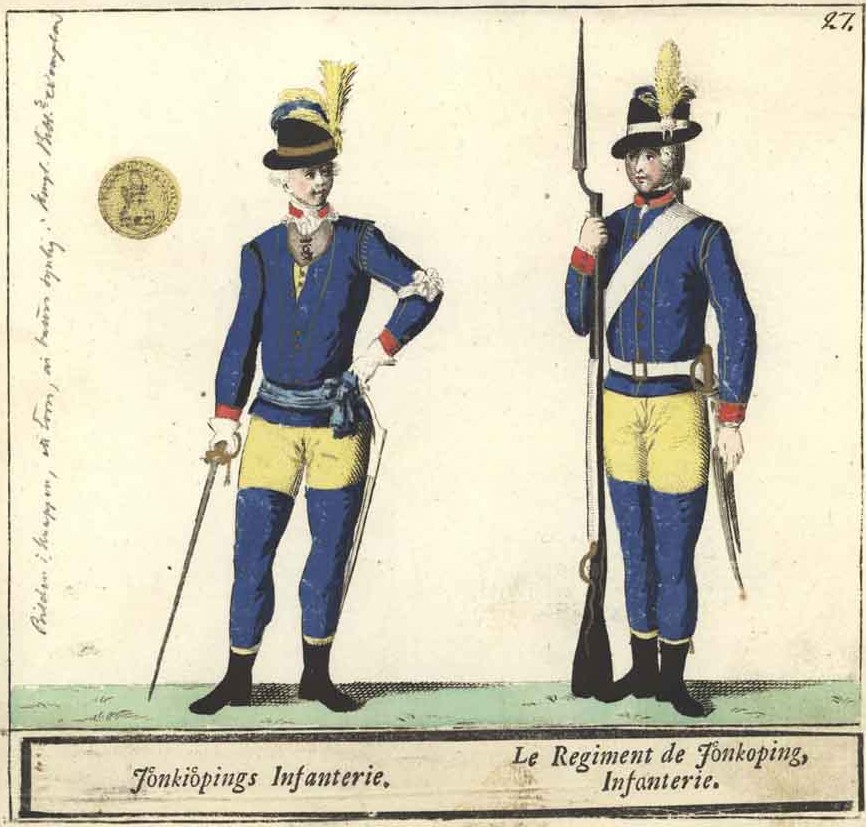
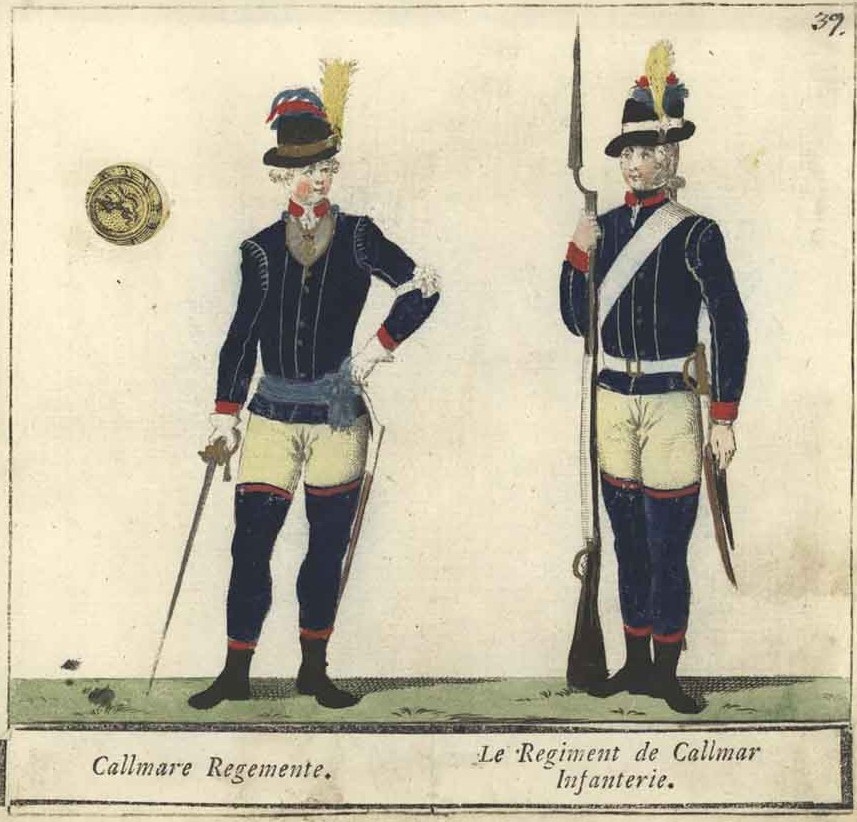
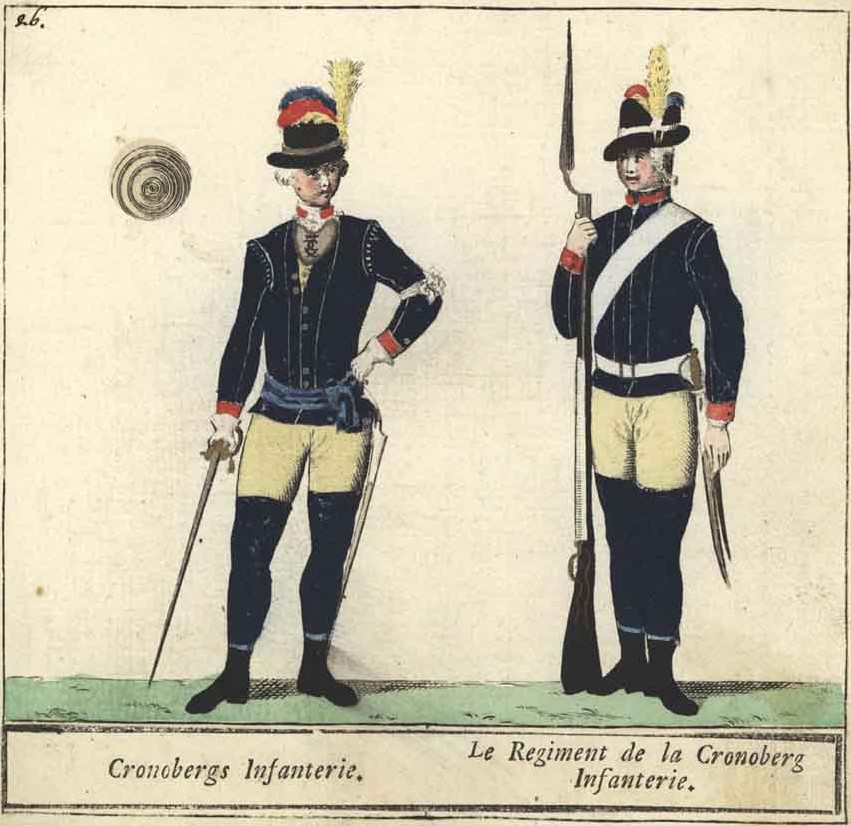
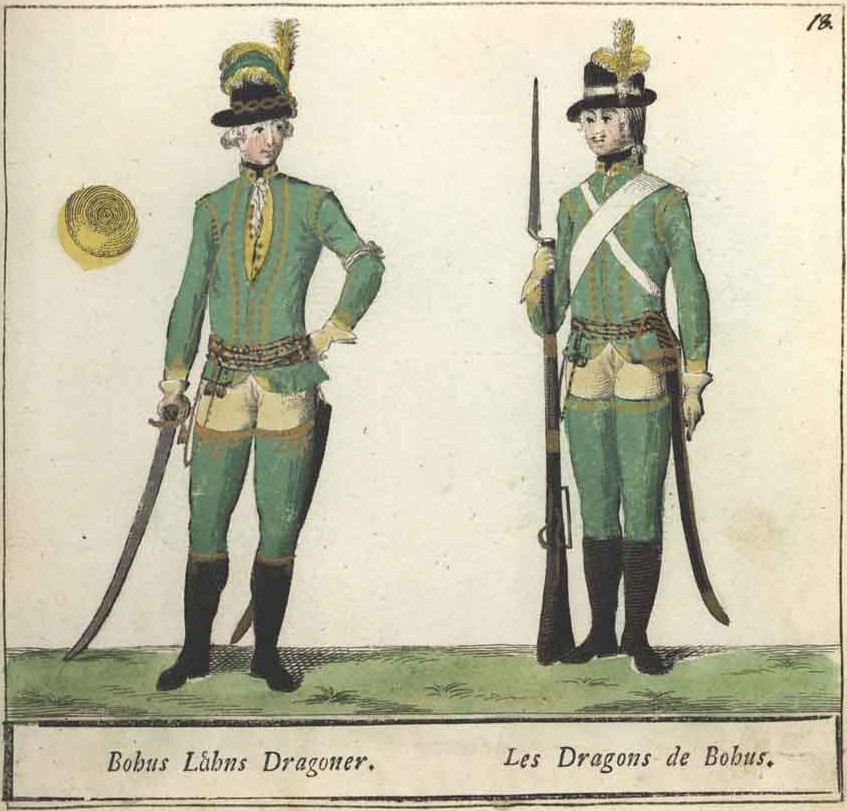
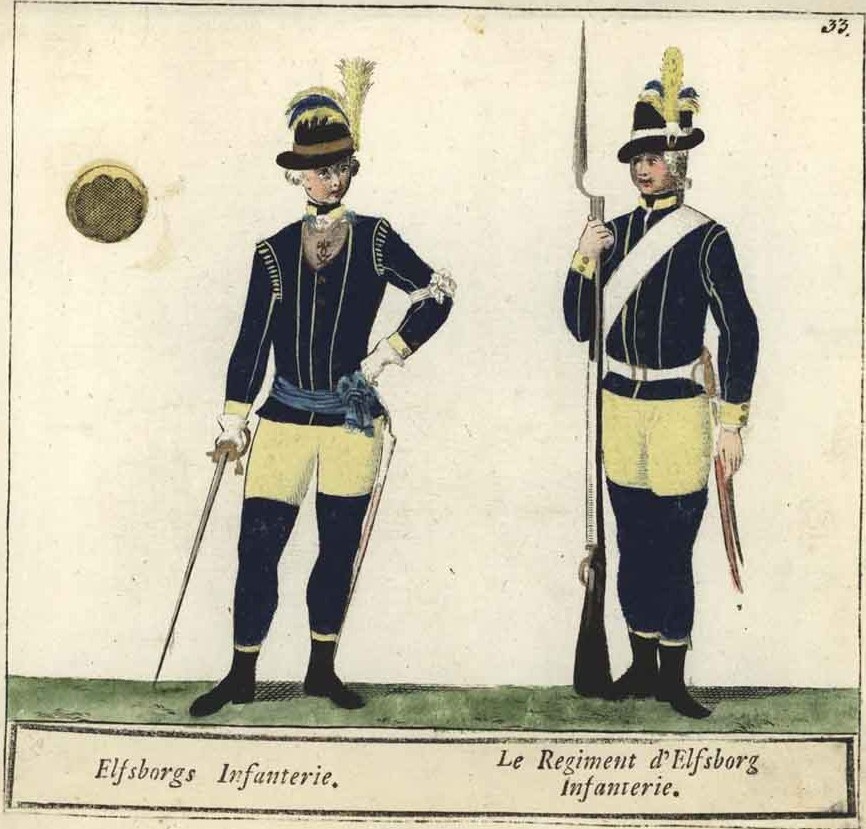
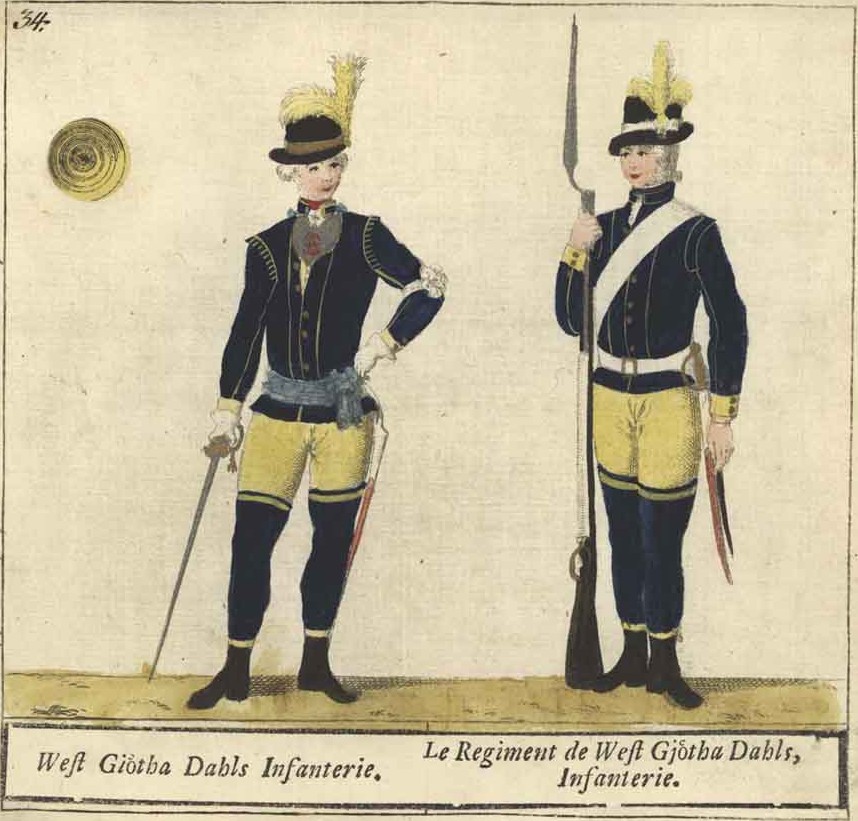
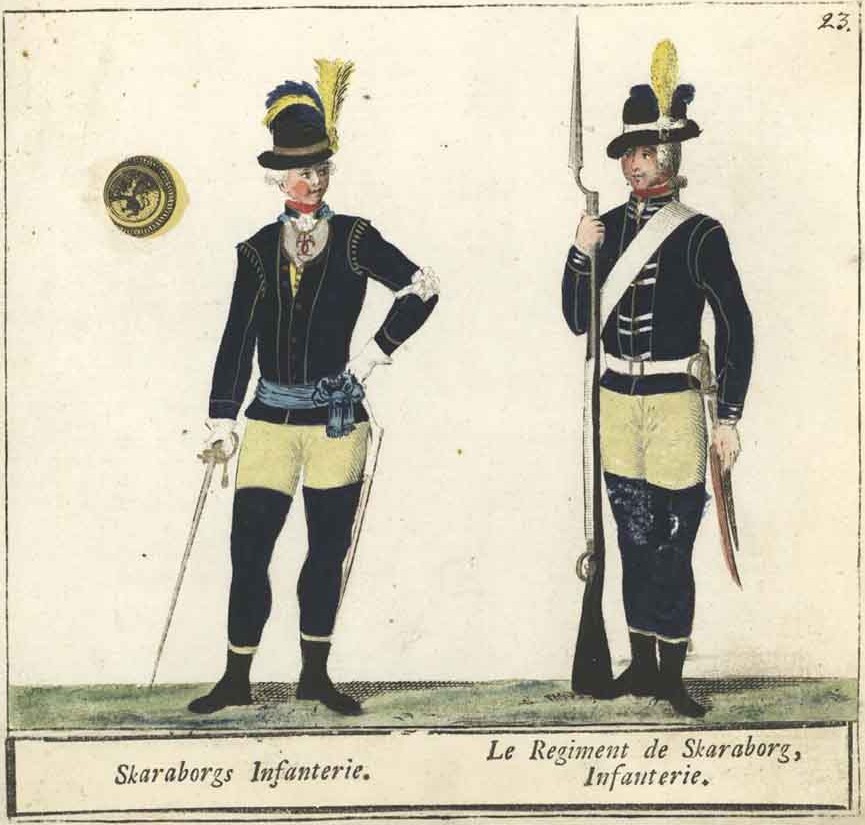
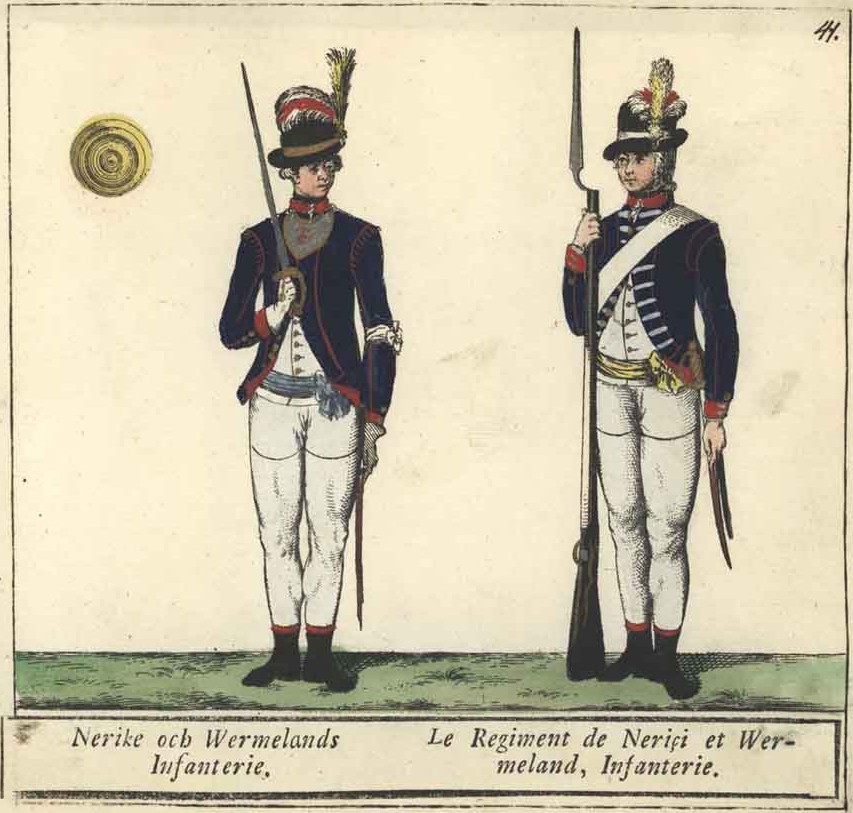
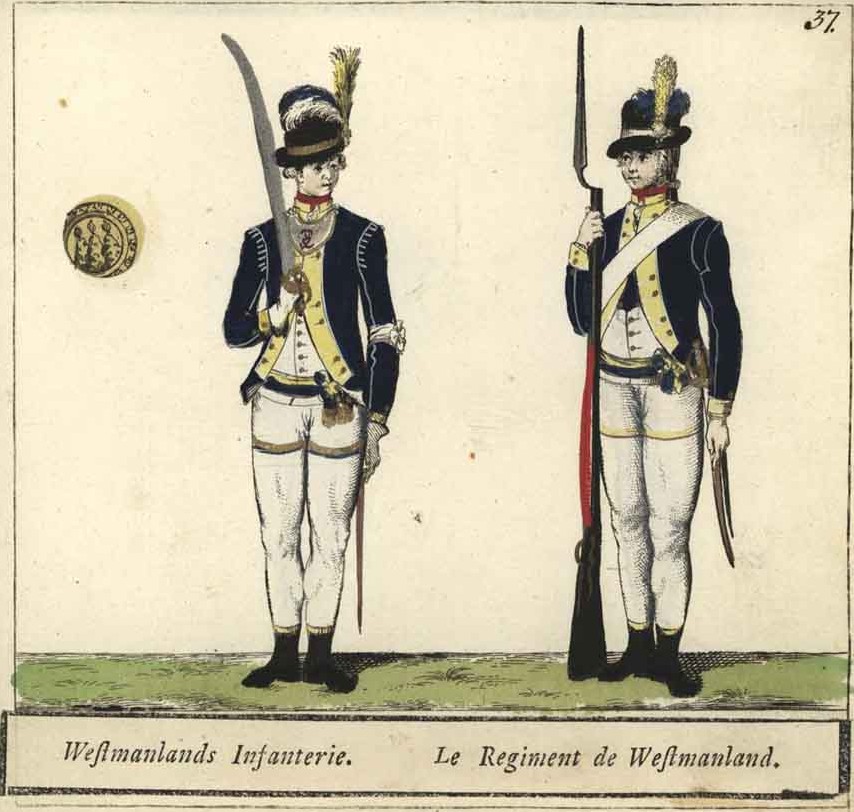
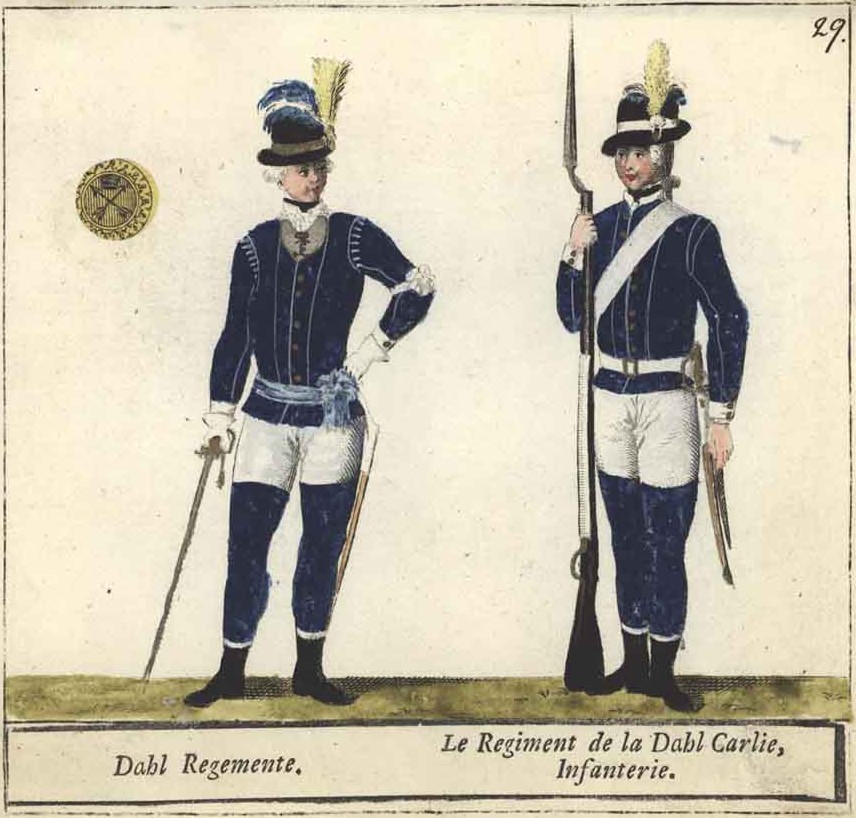
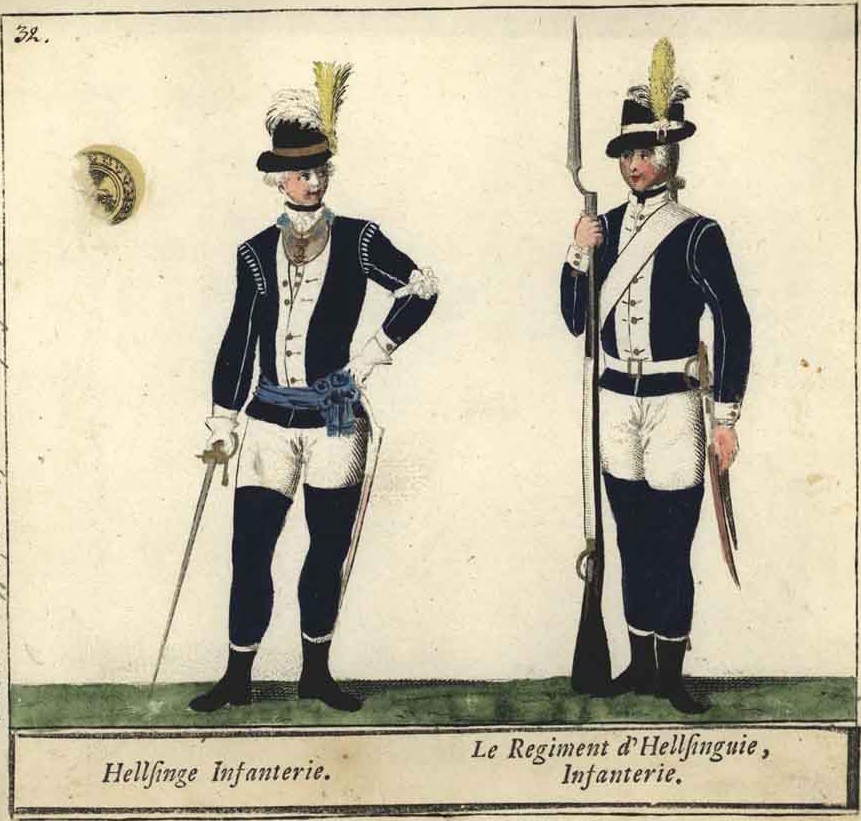
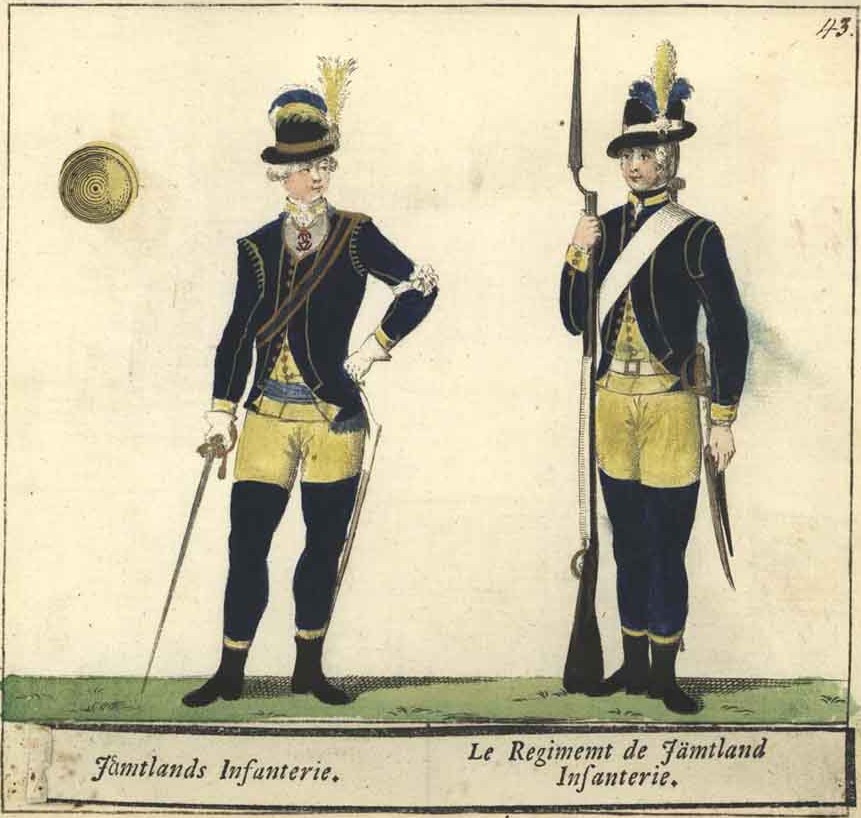
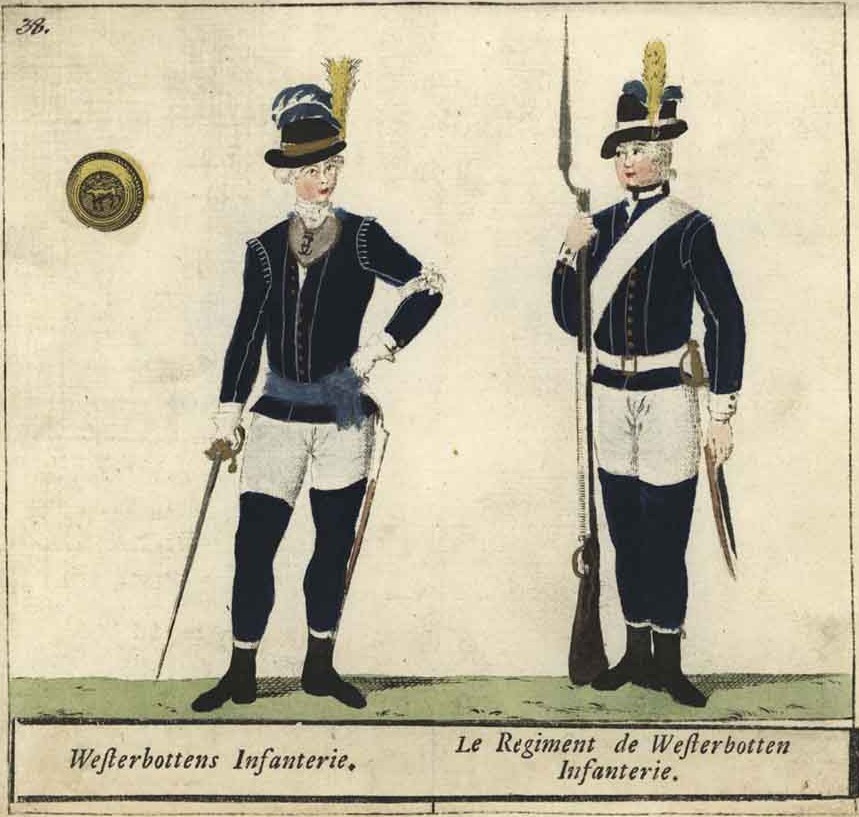
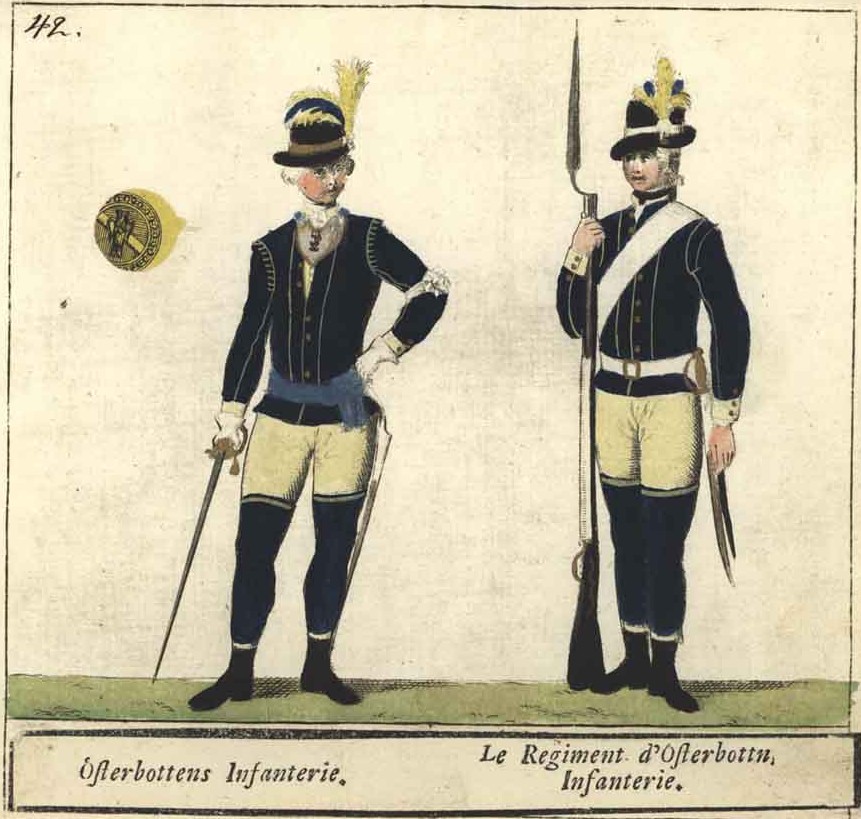
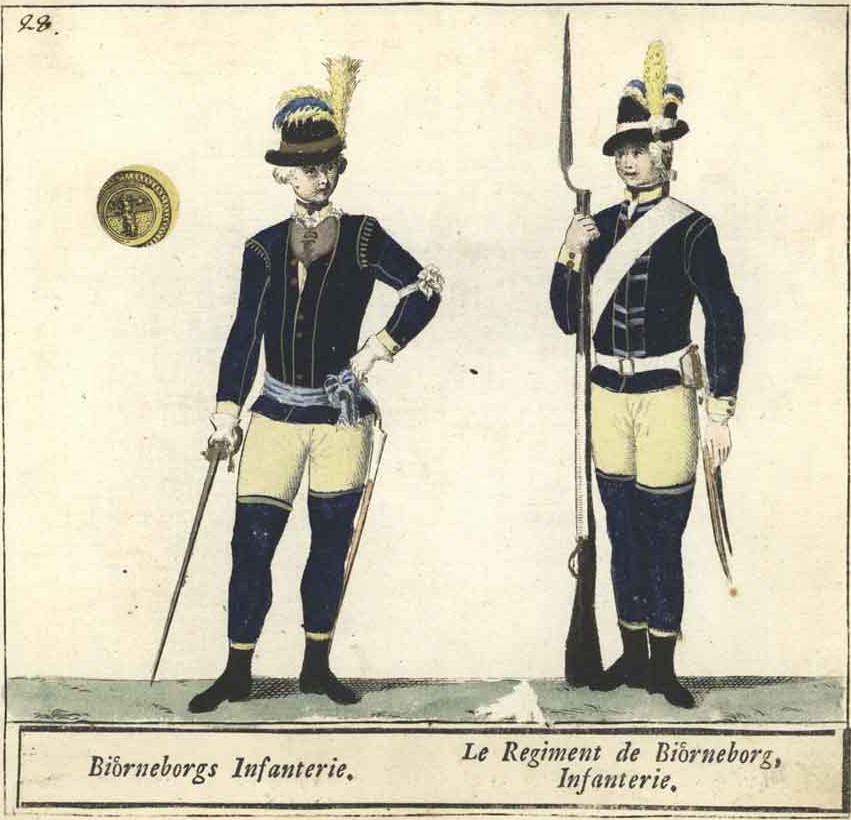
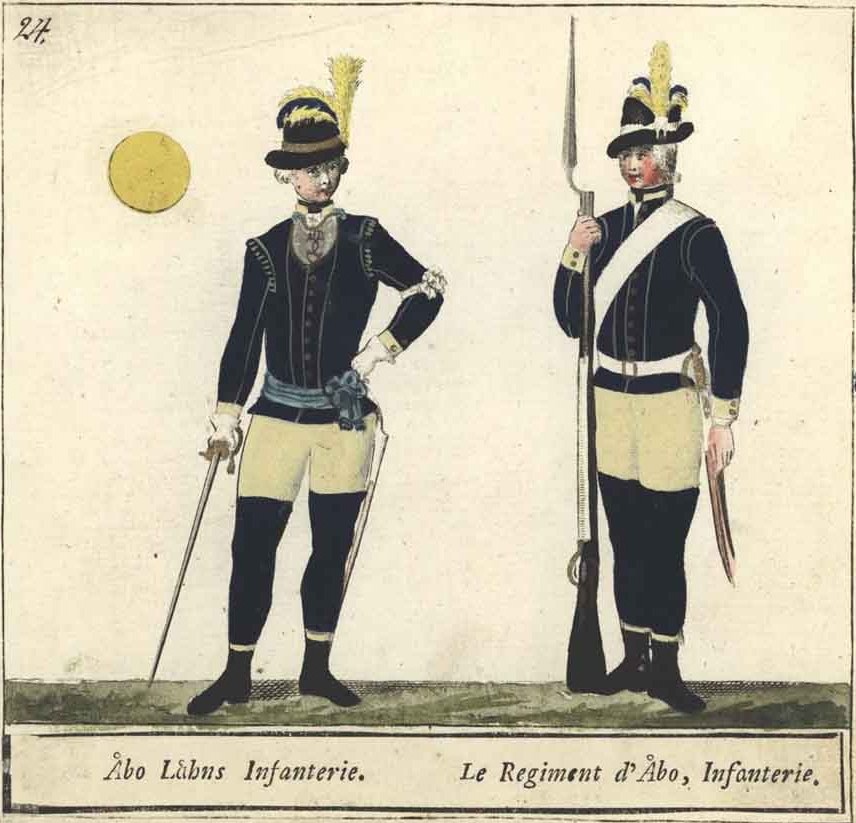
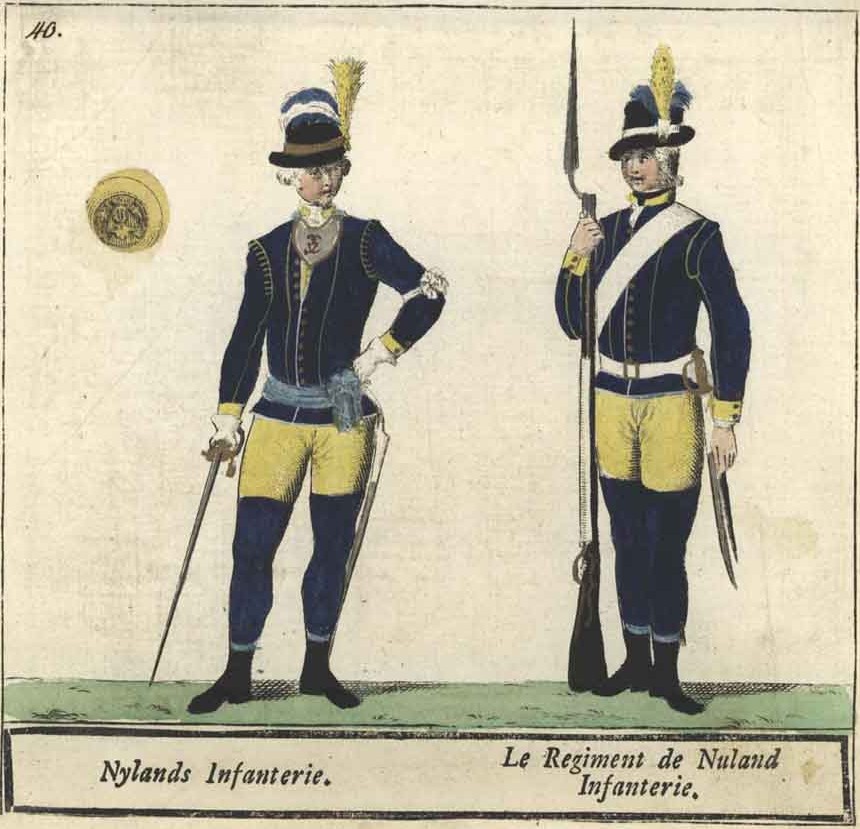
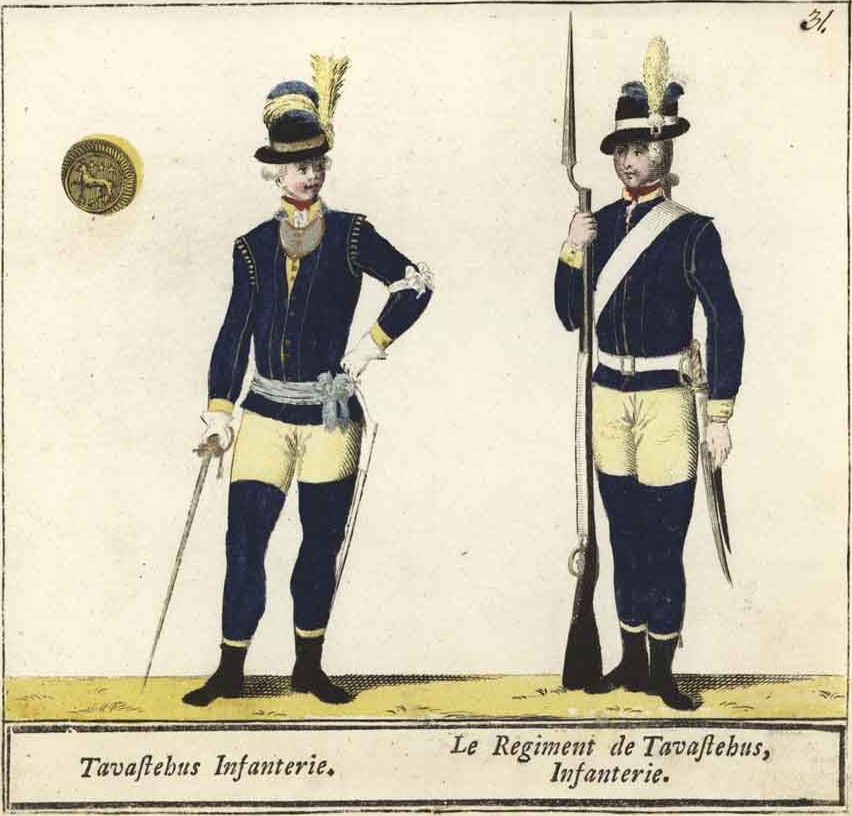
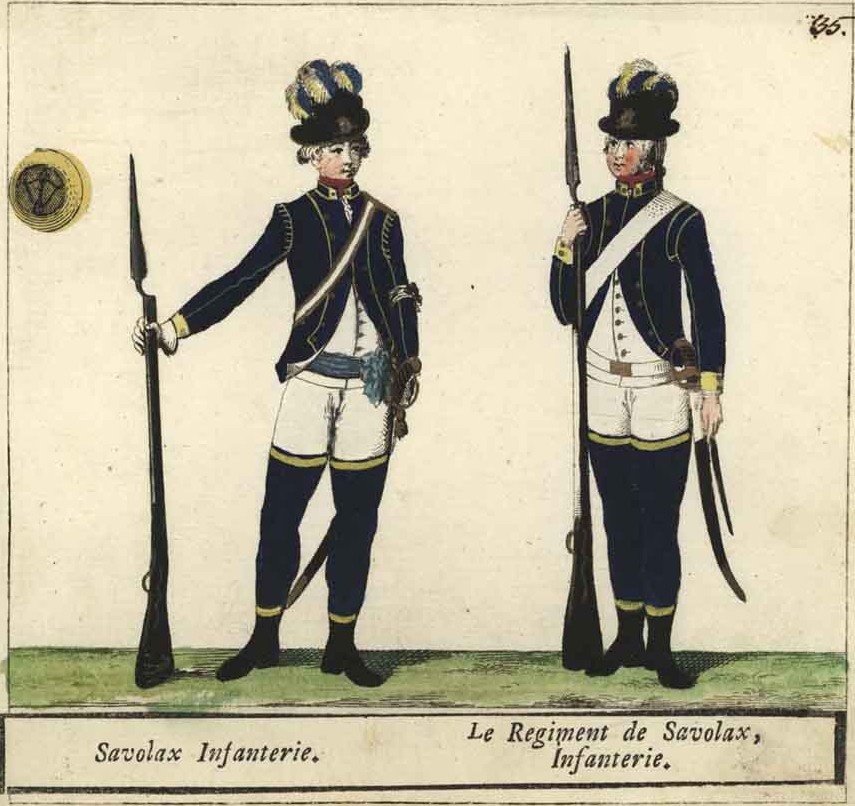
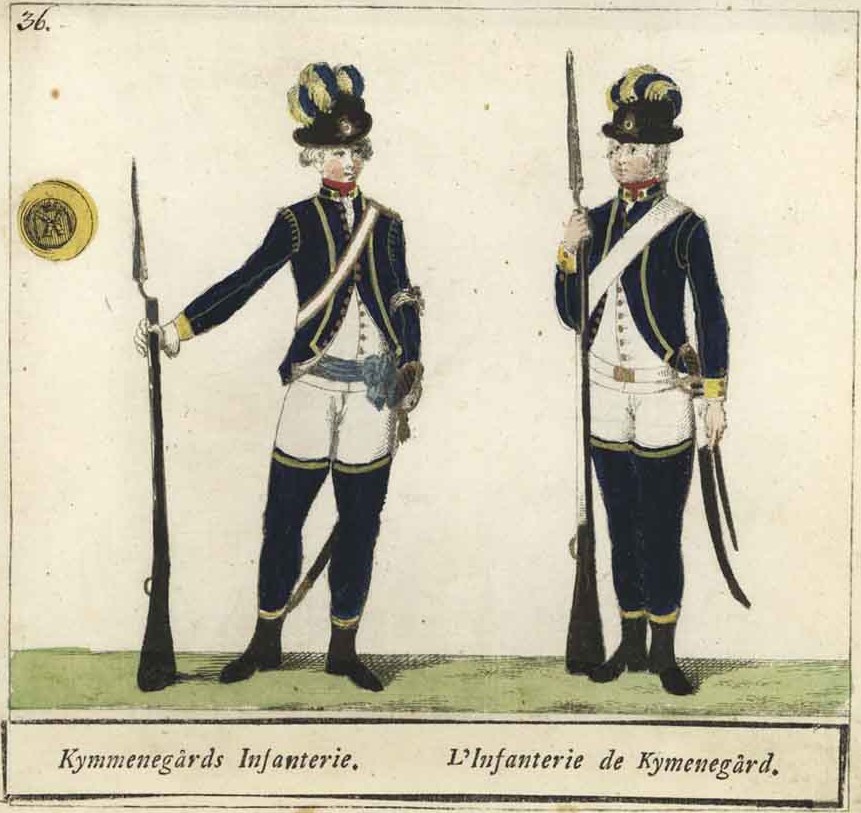
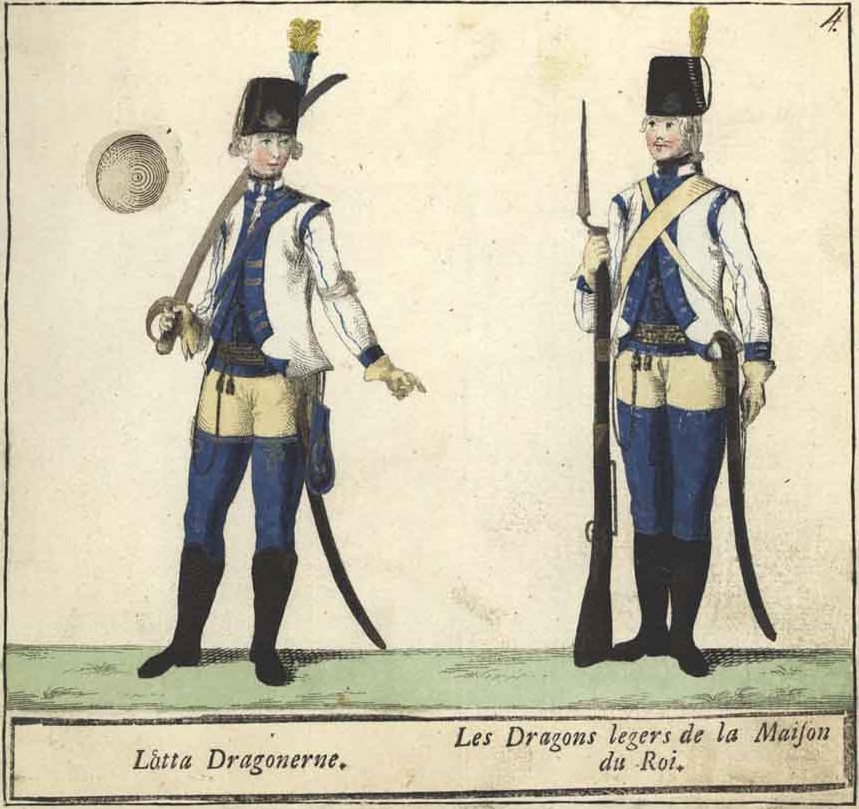
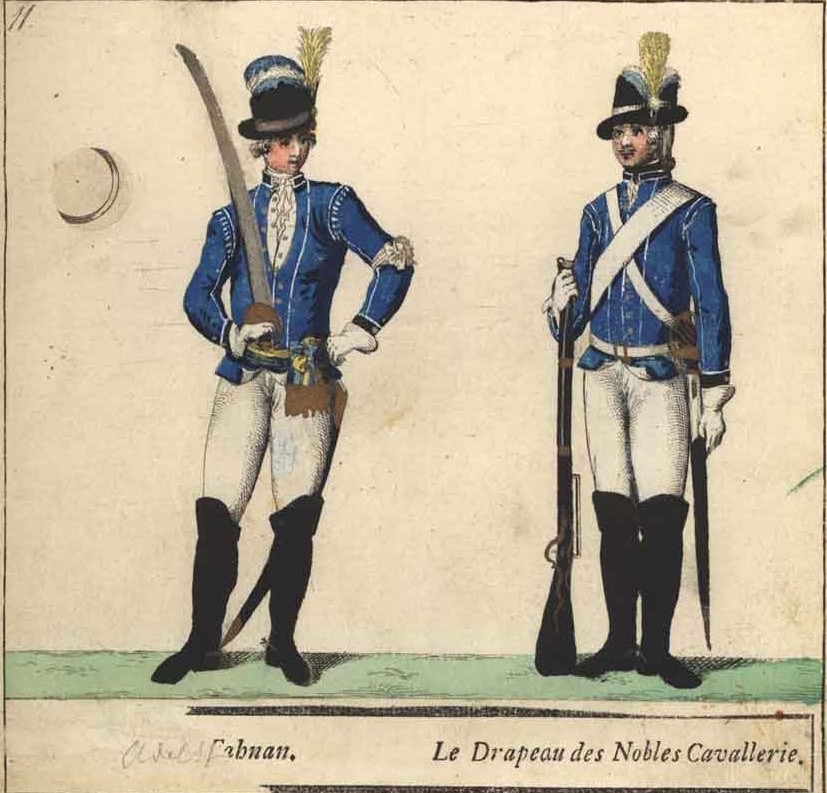
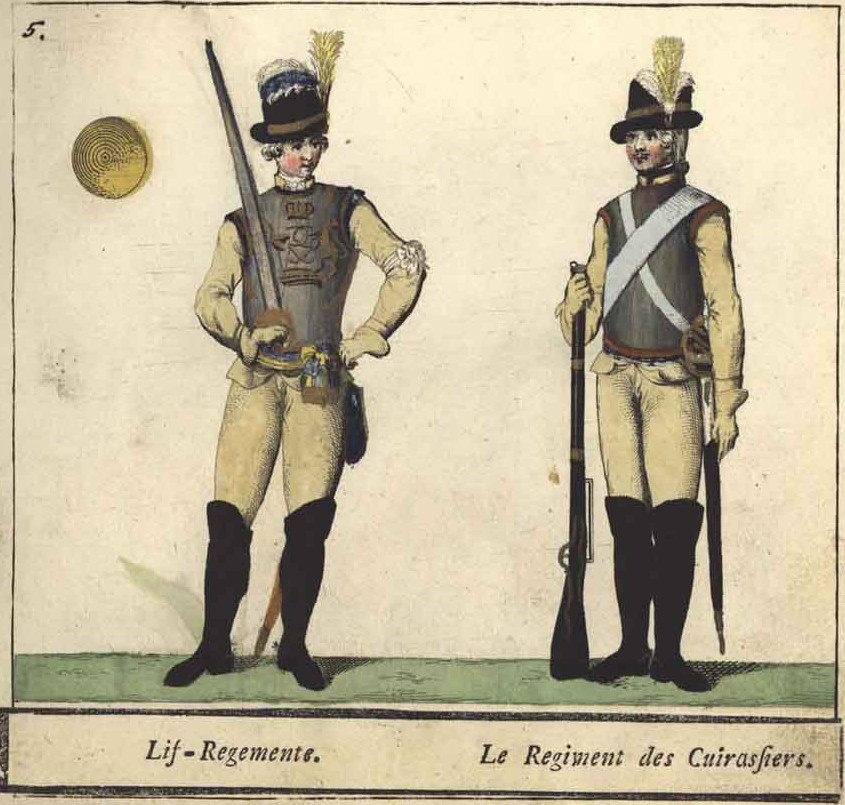
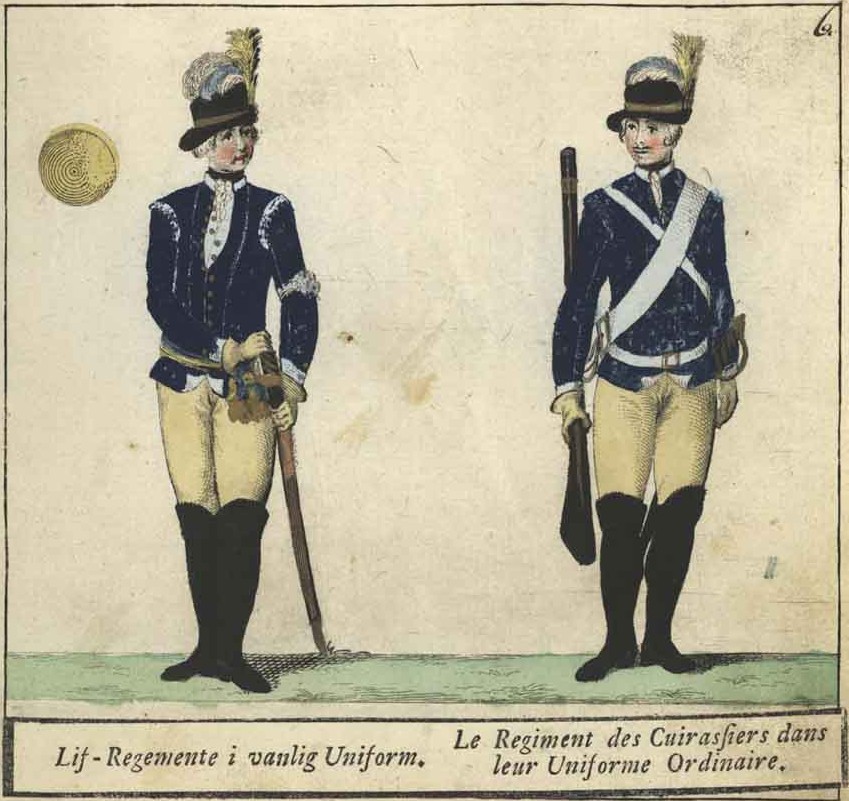
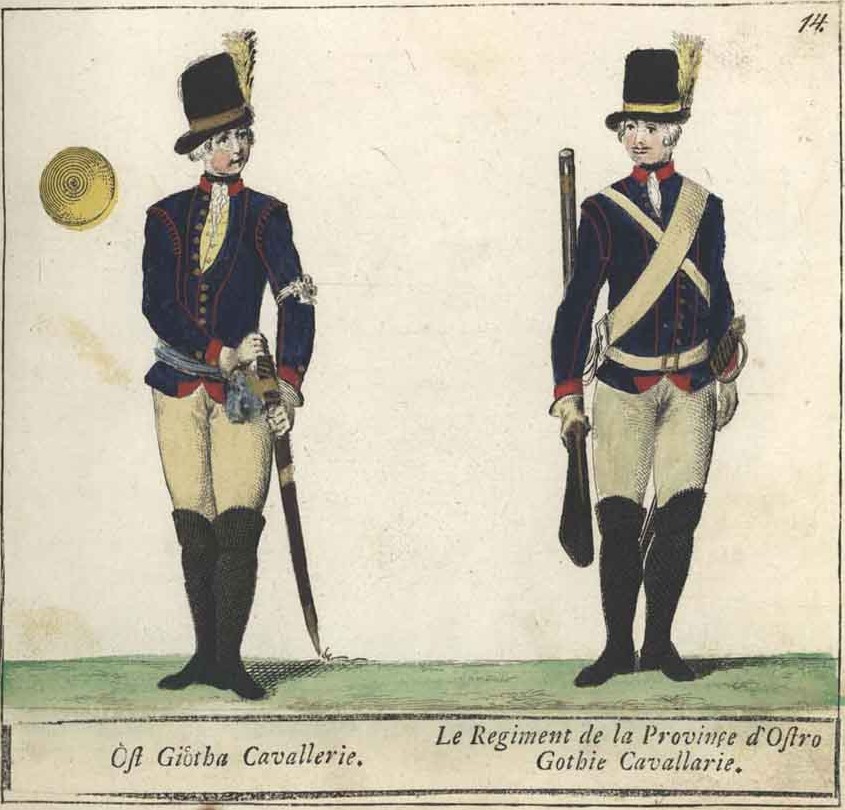
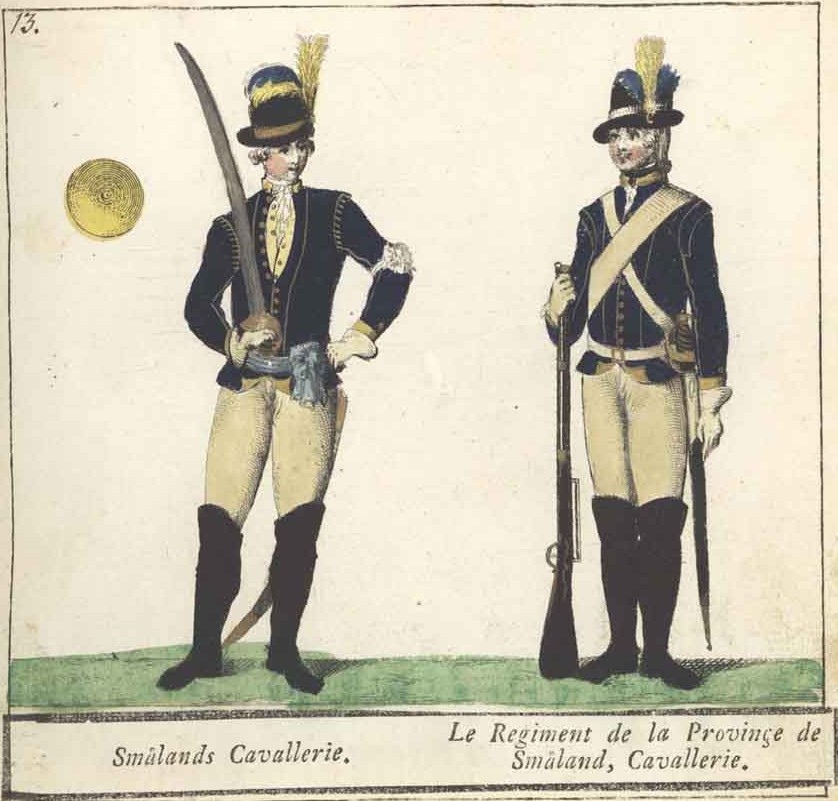
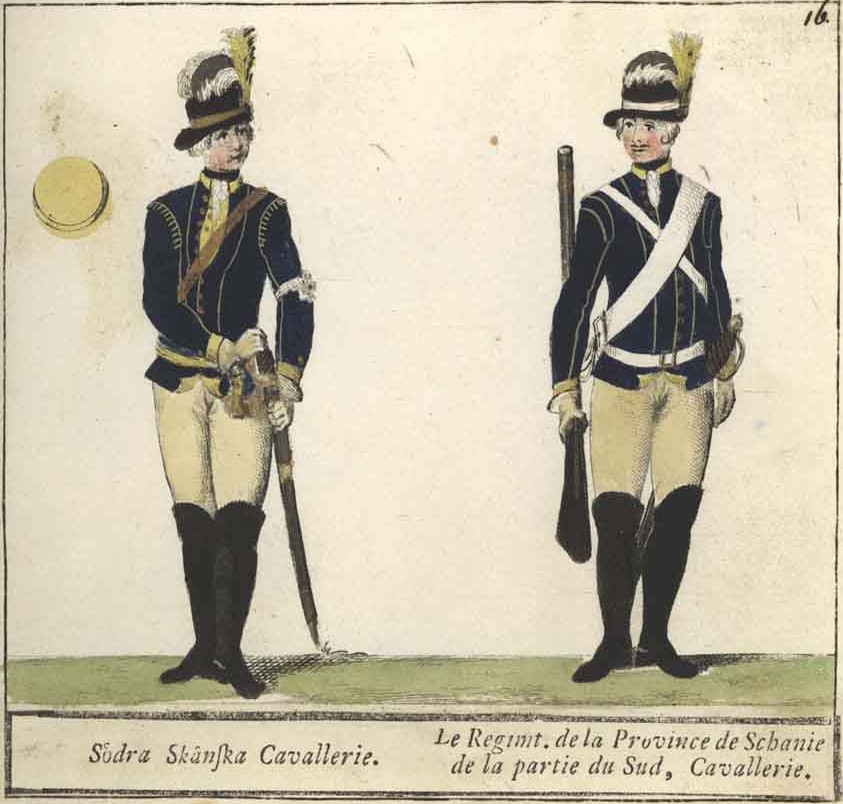
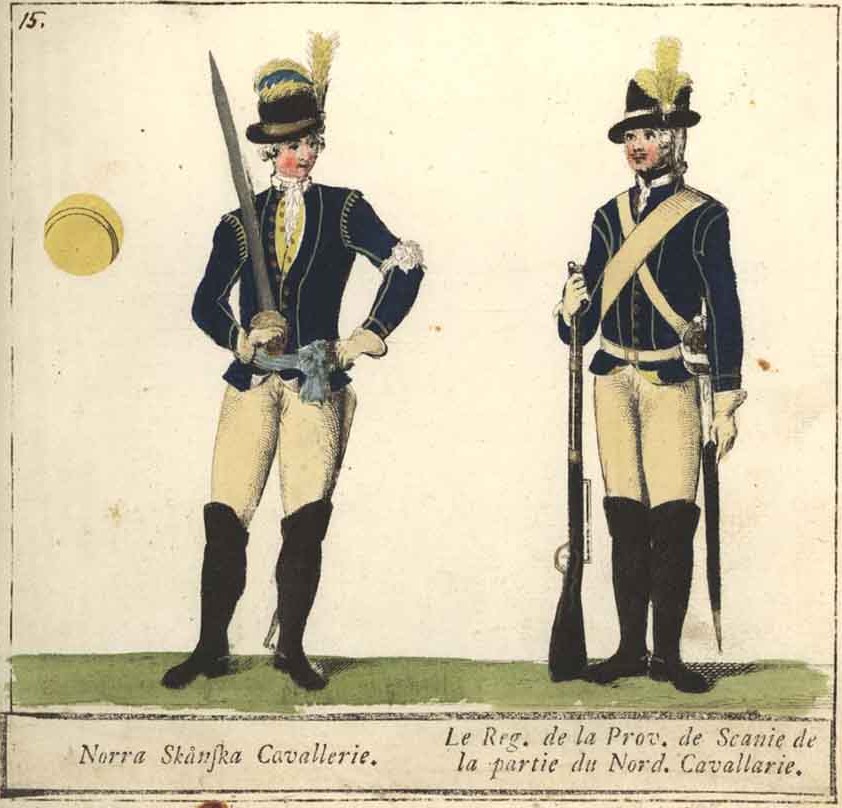
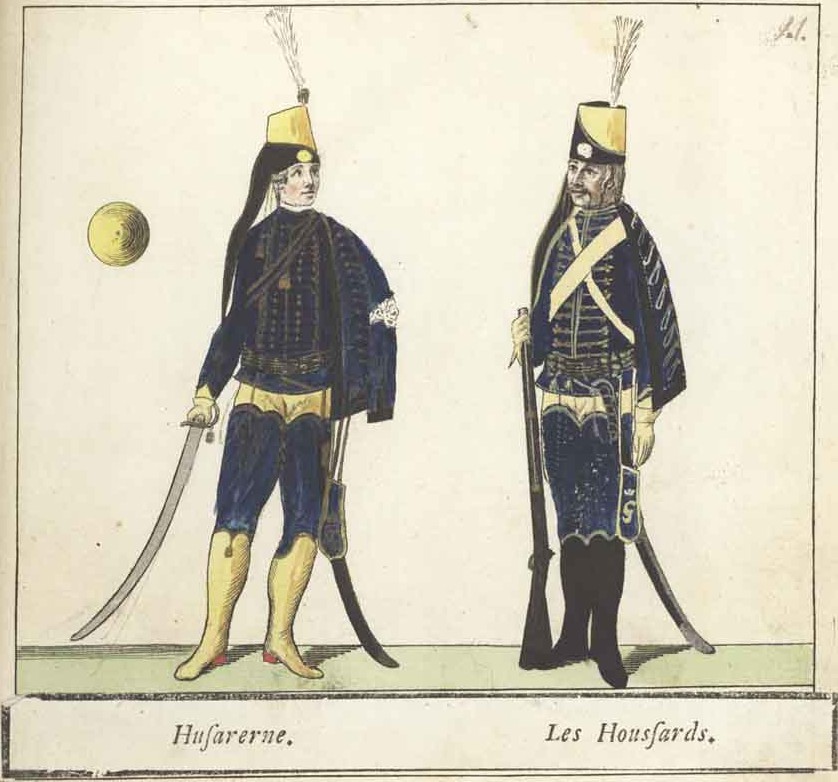
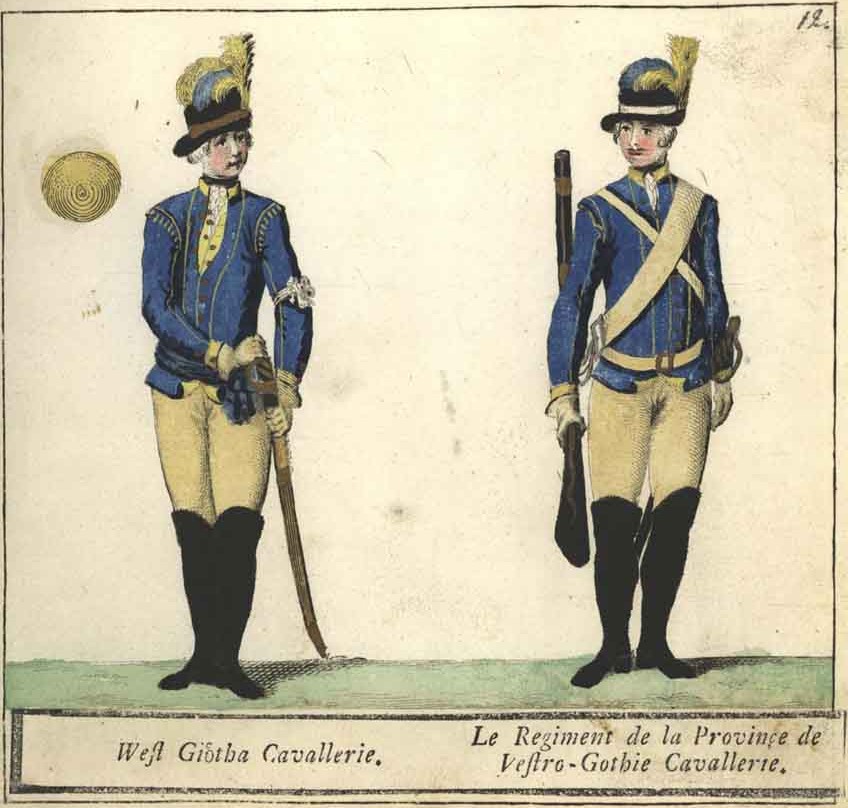
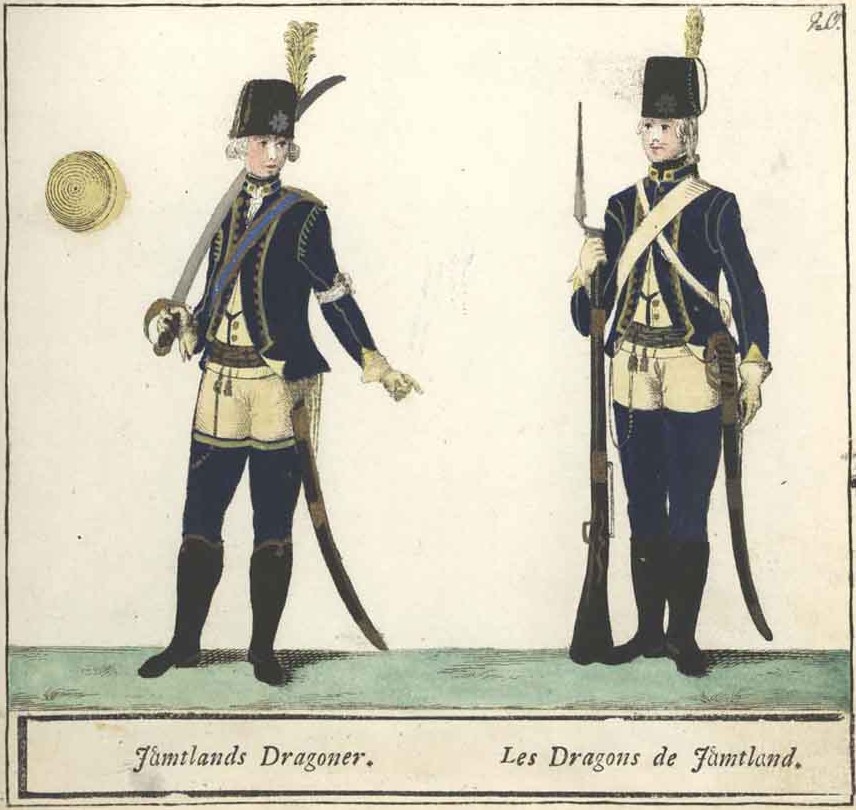
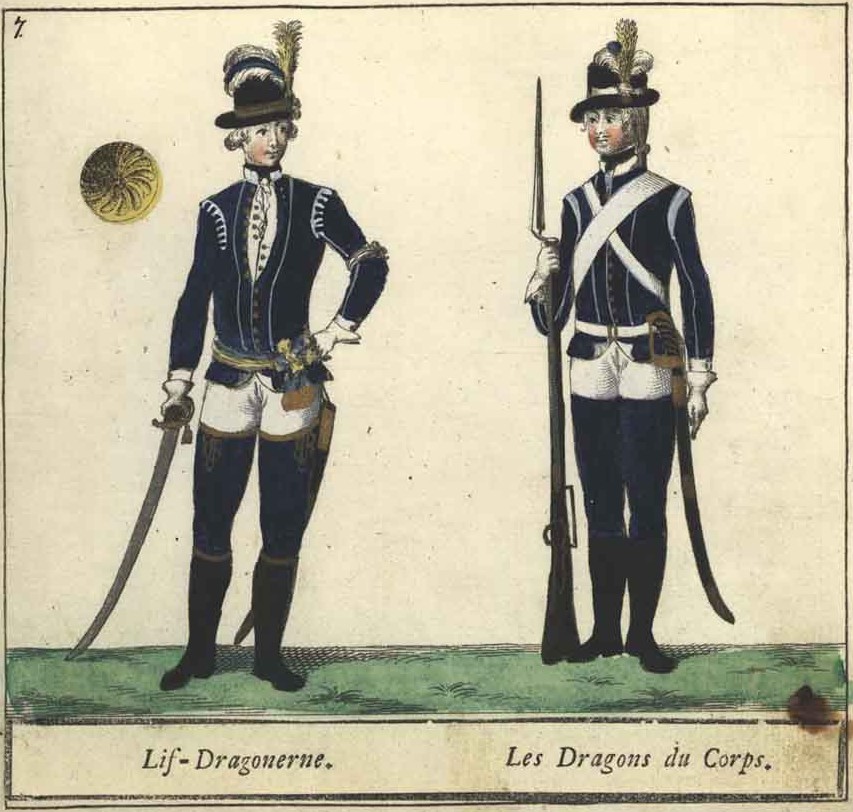
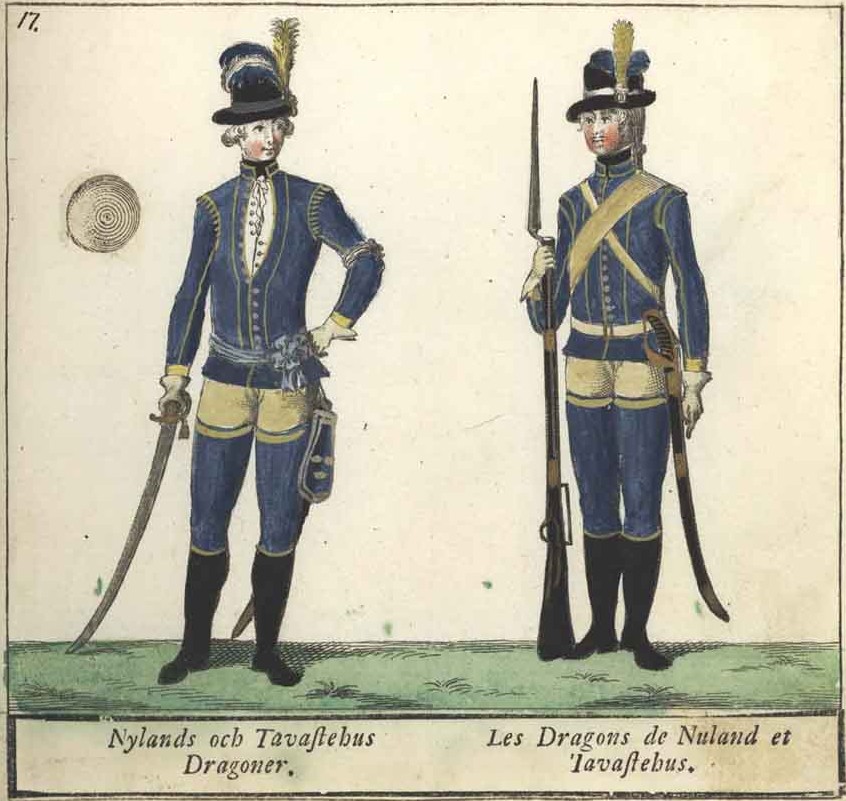
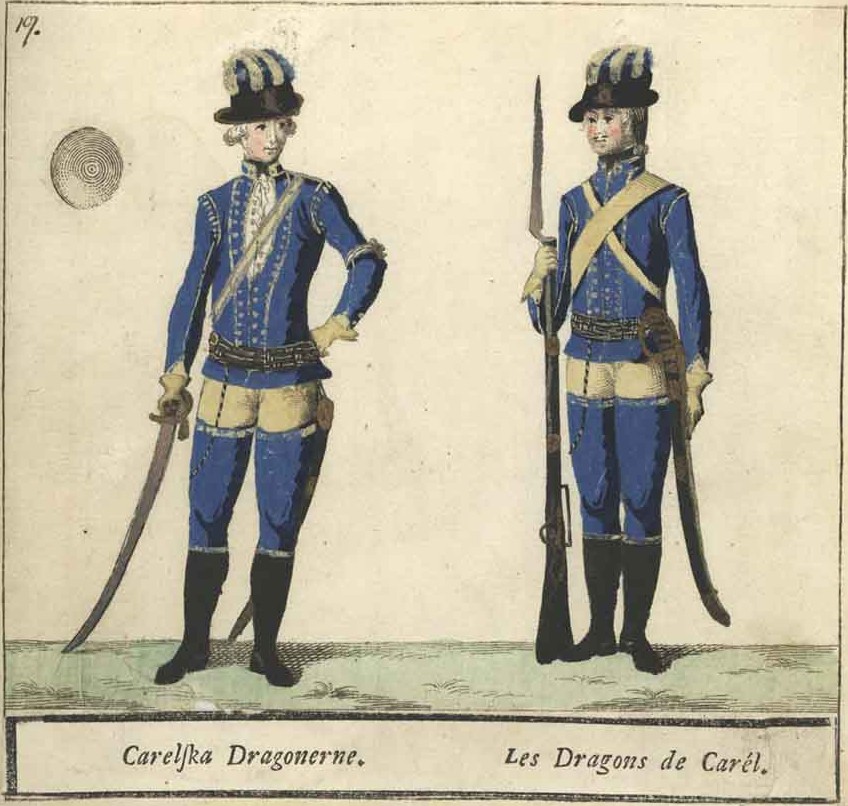
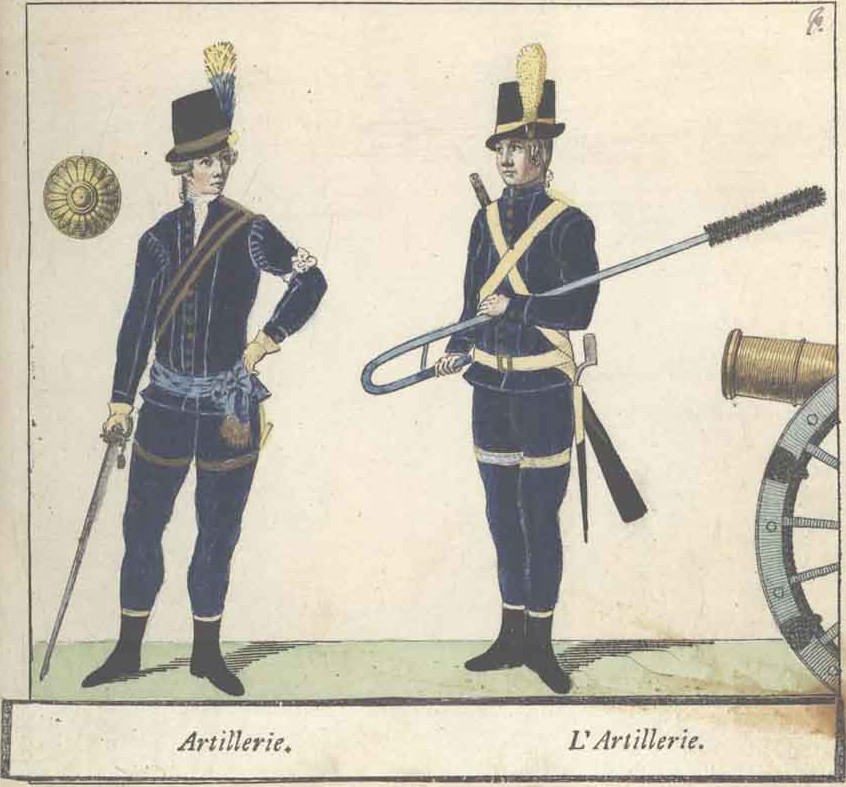
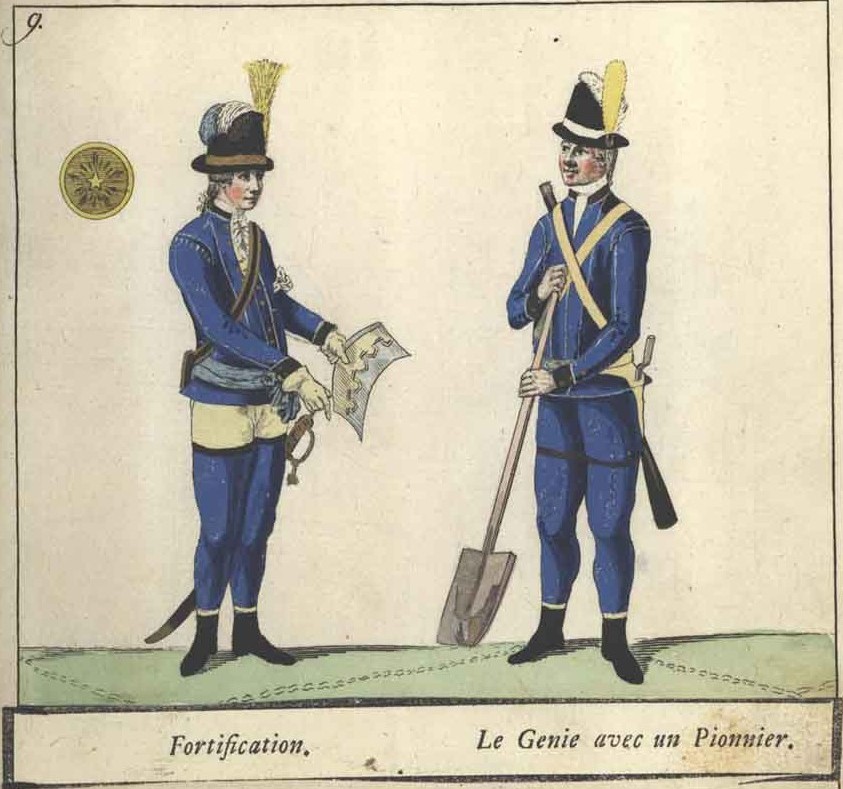
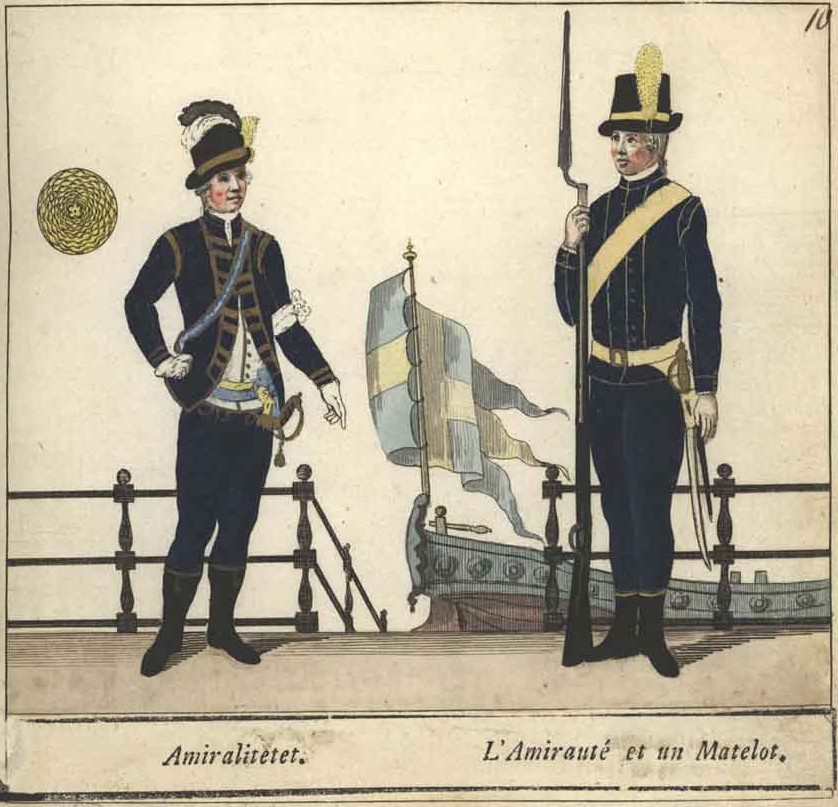
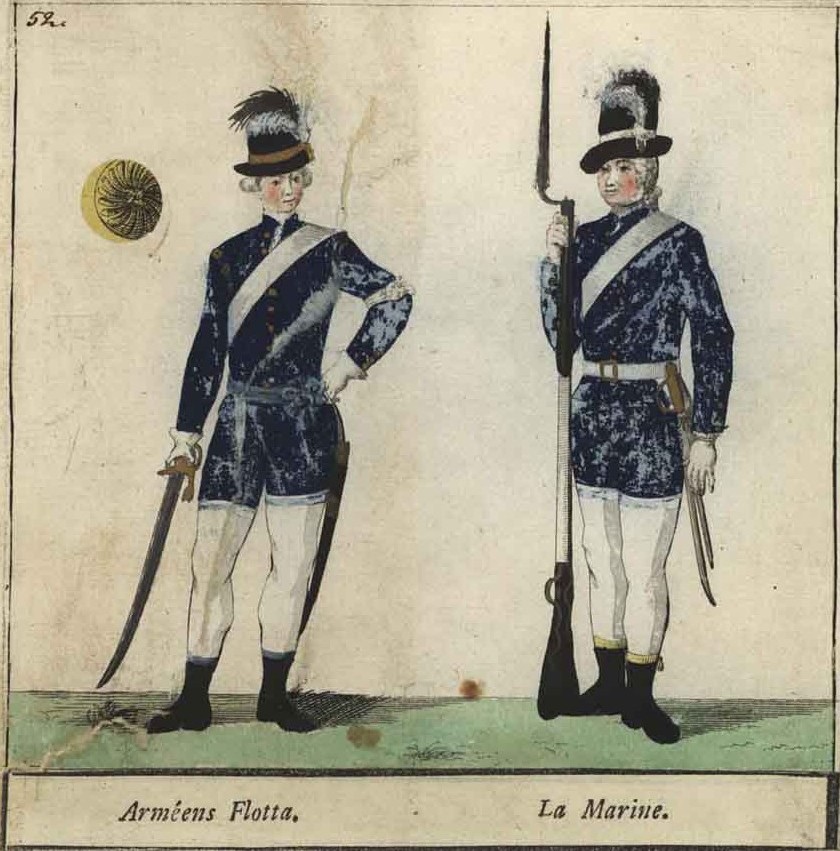
Title page of Carl Gustaf Roos’ book with illustrations of the m/1779
uniforms
The most dramatic change to the uniforms of the Swedish army occurred when
the m/1779 uniform was decreed on 6 October 1779. It was to correspond to
the so-called “Swedish costume” that Gustav III had designed the year
before. The aim was to counteract the import of French fashions by
establishing a national costume that was not affected by the constant
changes in international fashion. Moreover, since smaller amounts of fabric
were used to make the costume, it also meant savings for the crown.
The uniform was perceived by contemporaries as a masquerade costume and
consisted of a jacket that resembled the fashion that prevailed during the
first half of the 17th century. On the other hand, the new hat that would become a hallmark of
the Swedish army until 1815, was contemporary British fashion and
had been introduced by the Army's fleet as early as 1775. More unusual were
the charivades (loose trouser legs that were attached to the breeches) and
the boots that were inspired by Hungarian hussar costumes. The Savolax
Brigade, which was formed in 1775, had introduced these on their uniforms
and Gustav III liked them so much that the entire army received them in
1779. However, these were the most short-lived m/1779 garments as they
disappeared six months after the king's death when the m/1792 uniform was
introduced. The masquerade-like appearance of the jacket lasted longer and
was not replaced with a more fashionable design until 1802.
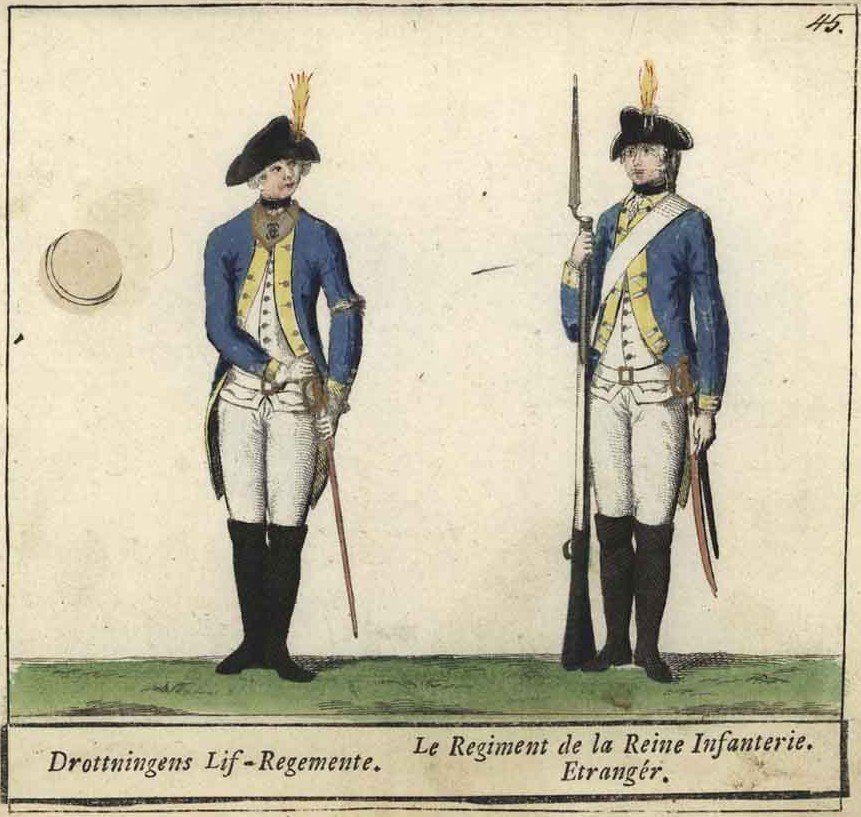
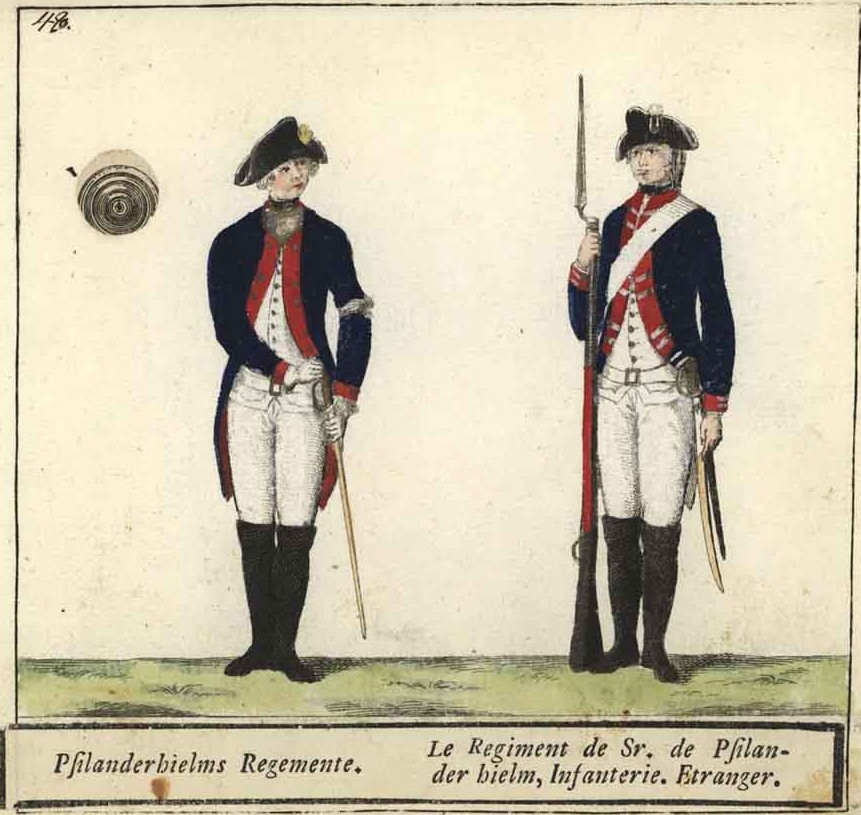
The regiments stationed in
Pomerania retained the cut of the m/1765 uniform because it was feared that
potential recruits in Germany would rather enlist in a foreign army to avoid
walking around in "masquerade costumes".
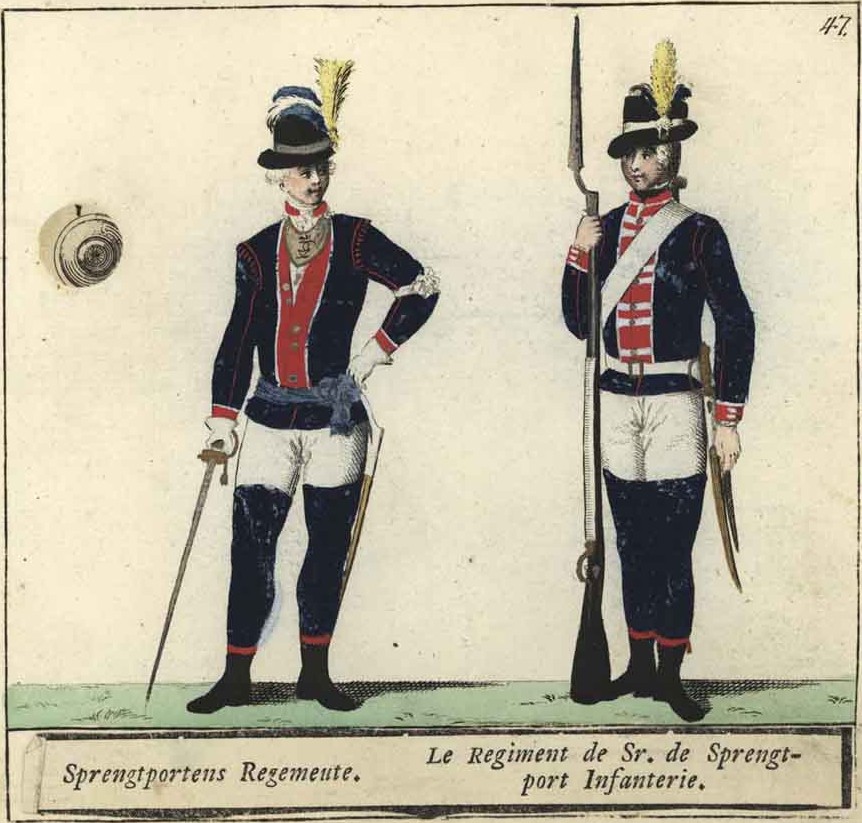
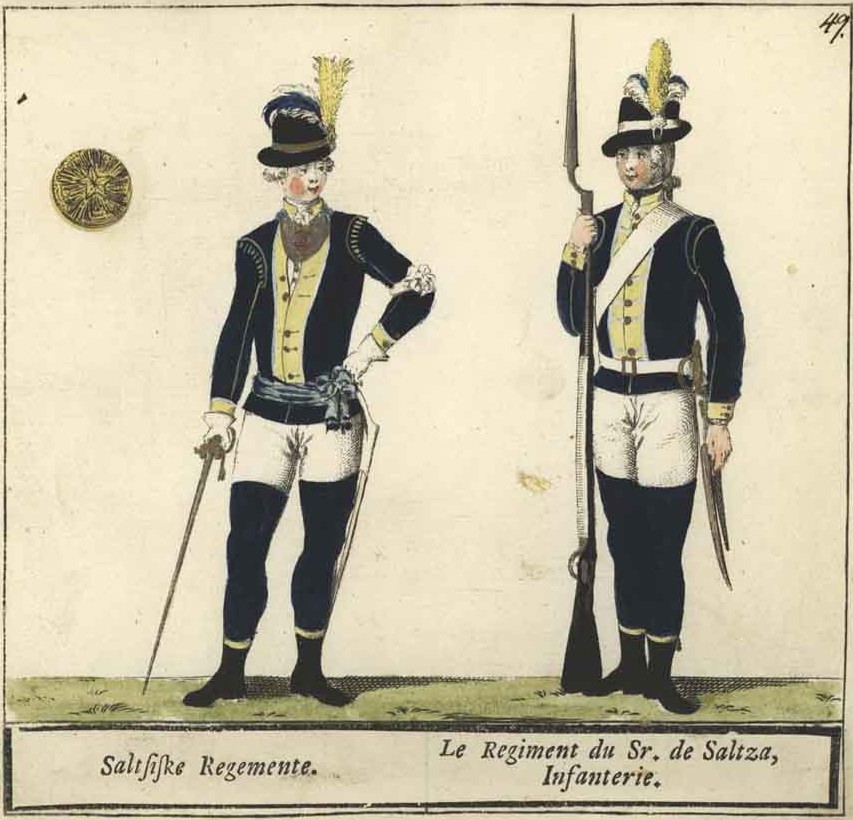
While the cut of the m/1779
uniforms was completely new, the regimental colours remained unchanged
compared to m/1765. It therefore seems that there was no immediate need to
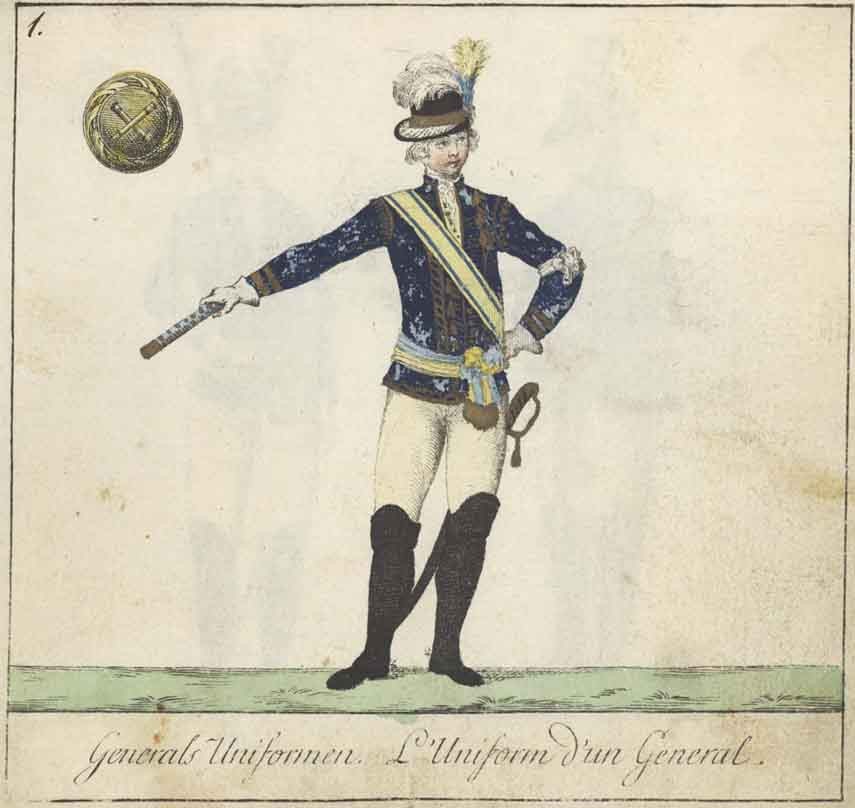
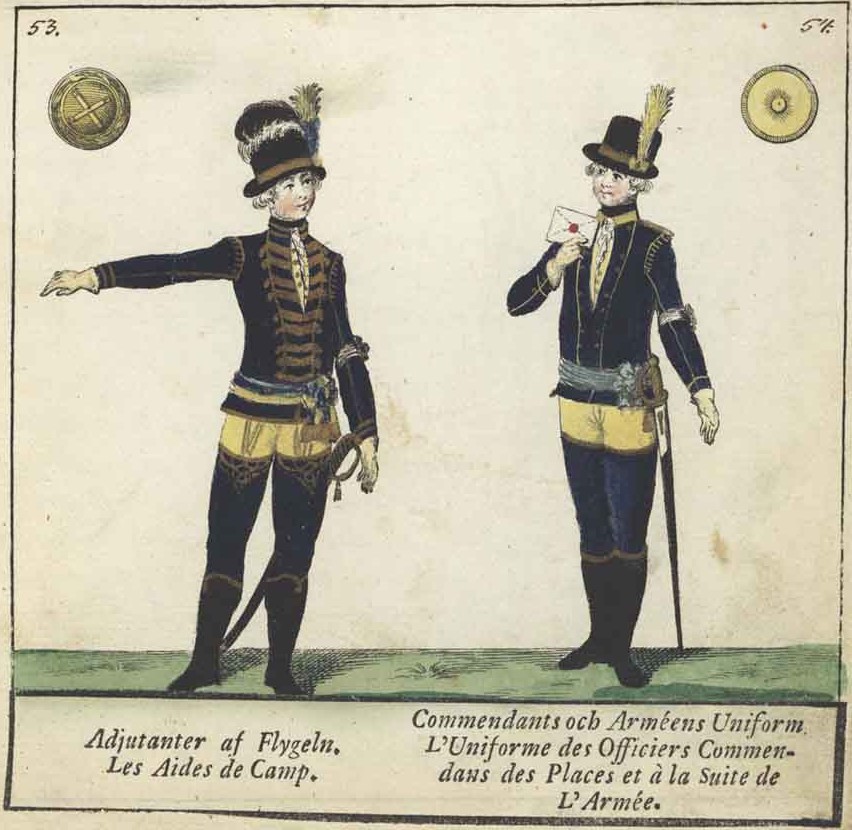
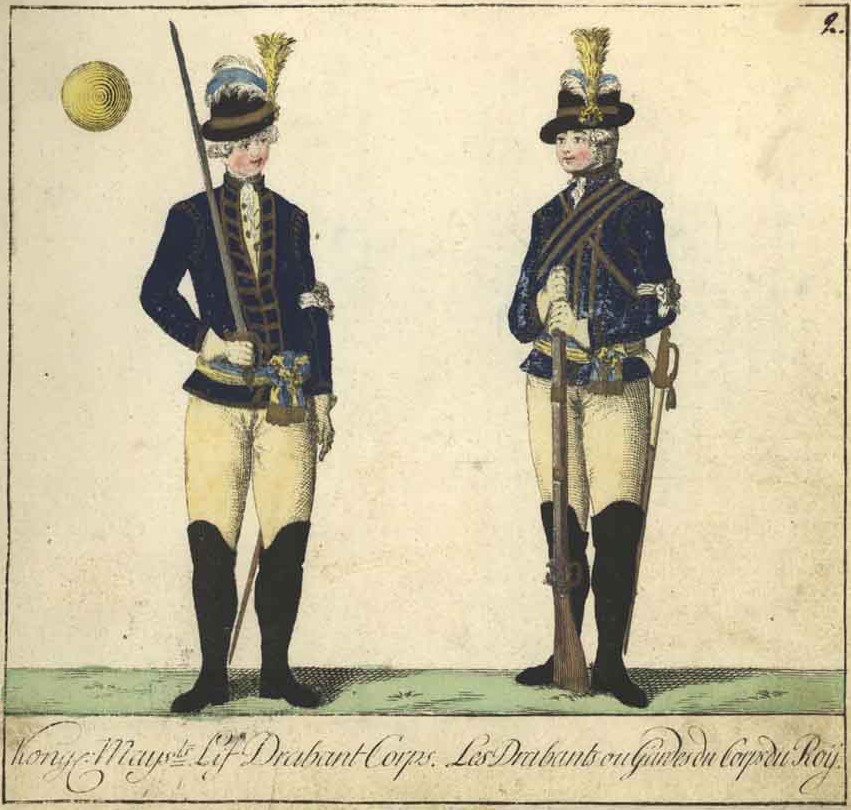
produce a new series of model drawings. In 1783, however, the m/1779
uniforms for officers and privates were depicted in a book by Carl Gustaf
Roos and that is where the illustrations on this page come from. By then,
the m/1779 uniform had also acquired its final appearance. The jacket was
initially longer, and the hat had a round hill and no plumes before a new
hat model was introduced in 1781.
Carl Gustaf Roos added the
following notes to his pictures:
The army is here depicted in the costume, which His Majesty himself has
graciously approved as the main uniform for each regiment, but for further
information, the regiments, in the summer and on exercise, use, instead of
these jackets, "collets" of the same colour as the underclothes, with cuffs,
collars, and lace of the same colour as the jackets. In addition to this
uniform, the army is equipped with cloaks.
Provincial regiments also wear grey jackets, called the "Släpmundering",
which the Royal Majesty and the Crown do not pay for, but instead the
recruitment districts ("rotar"), and are distinguished partly by blue
lining, cuffs and lapels, partly by yellow, according to the county's and
the colonel's own choice, with the same buttons, as in the regular uniform.
This släpmundering serves as the uniform for those regiments that
have "vargering" or doubling (= reserves for wartime service).
Uniforms of Generals, Livdrabants,: Admiralty, Army Fleet, Commandants and
Wing Adjutants, in relation to higher or lower ranks among the officers, are
distinguished, more or less rich in gold, with lace, tassels, fringes on the
shoulder, epaulettes, and have here been represented with one subaltern of
each Corps.
The non-commissioned officers are dressed in the same way as the soldiers,
but without lace on their lapels, finer cloth, sashes, lace and feathers on
their hats instead of the soldiers' wool or camel yarn. The non-commissioned
officers of the Guard and the Light Dragoons have feathers on their lapels
without tassels.
The musicians of the regiments are dressed in more or less motley lace
according to the colonel's livery or disposition; the musicians of the
Guards, the Light Dragoons and the Life Regiment have His Majesty's Royal
Livery.
The button, which accompanies each regiment, becomes a major difference
between those who may appear similar to each other in terms of uniforms.
|
|
References
The 1779 uniform regulation is depicted in Carl Gustaf
Roos' book from 1783. The images on this page come from the Swedish War
Archives (Krigsarkivet), which has a copy of the book. The Royal Library in
Stockholm (Kungliga biblioteket) has two copies of the book, but the one
that can be ordered for the special reading room is in a very poor
condition. The images have been cut out and divided in two and then pasted
back into a bound book. Apart from a few uniform buttons, all details are in
worse condition than in the War Archives' images. The Army Museum also has a
copy, but I have not looked at it.
The images of the shabraques come from the War
Archives (SE/KrA/0429/008/010 and SE/KrA/0429/008/011)
Bellander, Erik. Dräkt och uniform. Stockholm (1973)
Markelius, Martin. Gustav III:s armé. Stockholm (2020)
Roos, Carl Gustaf. Samling af Swenska arméens uniformer (1783) |