|


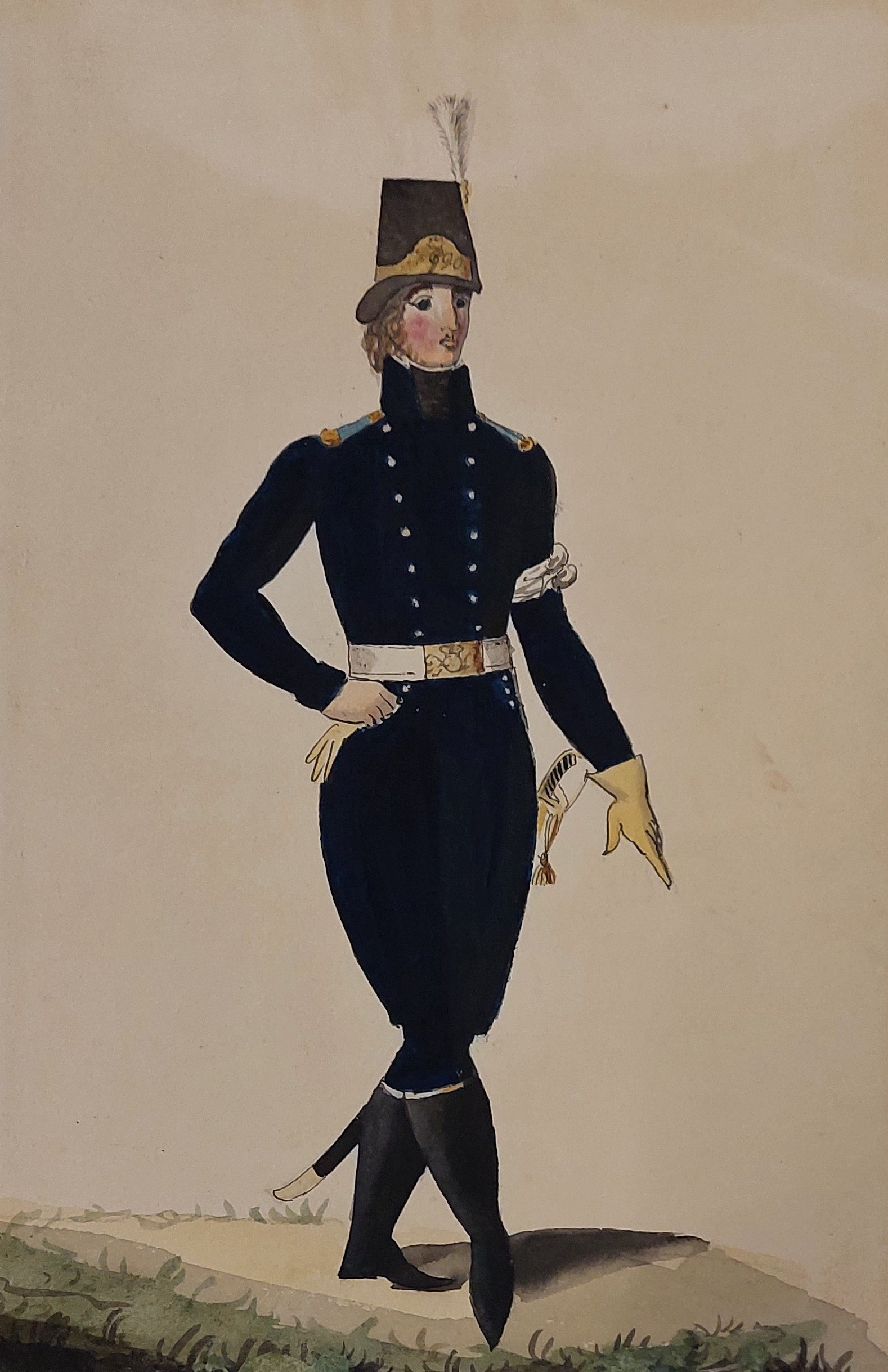
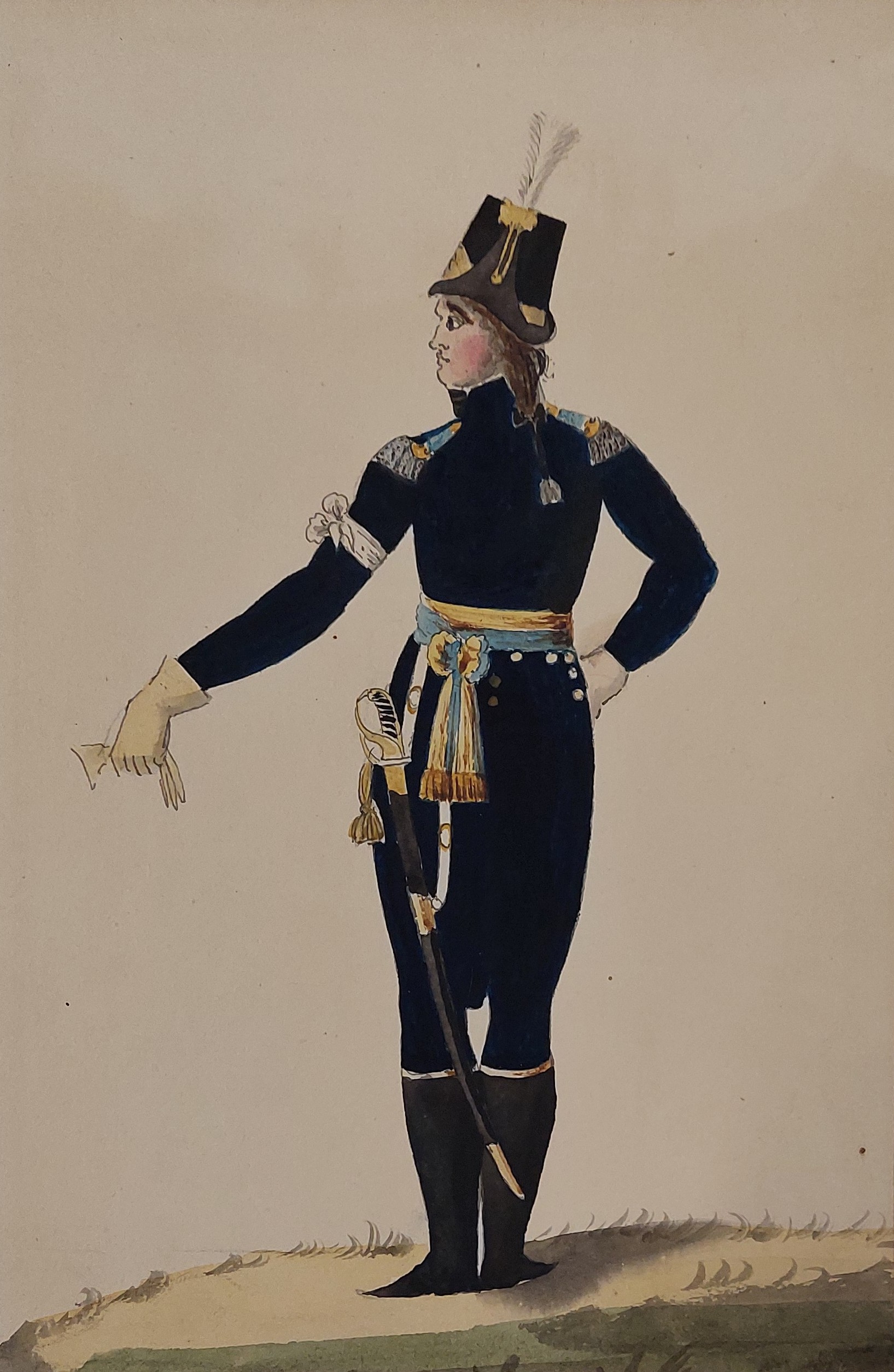
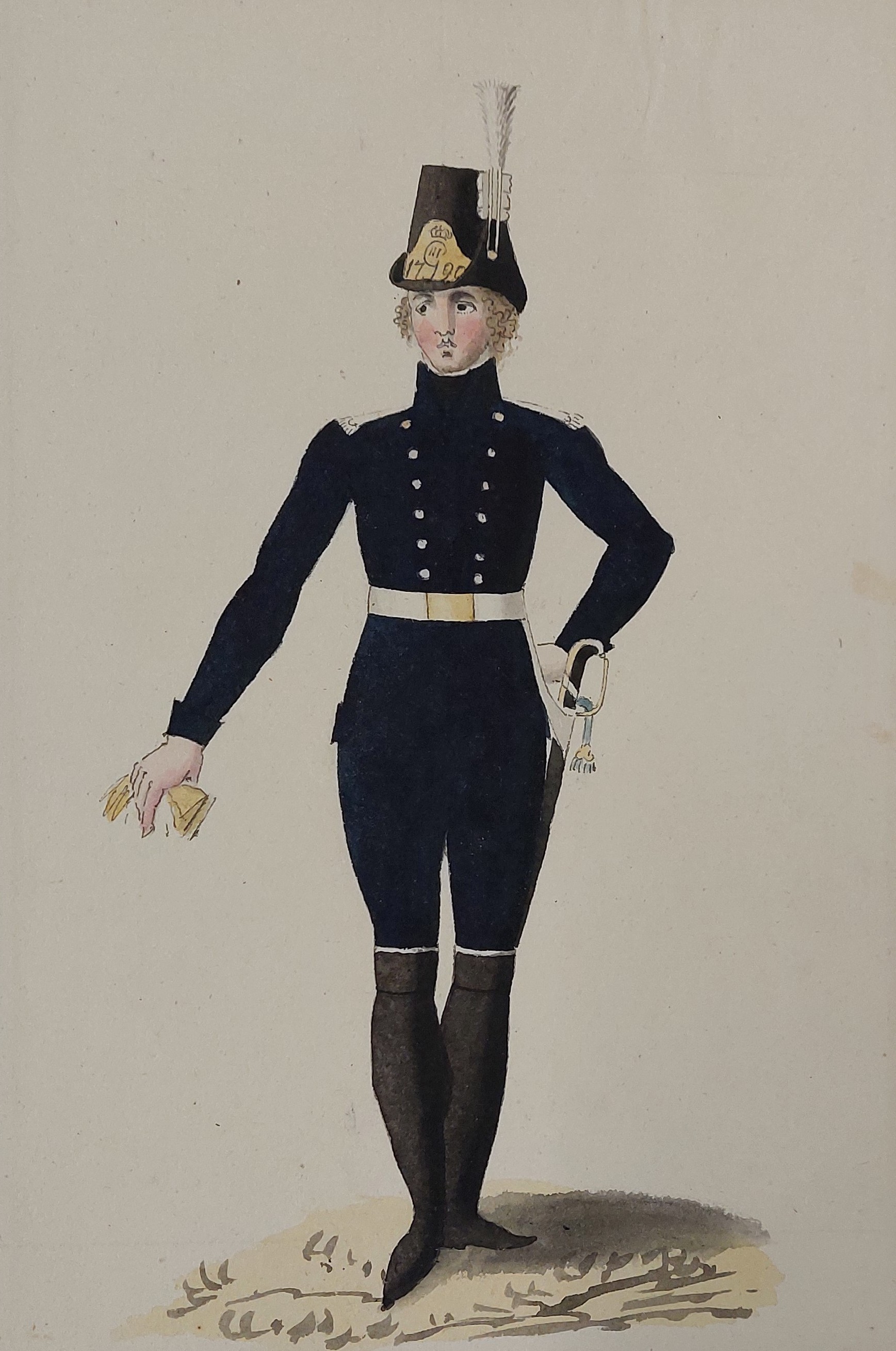
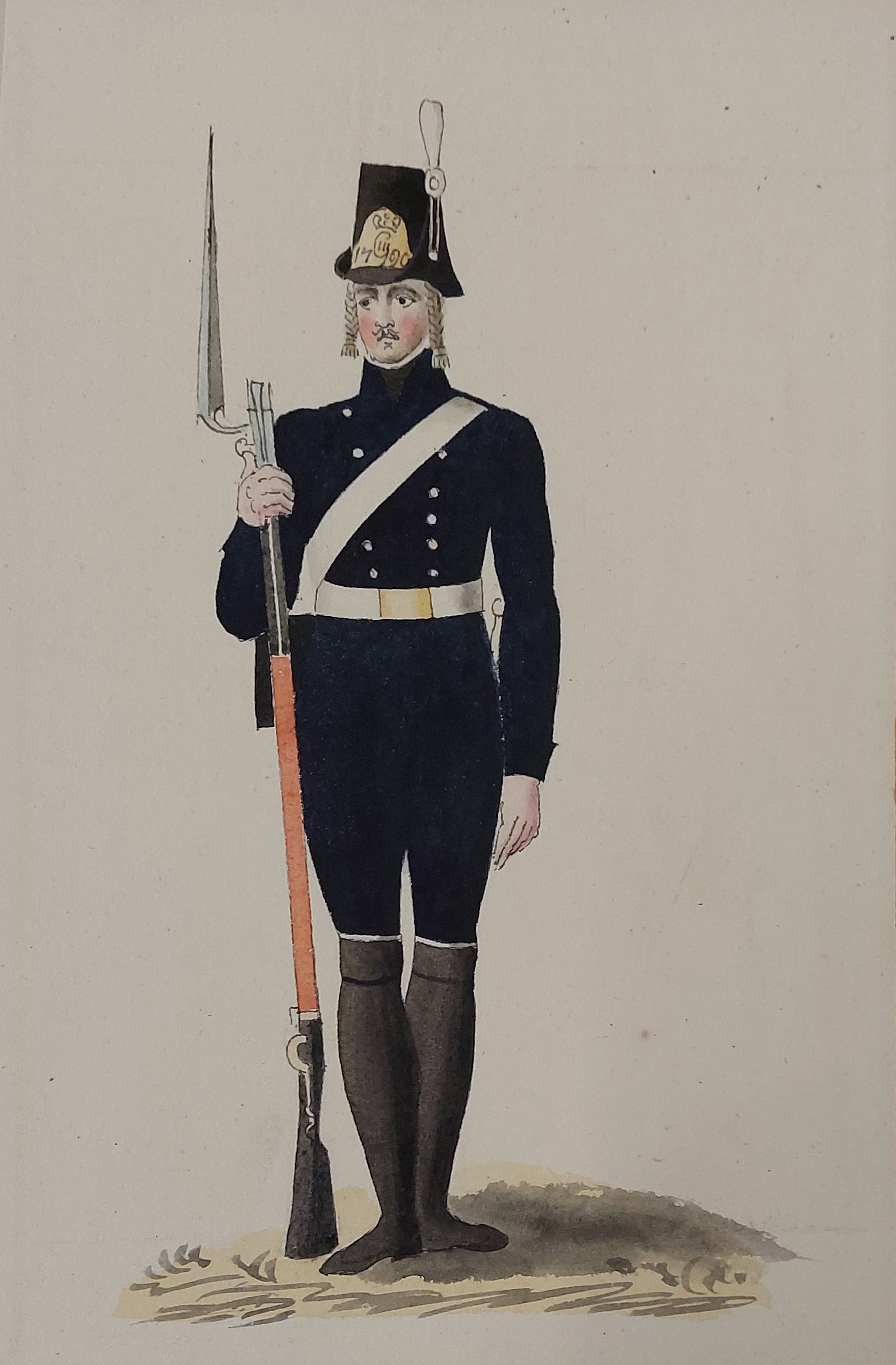
Uniforms of Svea livgarde. From the left: officer in parade uniform,
officer in regular uniform, NCO and private.
Except for the hat, the last remnants of
Gustav III's national costume were abolished when a new uniform regulation
came into force on 13 January 1802. The shoulder flaps disappeared from the
jacket, and the lapels were made wider and extended all the way up to the
shoulder seam. Officers and guard regiments were to distinguish themselves
by wearing a tailcoat instead of the usual jacket. The guard regiments also
exchanged their "Swedish hats" for so-called tricorne hats (actually
bicornes like a "Napoleon hat"). Changes also took place in the uniform
colours of individual regiments. Overall, the reform meant that Swedish
uniforms now followed international fashion to a much greater extent.
Although the m/1802 regulation
was only in force until 1806, there are many contemporary illustrations of
it. During the winter of 1802-03, Carl Gustaf Gillberg made a first set of
plates with model drawings. However, Gustav IV Adolf gifted them to the
uniform-interested British prince William Frederic of Gloucester who was in
Sweden from 10 November 1802 to 2 March 1803. A second set of plates
therefore needed to be made and Gillberg began this work as early as
February 1803, but he did not finish it until 1805. At the same time, the
Swedish officer Wilhelm von Runge created a third (incomplete) set of
illustrations of the Swedish army's uniforms on his own initiative.
The first set of Gillberg's
uniform drawings are kept in Great Britain and I only have access to the
Svea livgarde plates (see image above). However, the second set and Runge's
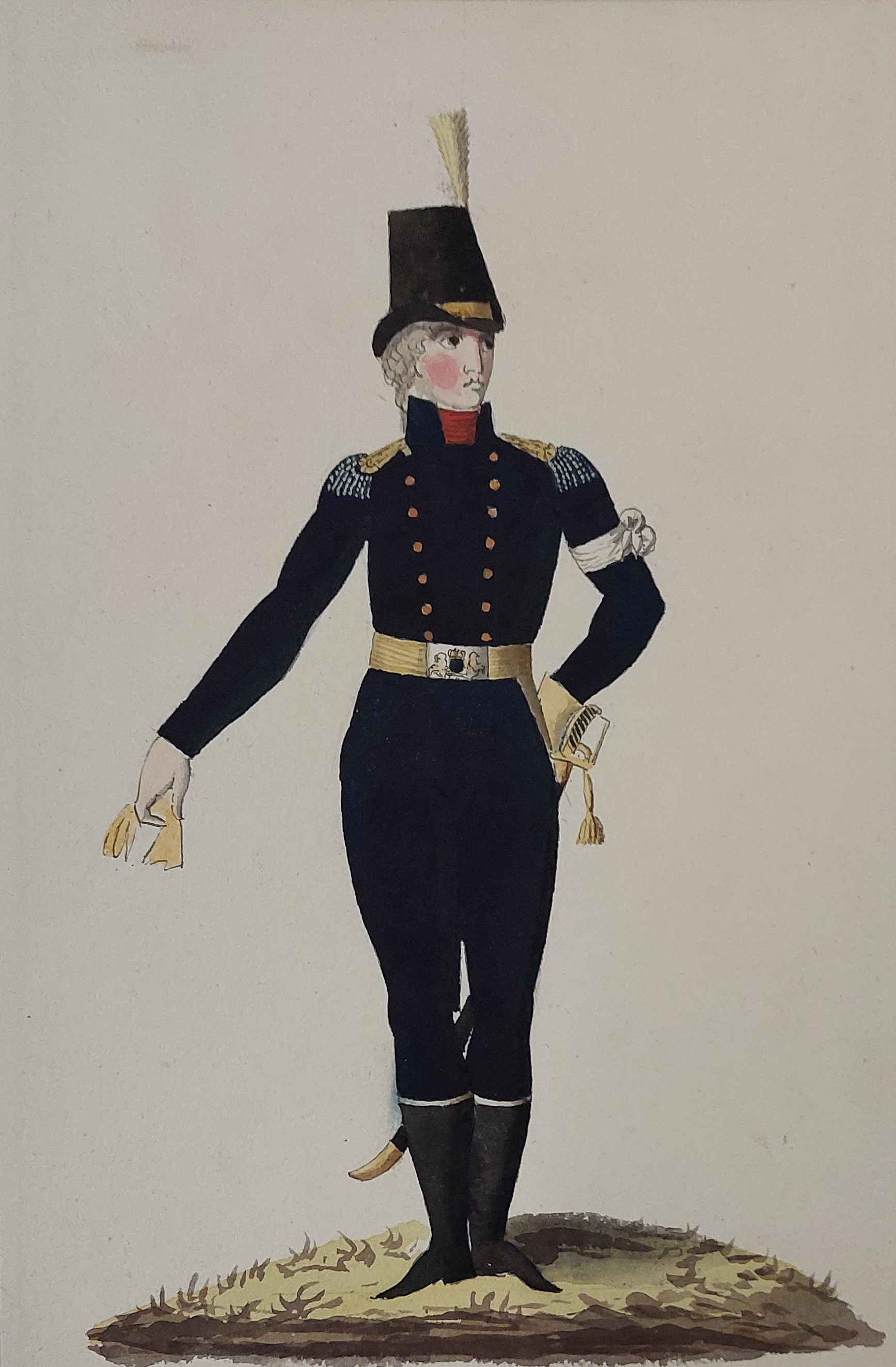
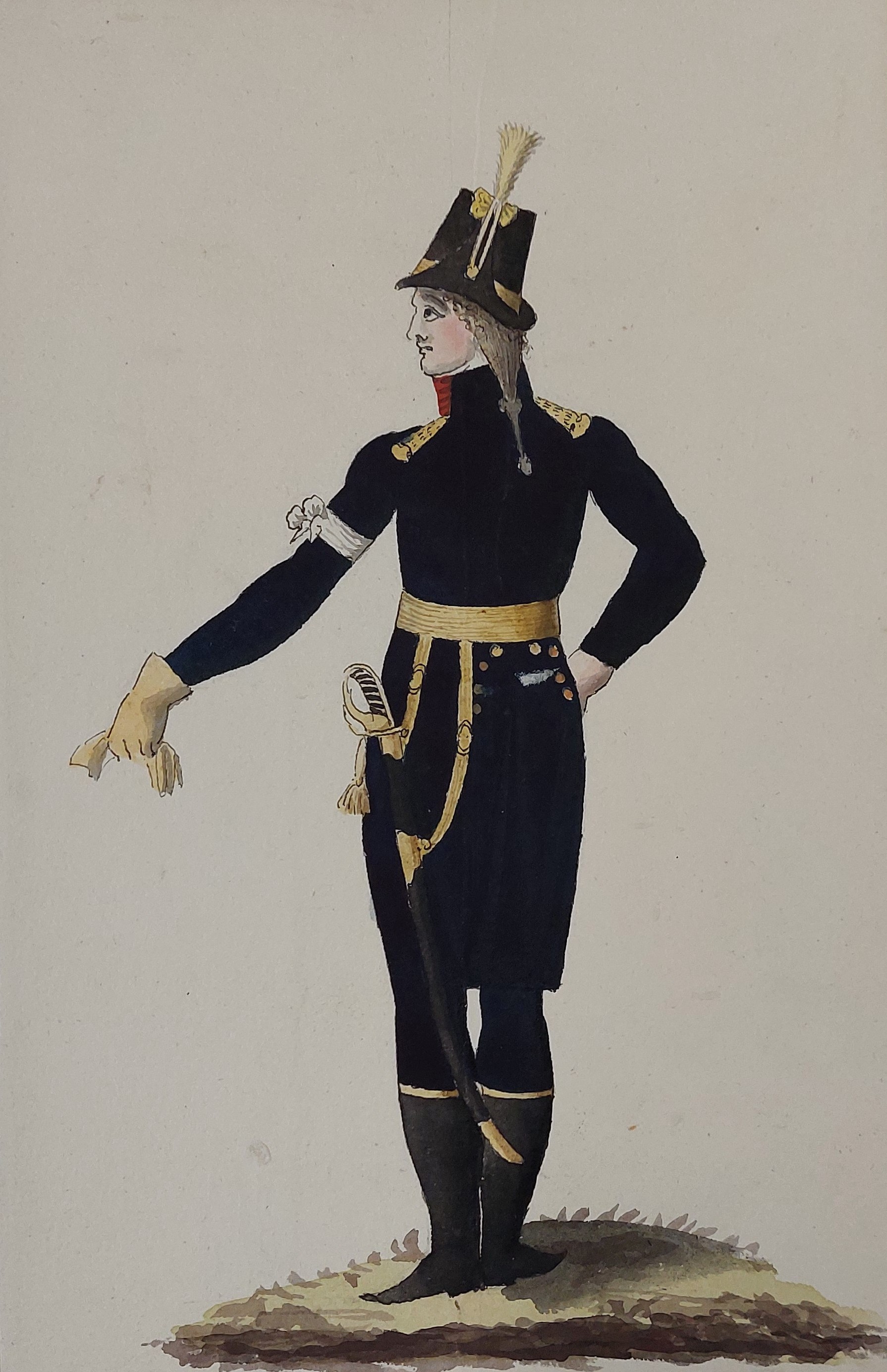
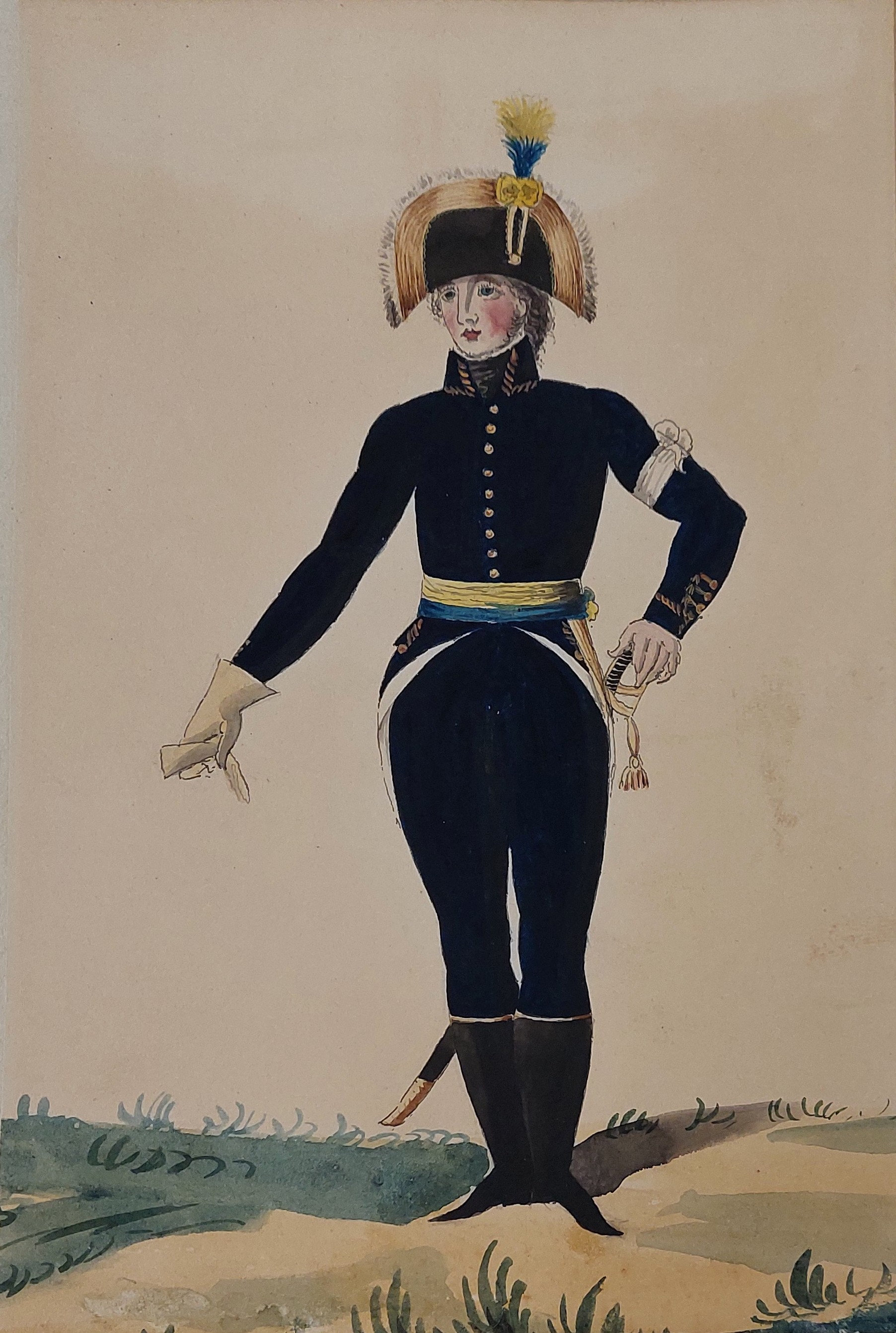
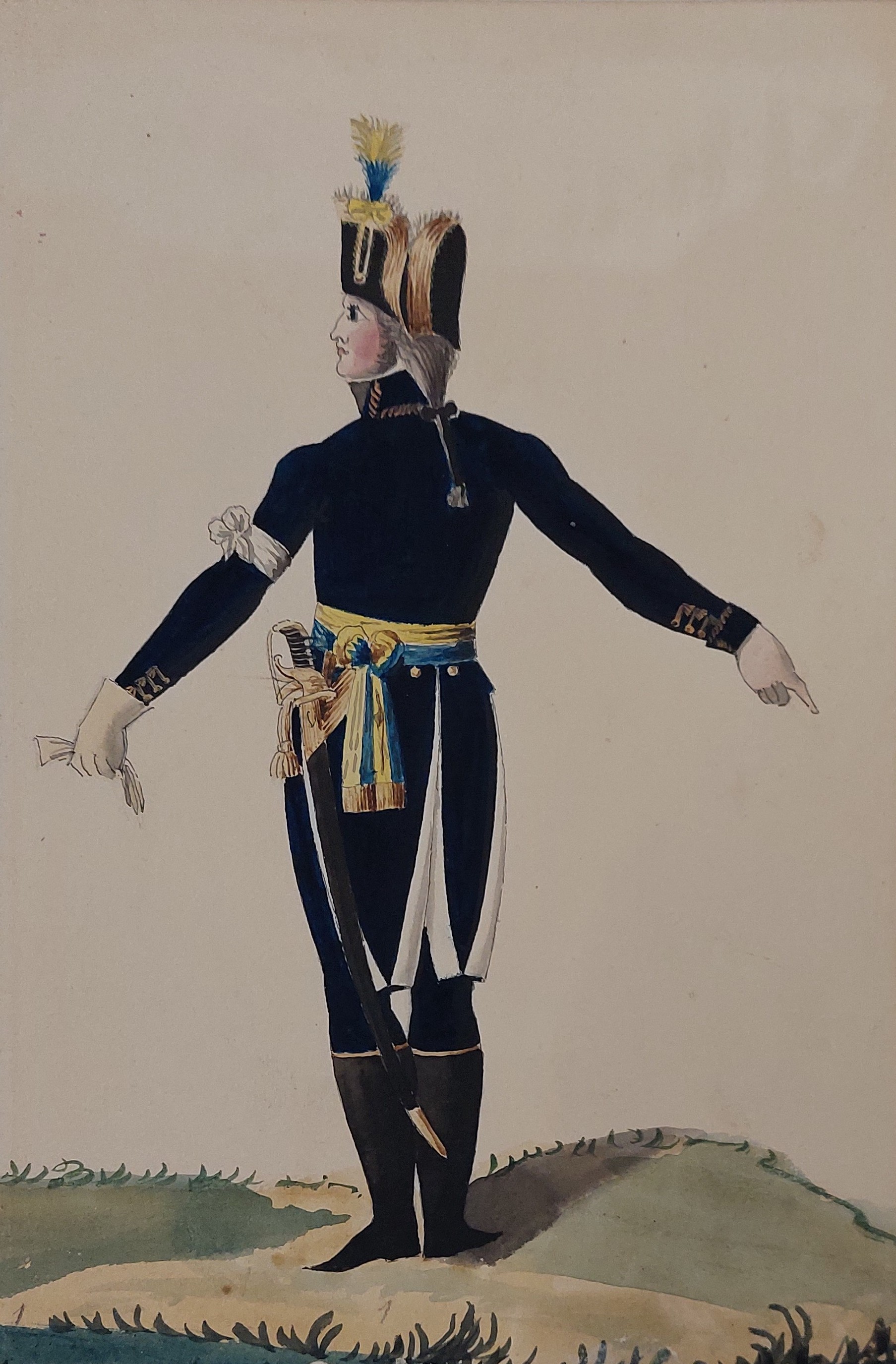
illustrations are published in their entirety on this page. The large images
on this page are Gillberg's plates that contain a non-commissioned officer
and private soldiers seen from the front and back. The small images on this
page are Runge's illustrations, and they have the same type of drawings, but
also pictures of officers seen from the front and back. This means that
Runge's pictures complement Gillberg who only depicted the officers in his
first set of plates. All images can be viewed in a larger format by clicking
on them.
Since the three sets were made
at different times, you can see the changes that took place during the
period that m/1802 was the current uniform regulation. As early as 11
November 1802, the shoulder belt was replaced with a waist belt and in
connection with this, the blue-yellow sashes that had been introduced with
the m/1792 uniform disappeared. In addition, the turnbacks on the lower part
of the front of the jacket were reduced. These changes meant that Gillberg
corrected his first plates afterwards. Such changes also took place on
Gillberg's second set of plates. For example, when Gustav IV Adolf on June
26, 1805, decided that the infantry should change their hairstyles so that
instead of braids at the ears and pigtail, they would have short-cut hair
with sideburns.
Gillberg's subsequent
corrections to the large plates below mean that these show how the m/1802
uniforms looked when the Swedish army participated in the Napoleonic Wars in
1805. Runge's pictures, on the other hand, have the older hairstyles and
other details that were out of date at the time.
Also note that there was a
separate uniform regulation from 14 December 1801 that applied to certain
categories of officers. This m/1801 uniform did not have lapels but instead
a single row of buttons. In addition, they did not have rank insignia on the
shoulders in the form of epaulettes, but instead they were embroidered on
the cuffs and collar (which was a turn-down collar and not a stand-up collar).
Those who wore this uniform were generals, the king's adjutants, the
Livdrabant Corps, and artillery and fortification officers. All of them also
wore a "Napoleon hat" instead of the round "Swedish hat". |
|
Enlisted
Infantry |
|
Svea
livgarde

Note how the colour of the hat plumes differs. In Gillberg's original plate
(top of this page) and Runge's images below, the officers have yellow plumes
while the privates' plumes are white. In Gillberg's second plate, seen above,
the non-commissioned officer on the left also has a white plume. This white
colour distinguished the Guards regiments from the regular regiments, and
when Gustav IV Adolf demoted the Guards regiments in 1808, all personnel
were forced to replace their plumes.
|

Officer |

Officer |

NCO |

Private |

Private |
Svea livgarde Jäger Battalion

The Jäger battalion is
distinguished by green hat plumes in Gillberg's later plate (above) but in
the earlier plate (below) they were yellow. In Runge's pictures (further
down) made between these two, the privates have been given white plumes
while the officers still had yellow.
In addition to the hat plumes,
the Jäger battalion’s hats also have a horsehair brim. They are green for
all personnel in Gillberg's earlier plate and Runge's pictures below. In
Gillberg's later plate (above) only the non-commissioned officer's hat has a
green horsehair brim while the privates have black ones.

|

Officer |

Officer |

NCO |

Private |

Private |
|
|
Göta livgarde

Note the colour differences between Gillberg's plate above and Runge's
pictures below. Gillberg has orange distinguishing colour (the lining is
yellow, however). Runge's pictures, on the other hand, have yellow
distinguishing colour and, apart from the white breeches, are identical to
Runge's pictures of the Svea livgarde. The colours of the hat plumes differ
between Gillberg and Runge in the same way as for the Svea livgarde.
|

Officer |

Officer |

NCO |

Private |

Private |
Göta livgarde Jäger Battalion

The differences between Gillberg's and Runge's jäger pictures are the same
as for Svea livgarde. The only difference between the Svea livgarde and
the Göta livgarde jäger uniforms was the colour of the collar. Yellow for
the former battalion and green and white for Göta livgarde.
|

Officer |

Officer |

NCO |

Private |

Private |
|
|
Finska gardet
(Finnish Guards)

Runge's pictures below show both parade uniform and regular uniform for
officers and privates.
|

Officer |

Officer |

Private |

Private |
|
|
Konungens eget
värvade regemente
(The King's Own Enlisted Regiment)
|
|
Värmland Jäger Battalion

|

Officer |

Officer |

NCO |

Private |

Private |
|
|
Drottningens livregemente
(The Queen's Life Regiment)
|
|
Engelbrecht's Regiment
(garrison regiment in Stralsund)
|
|
Jägerhorn's Regiment
(garrison regiment in Sveaborg)
|
|
Änkedrottningens
livregemente
(Queen Dowager's Life Regiment)
|
|
Savolax Jäger Regiment
 |
|
Officer
 |
Officer
 |
NCO |
Private |
Private |
|
|
Karelska
Jäger Battalion
|
|
Adlercreutz' Regiment
(garrison regiment in Sveaborg)

|
|
Provincial
Infantry |
|
Livregementet's Light Battalion
(the part of the former Livregementet till häst that was allotted in
Västmanland and Södermanland)

|

Officer |

Officer |

NCO |

Private |
|
|
Uppland
Regiment

|

Officer |

Officer |

NCO |

Private |

Private |
|
|
Södermanland
Regiment

|

Officer |

Officer |

NCO |

Private |

Private |
|
|
Livgrenadjärregementet
(Life Grenadier Regiment)

This regiment had been created in 1791 by merging the Östergötland
Infantry Regiment and Östgöta Cavalry Regiment.
|

Officer |

Officer |

Officer |

Officer |

NCO |

Private |

Private |
The two small pictures on the left are loose pages that are kept in the
Swedish War Archives (Krigsarkivet) and on them there is a note in
pencil indicating them as the First Life Grenadier Regiment (former
Östergötland Infantry Regiment). The other pictures are from volume 1 of
Runge's book which is kept in the Swedish National Library (Kungliga
biblioteket), but in them the officers have two different hats and none
of them match the War Archives pictures. |
|
Jönköping
Regiment

|

Officer |

Officer |

NCO |

Private |

Private |
|
|
Kalmar Regiment

There is also a model drawing of
officers seen from the front and back in the Kalmar County Museum
that was "approved" by Gustav IV Adolf.
|

Officer |

Officer |

NCO |

Private |

Private |
|
|
Kronoberg
Regiment

|

Officer |

Officer |

NCO |

Private |

Private |
|
|
Bohuslän Regiment

|

Officer |

Officer |

NCO |

Private |

Private |
|
|
Älvsborg Regiment

|

Officer |

Officer |

NCO |

Private |

Private |
|
|
Västgöta-Dal
Regiment

|

Officer |

Officer |

NCO |

Private |

Private |
|
|
Skaraborg
Regiment

|

Officer |

Officer |

NCO |

Private |

Private |
|
|
Närke-Värmland
Regiment

|

Officer |

Officer |

NCO |

Private |

Private |
|
|
Västmanland
Regiment

|

Officer |

Officer |

NCO |

Private |

Private |
|
|
Dal Regiment

|

Officer |

Officer |

NCO |

Private |

Private |
|
|
Hälsinge Regiment

|

Officer |

Officer |

NCO |

Private |

Private |
|
|
Jämtland Regiment
|
|
Västerbotten
Regiment

|

Officer |

Officer |

NCO |

Private |

Private |
|
|
Österbotten Regiment

Runge's images below have been stated in his work to be Jämtland
regiment, but it seems that the images of Jämtland and Österbotten have
been mixed up there.
|

Officer |

Officer |

NCO |

Private |
|
|
Kajana Battalion
|
|
Björneborg
Regiment

|

Officer |

Officer |

NCO |

Private |

Private |
|
|
Åbo Län
Regiment

|

Officer |

Officer |

NCO |

Private |

Private |
|
|
Nyland
Regiment

|

Officer |

Officer |

NCO |

Private |

Private |
|
|
Nyland
Jäger Battalion

|
|
Tavastehus
Regiment

|

Officer |

Officer |

NCO |

Private |

Private |
|
|
Savolax
Regiment

|

NCO |

Private |

Private |
 |
 |
|
Officers of Savolax
Light Infantry |
|
|
Cavalry |
|
Lätta
livdragonerna
(The Light Life Dragoons)

|

Officer |

Officer |

Officer
(parade uniform) |

Officer
(parade uniform) |

NCO |

Private |

Private |
Lätta
livdragonerna's Horse Jägers

|

Officer |

Officer
(parade uniform) |

NCO |

Private |

Private |
|
|
Livregementet's Cuirassier Corps
(the part of the former Livregementet till häst that was allotted
in Uppland)

|

Officer |

Officer |

Officer |

Officer |
|
|
Livregementet's Hussar Corps
(the part of the former Livregementet till häst that was allotted in
Närke and Västergötland)
|
|
Adelsfanan
(De facto disbanded after 1743 when recruitment of privates ceased. However,
officer positions were filled until 1809.)

 |
|
Småland Dragoon Regiment
|
|
Södra
Skånska Cavalry Regiment
|
|
Skånska Line Dragoon Regiment
(former Nora skånska Cavalry Regiment)
|
|
Hussar Regiment
(enlisted unit that was stationed in Skåne and Halland)
|
|
Västgöta Line Dragoon Regiment
Västgöta Regiment was a
cavalry regiment until 1792 when it was converted into a dragoon
regiment. From 1802 to 1806 it was called a line dragoon regiment and
then again a dragoon regiment. In 1811 it was converted into an infantry
regiment.
All uniform drawings are kept
in the Swedish War Archives. Runge's small pictures above have been named
"Dragons de Westro-Gothie" on a title page. Gillberg's plate above has been
given a subtitle stating that it is "Västgöta linjedragonregemente" while
the plate below is stated to be "Västgöta dragonregemente". In addition,
another uniform drawing has been attached to Gillberg's plates, and it is
dated 1806. In Arne Danielsson's article from 1965, a receipt is reported
for a Västgöta plate that was delivered in June 1807 (the very last of the
plates in this series and two years later than the penultimate).
|

Cropped uniform drawing dated 1806.
Click on it to also see the text. |
 |
|
NCO |
Privates |
|
|
Jämtland Horse Jägers
|
|
Nyland Dragoon Corps

|
|
Karelska
Dragoon Corps
|
|
Artillery

Svea Artillery Regiment
(blue collar)
|

Officer |

Officer |

NCO |

Private |
Officers at Other
Artillery Regiments
Horse Artillery
|
|
Navy
Main Fleet
|

Vice admiral |

Vice admiral |

Officer |

Officer |

Private |
Navy
Volunteers
Army Fleet

|
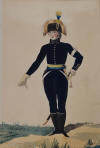
Vice admiral |
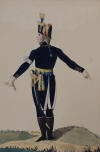
Vice admiral |
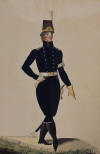
Officer |
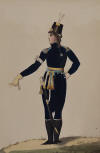
Officer |
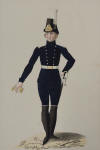
NCO |
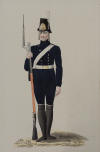
Private |
|
|
Corps of Engineers


Officers with parade uniform
("Officier en grand uniforme")
|


Officers with regular uniform
("Officier en uniforme de travail") |
|

Workers in Sveaborg |

Labour Corps on the Right Wing of the Western Army |
|
|
Other |
|
Generals

 |
"Grand Etat
Major et adjudants du Roi"

 |
|
His Royal Majesty's
Livdrabant Corps


 |
Duke
Karl's Livdrabant Corps

 |
|
|
"Uniform
des Commandants de Places"


 |
|
Stockholm
City's Military Company

 |
Officers
Without Duty
 |
|
Troops in
Saint Barthélemy
 |
|
References
Carl Gustaf Gillberg's first version of m/1802 plates
is kept in Windsor Castle in the UK. I have not visited Windsor Castle so
the two plates for the Svea Livgarde come from its regimental history work.
The second version of Gillberg's plates is in the Swedish War Archives
(series 0429-004).
Wilhelm von Runge's work consists of five volumes
which are divided between the National Library (volumes 1-2 and 5) and the
War Archives (volumes 3-4). Volumes 1-2 contain divided and enlisted
infantry from Sweden proper. Volumes 3-4 consist of the cavalry and Finnish
regiments, but they are in a "slaughtered" condition and consist of loose
pages (series 0429-005). Volume 5 consists of civilian uniforms, and they
are not published on this page.
Bellander, Erik. Dräkt och uniform.
Stockholm (1973)
Danielsson, Arne. Gustavianska uniformsritningar på Windsor Castle
(article in MAM 26).
Stockholm (1965)
Runge, Wilhelm von. Collection des
uniformes de l'armée suédoise, en l'année 1803
Warfvinge, Svante m. fl. Kungl. Svea livgardes historia,
band V.
Stockholm (1976) |