Battles and Sieges Swedish Army Danish-Norwegian Army Other Armies Sources


Örjan Martinsson


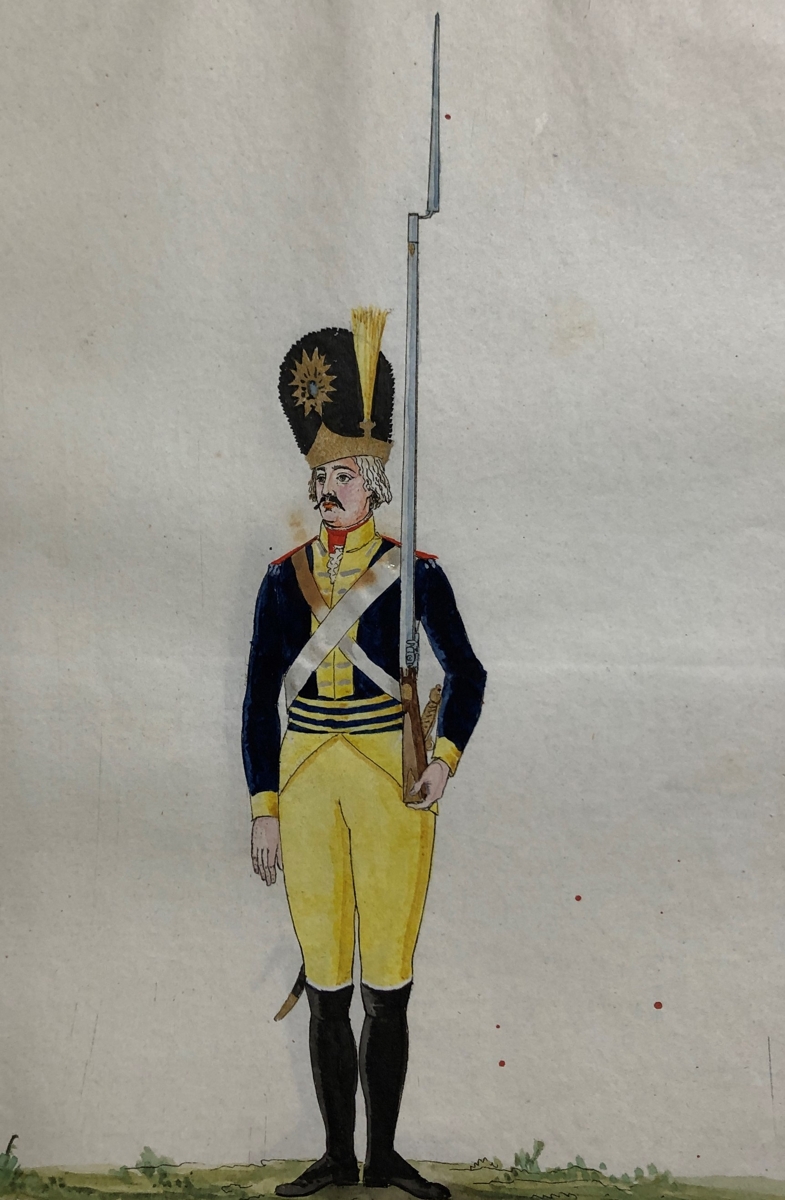
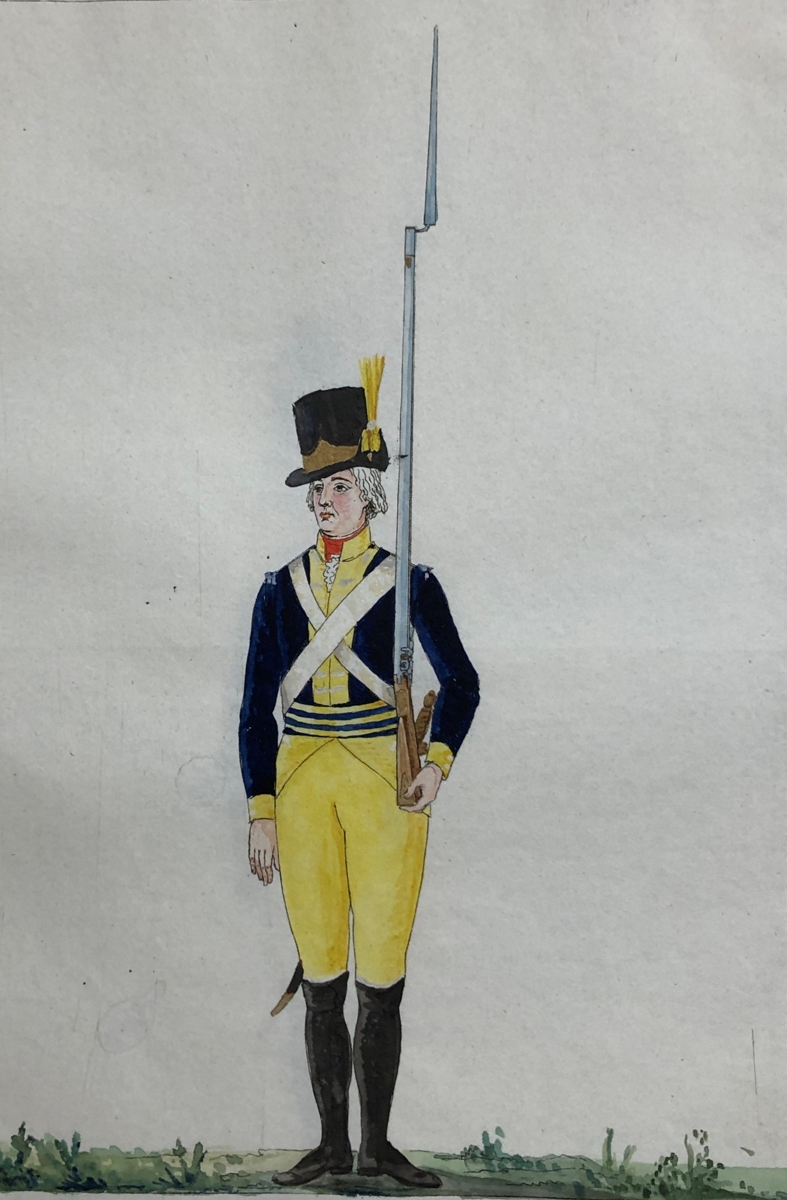
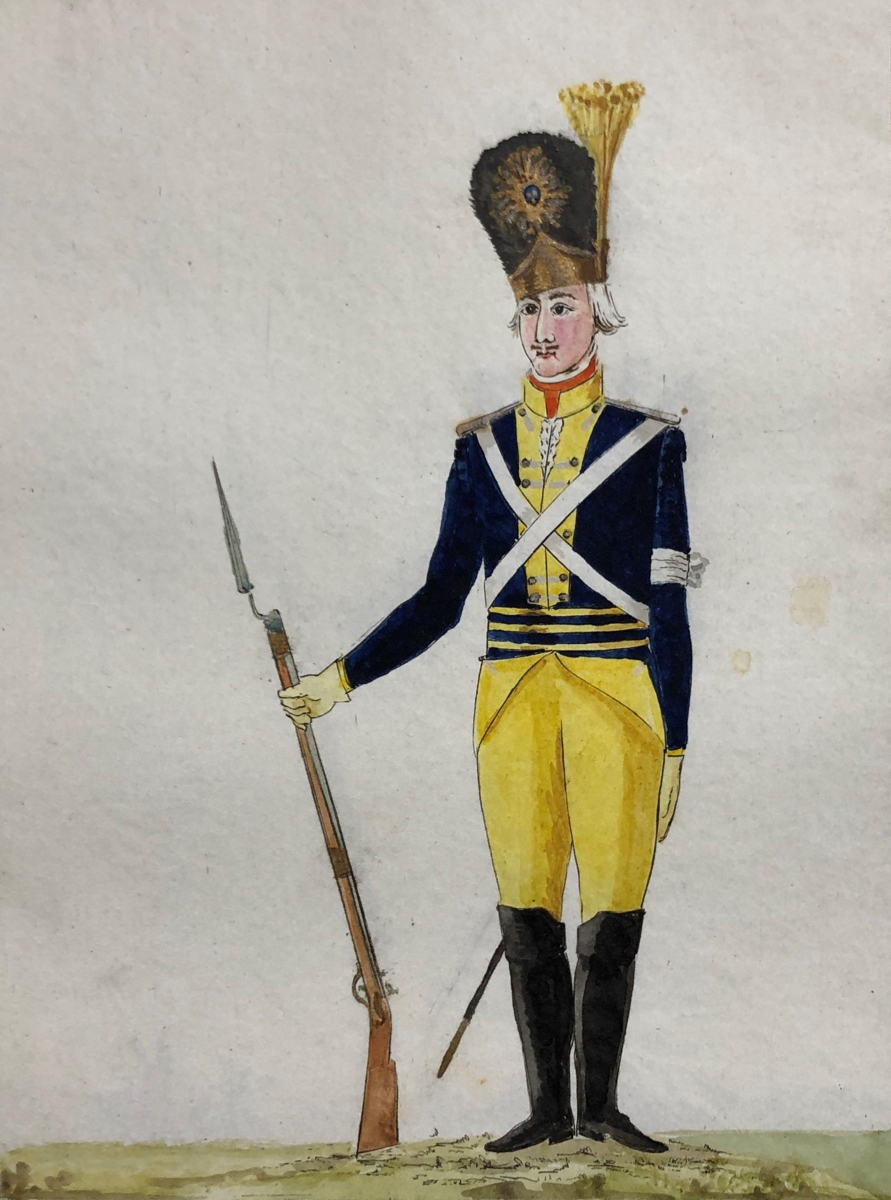
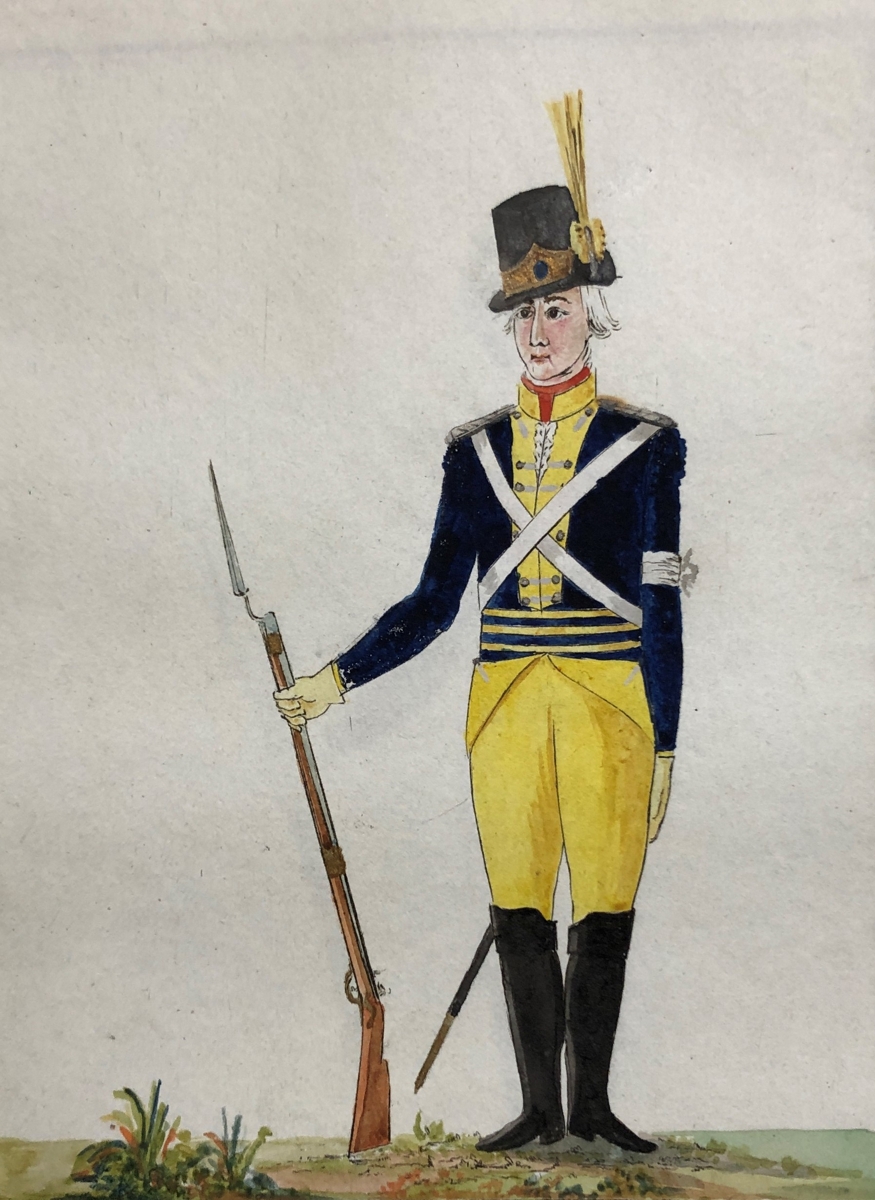
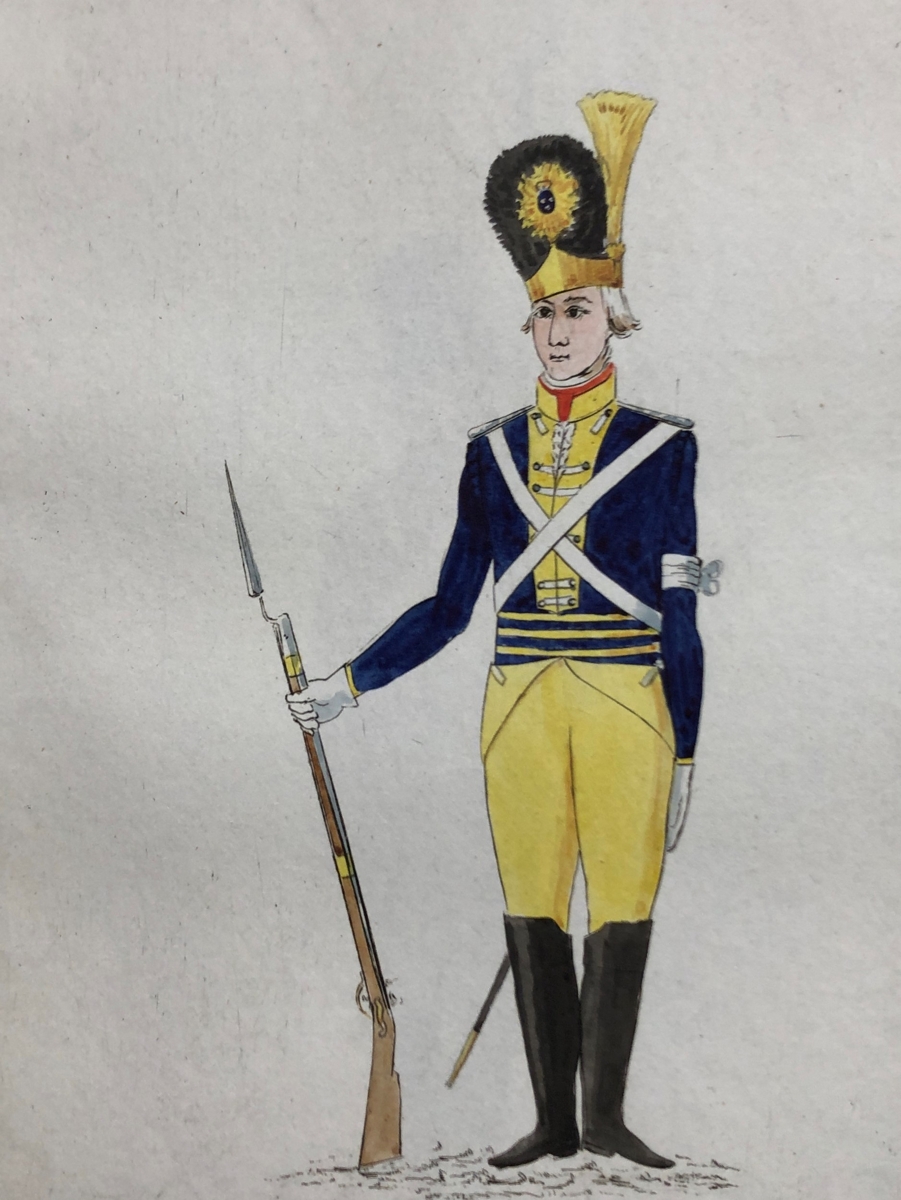
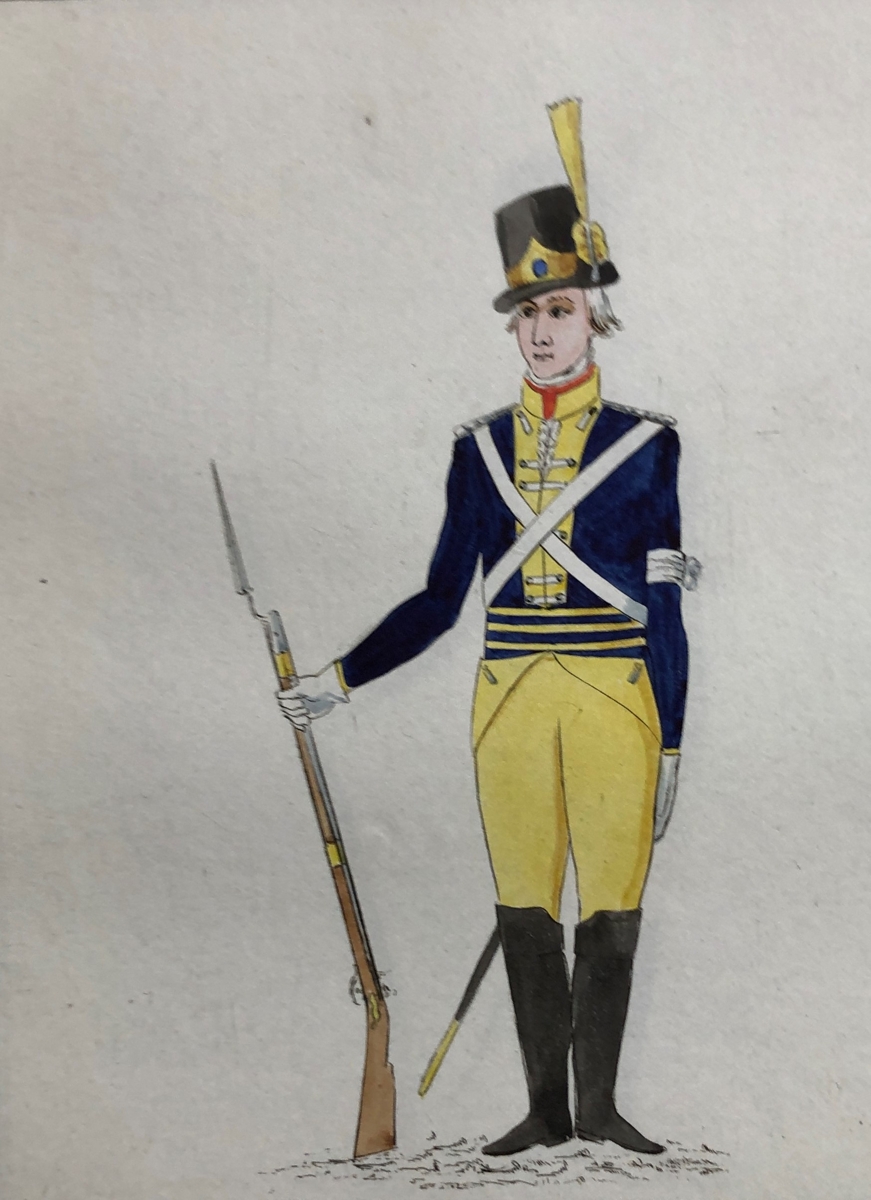
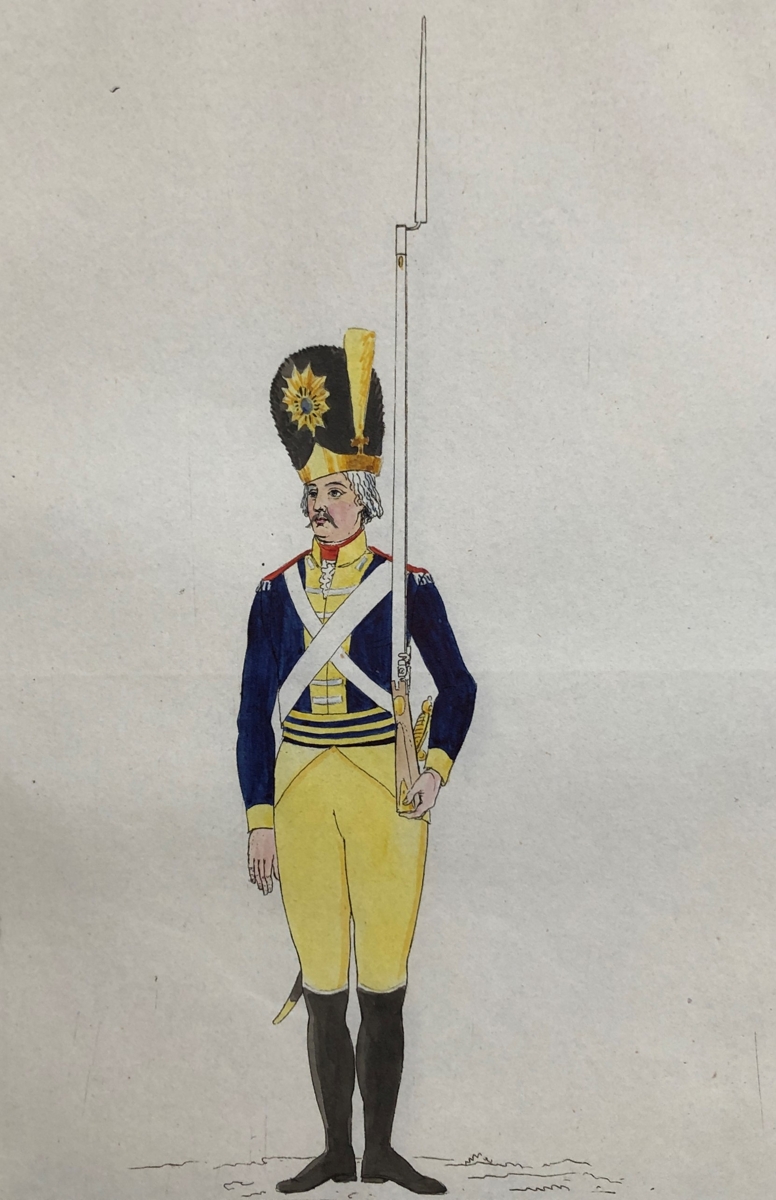
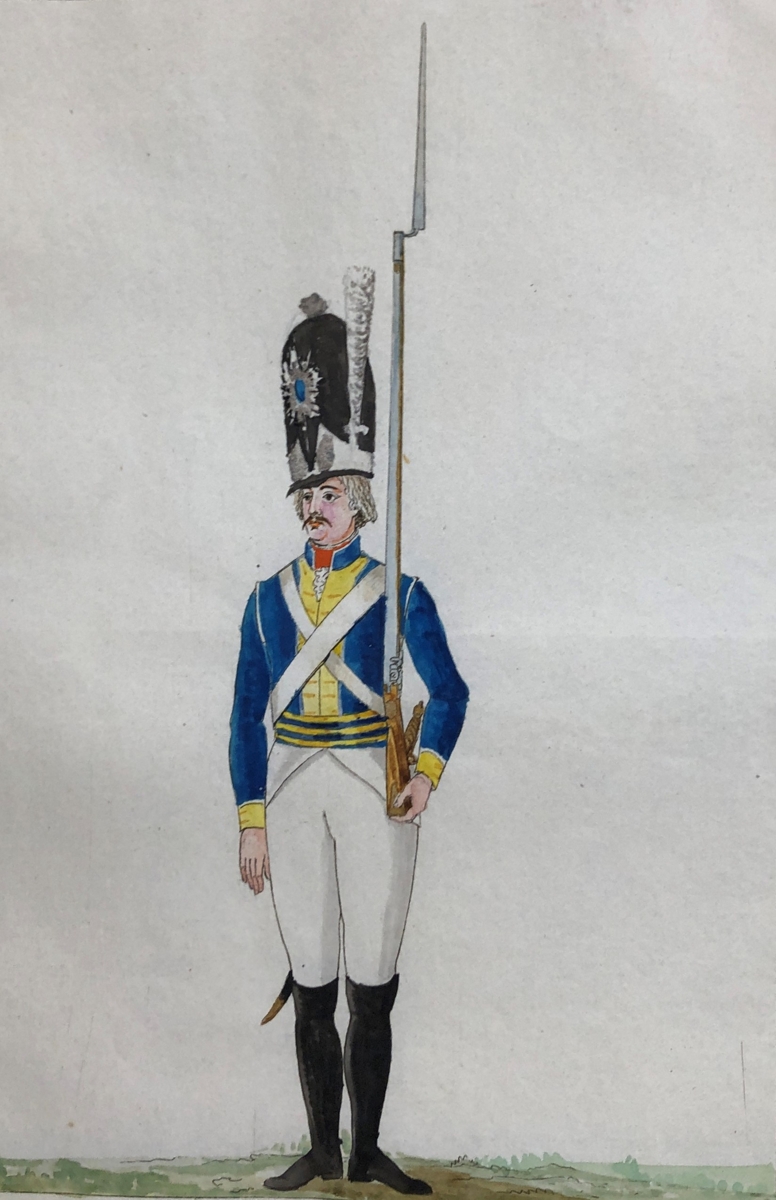
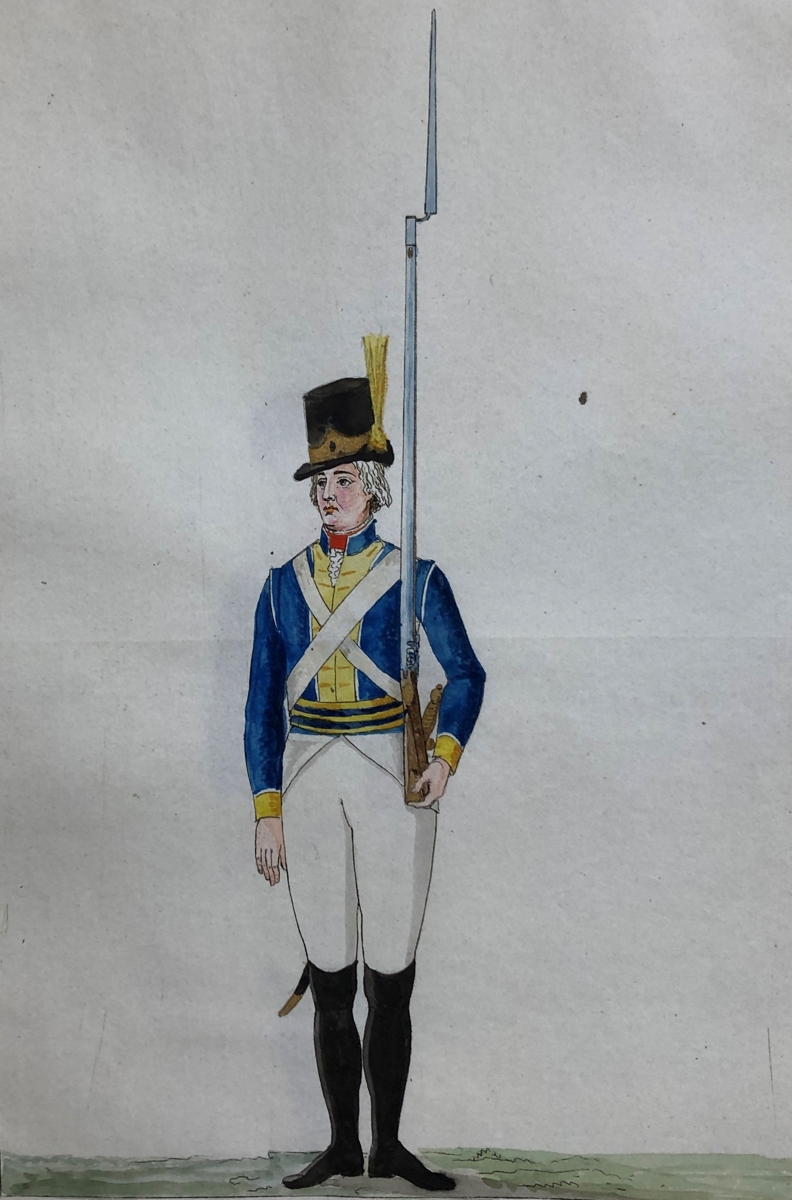
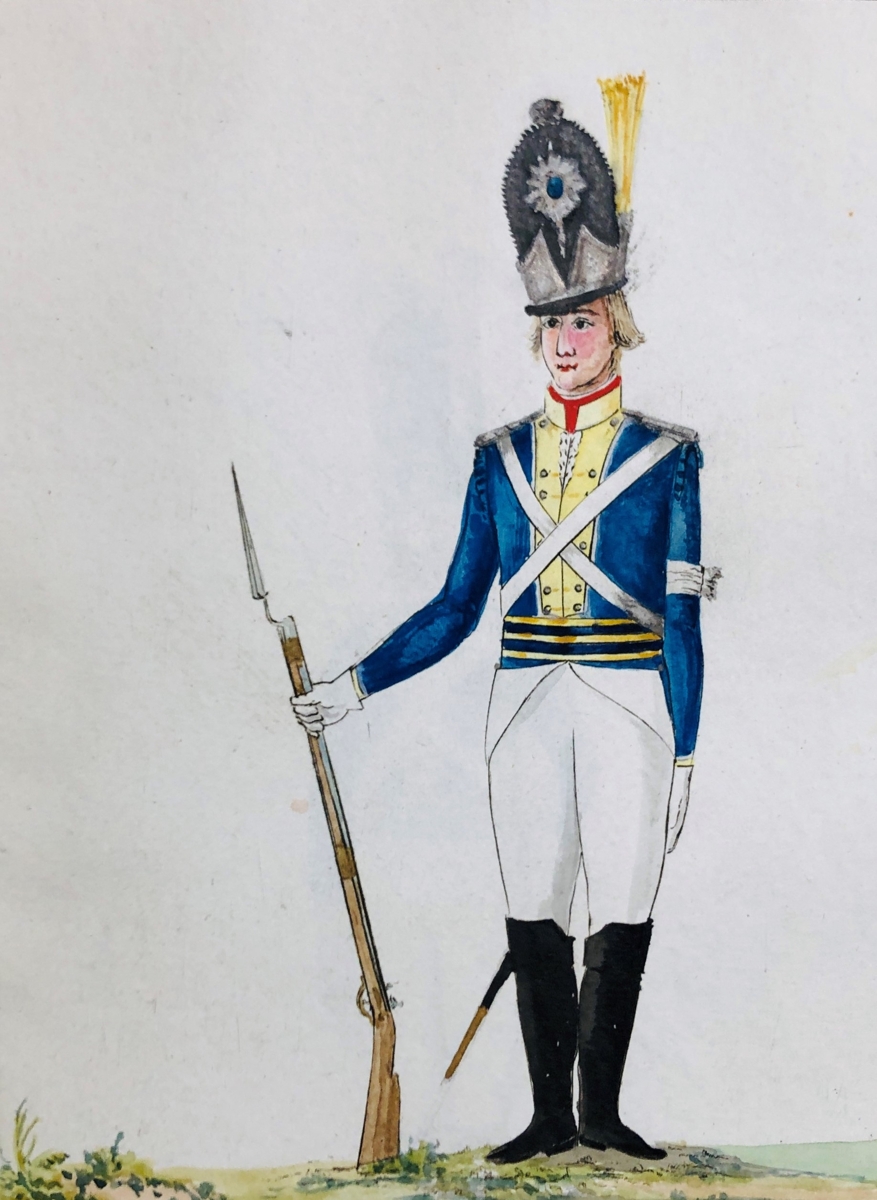
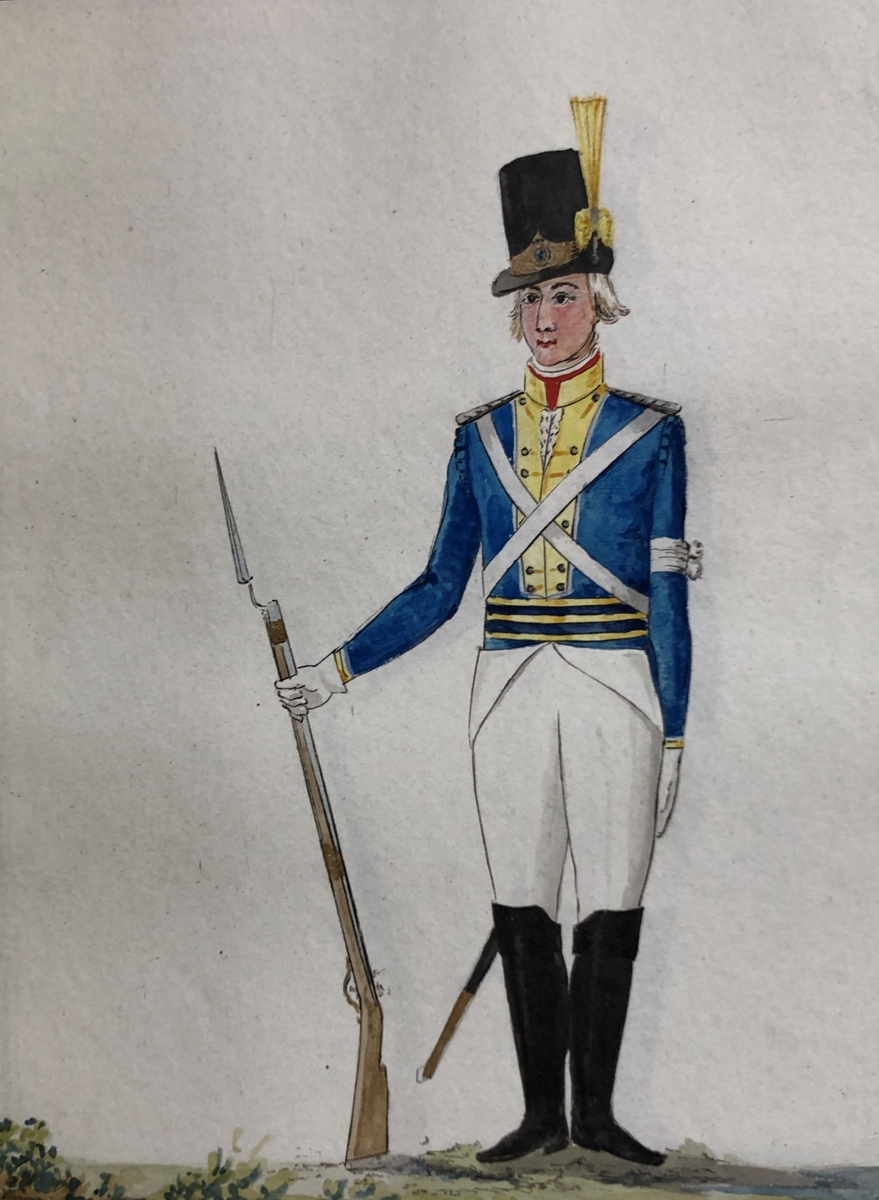
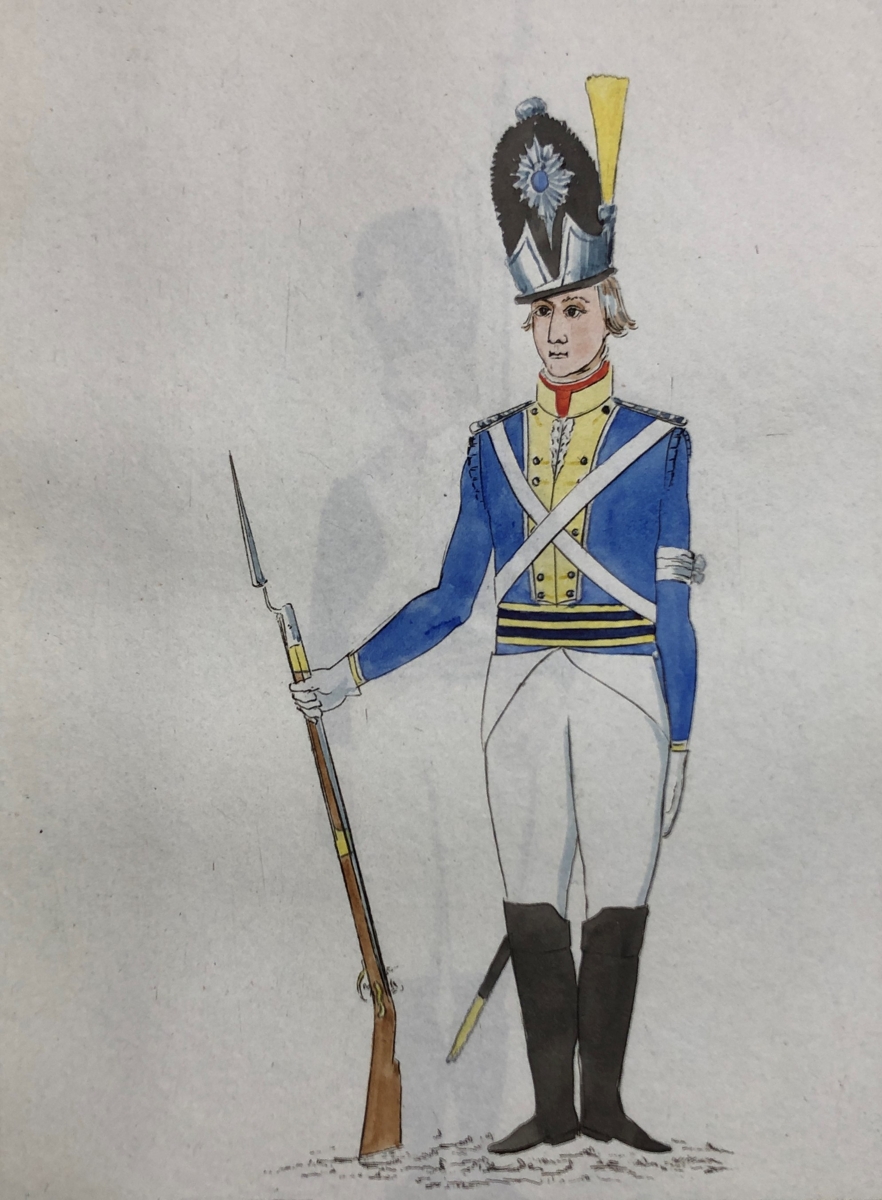
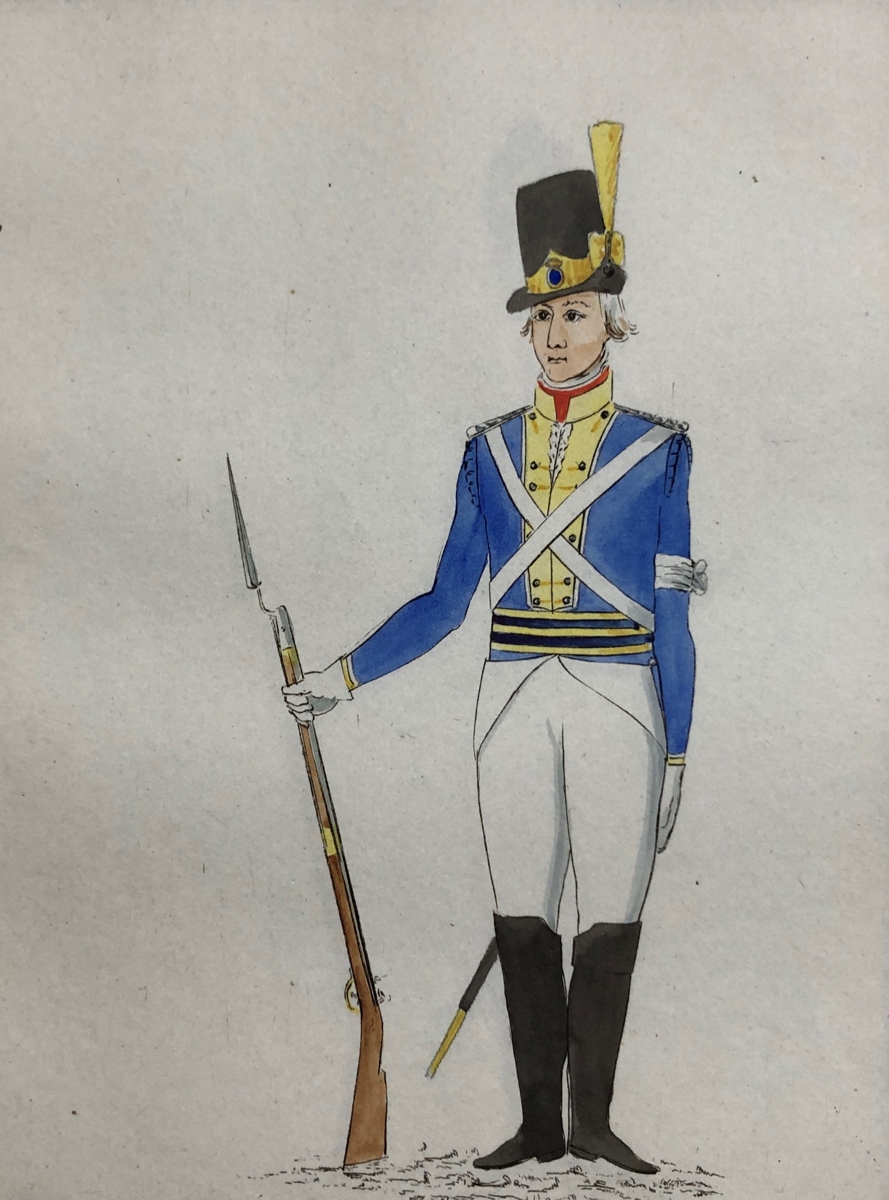
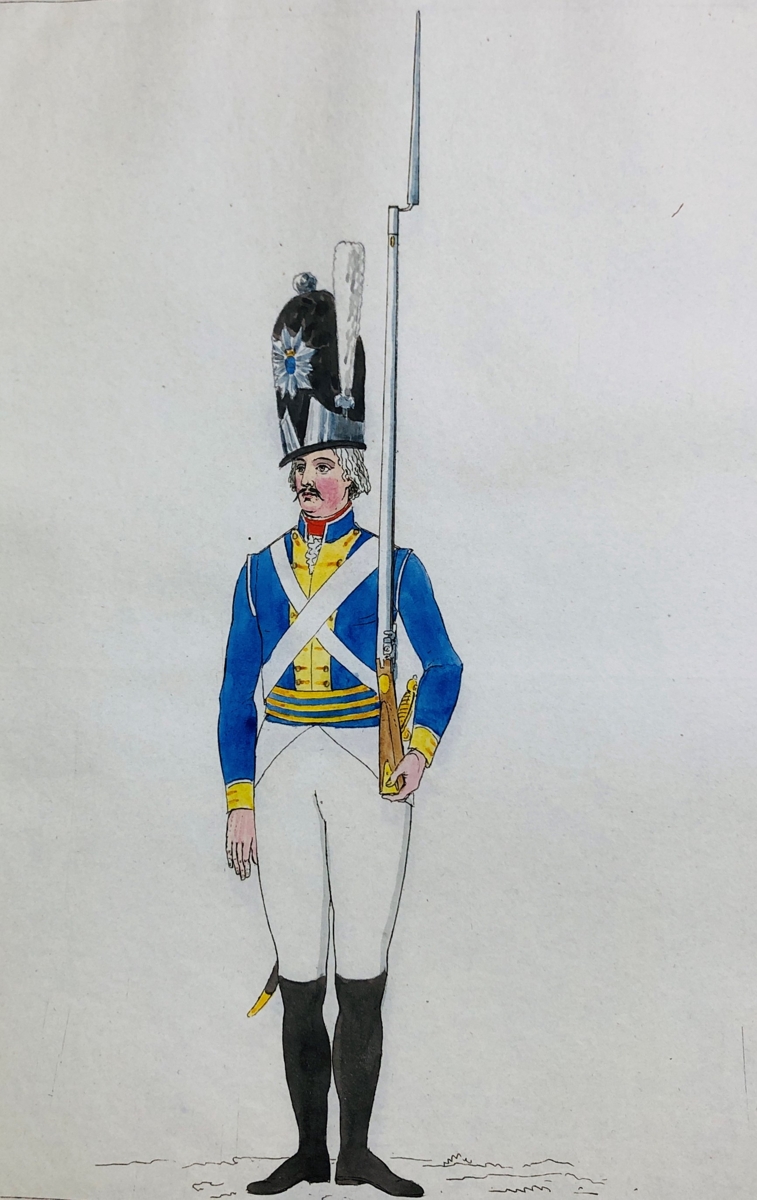
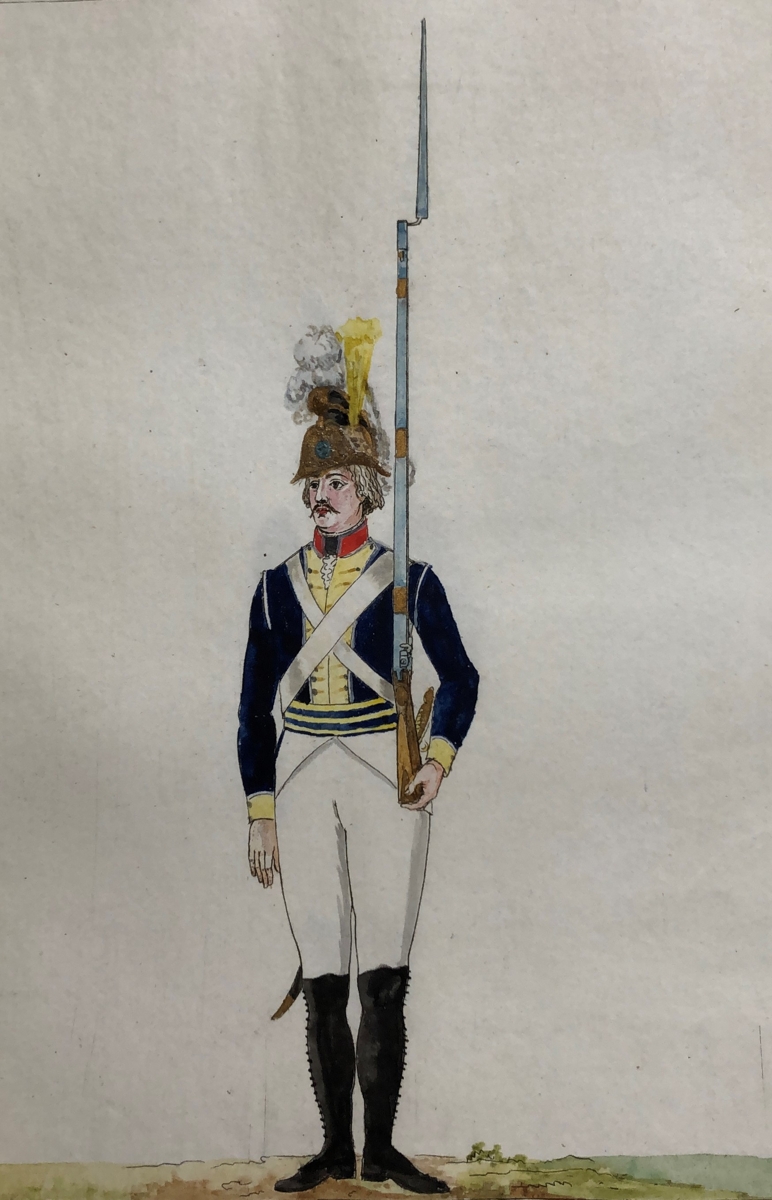
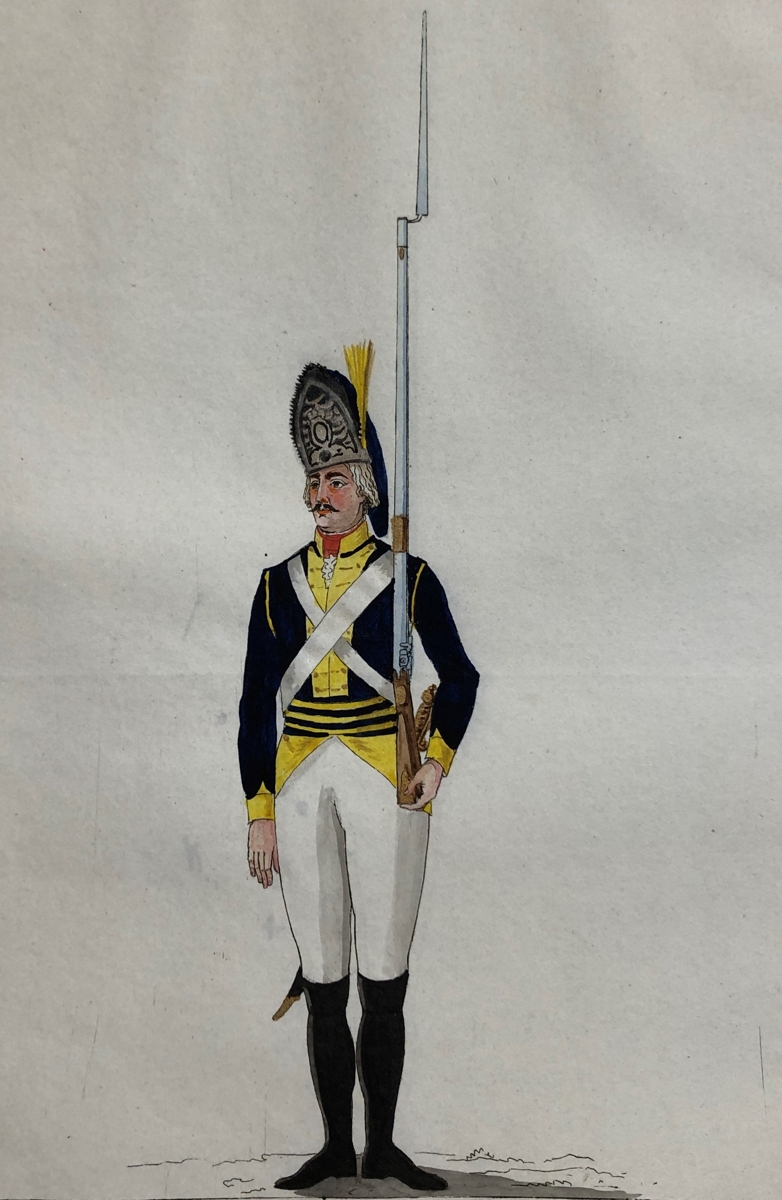
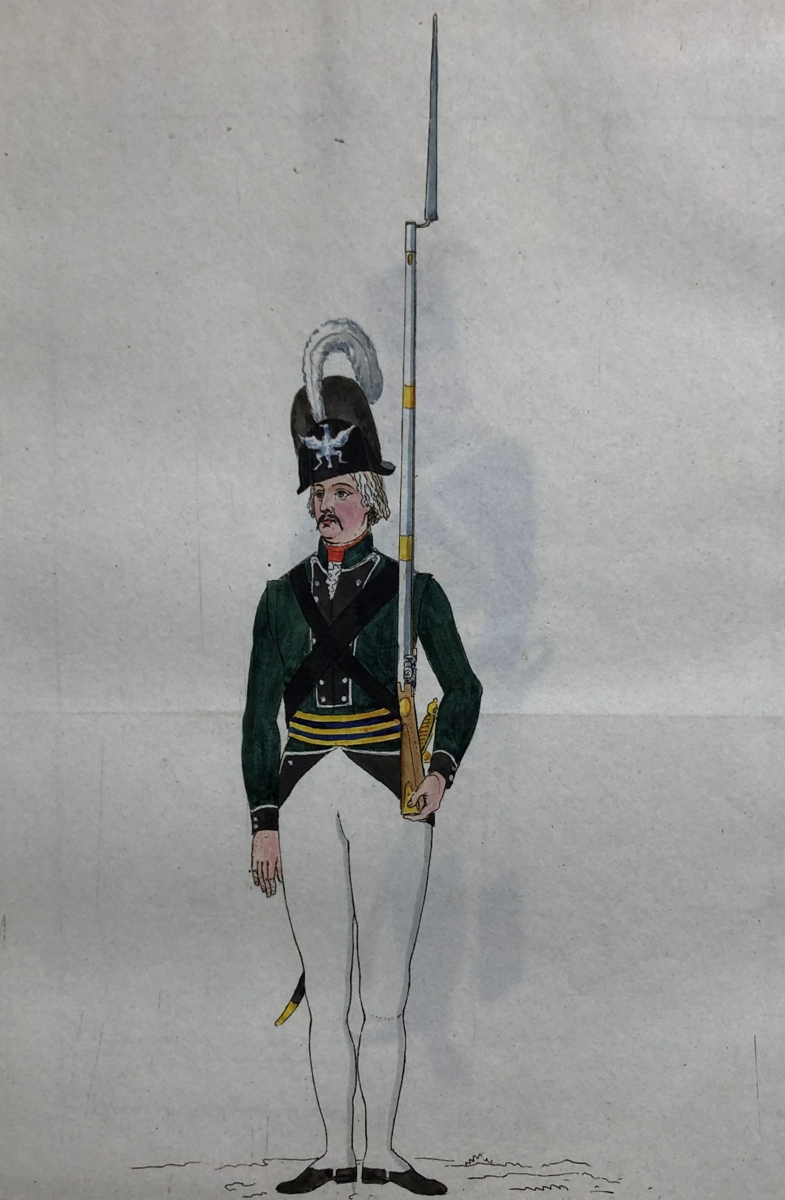
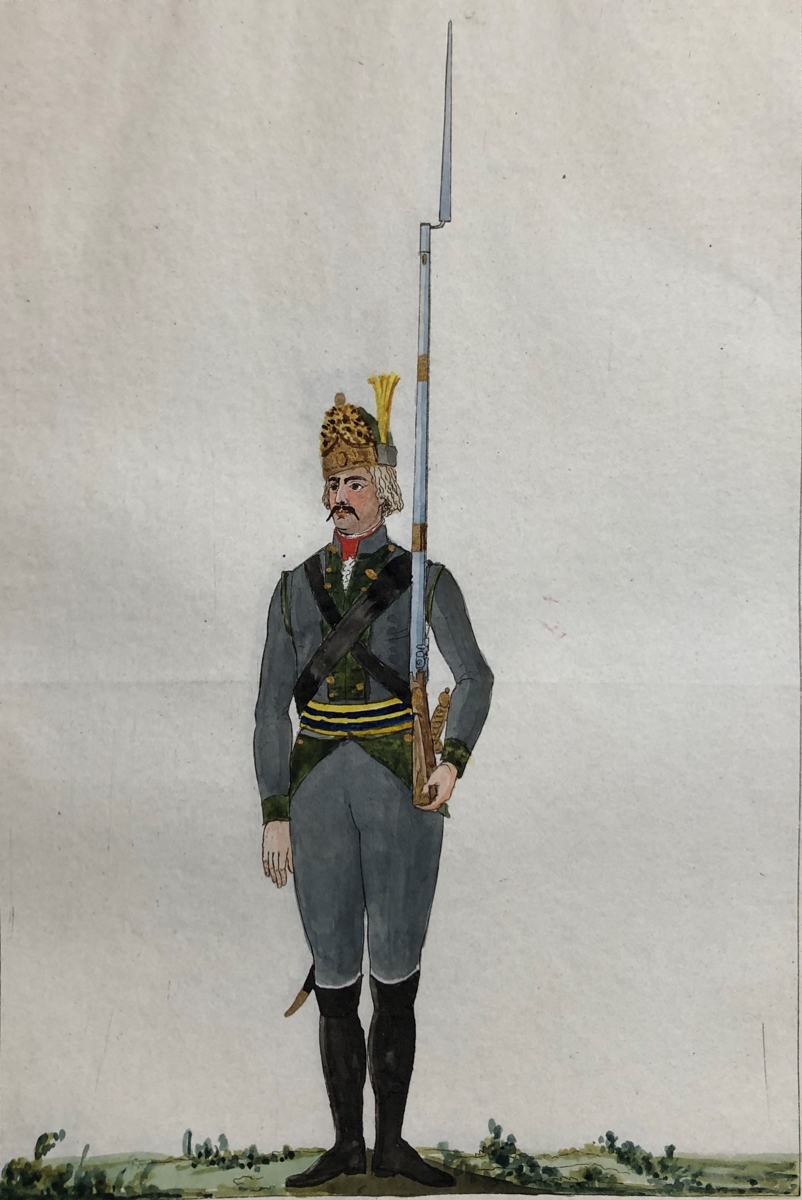
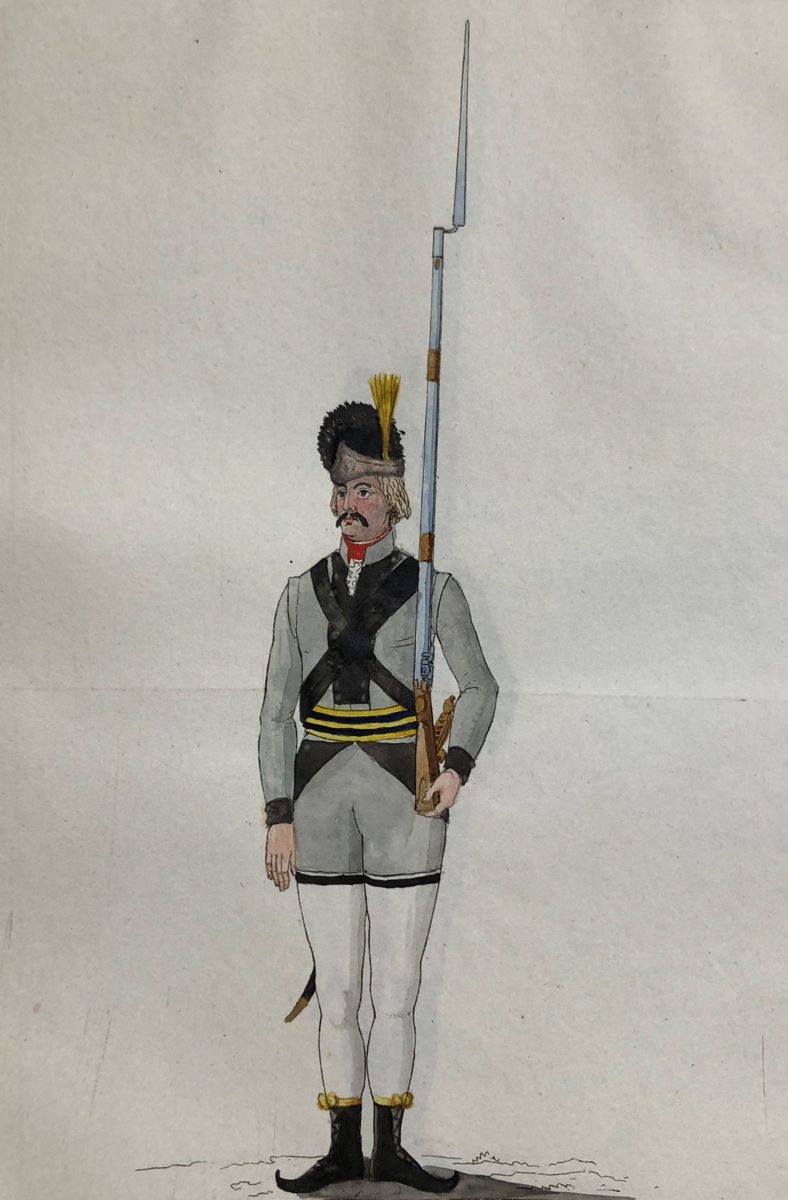
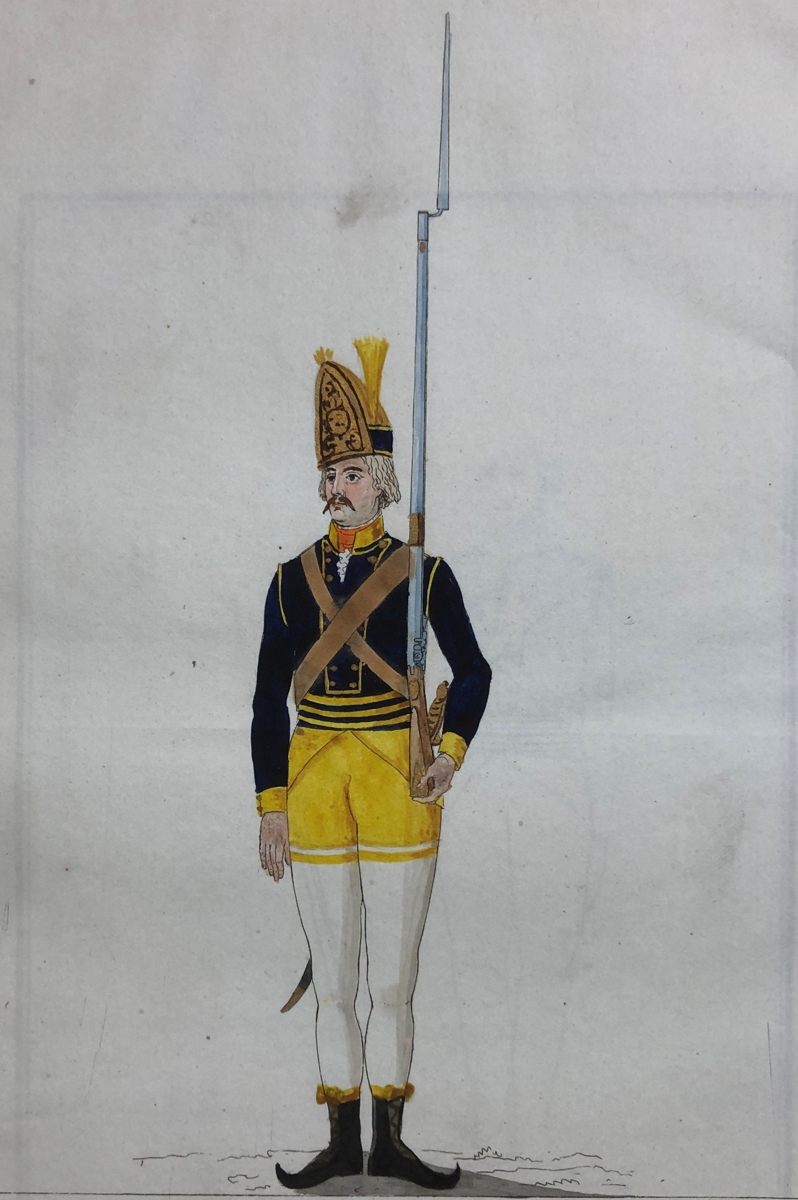
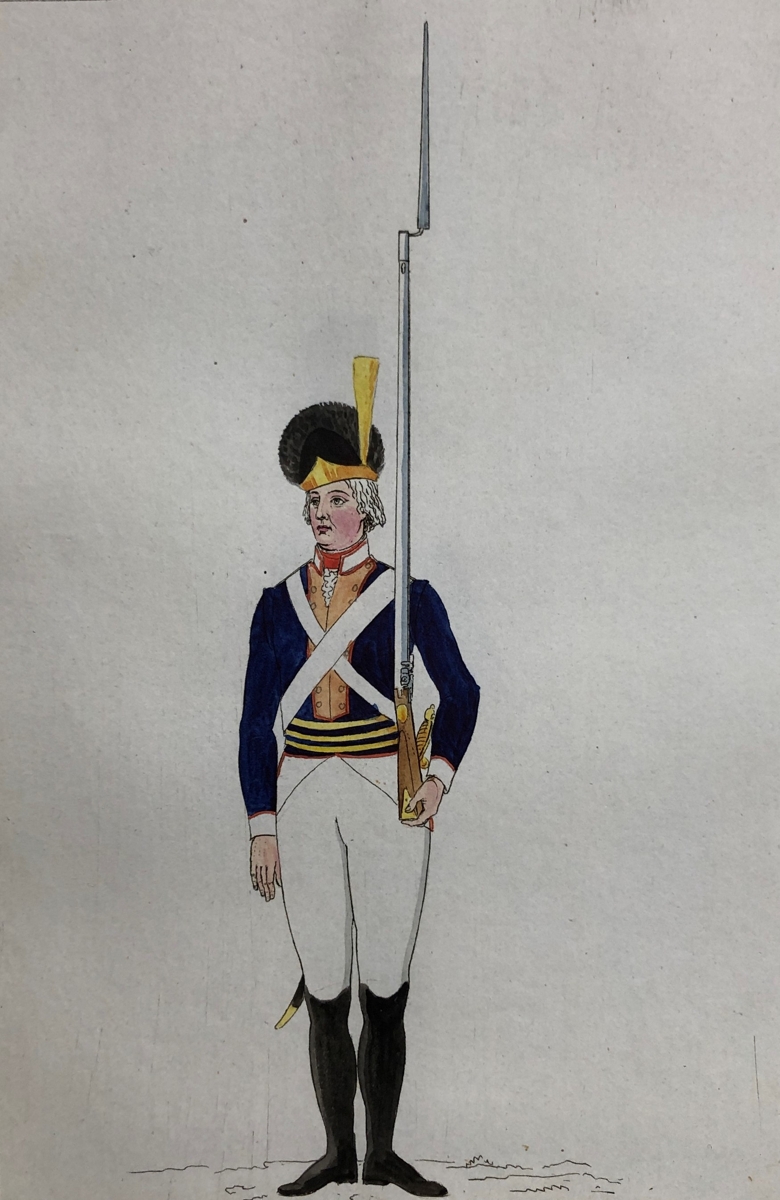
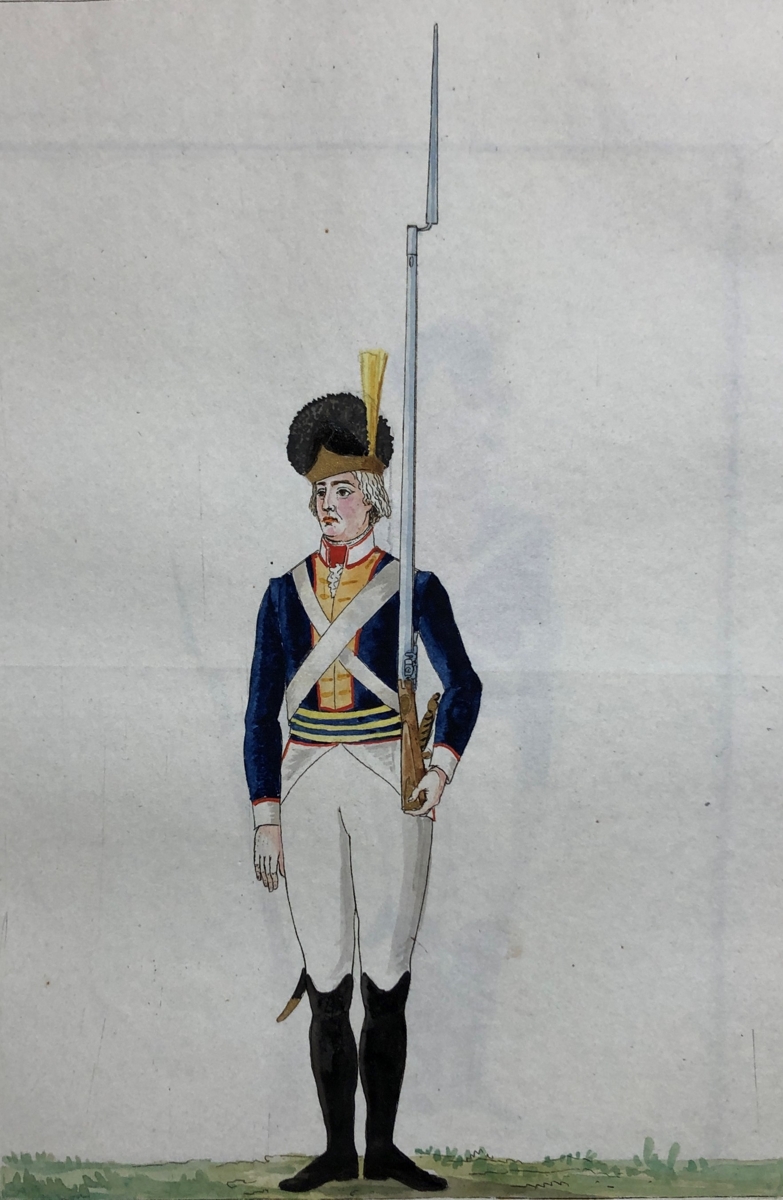
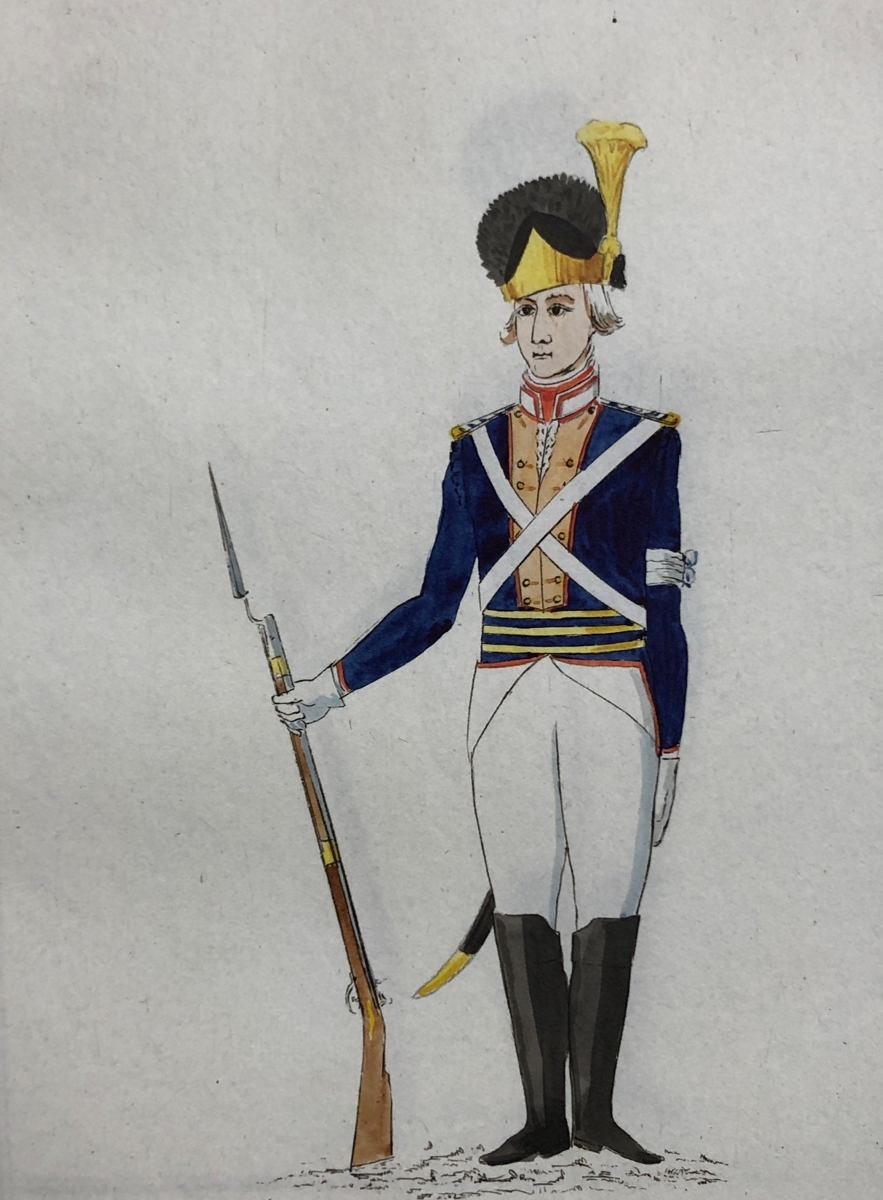
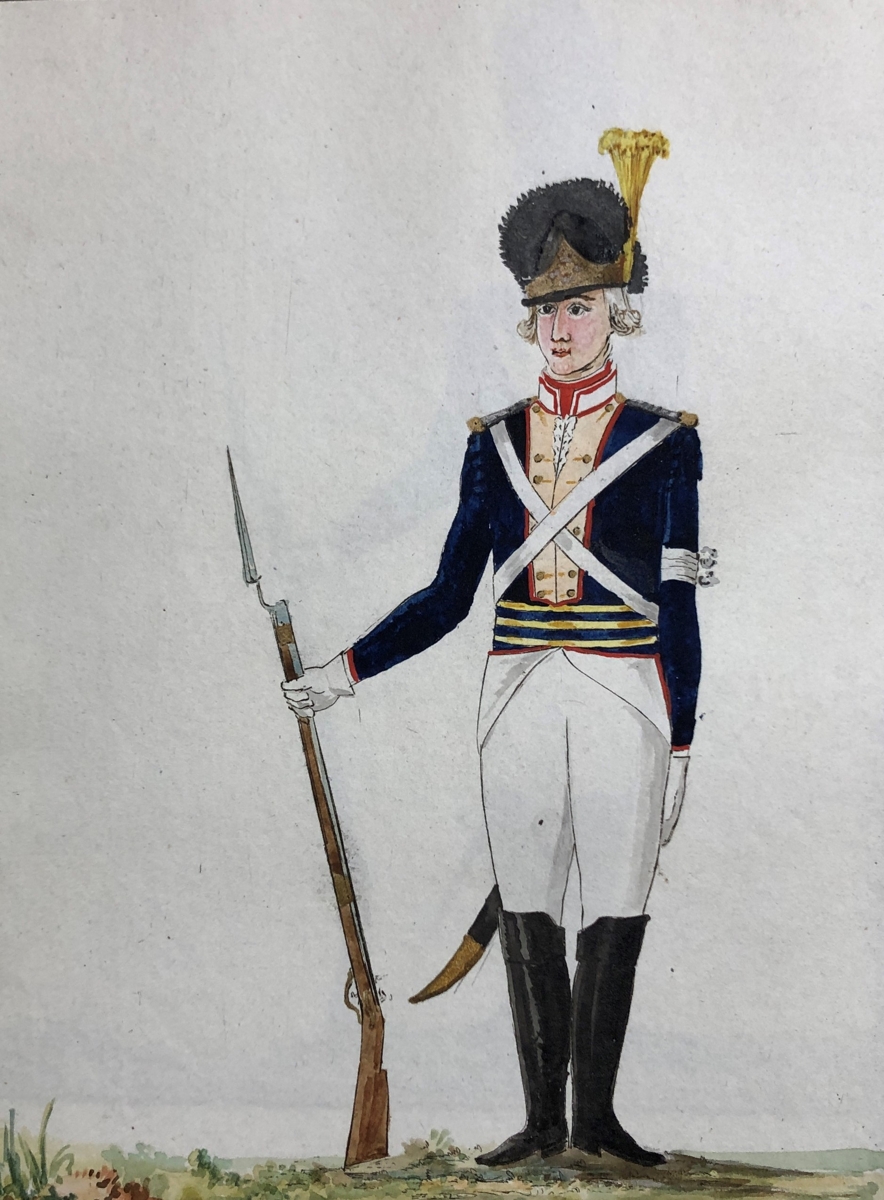
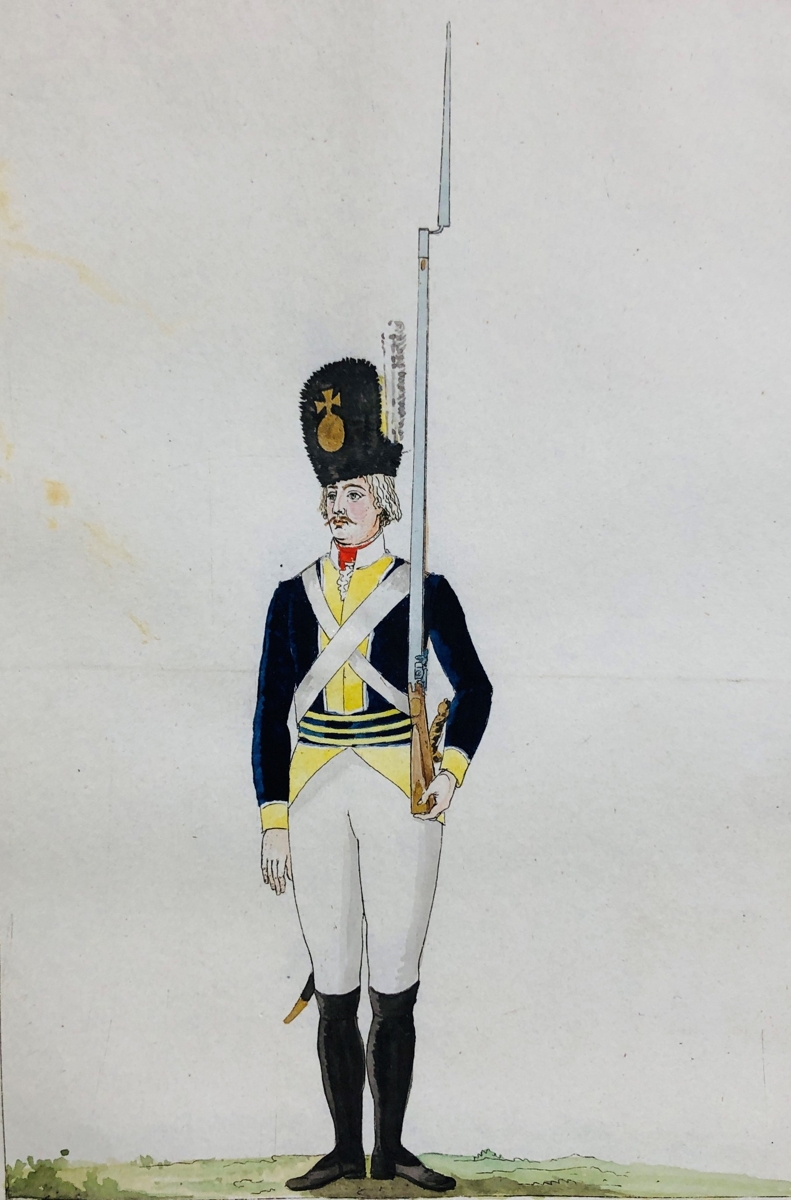
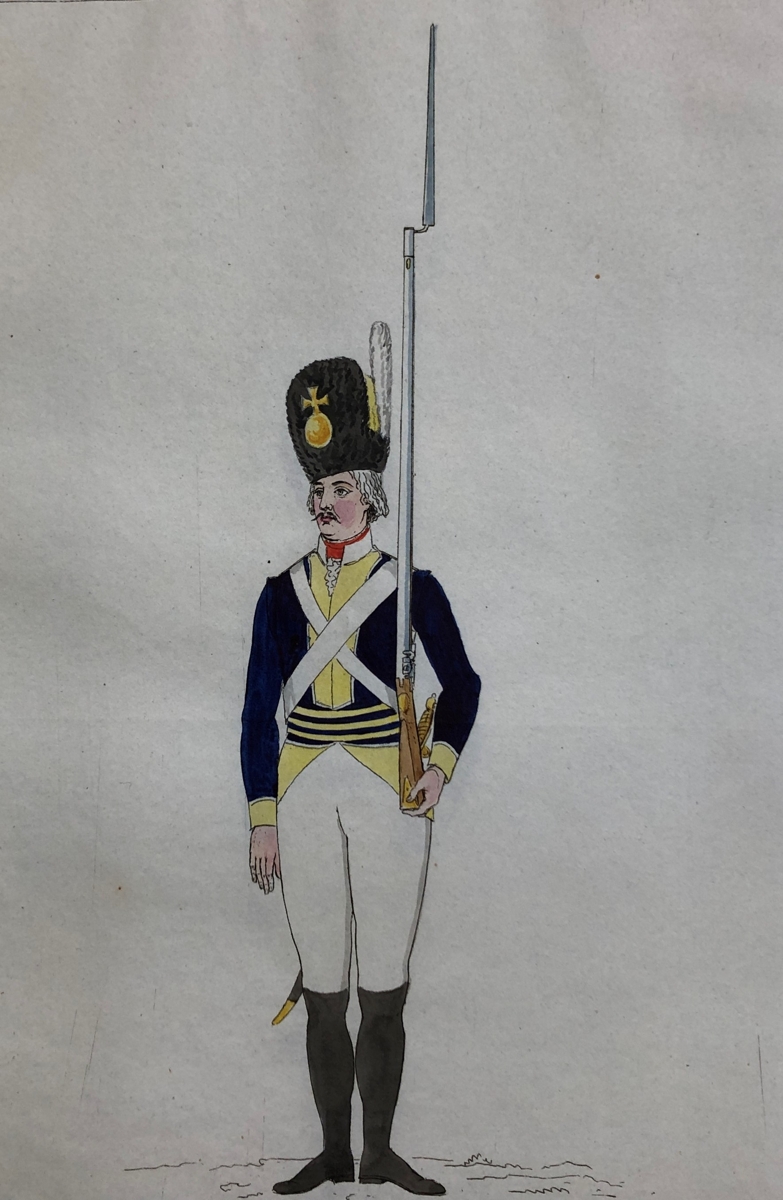
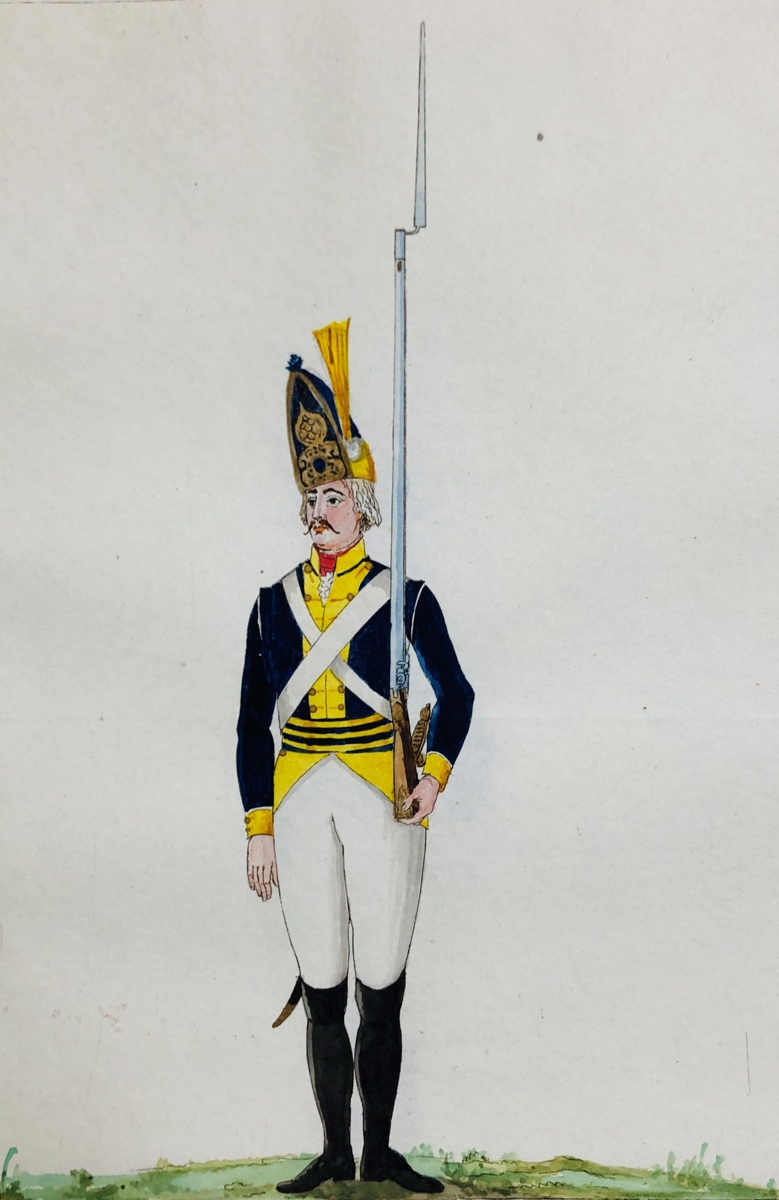
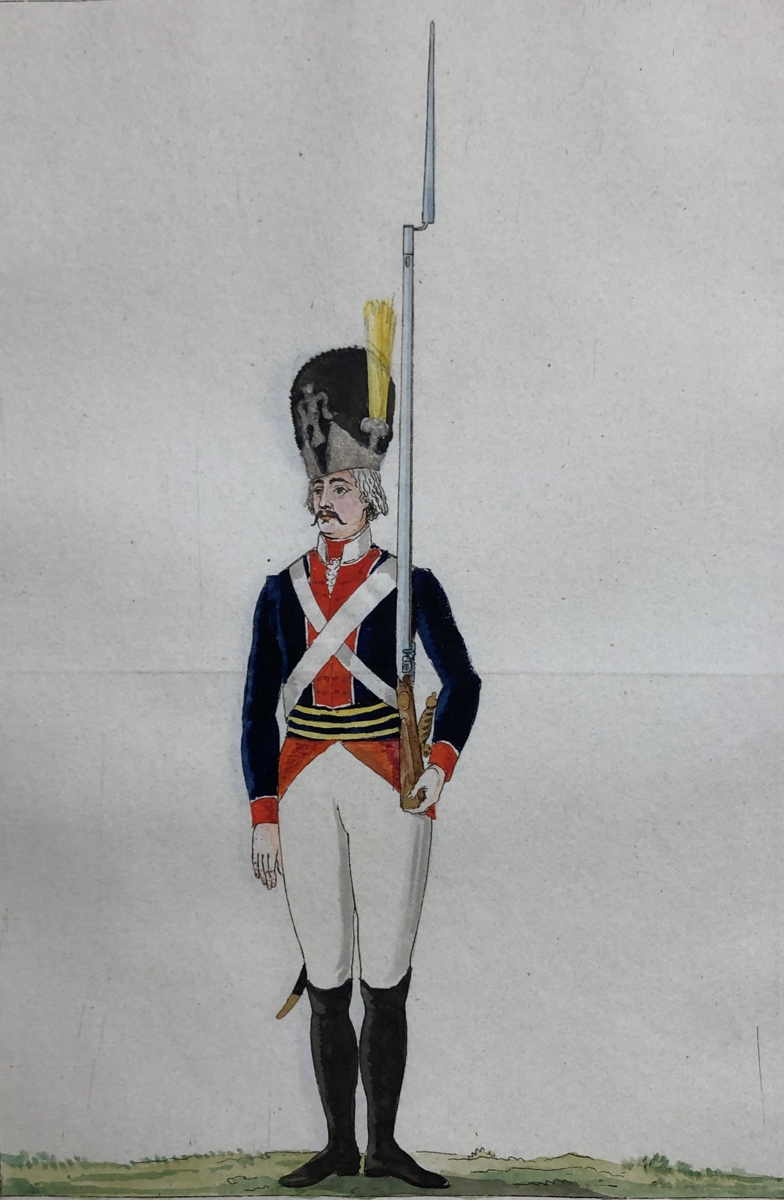
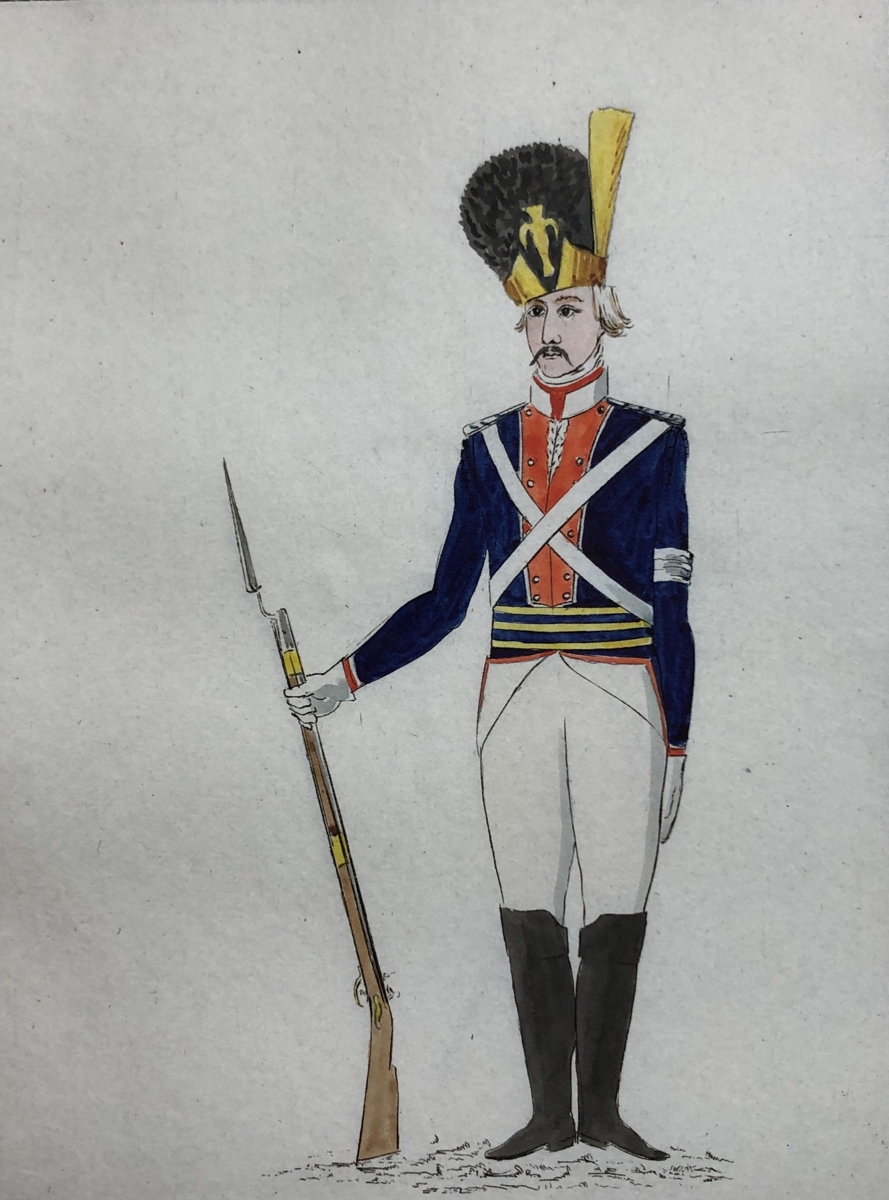
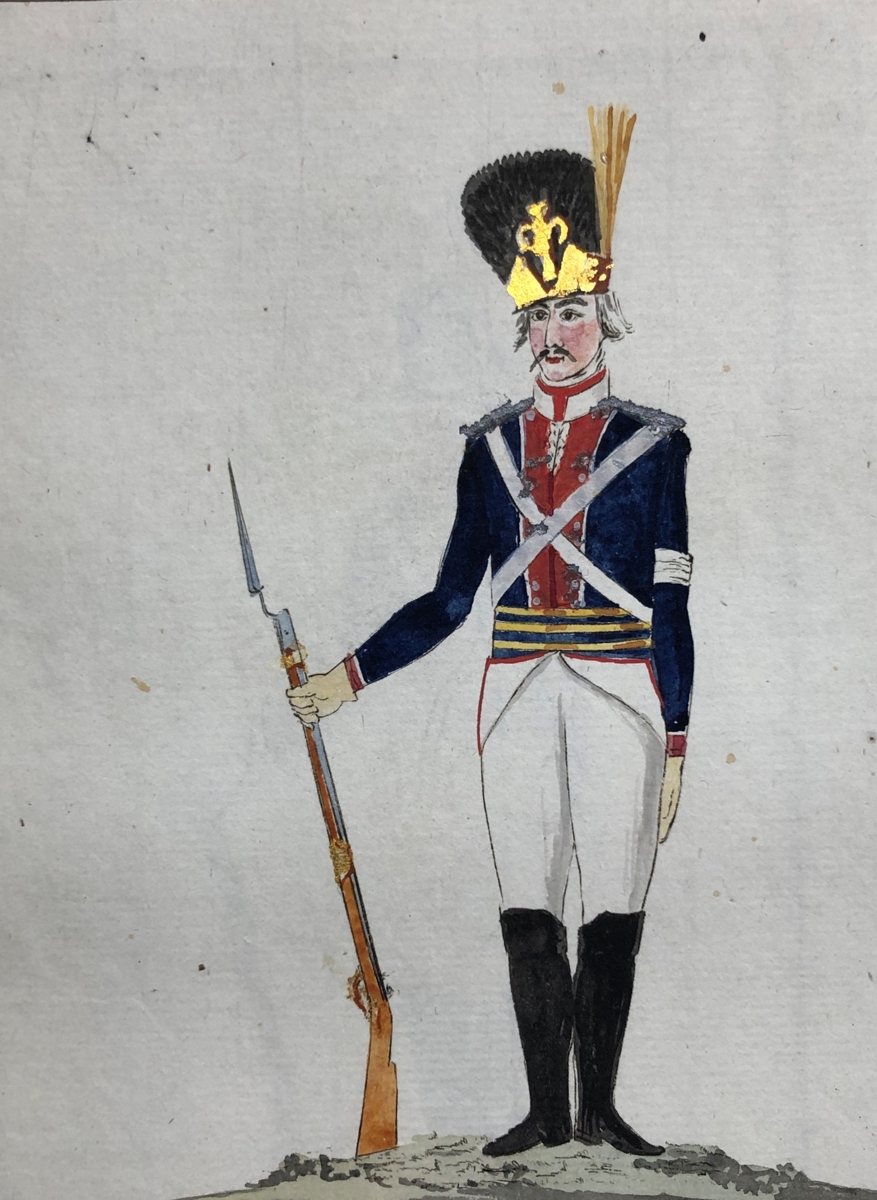
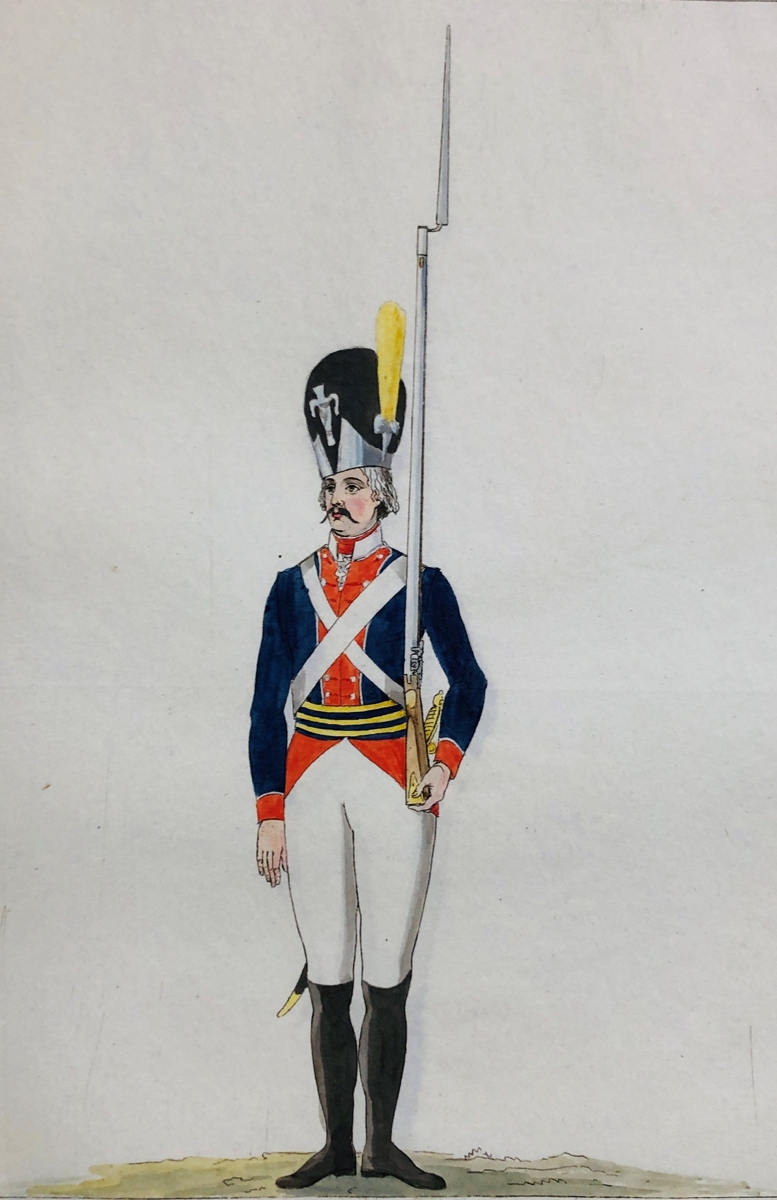
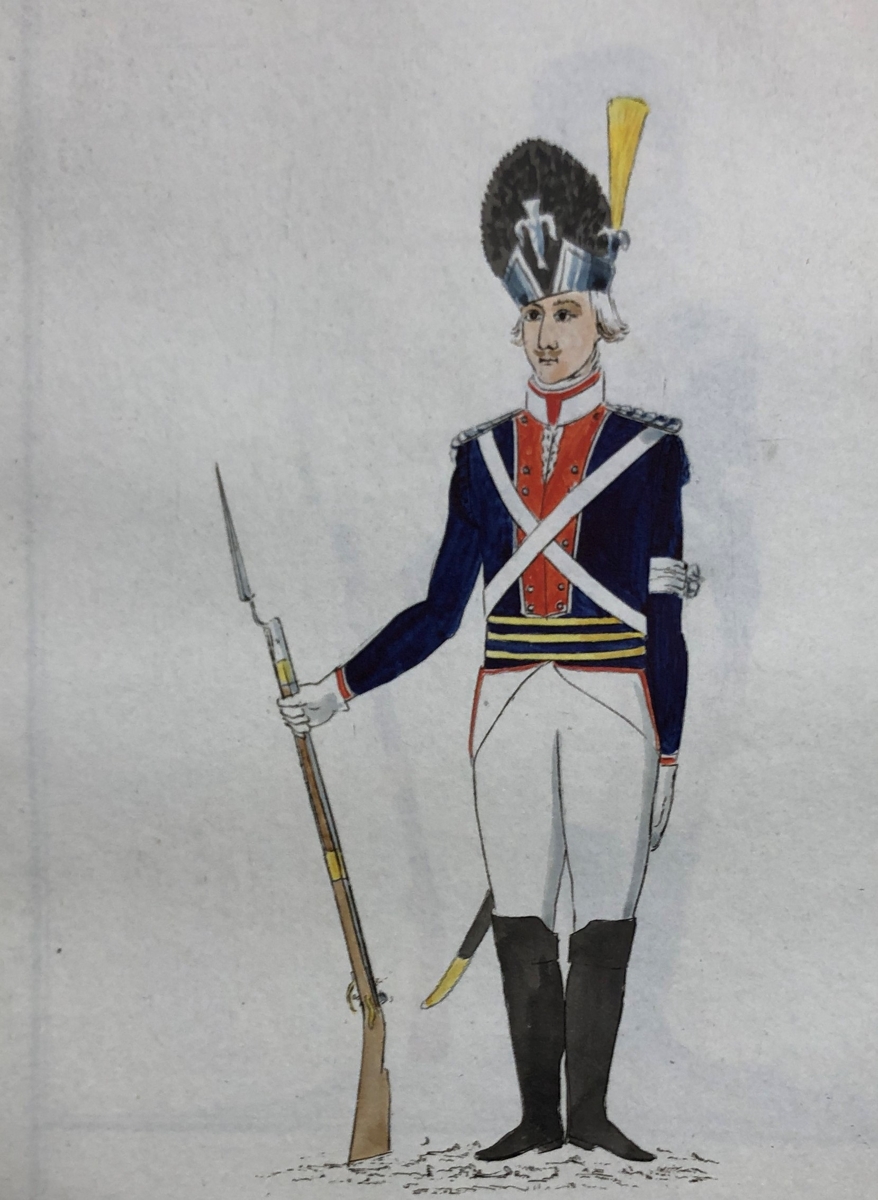
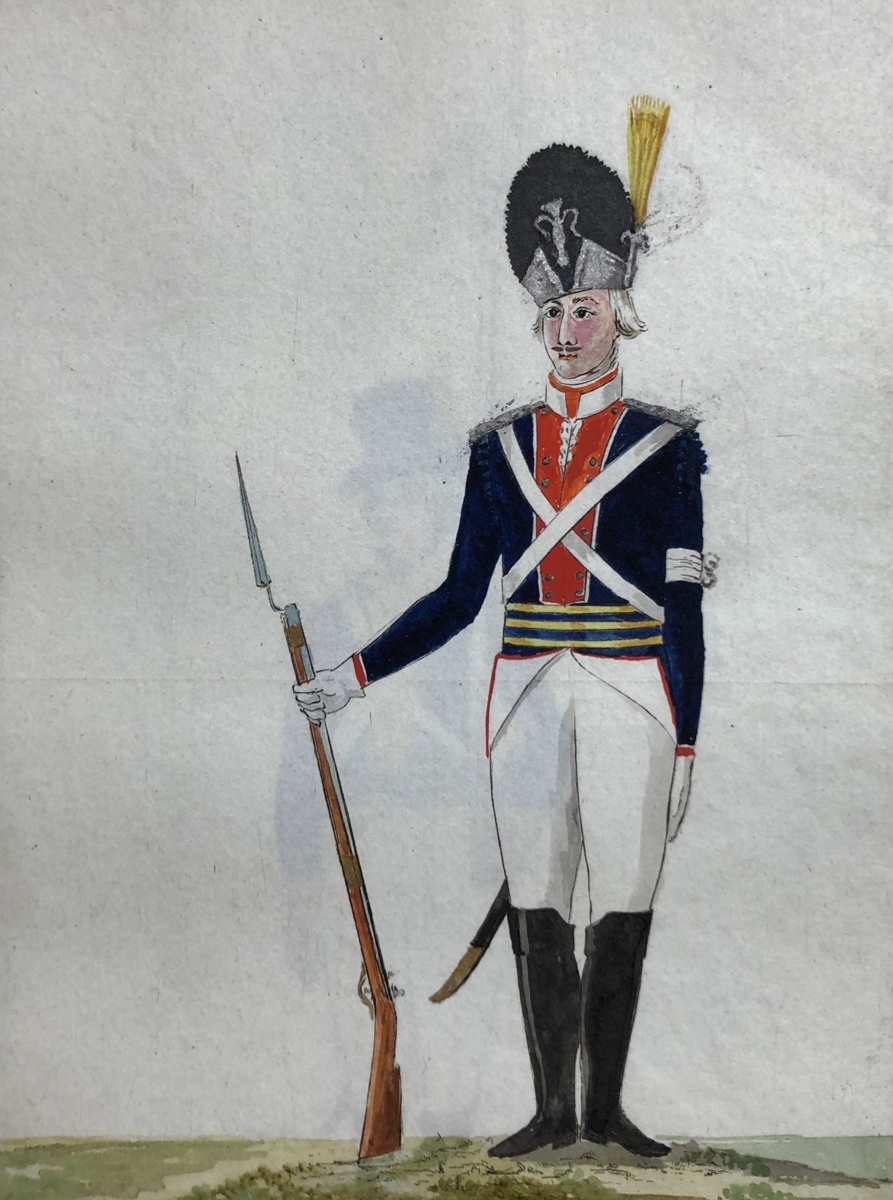
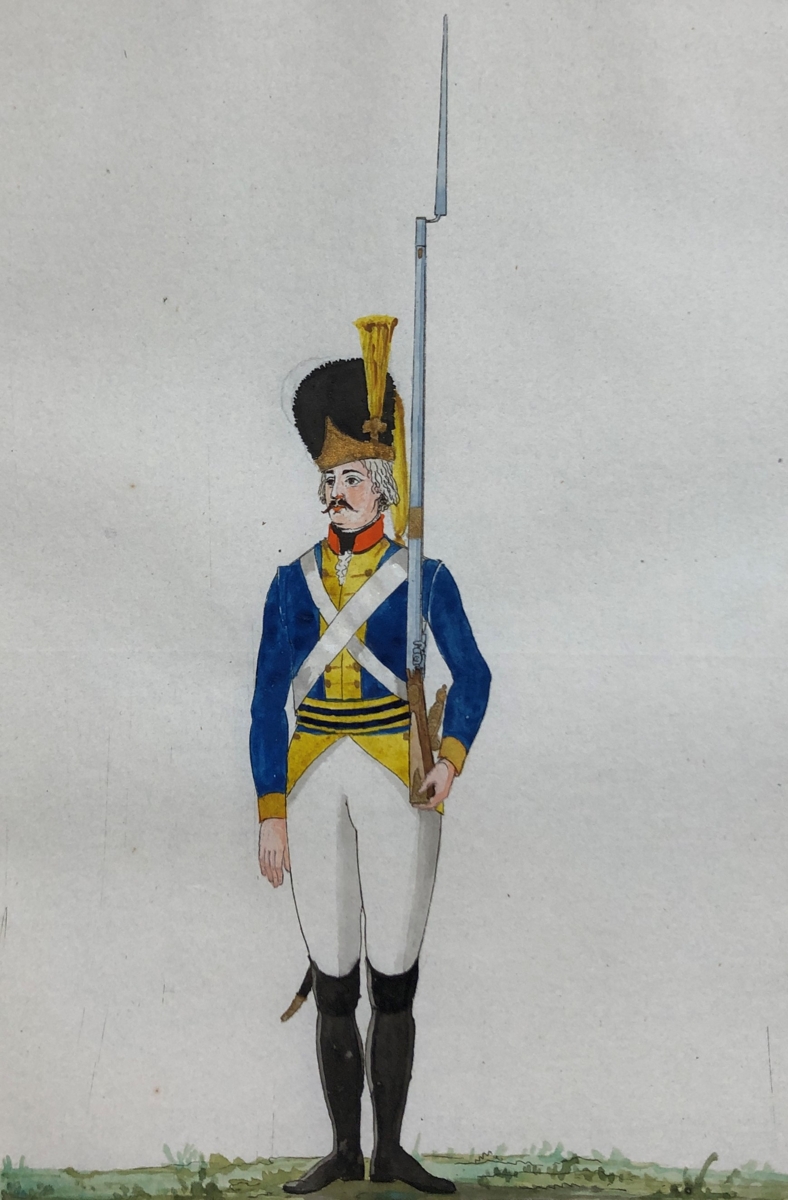
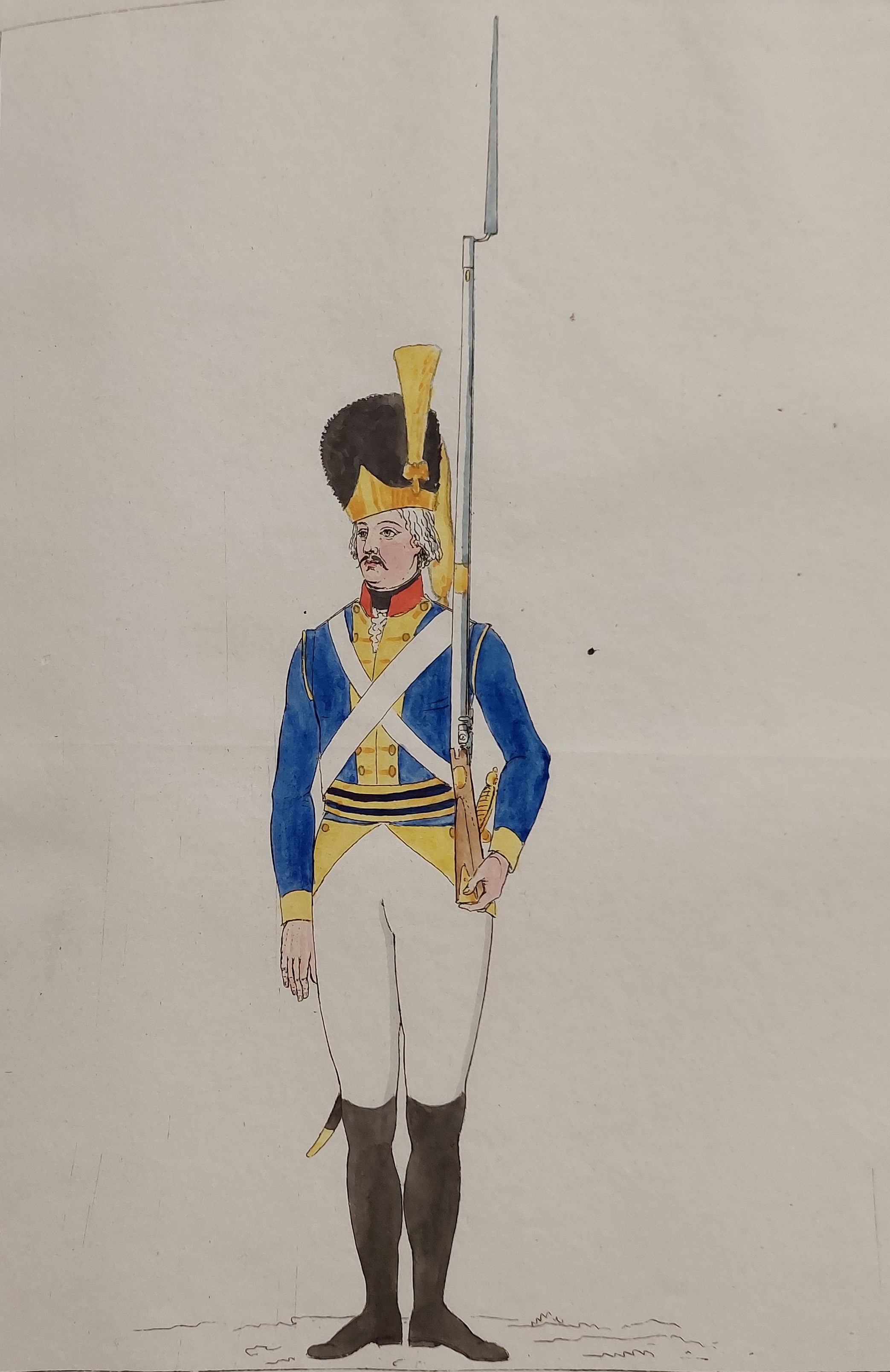
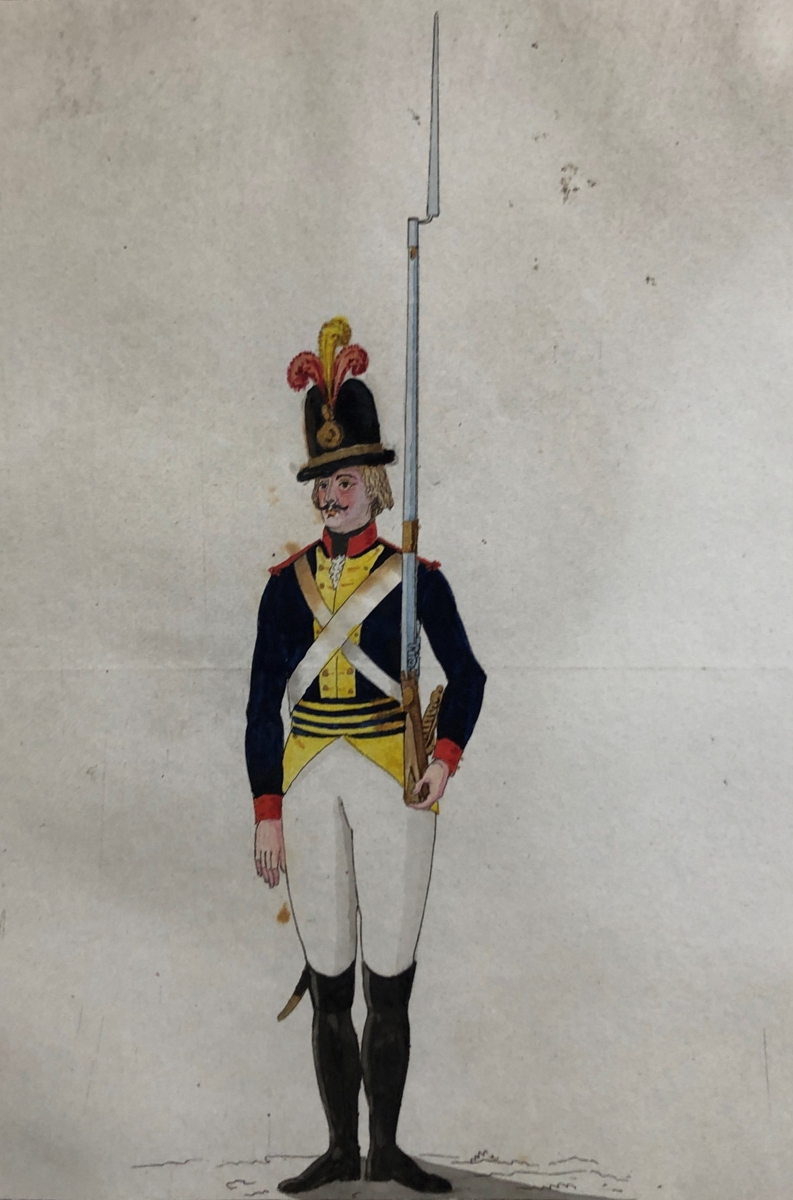
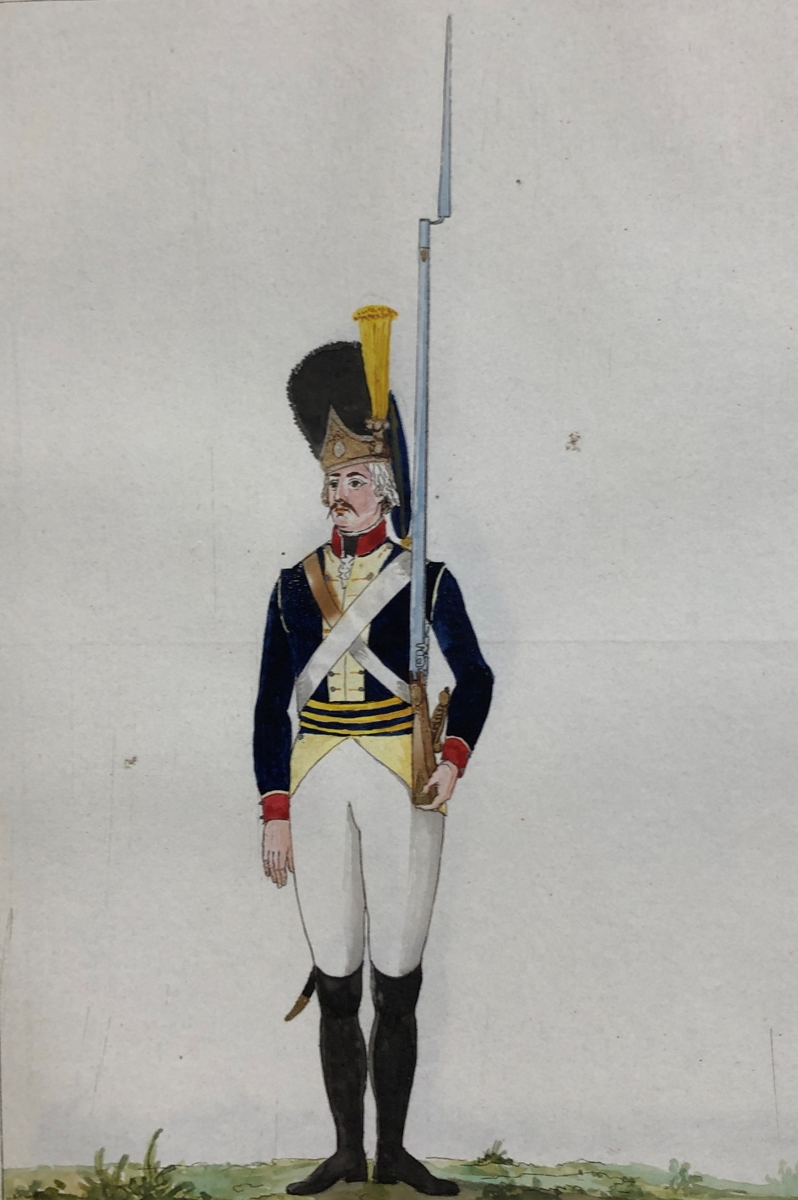
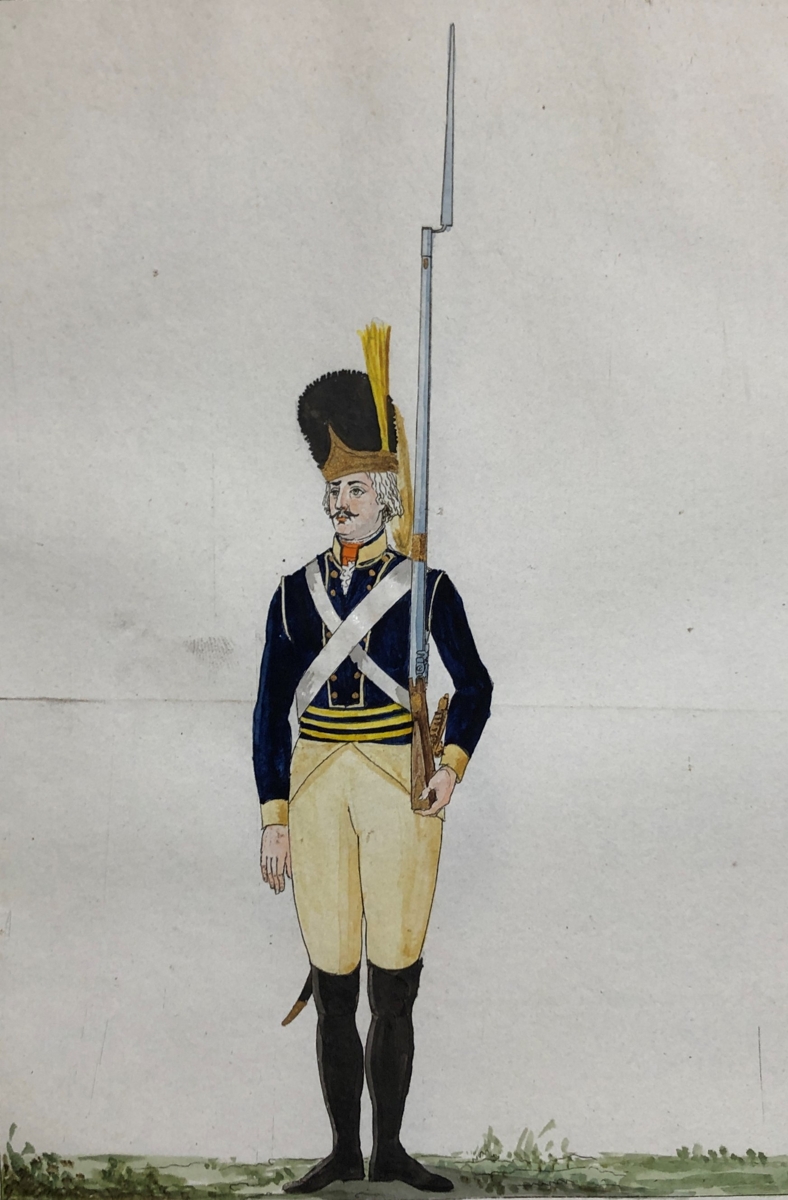
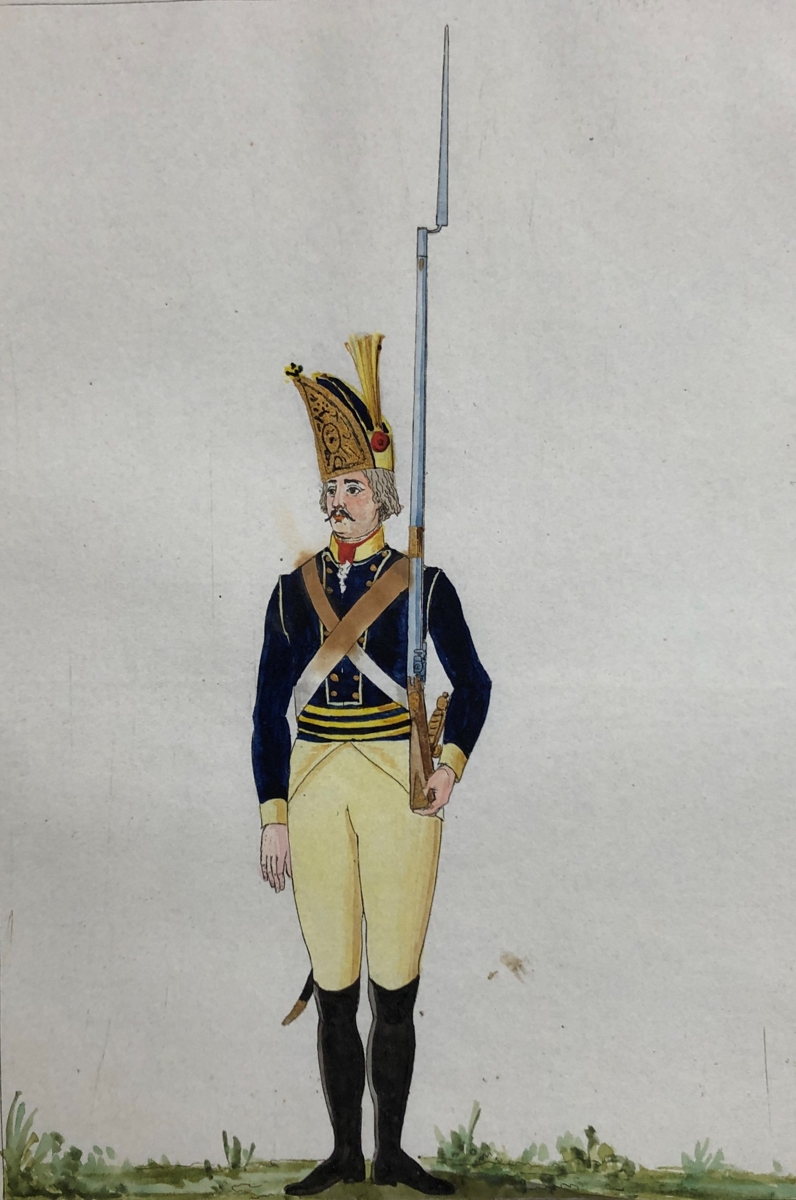
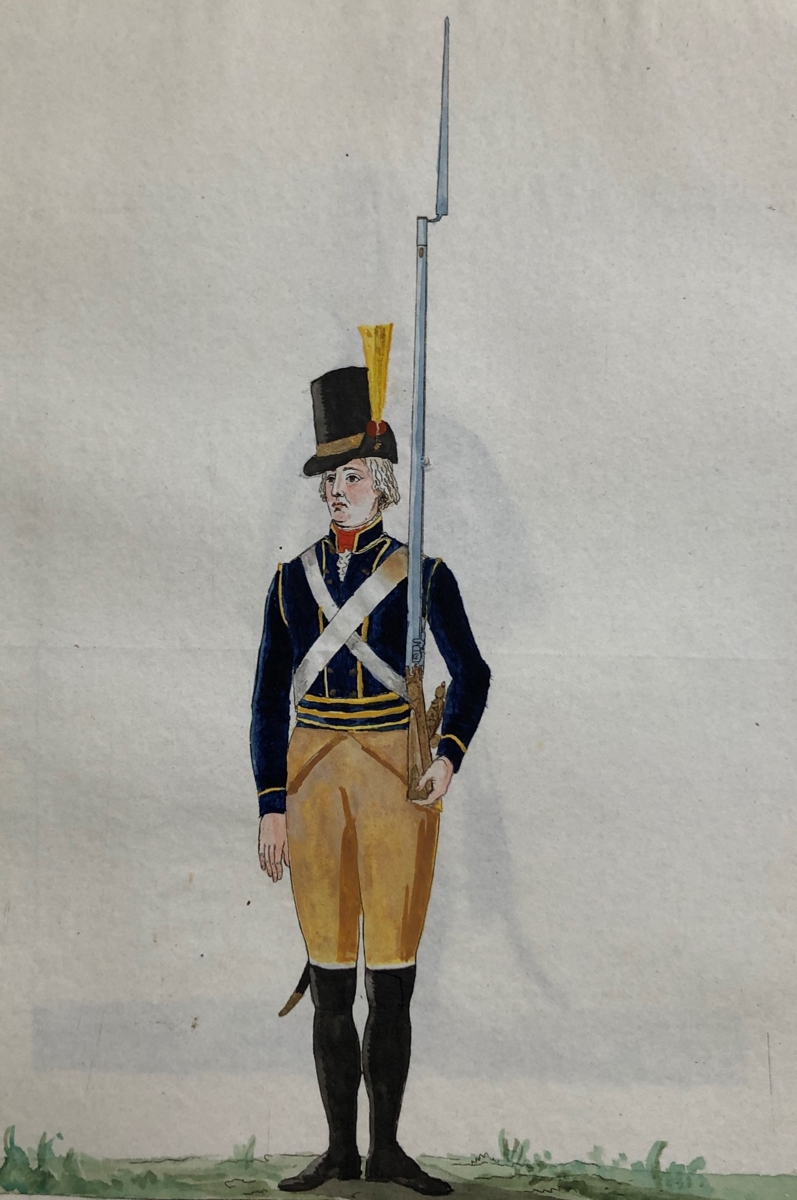
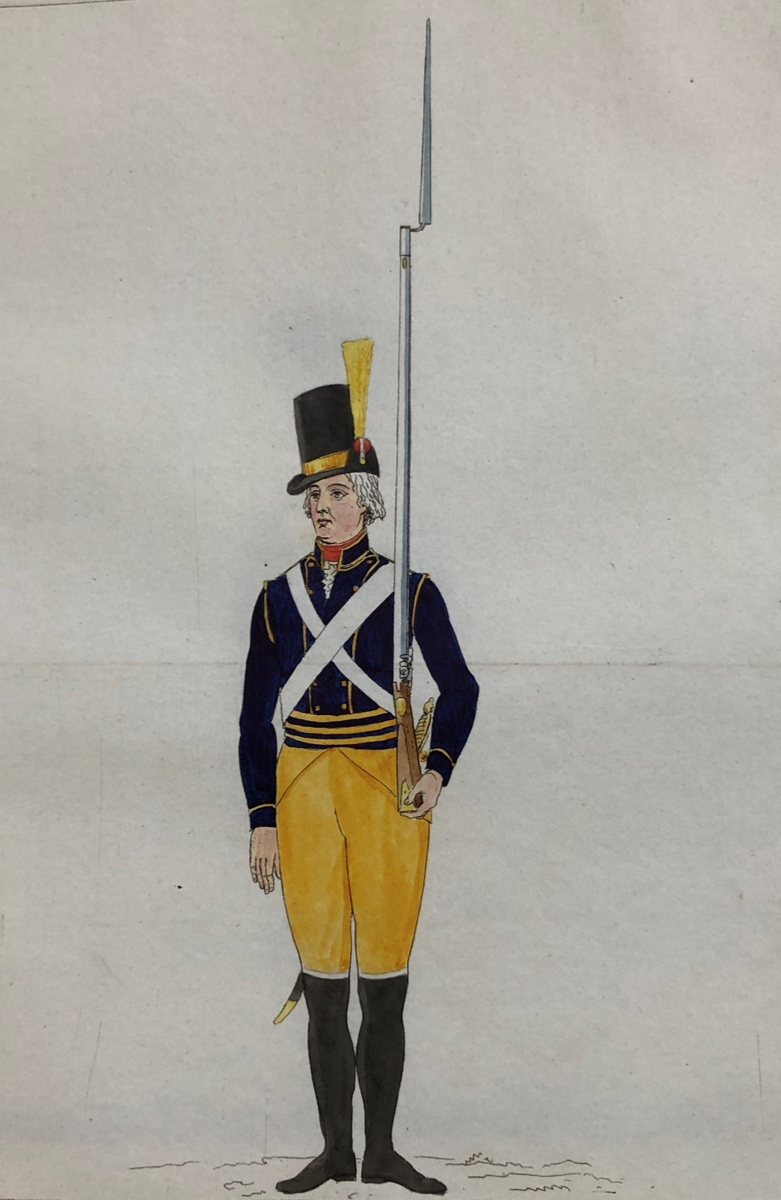
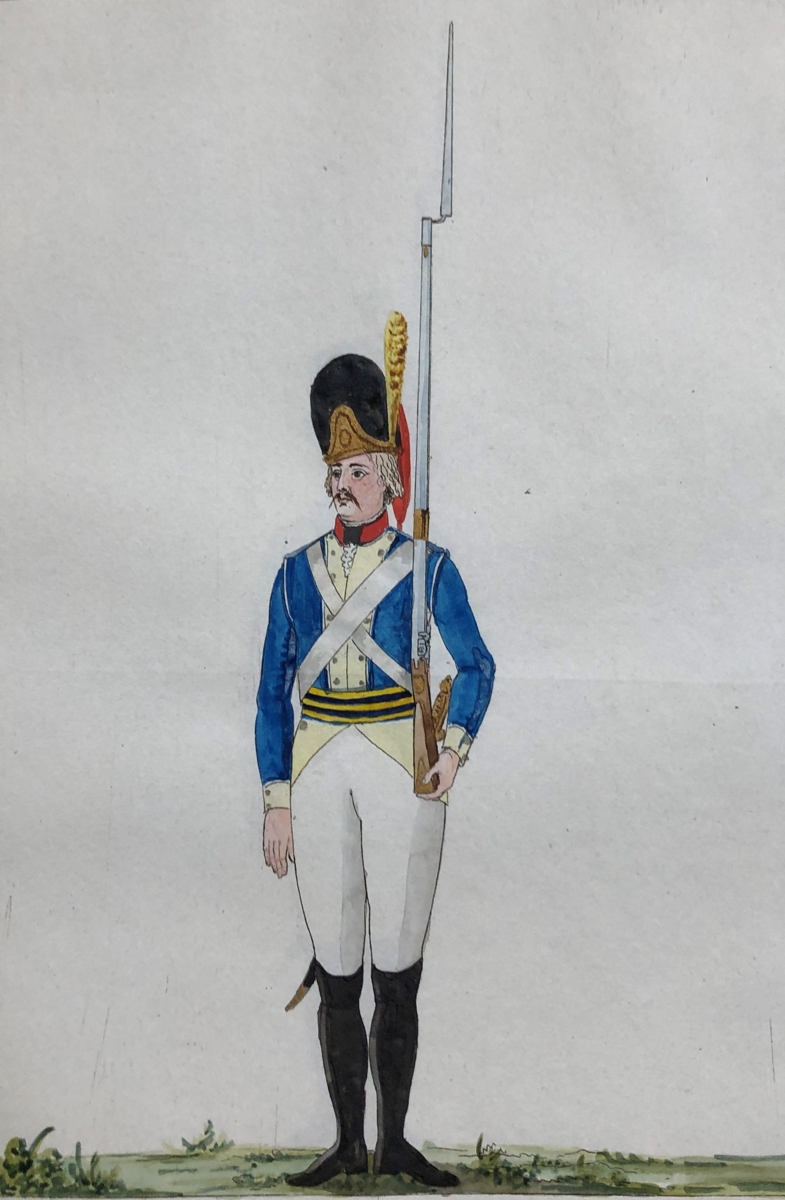
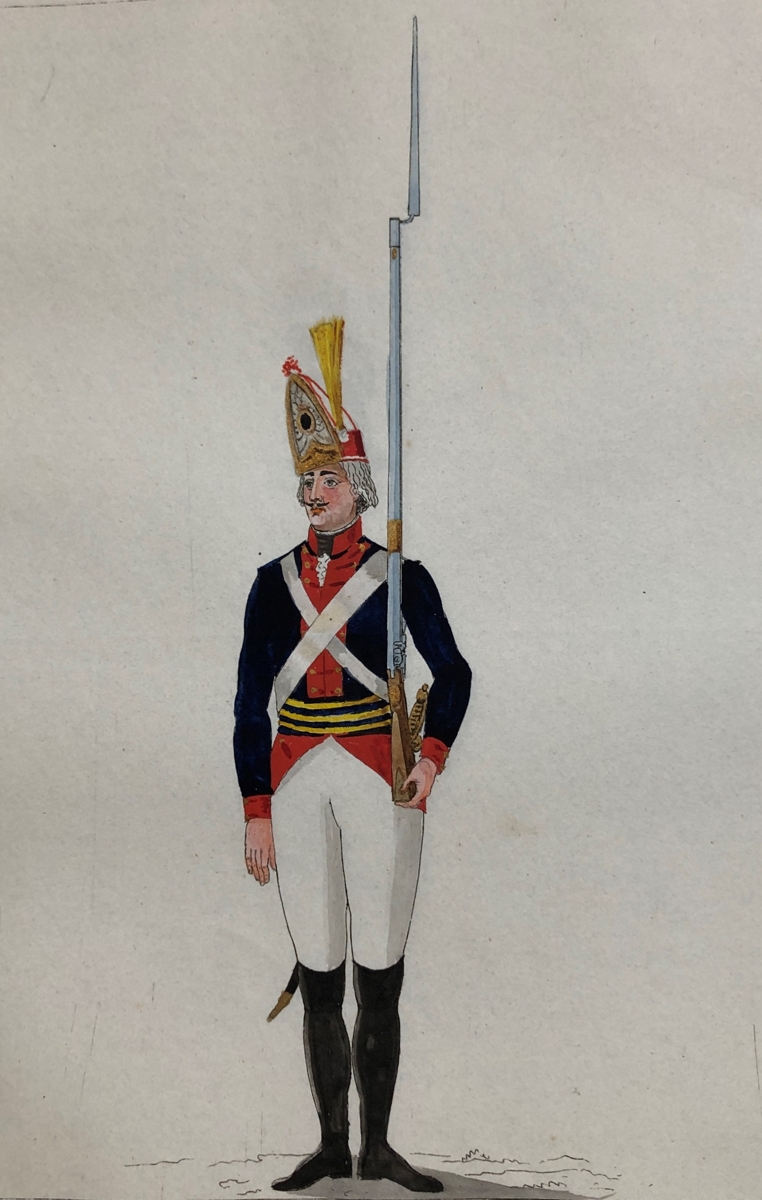
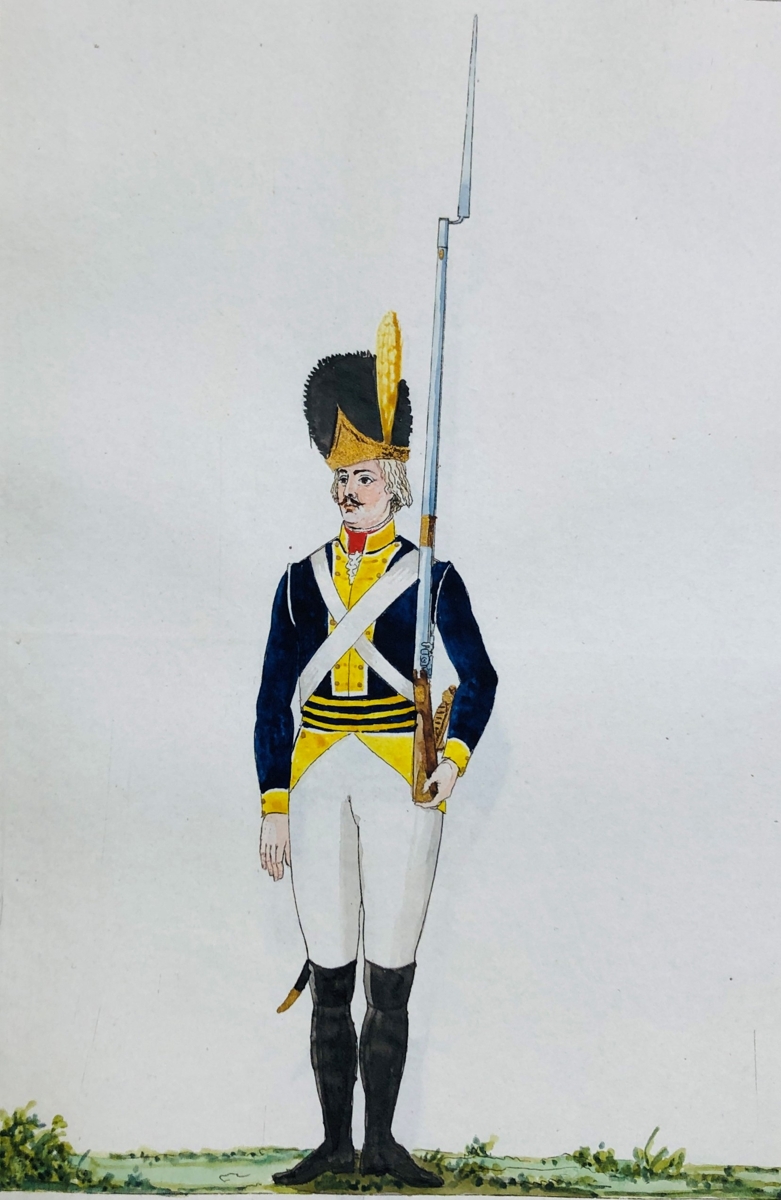
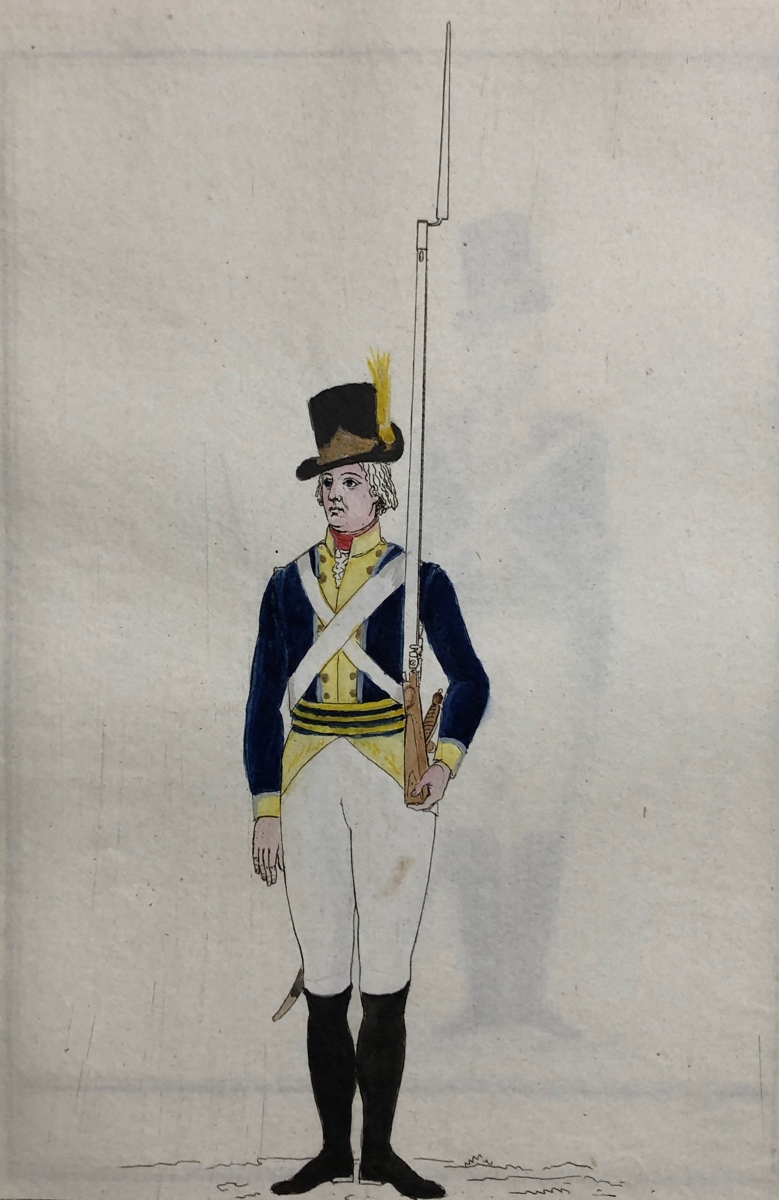
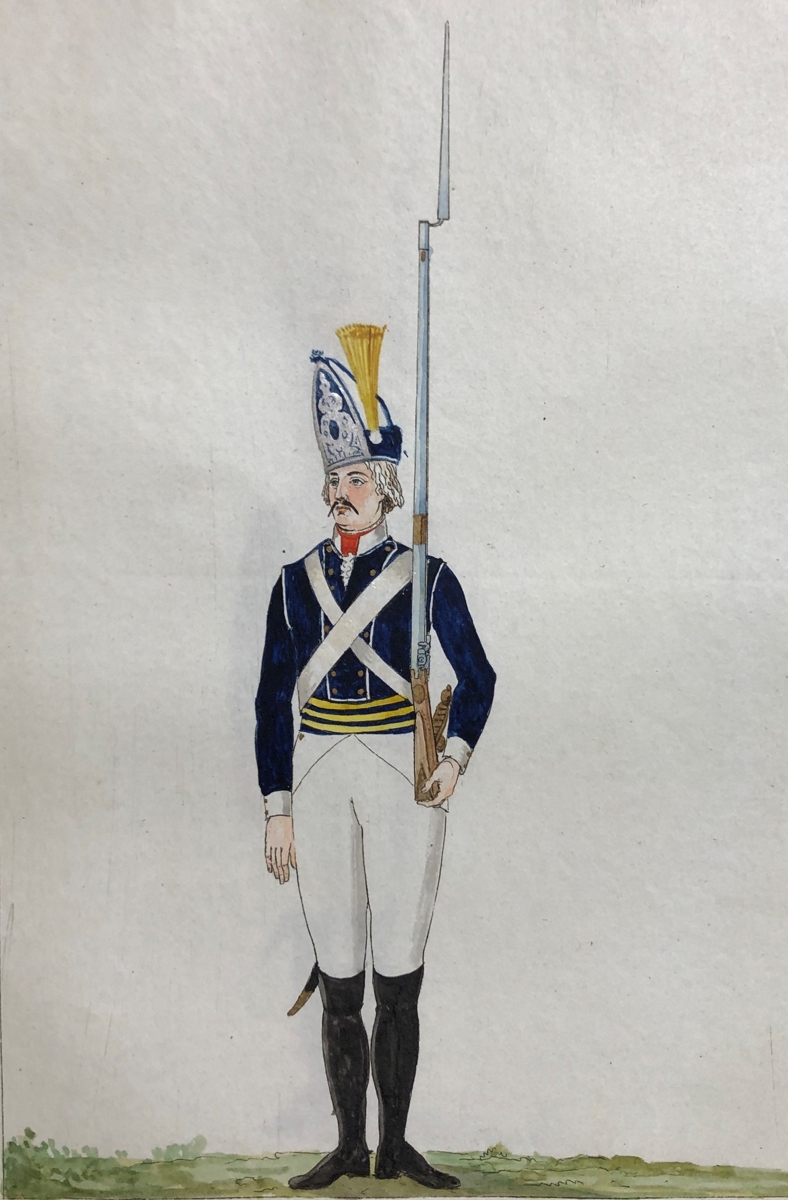
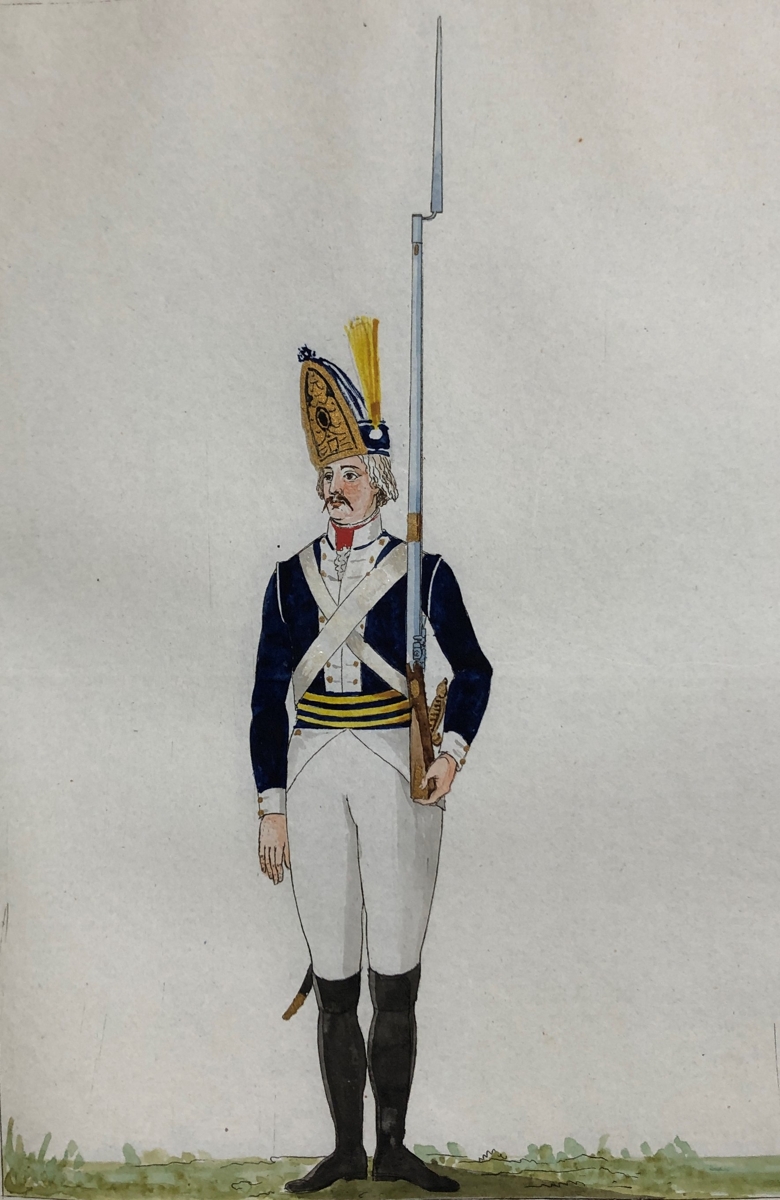
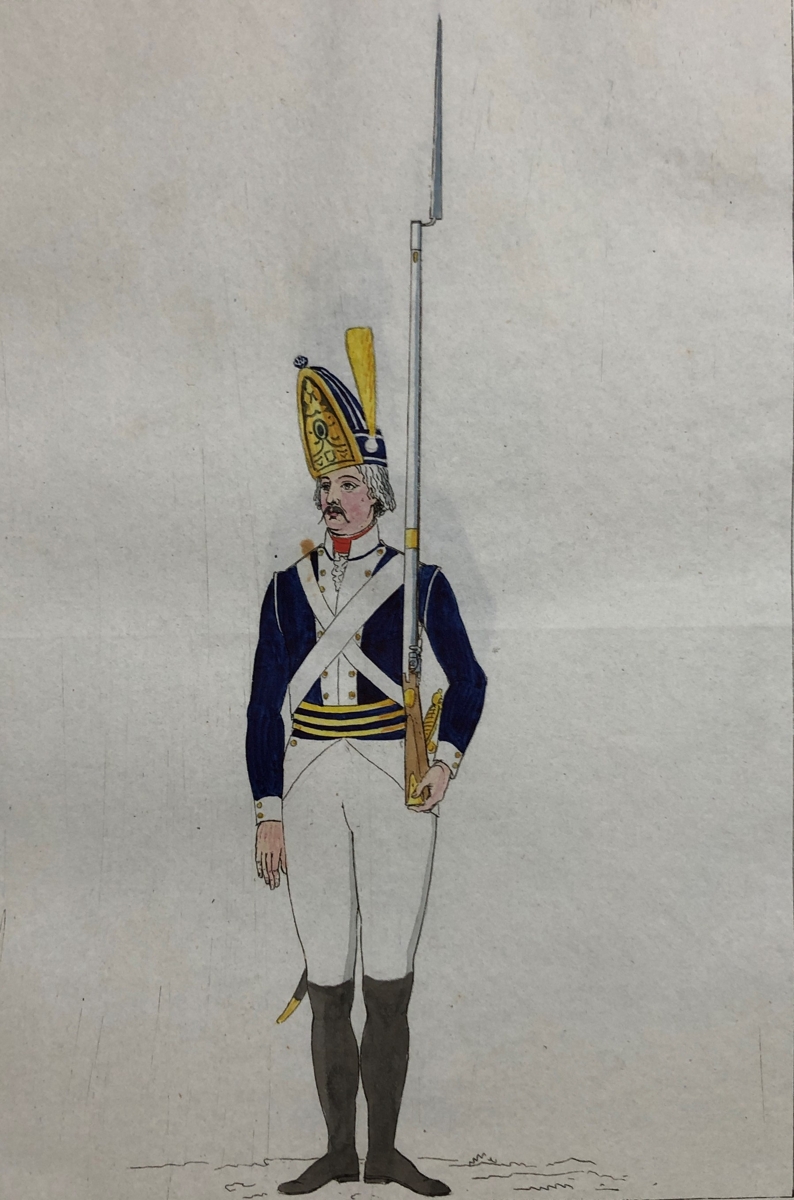
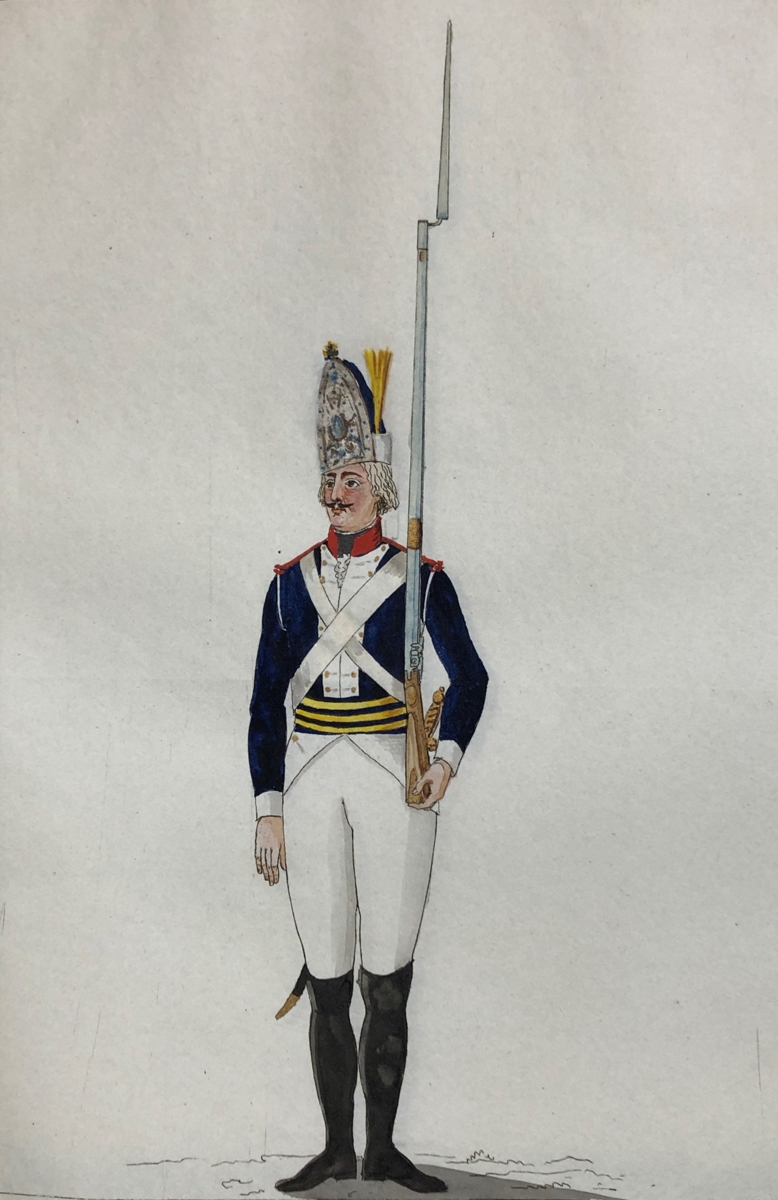
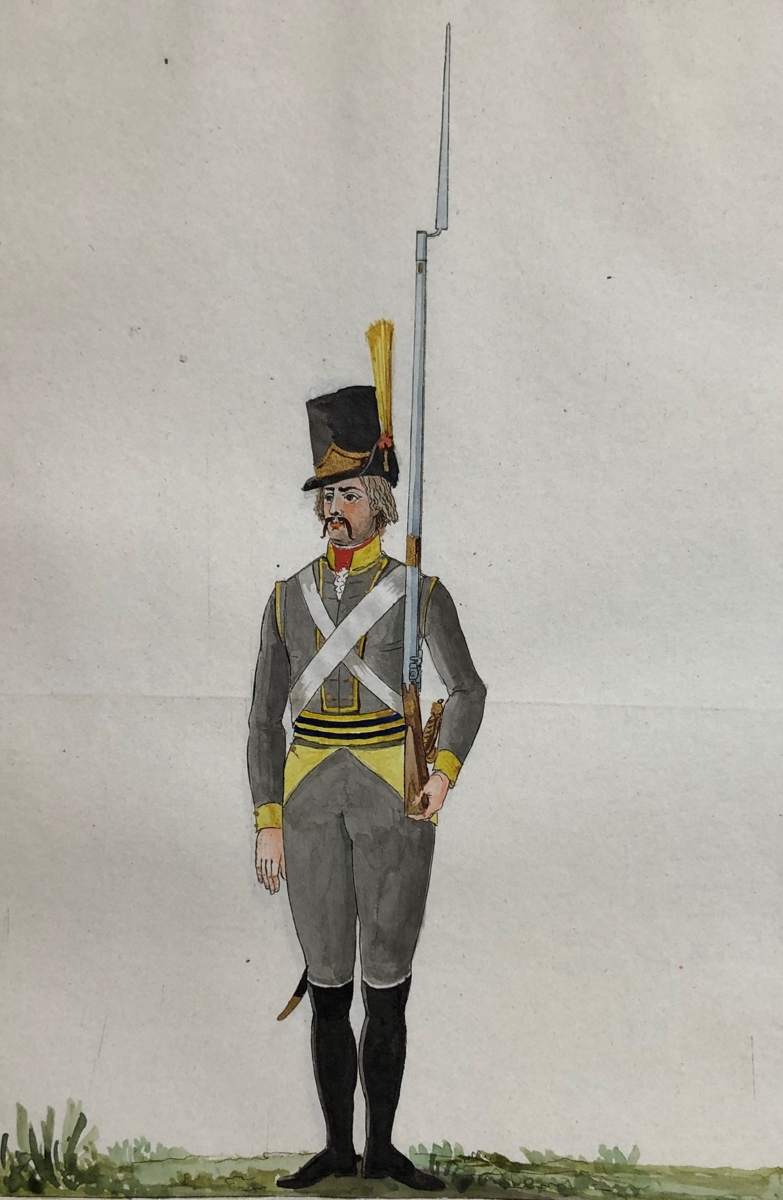
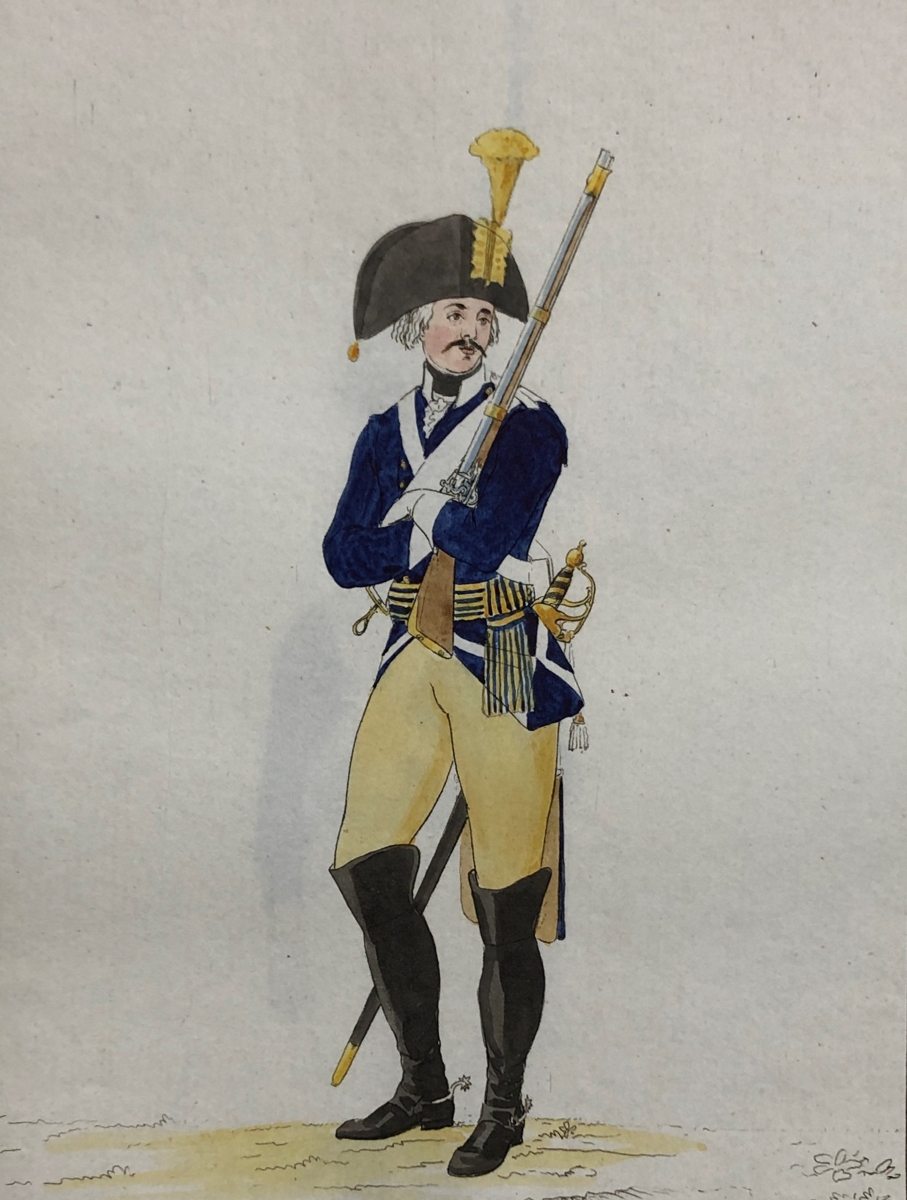
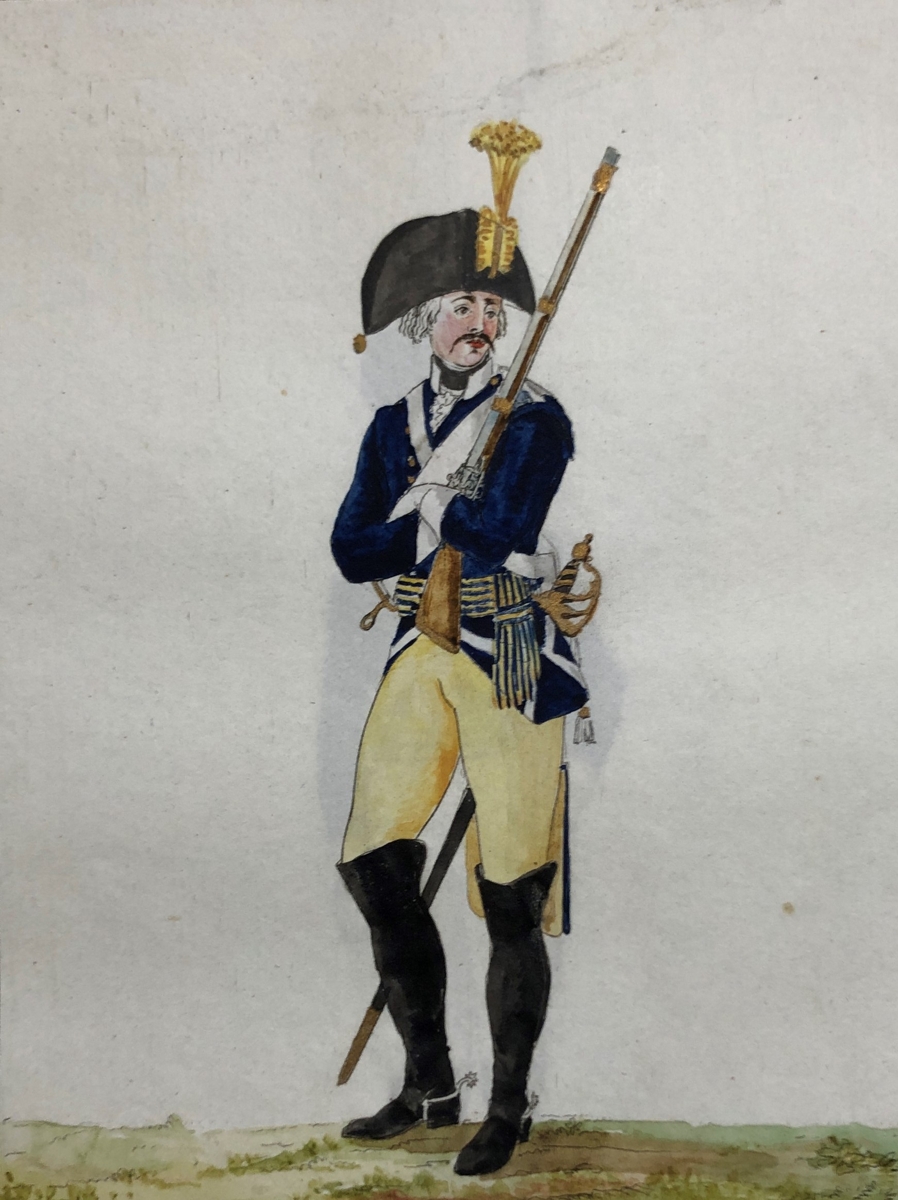
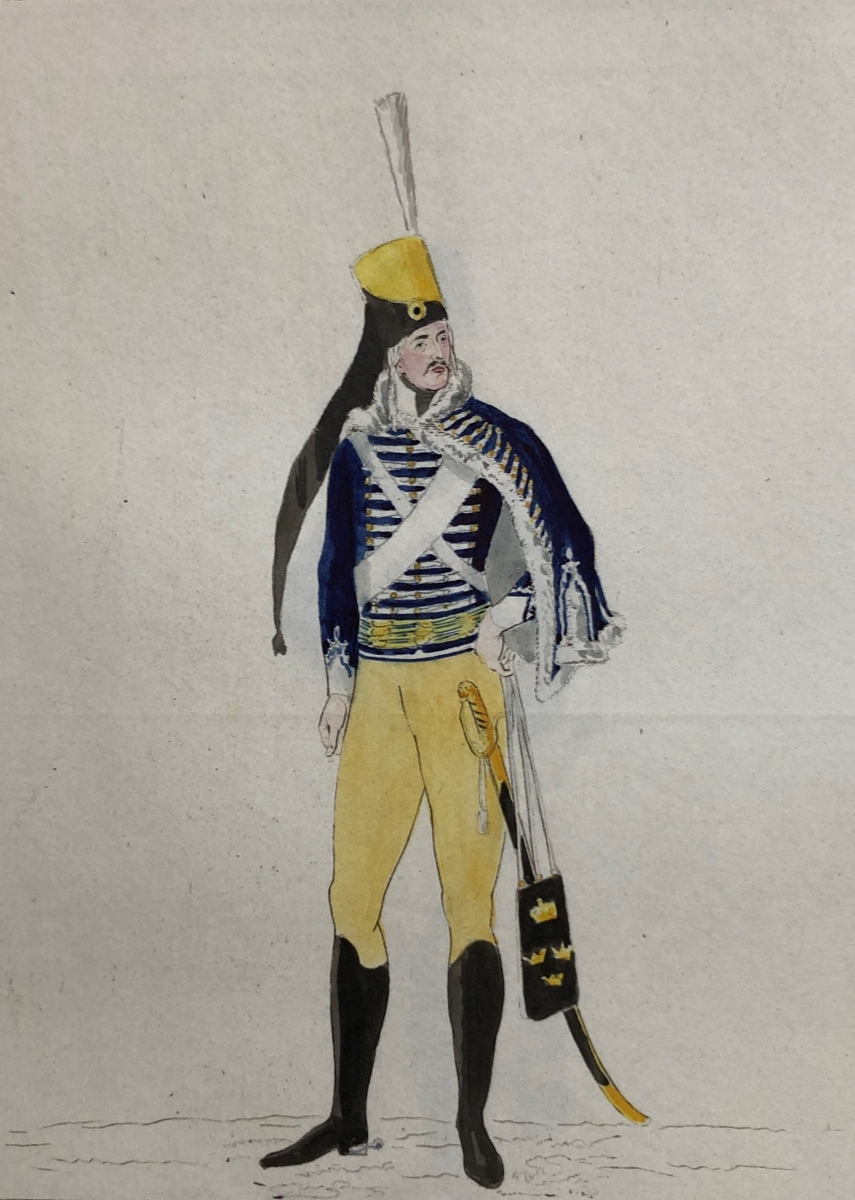
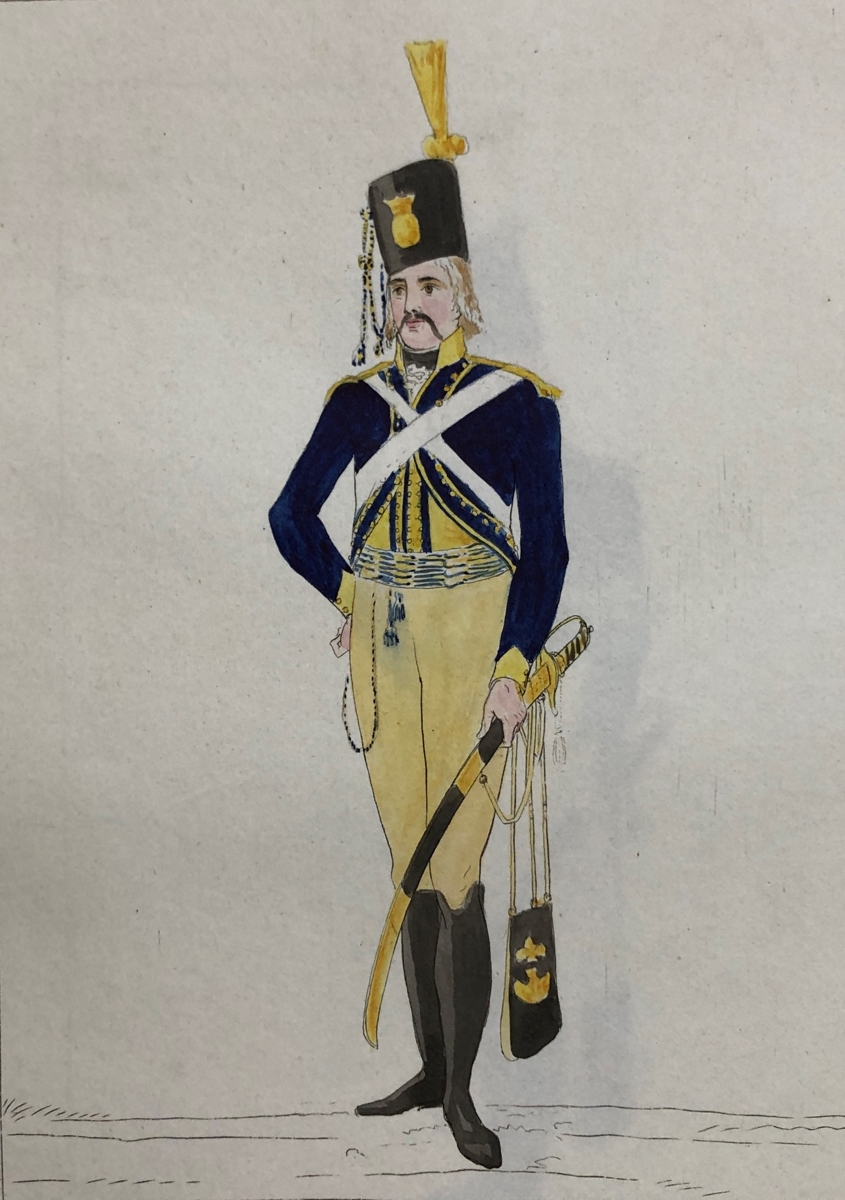
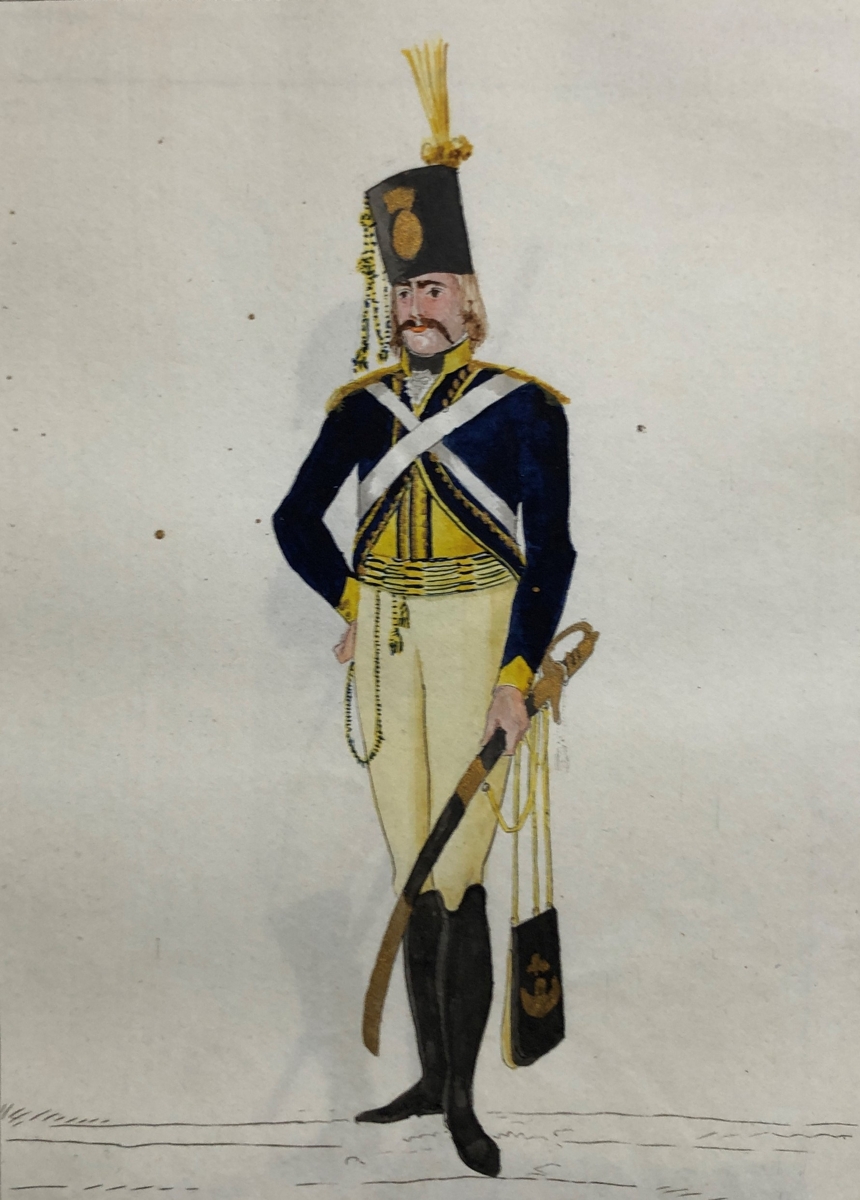
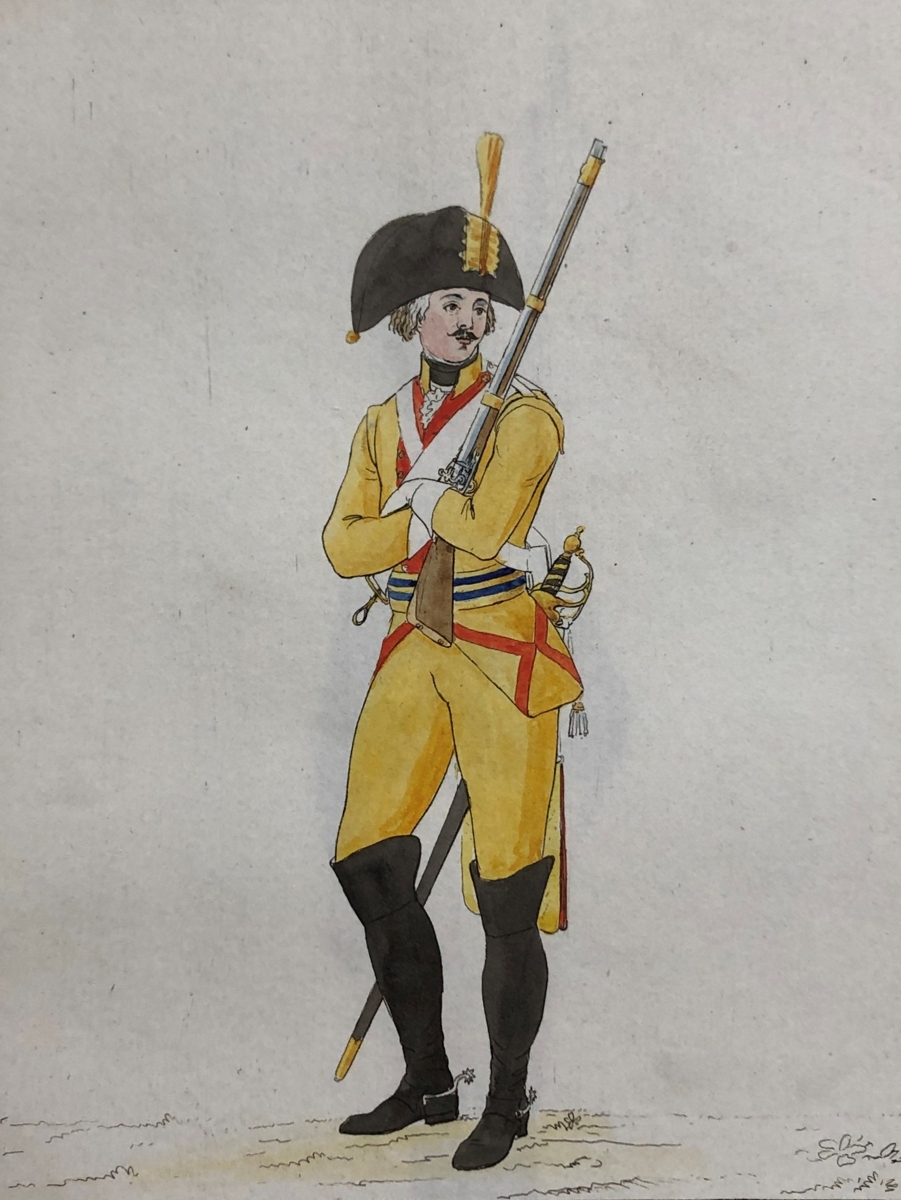
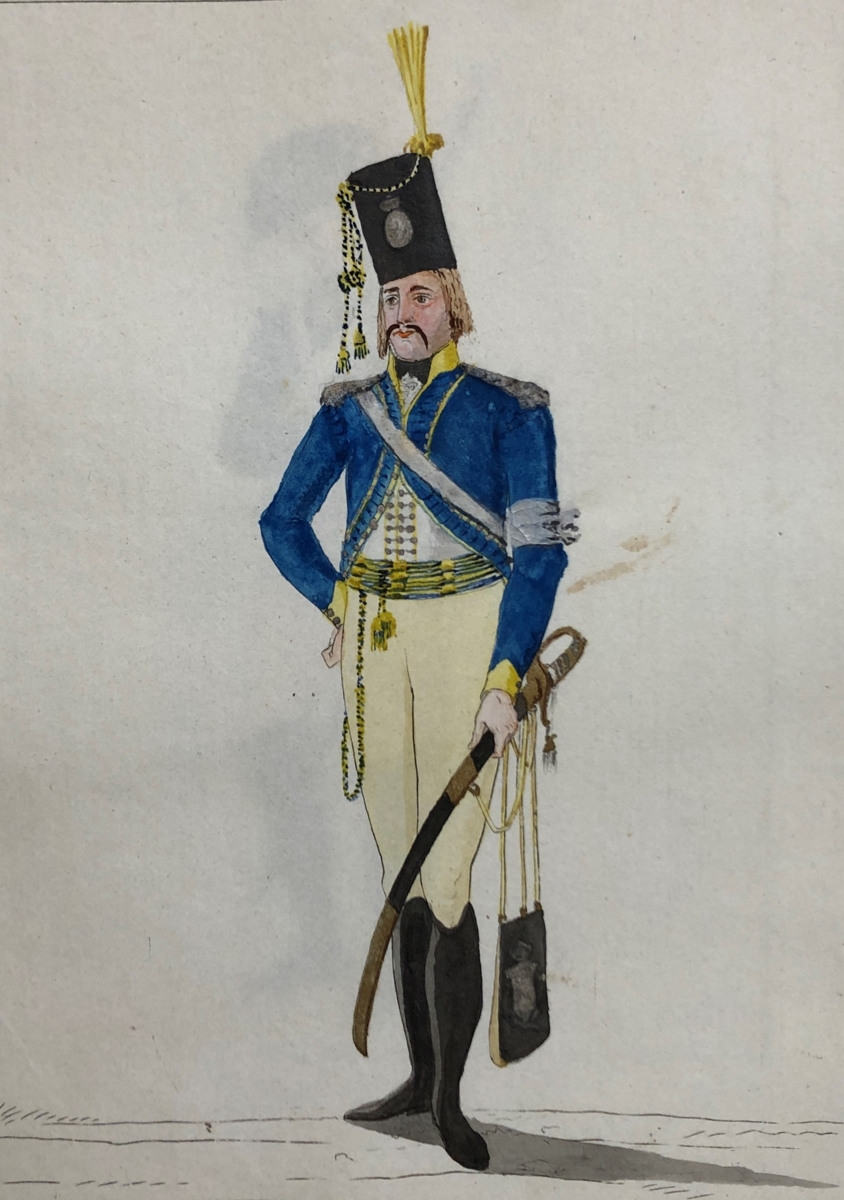
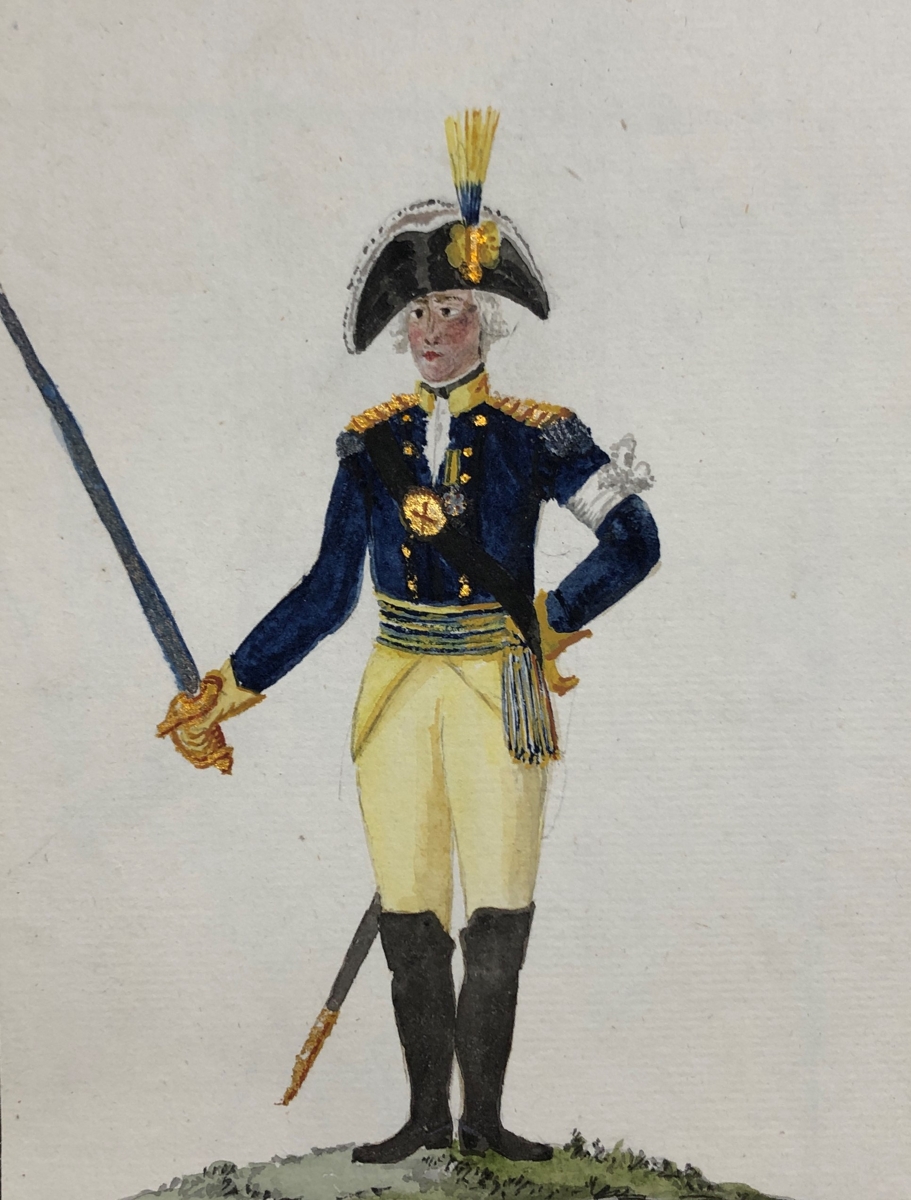
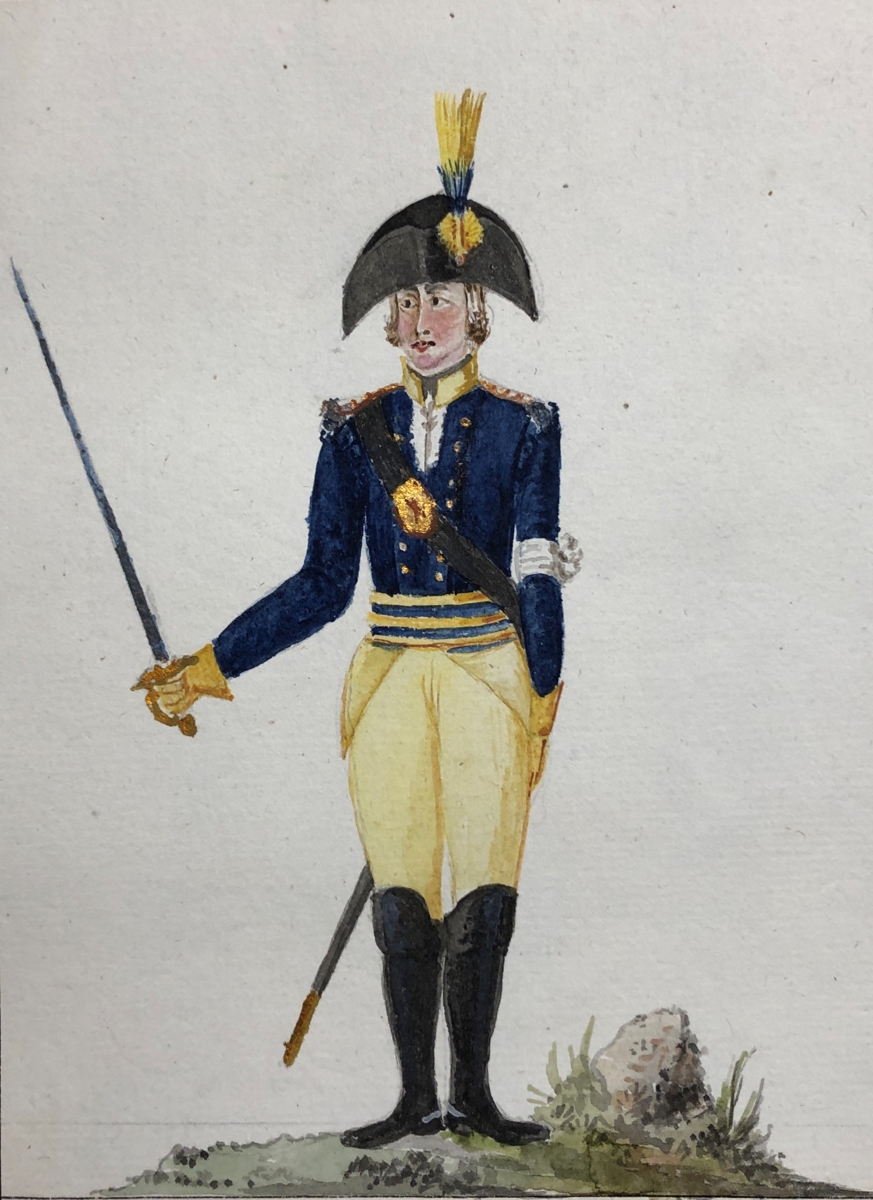
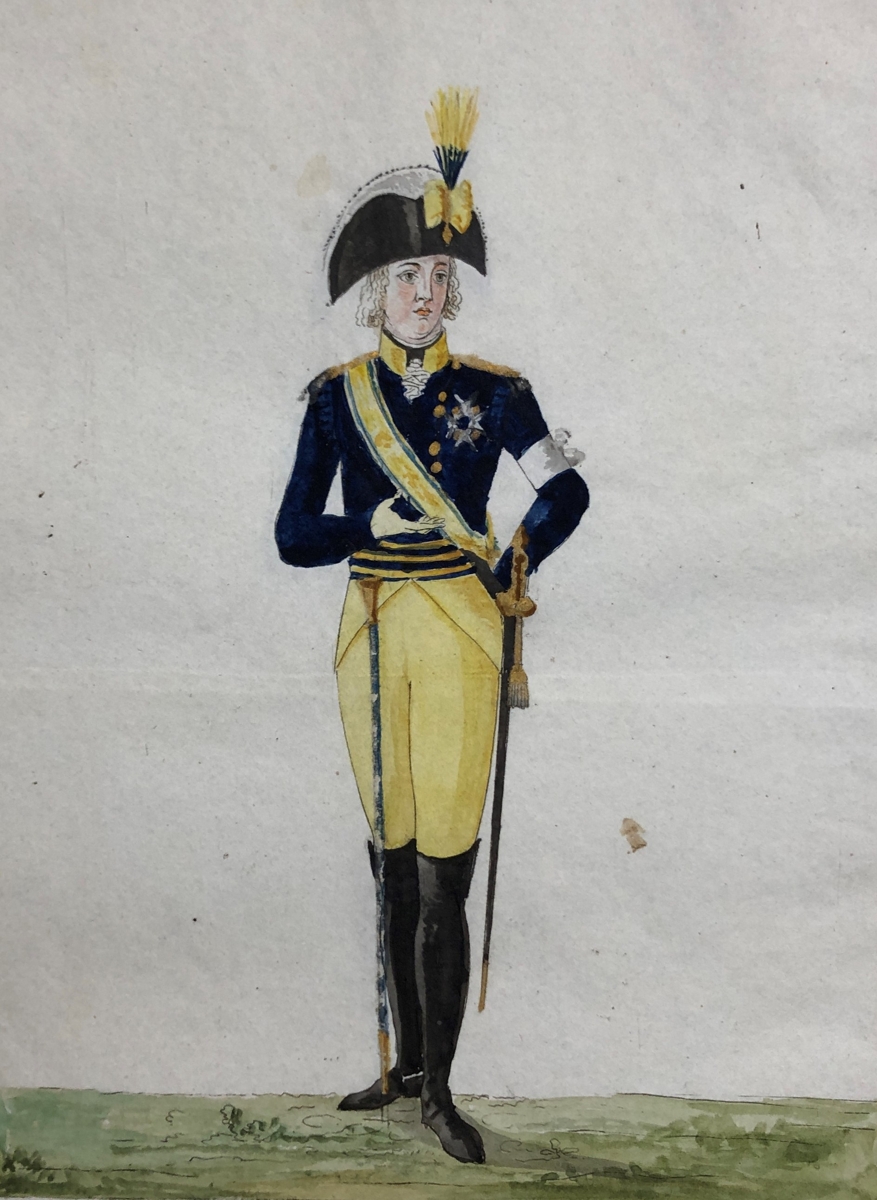
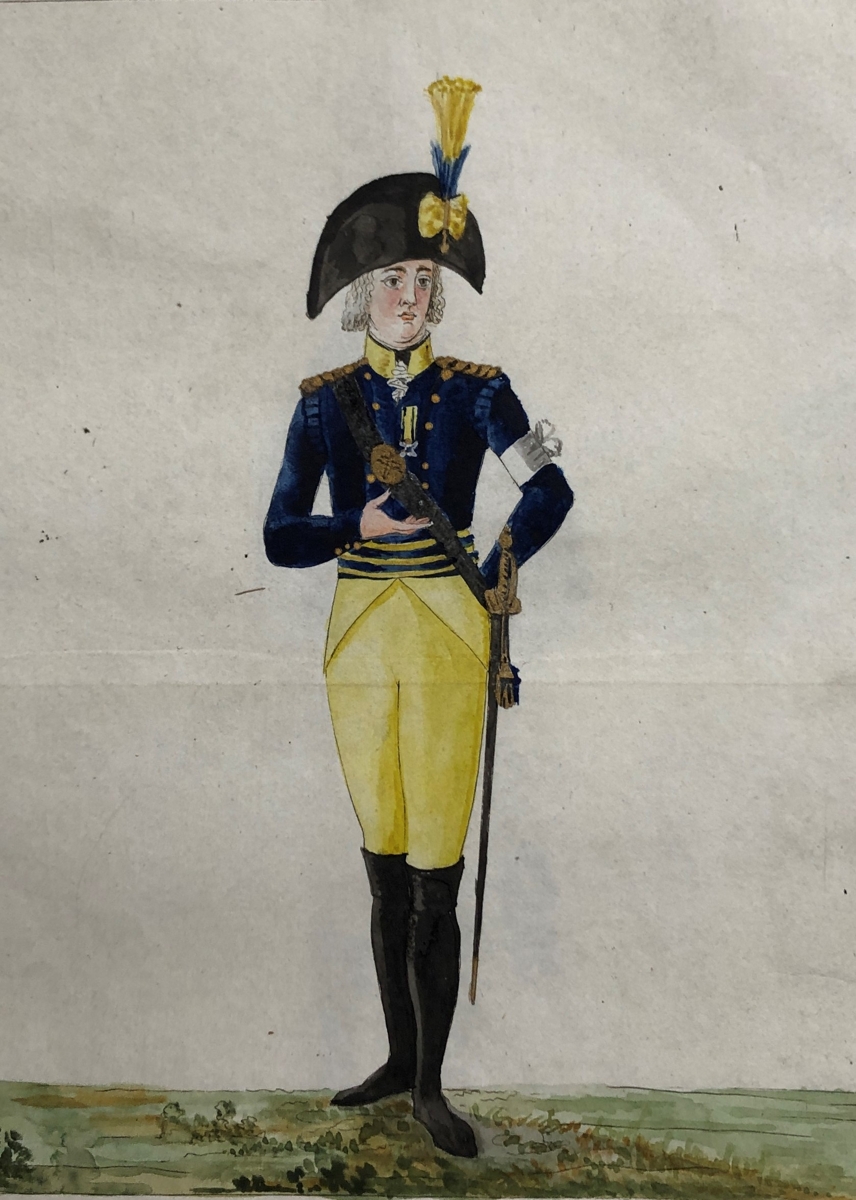
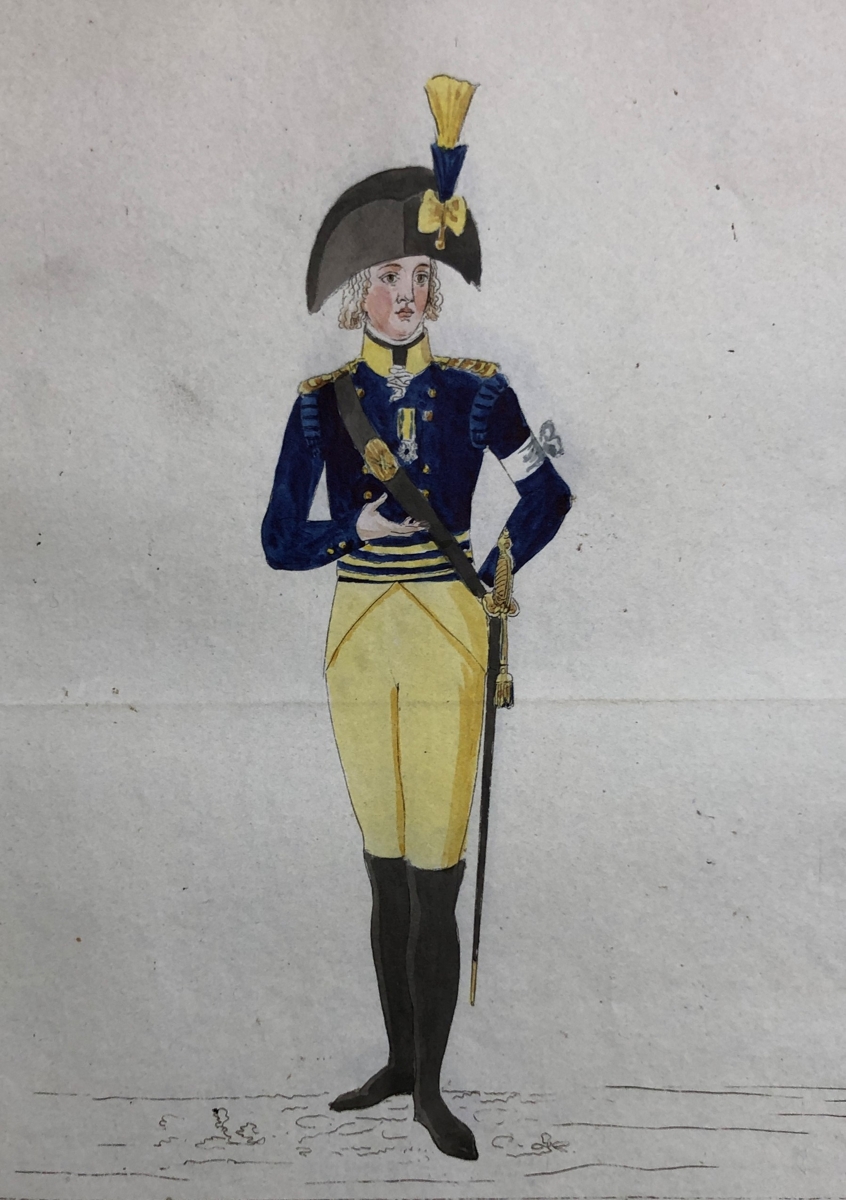
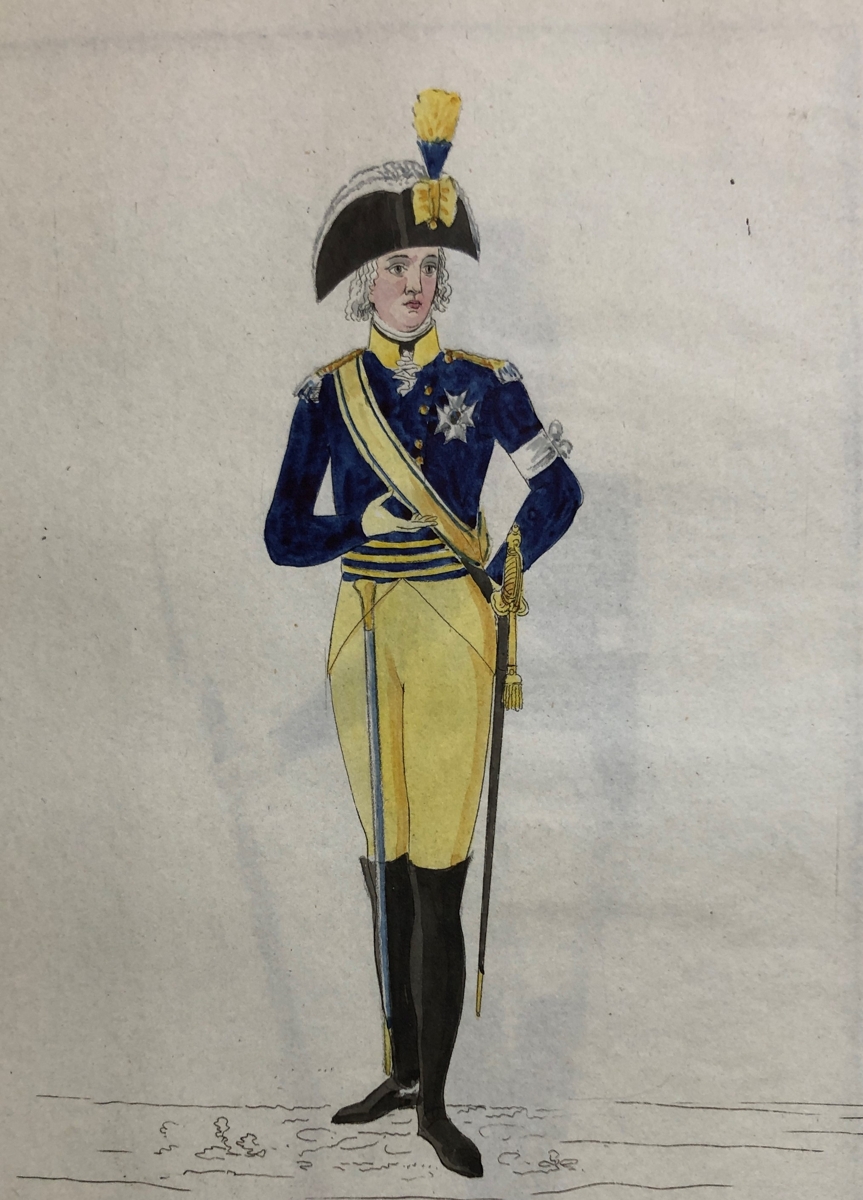
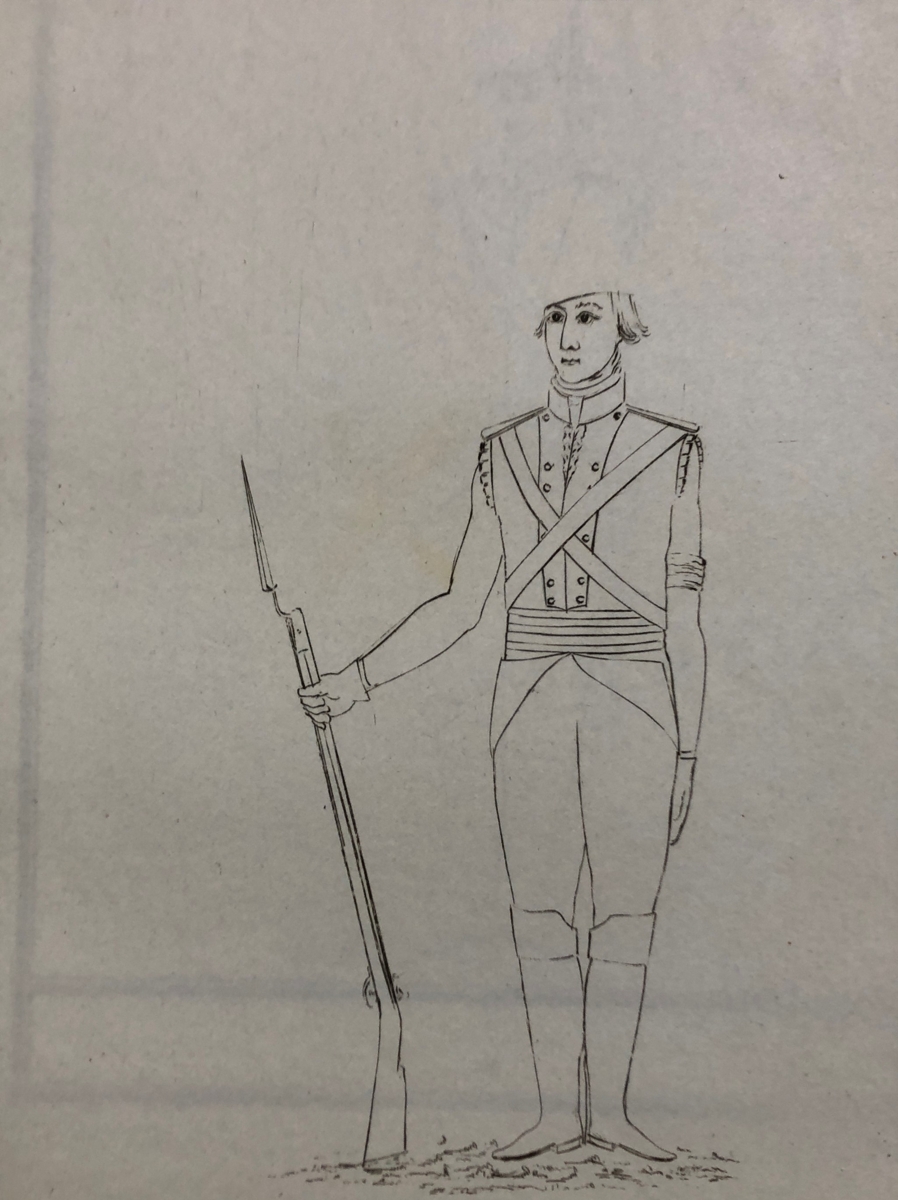
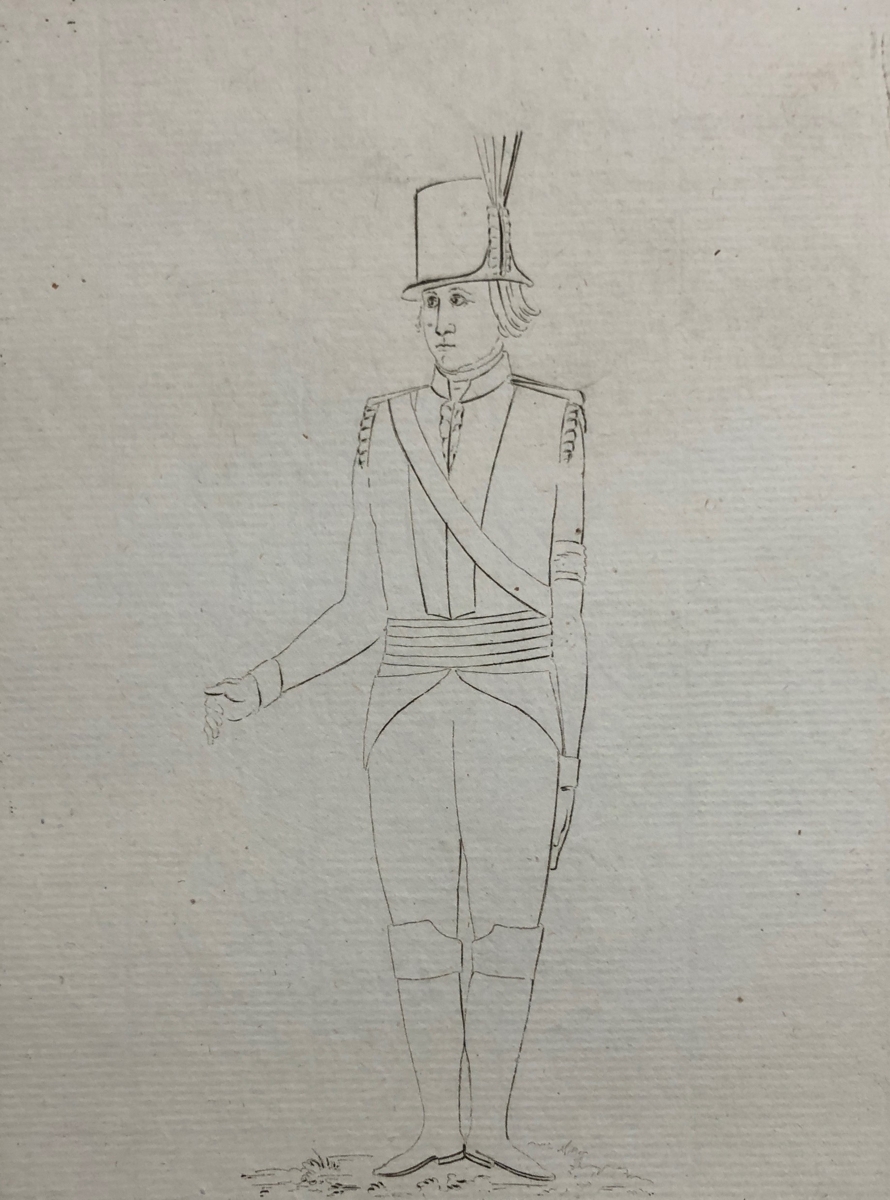
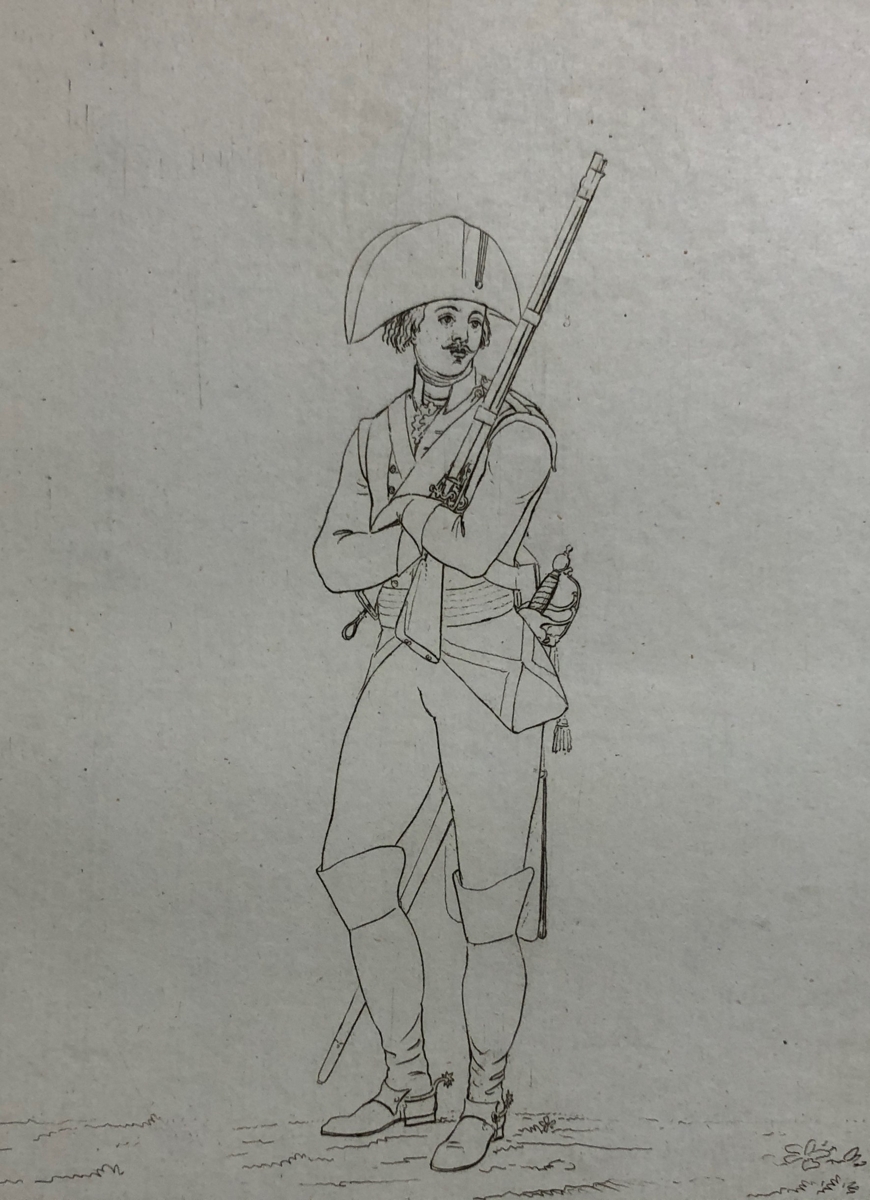
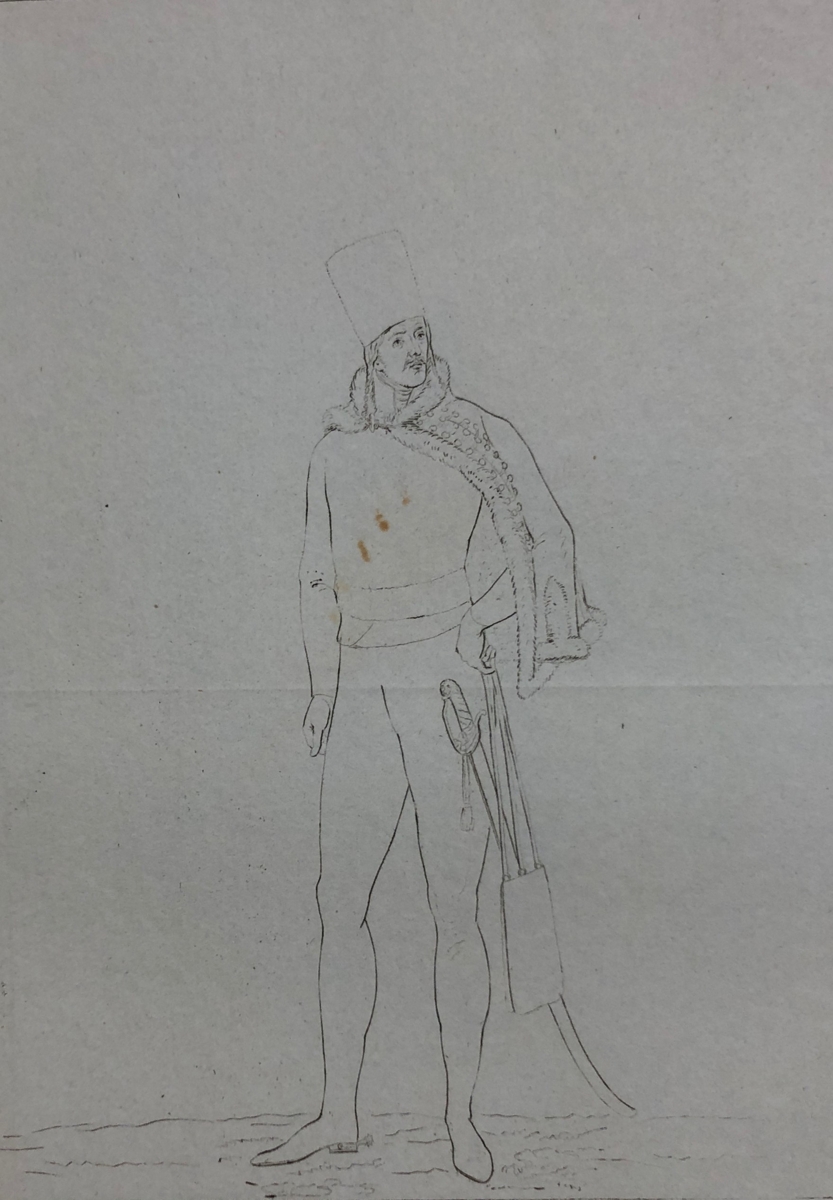
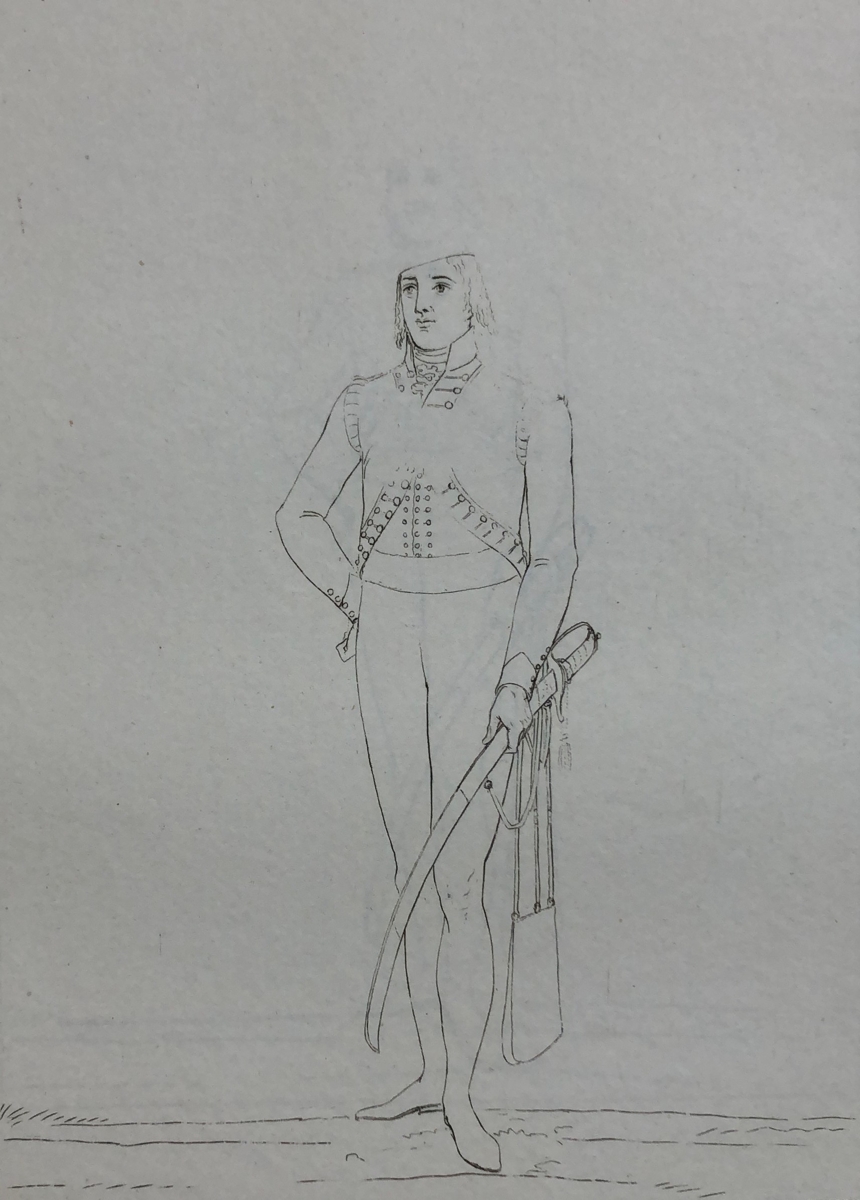
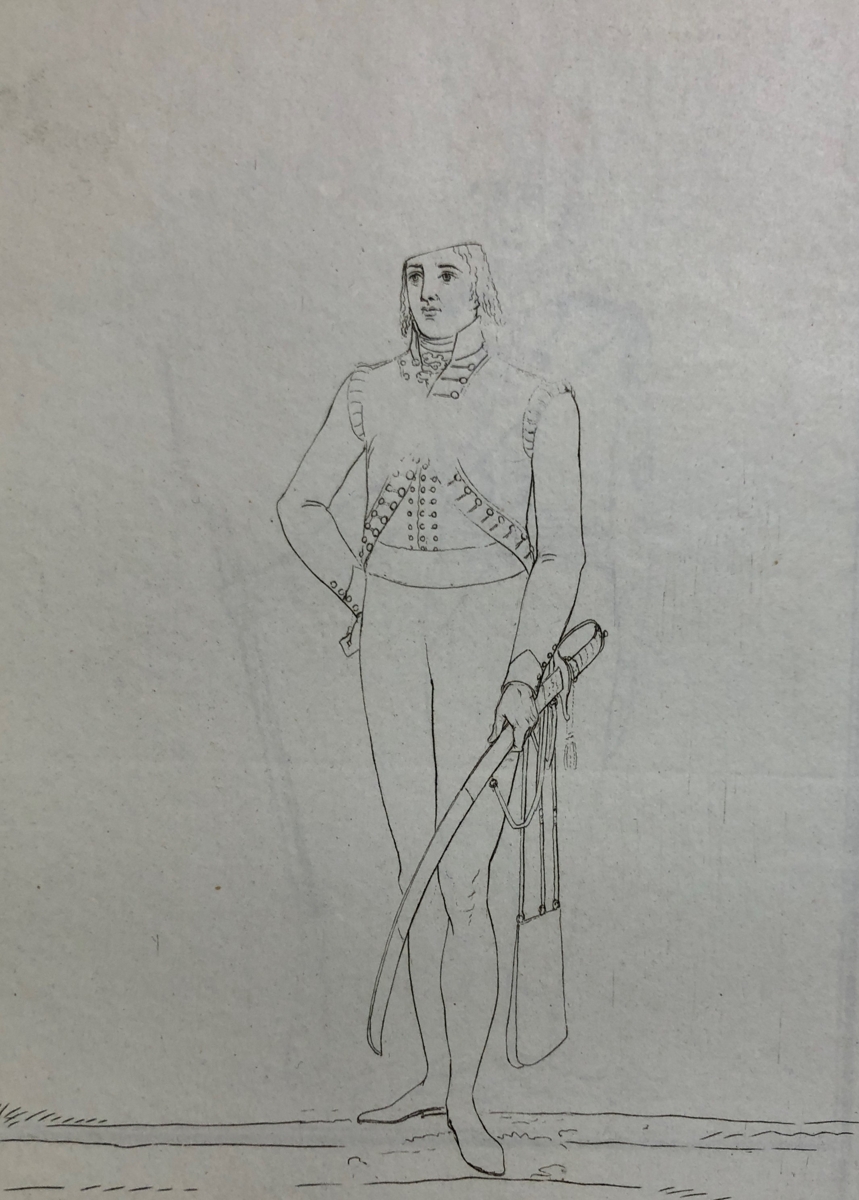
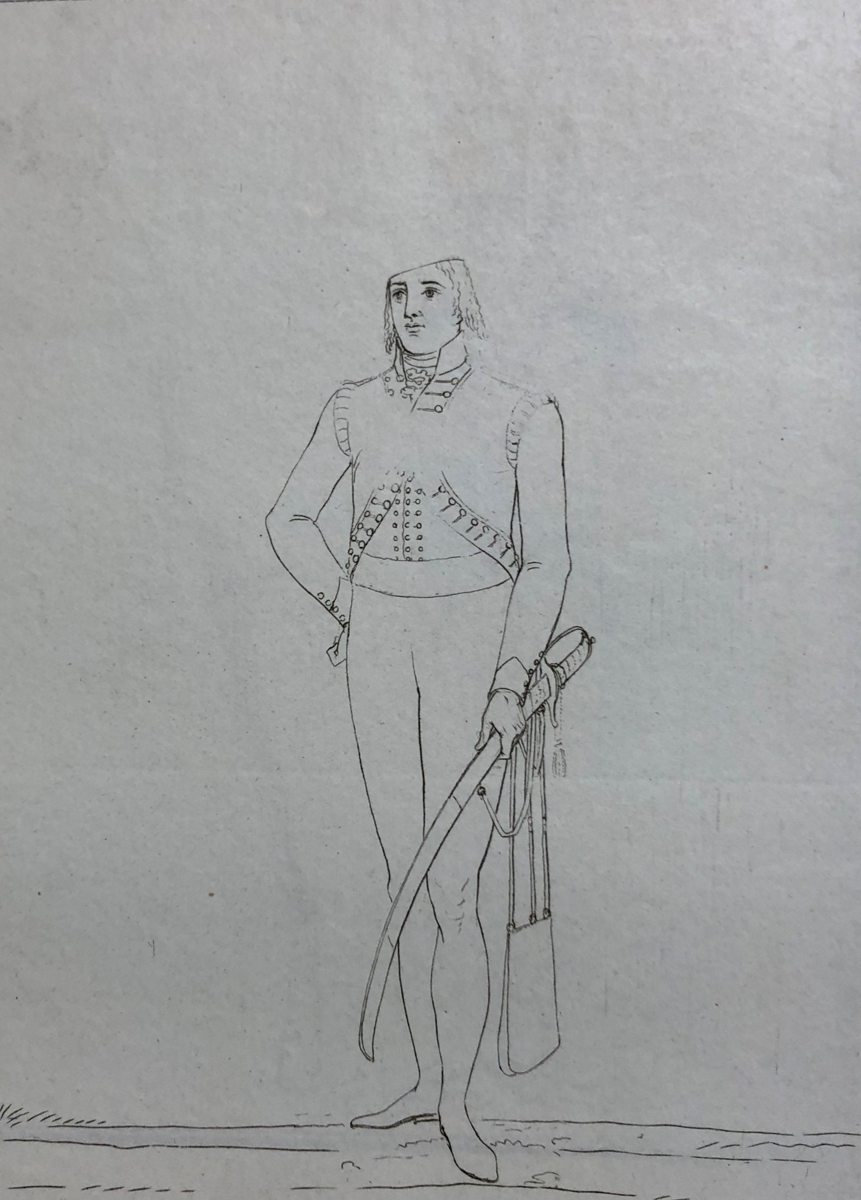
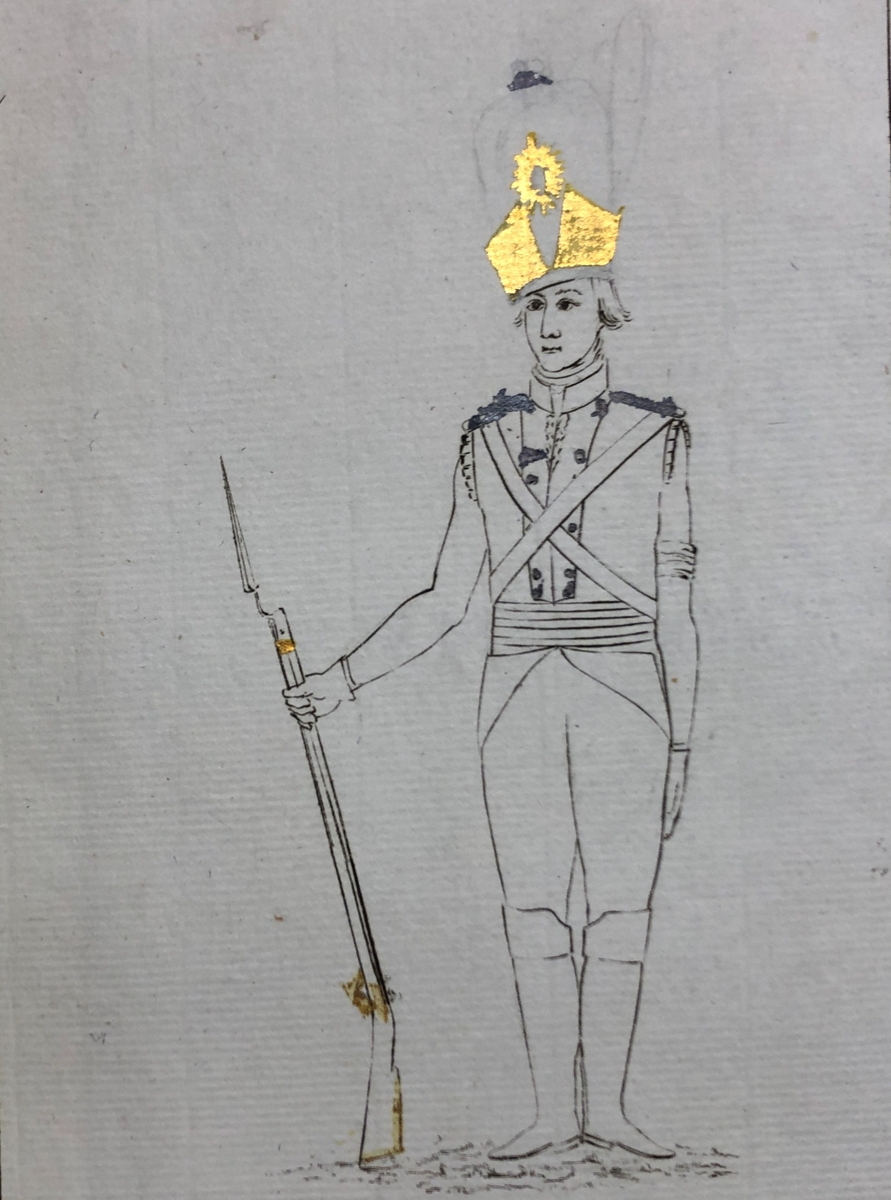
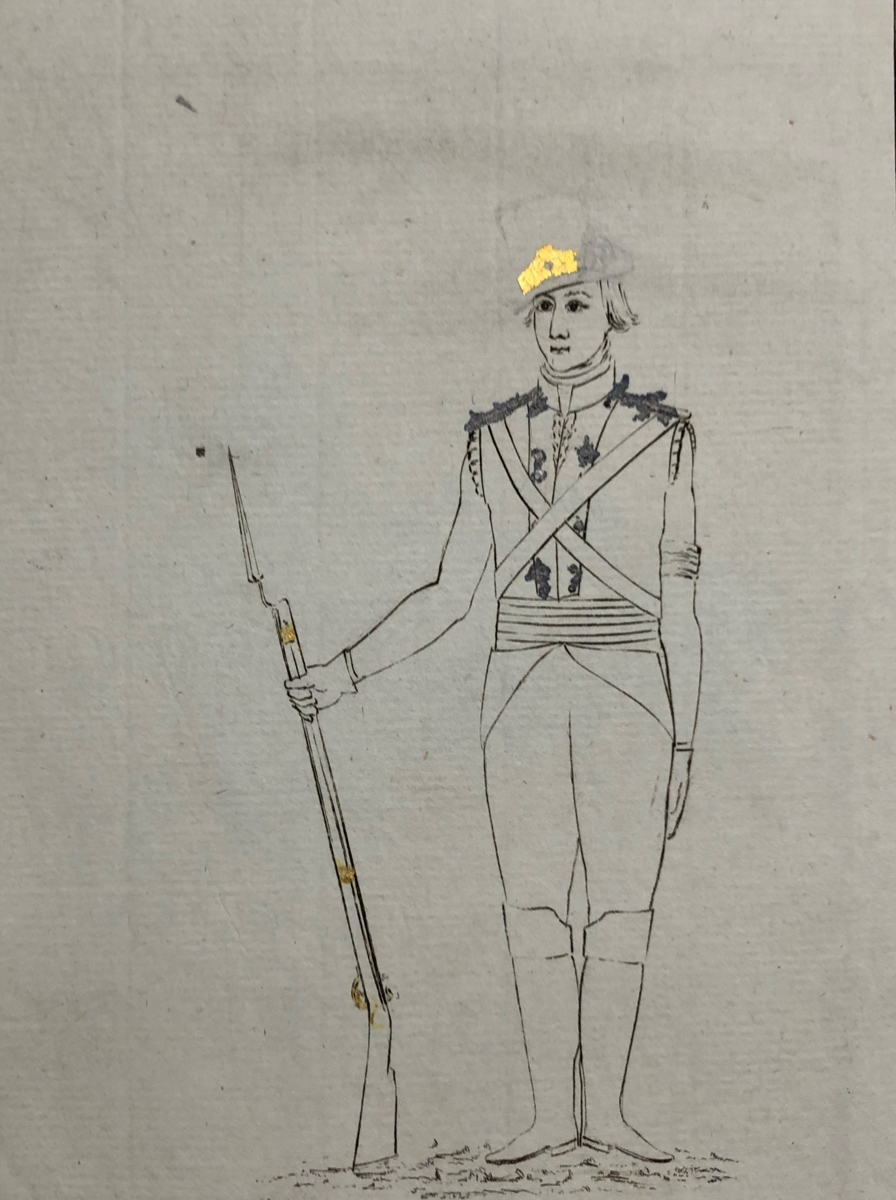
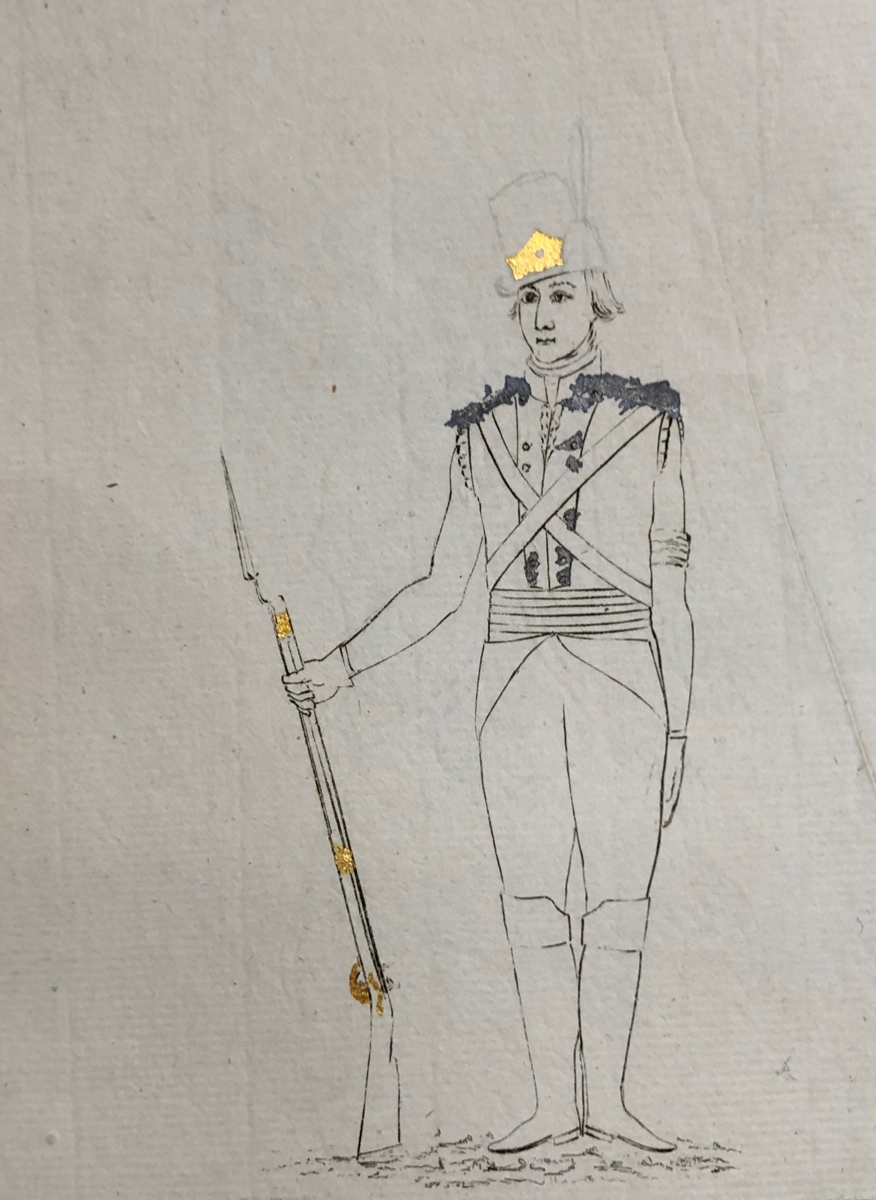
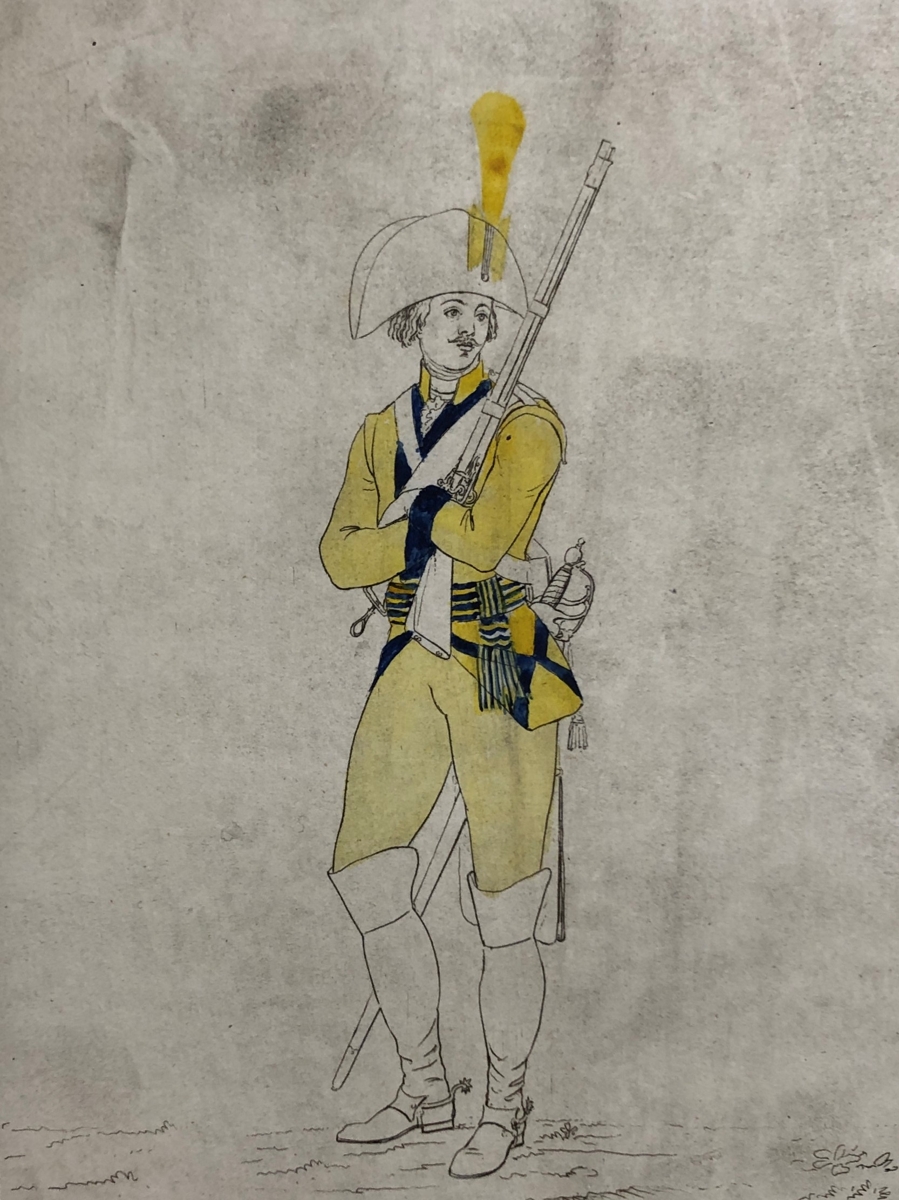
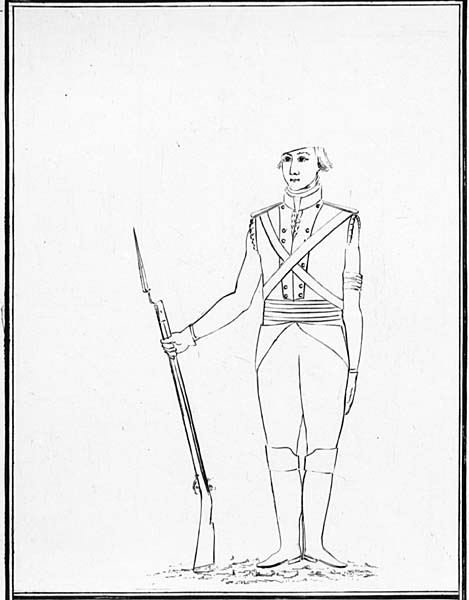
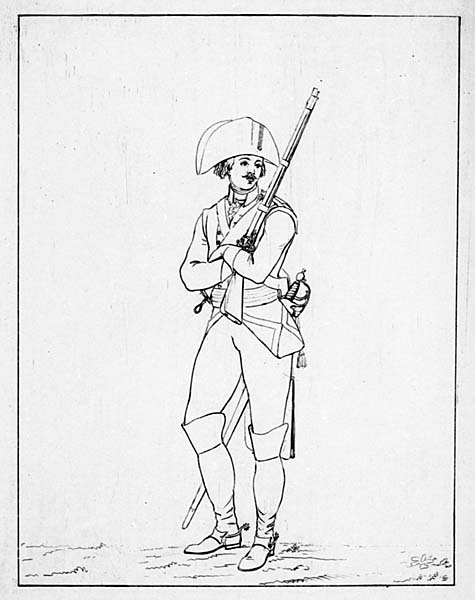
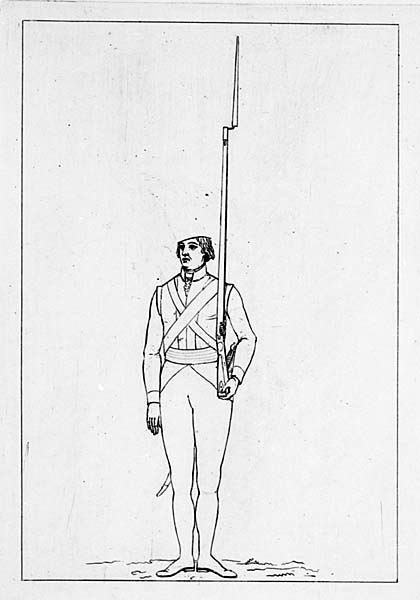
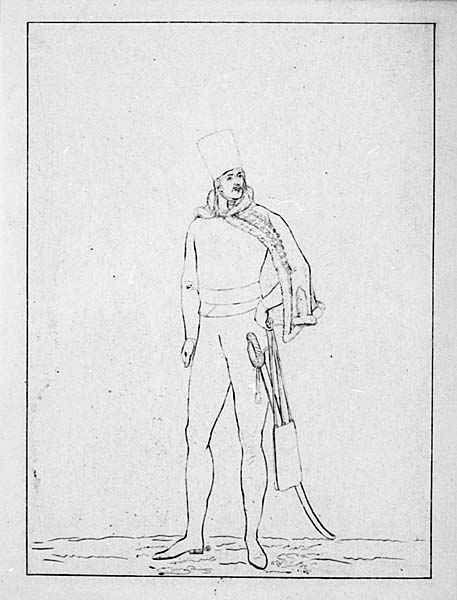
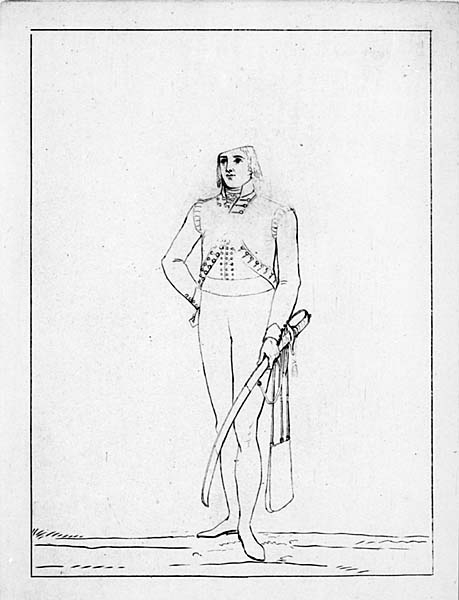
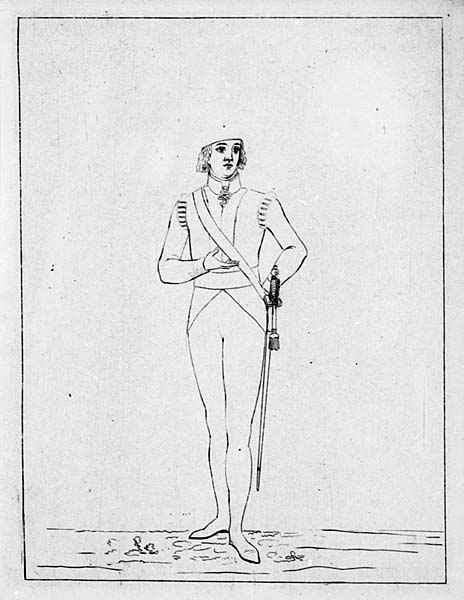
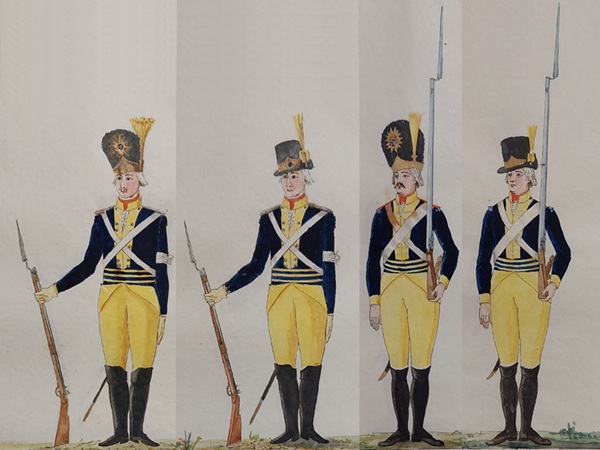
Svea livgarde uniforms. From left: grenadier officer, regular officer, grenadier and musketeer.

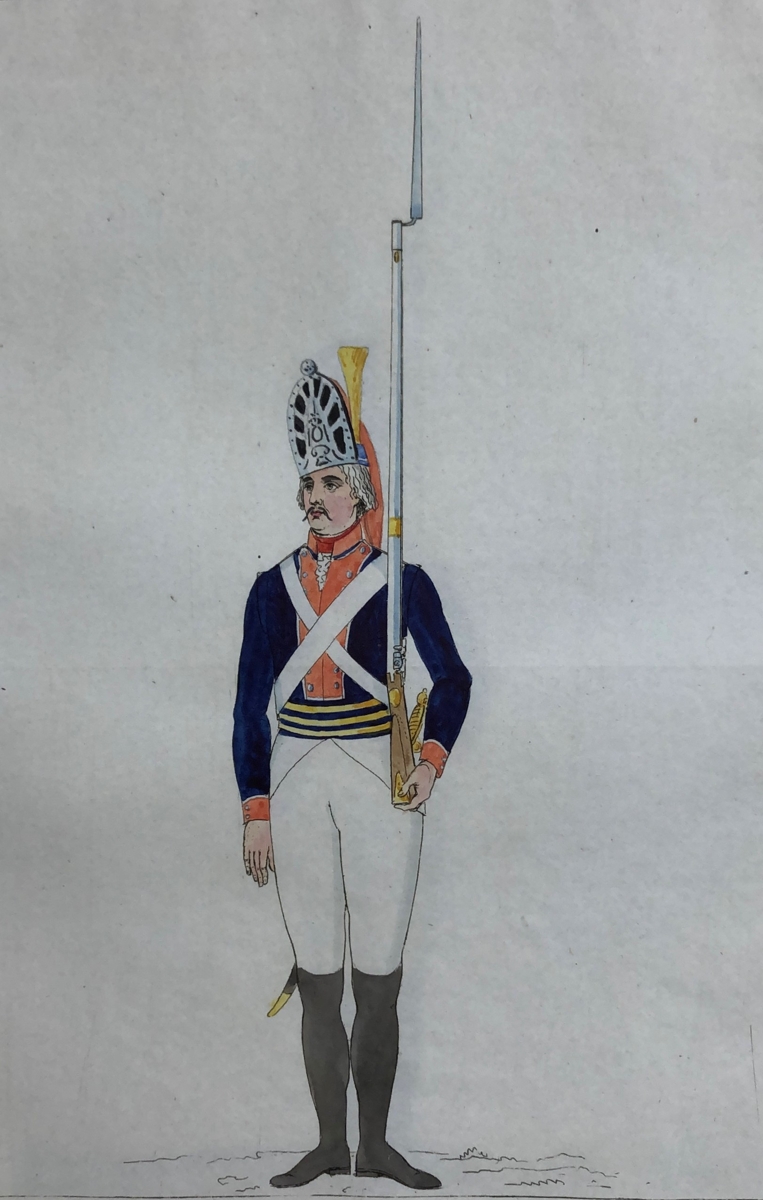
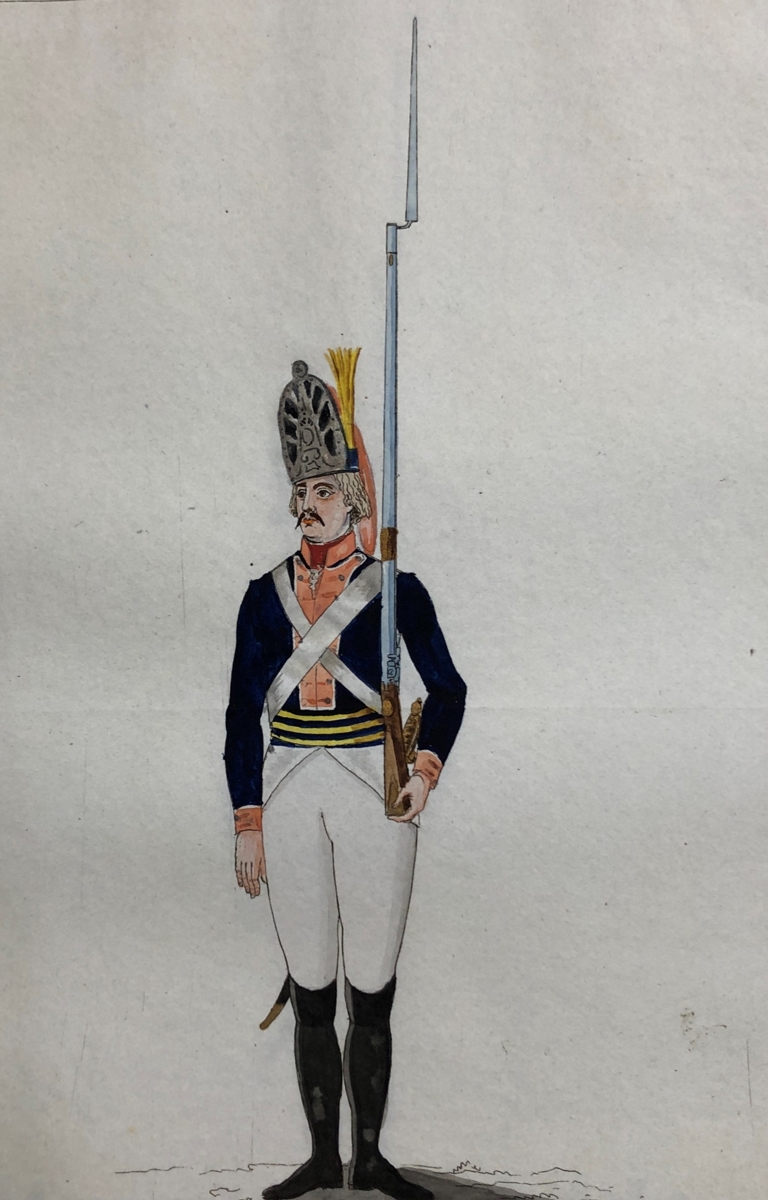
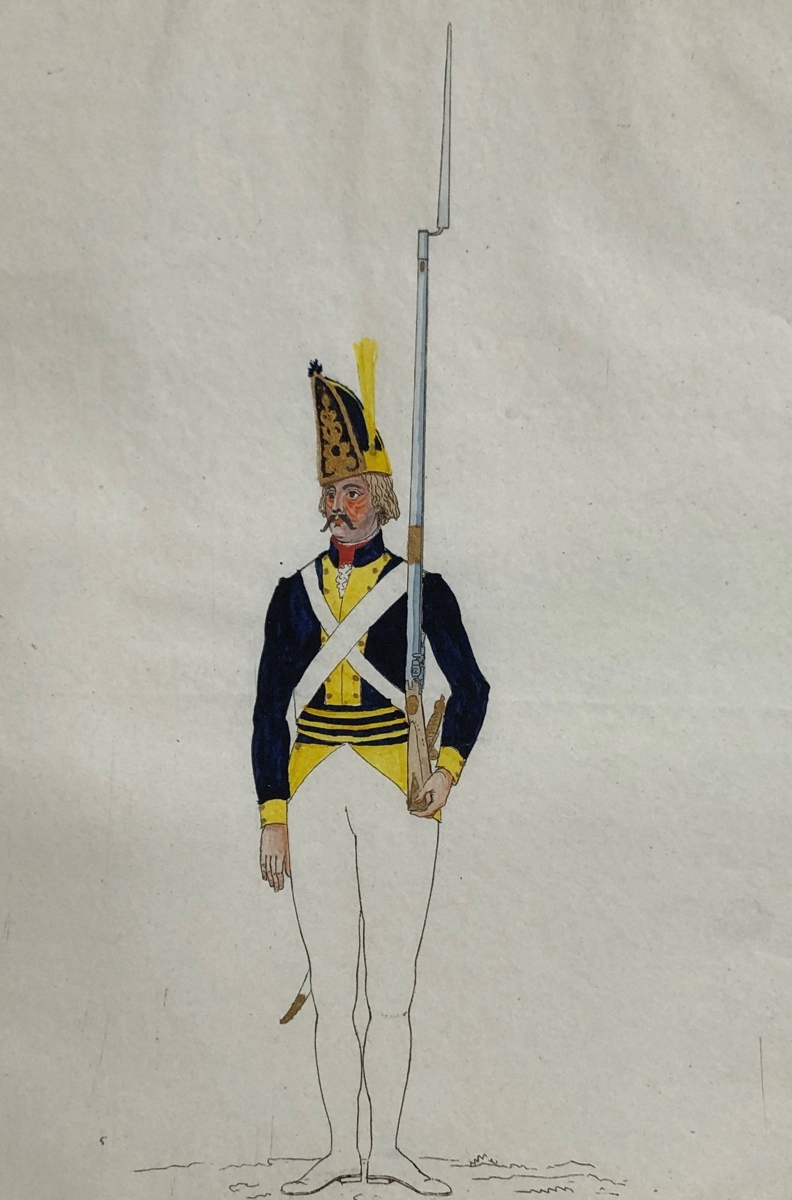
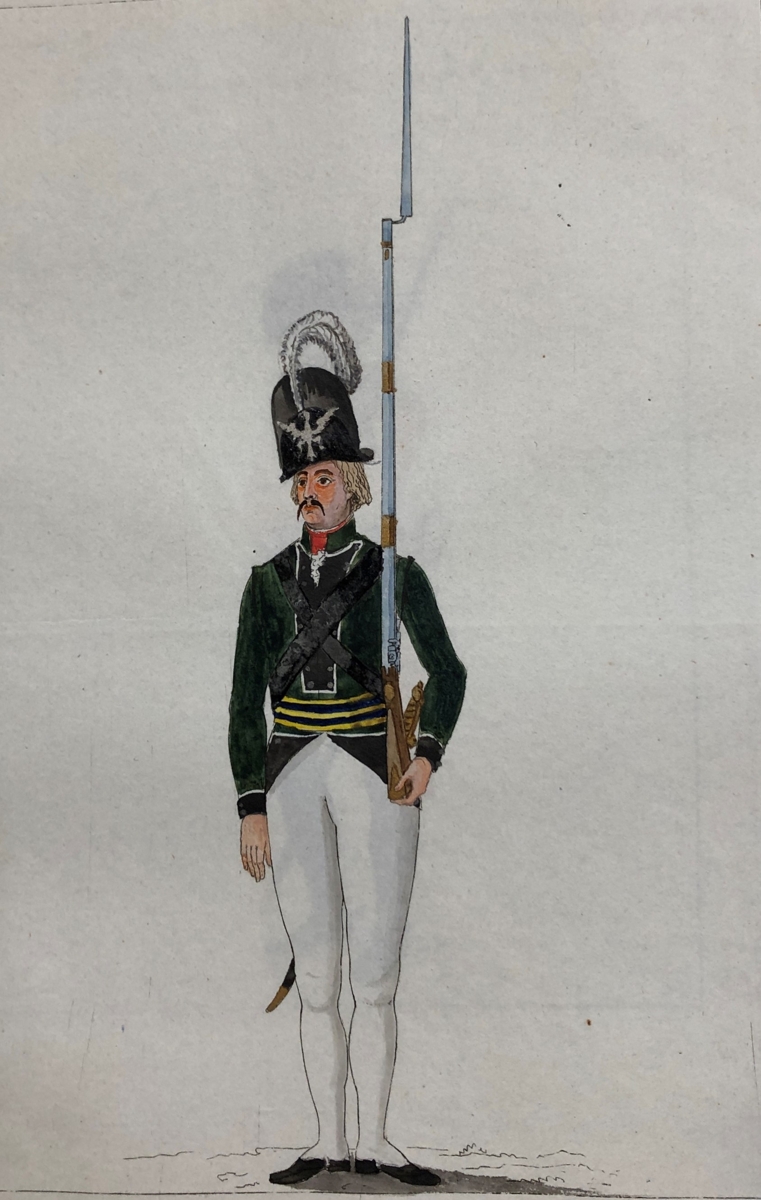
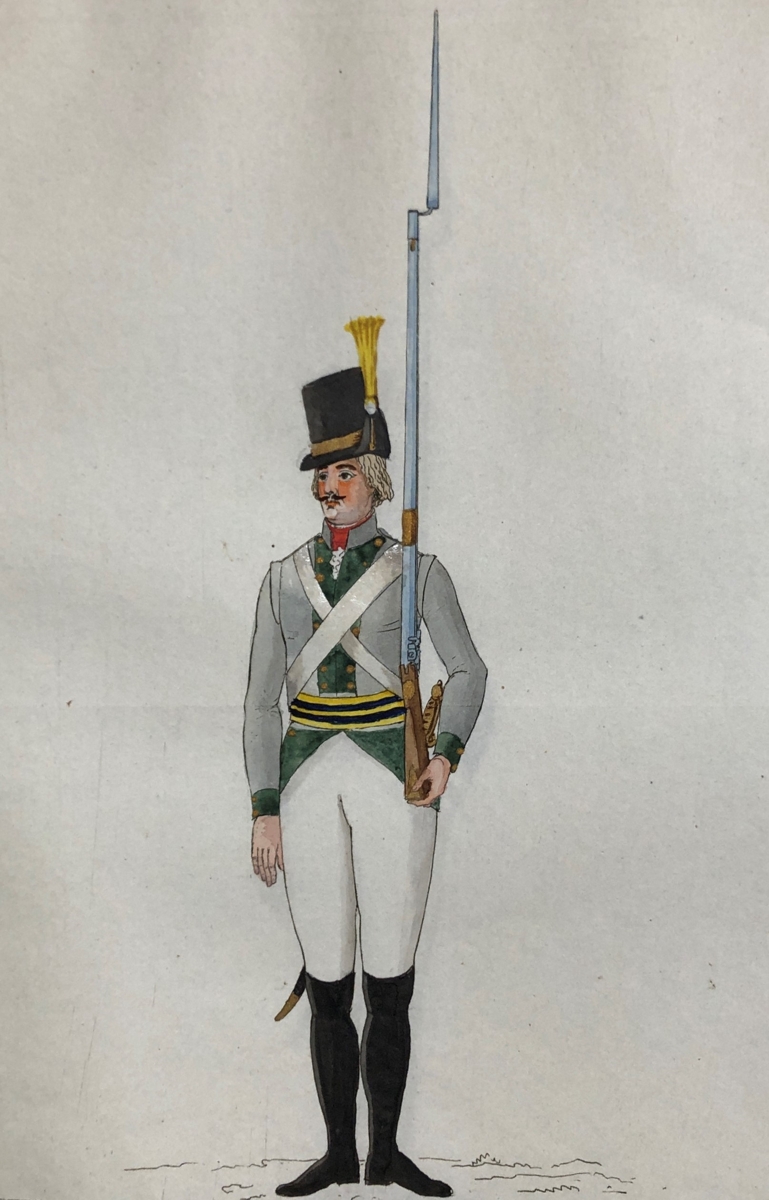
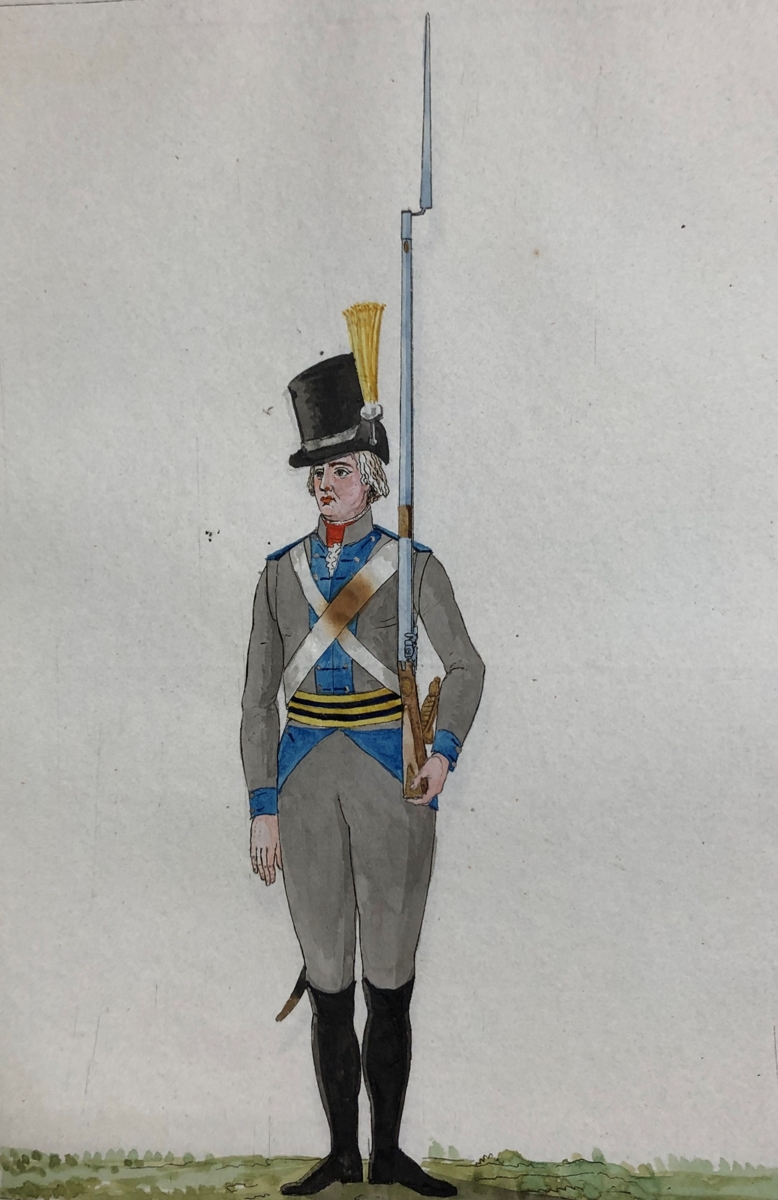
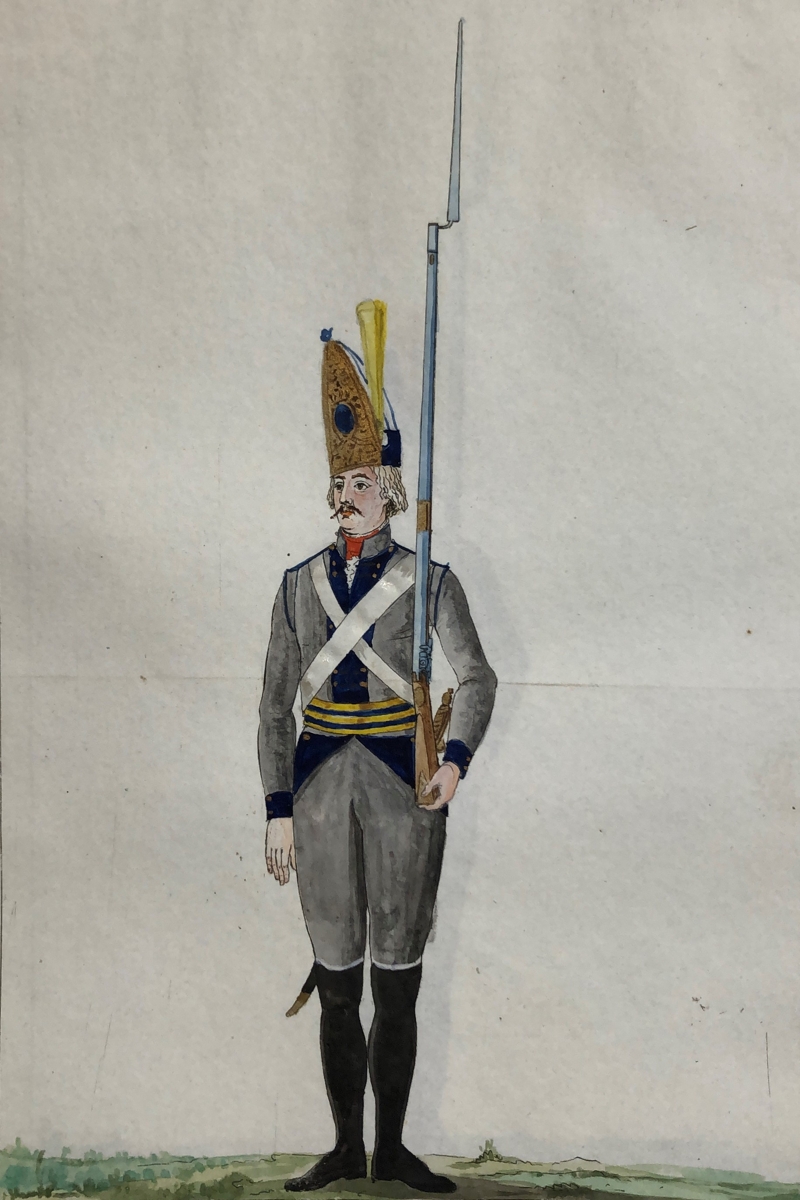
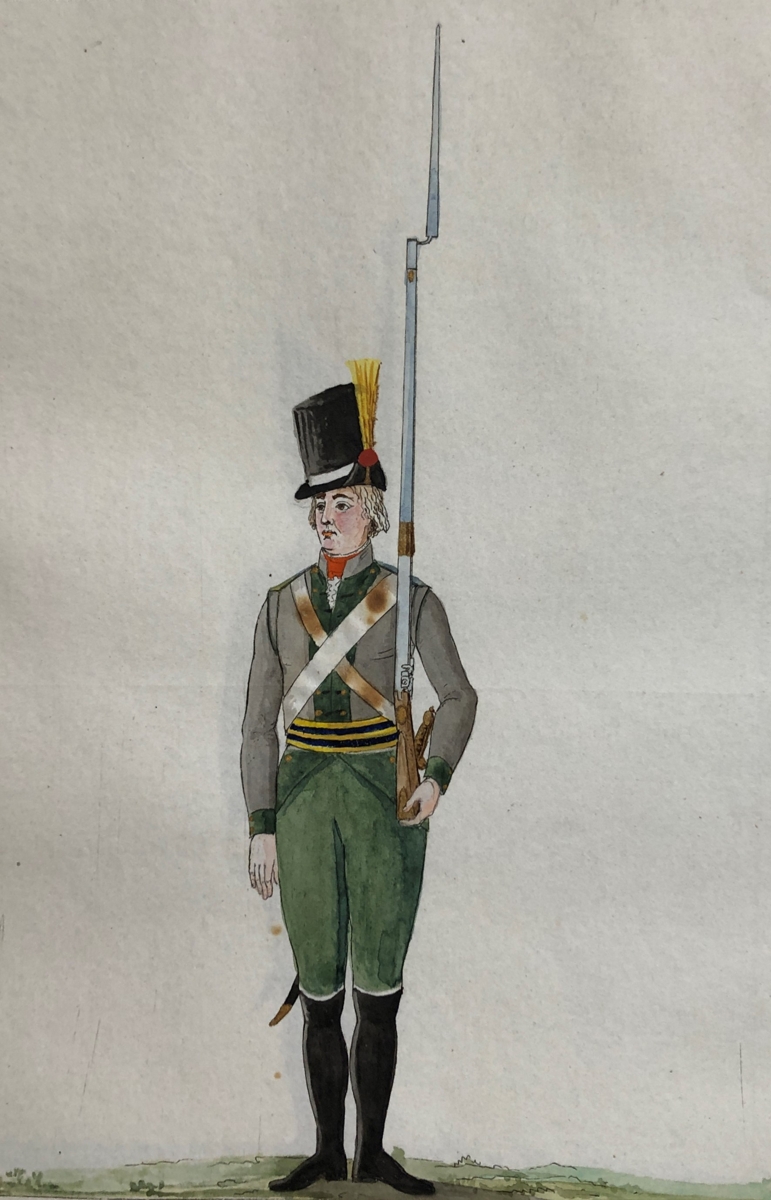
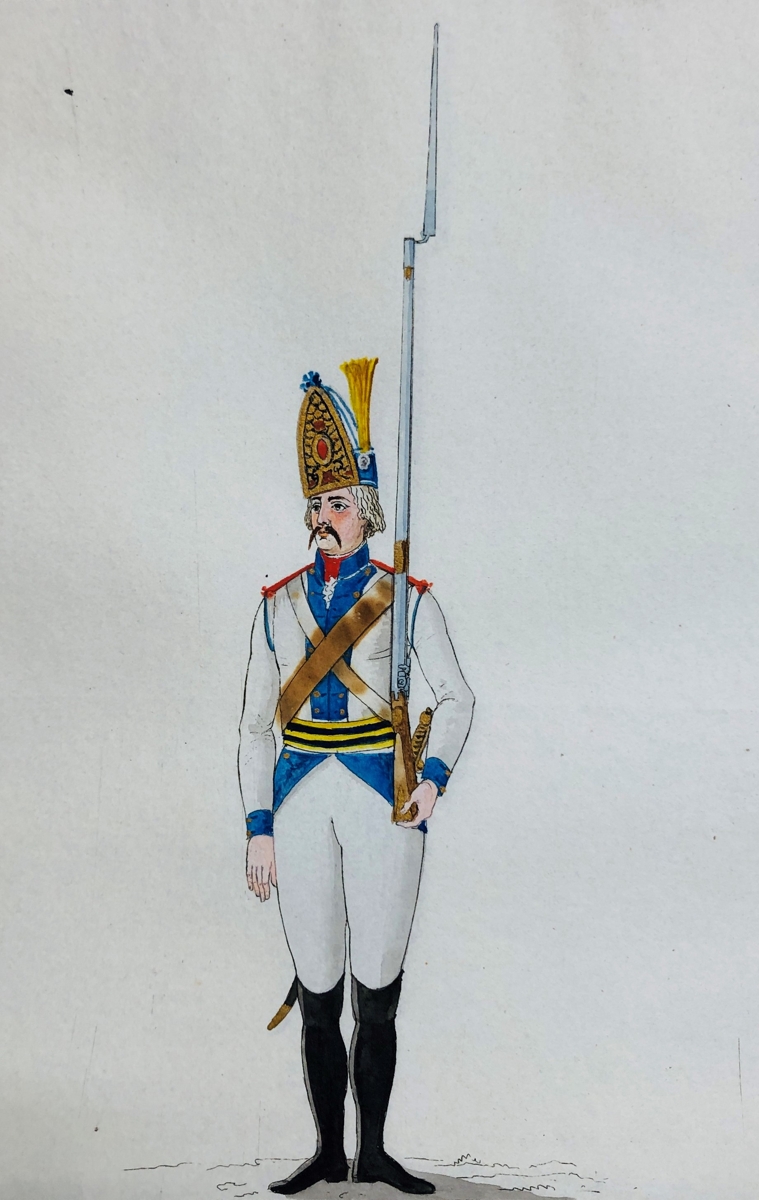
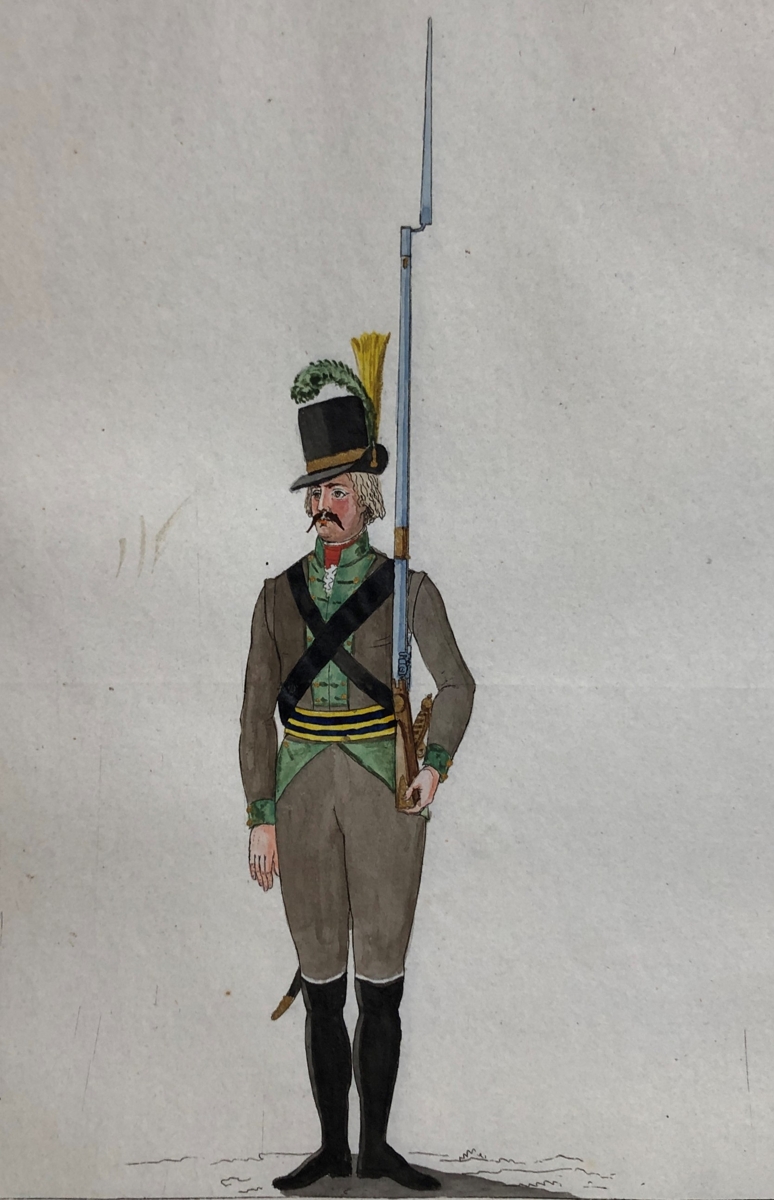
On 25 October 1792, a new uniform regulation was issued, based on the experiences of the Russian War of 1788-1790. The previous m/1779 uniform was based on Gustav III's self-designed "Swedish Costume" and had been controversial from the very beginning as it was criticised for being a masquerade costume. War experience had not mitigated the criticism and now it was decided to make the uniform more functional.

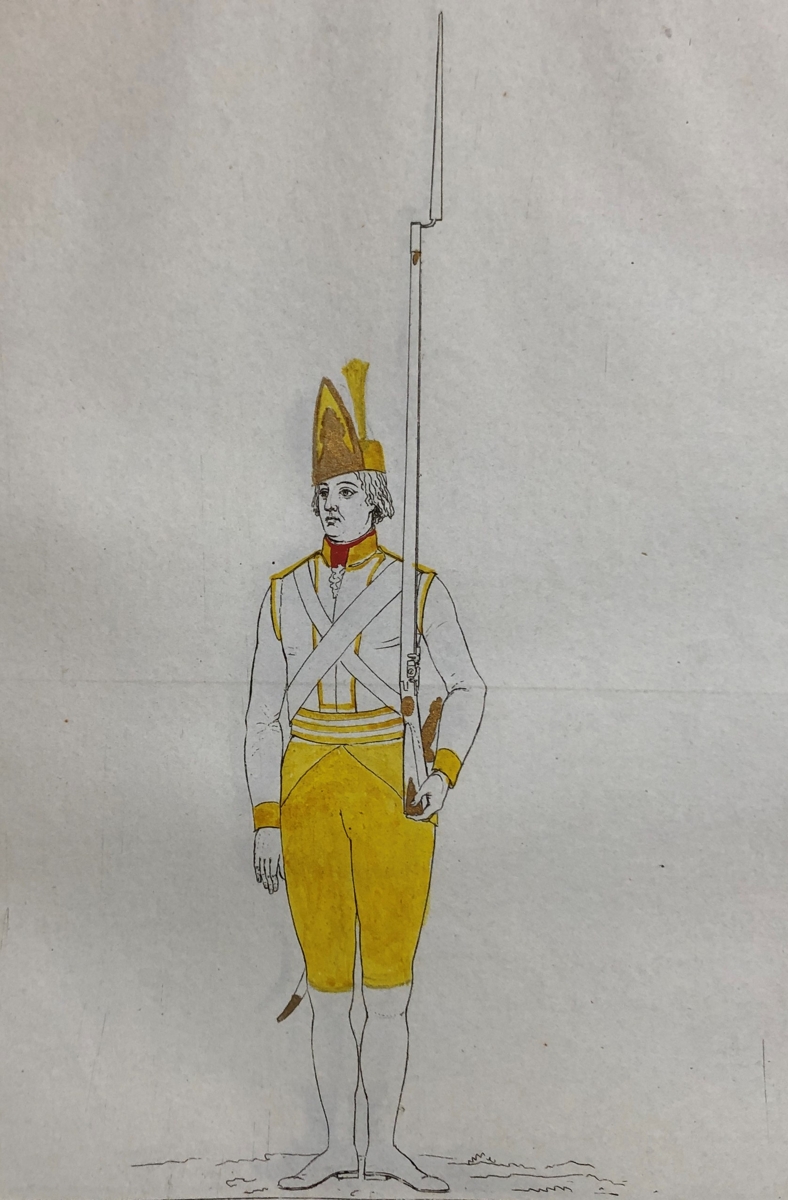
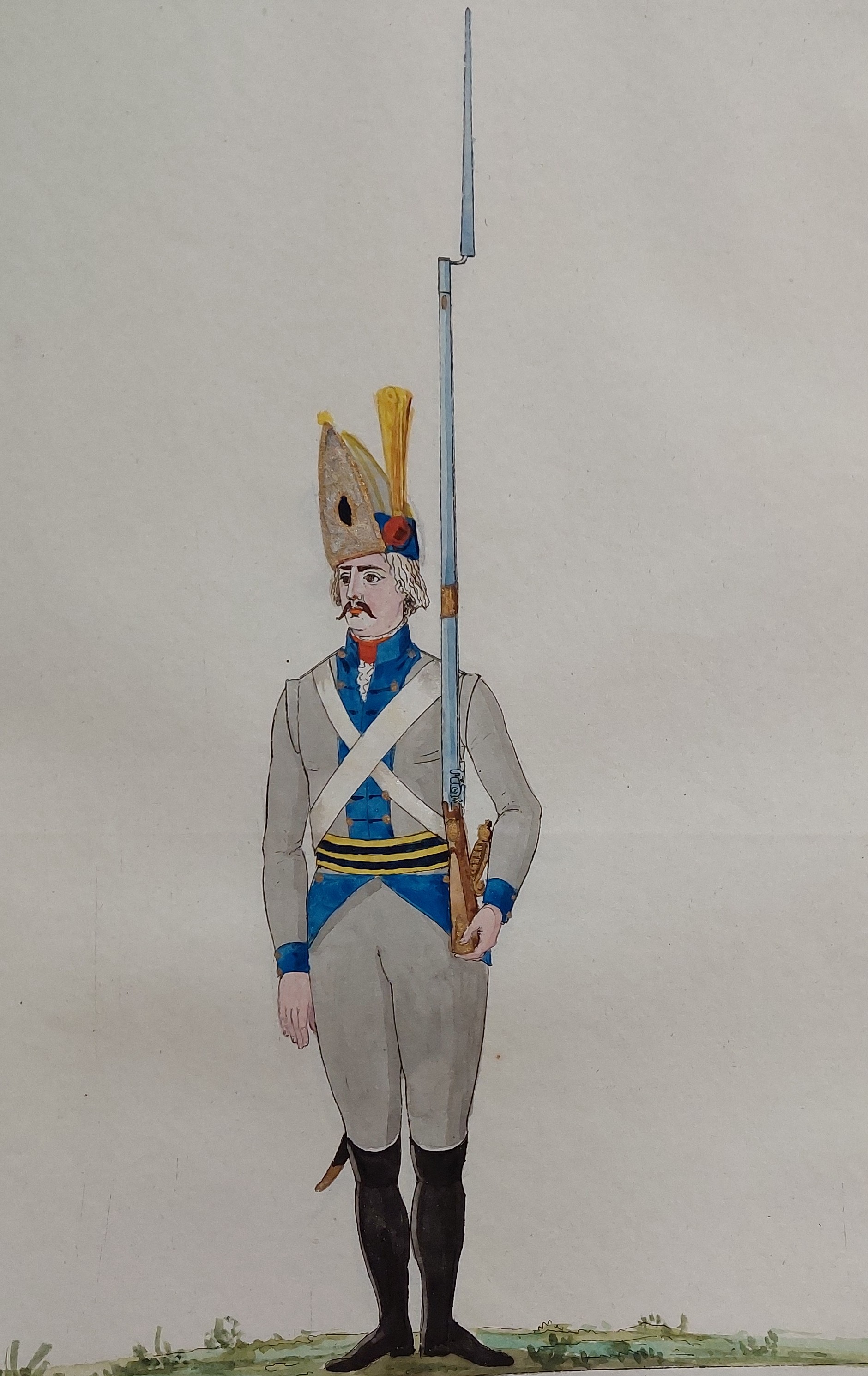
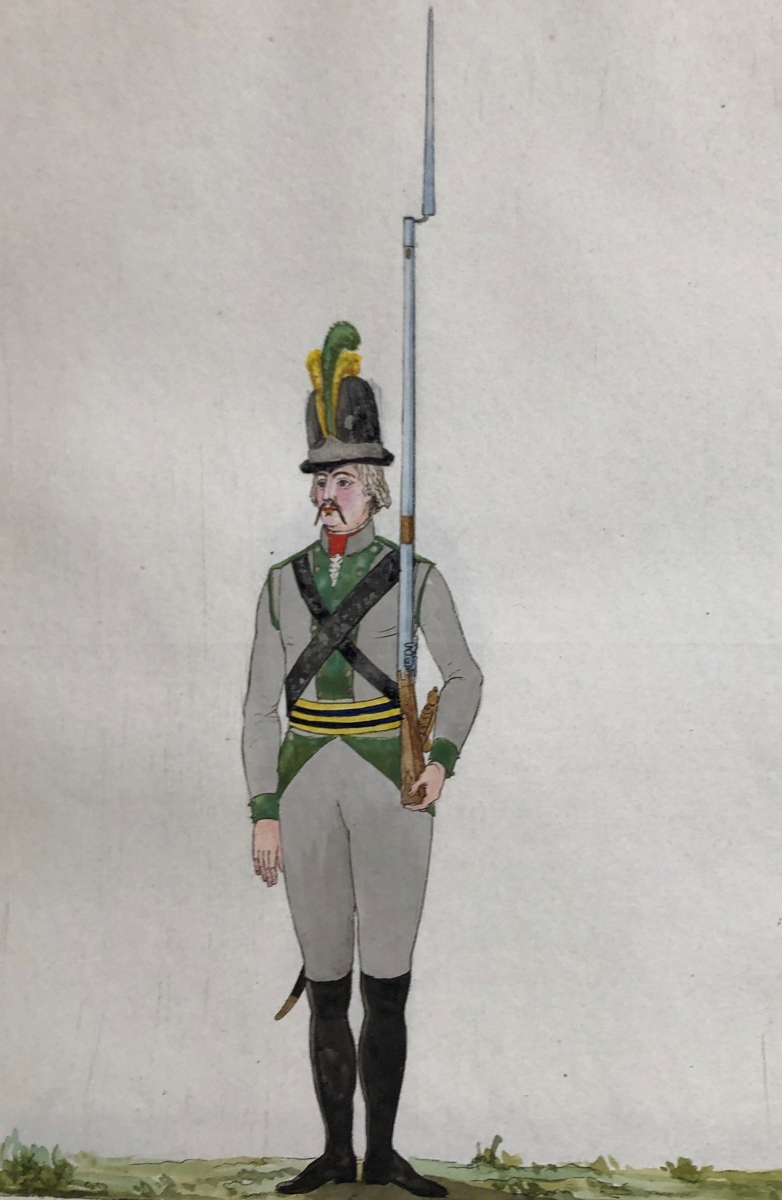
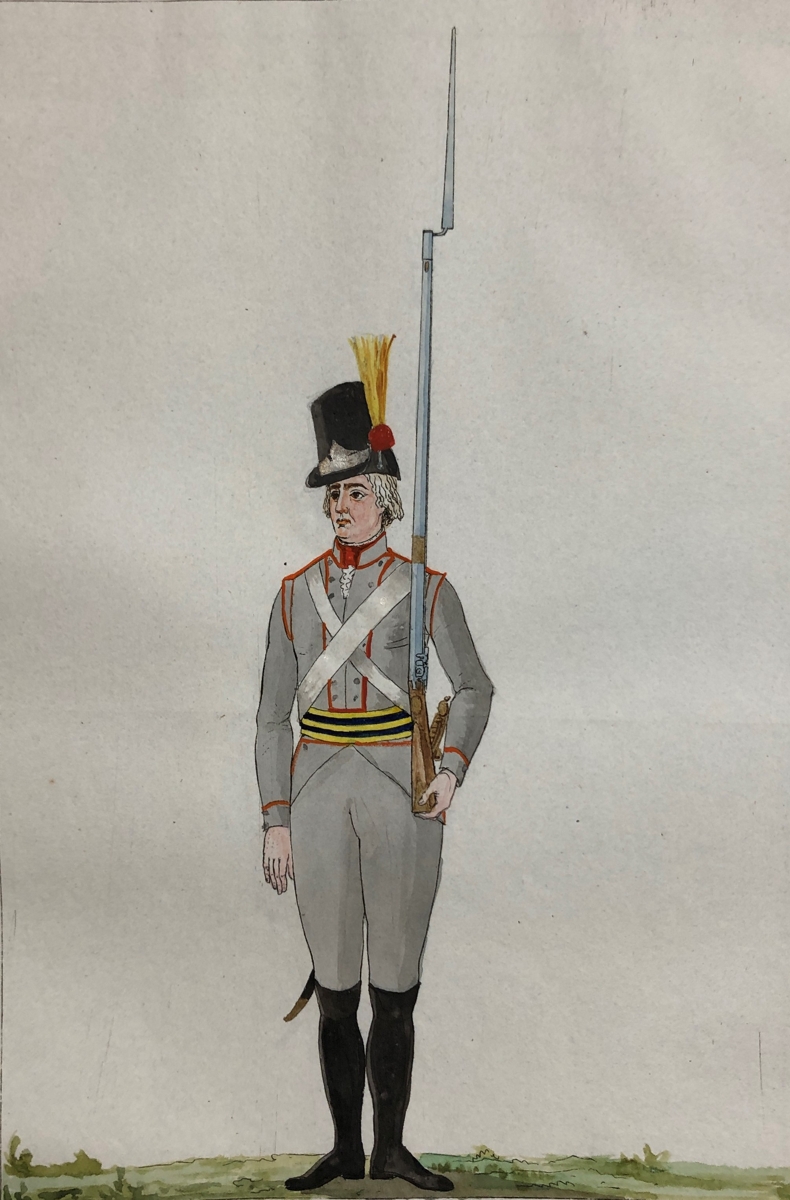
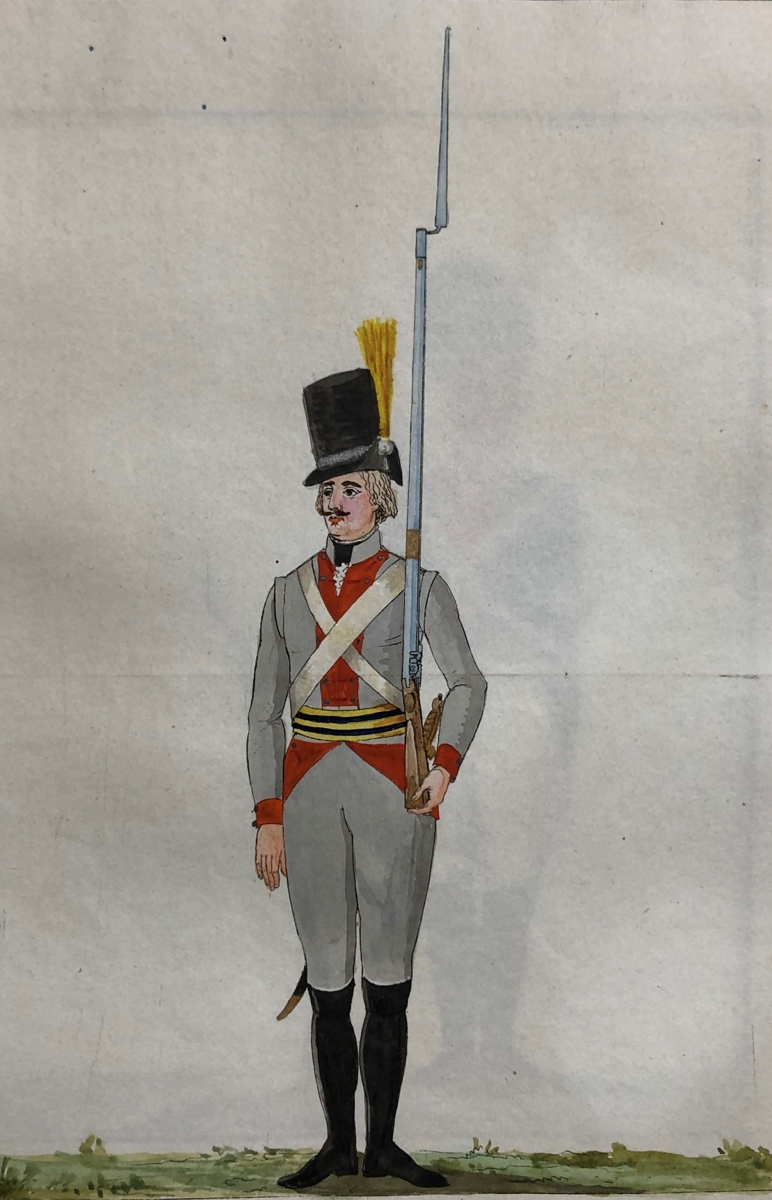
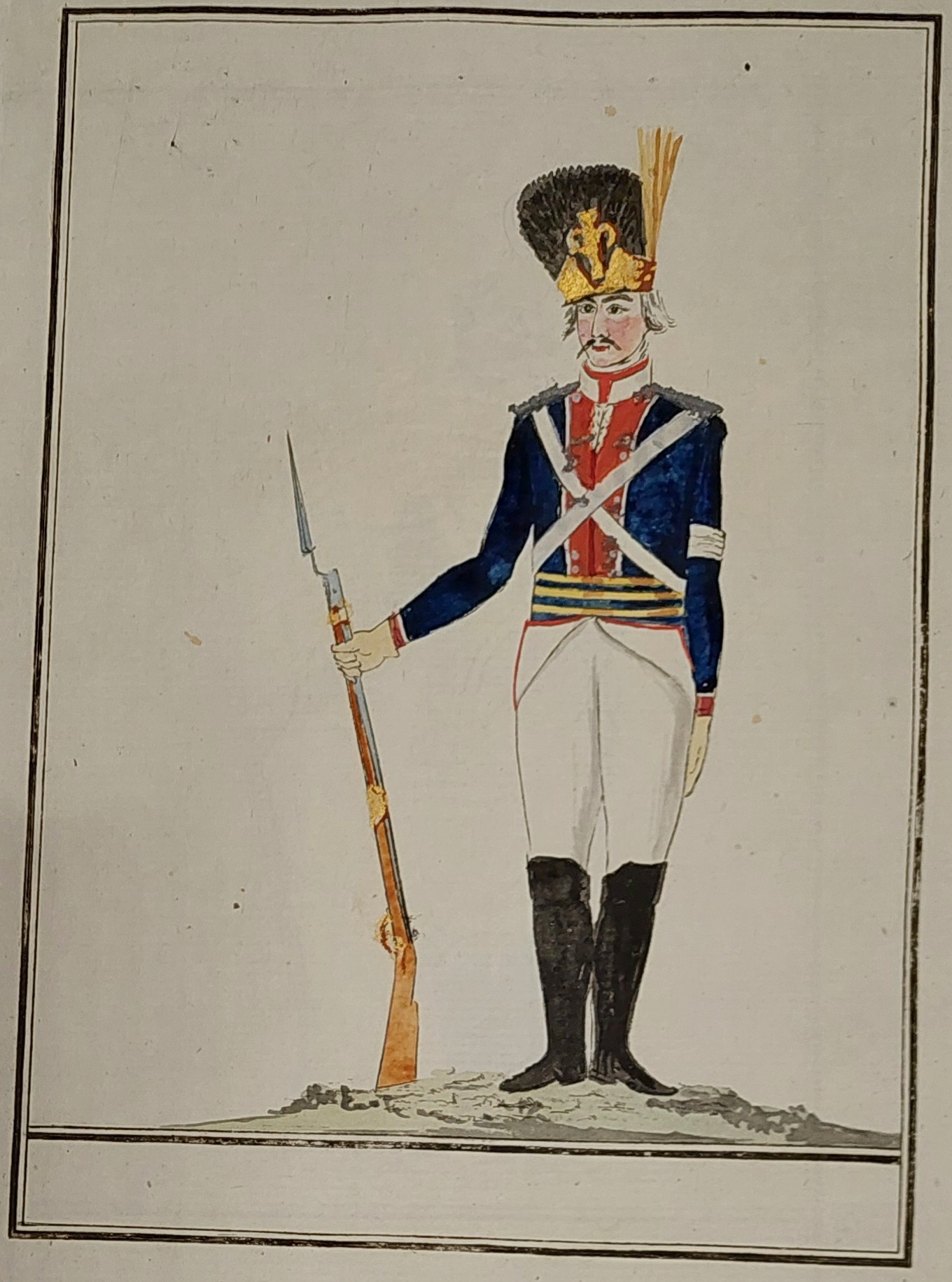
The changes that took place when m/1792 was introduced were that the exotic Hungarian boots and charivades disappeared and were replaced with the same type of shoes and gaiters that had been worn before m/1779 was introduced. The jacket was allowed to retain its Gustavian appearance, but several alterations were made to it. It was lengthened so that it went down to the crotch instead of the waist, albeit with small turnbacks on the front that reached the waist. The previous lapels, which had only been decorations sewn onto the jacket, were now replaced with functional lapels that could be turned around and fastened on both sides of the jacket opening. The waist belts were replaced with shoulder belts, which made it possible to introduce sashes with blue and yellow stripes as a distinctive feature of the Swedish army. The round and tall hat with yellow plume were retained and were also a characteristic of the Swedish army. The hats seen on most of pictures on this page are, however, grenadier caps that were only worn by a selected elite in the regiments.

A novelty for the officer uniform was that the gorget disappeared, and the rank insignia were instead placed on epaulettes on the shoulders. Since 1772, they also wore a white armband to commemorate Gustav III's coup d'état that year.

  Enlisted Infantry
 Svea livgarde  Stedingk's Regiment  Änkedrottningens livregemente
 Göta livgarde  Värmland Jäger Battalion  Savolax Foot Jäger Regiment
 Konungens eget värvade regemente  Stackelberg's Regiment  Karelska Jäger Battalion
  Provincial Infantry
 Livregementet's Light Infantry Corps  Älvsborg  Österbotten
 Uppland  Västgöta-Dal  Björneborg
 Södermanland  Skaraborg  Åbo Län
 Livgrenadjärregementet  Närke-Värmland  Nyland
 Jönköping  Västmanland  Tavastehus
 Kalmar  Dal Regiment  Savolax
 Kronoberg  Hälsinge   Other
 Bohuslän  Västerbotten  Generals and Adjutants
  Cavalry
 Livregementet's Cuirassier Corps  Småland  Västgöta
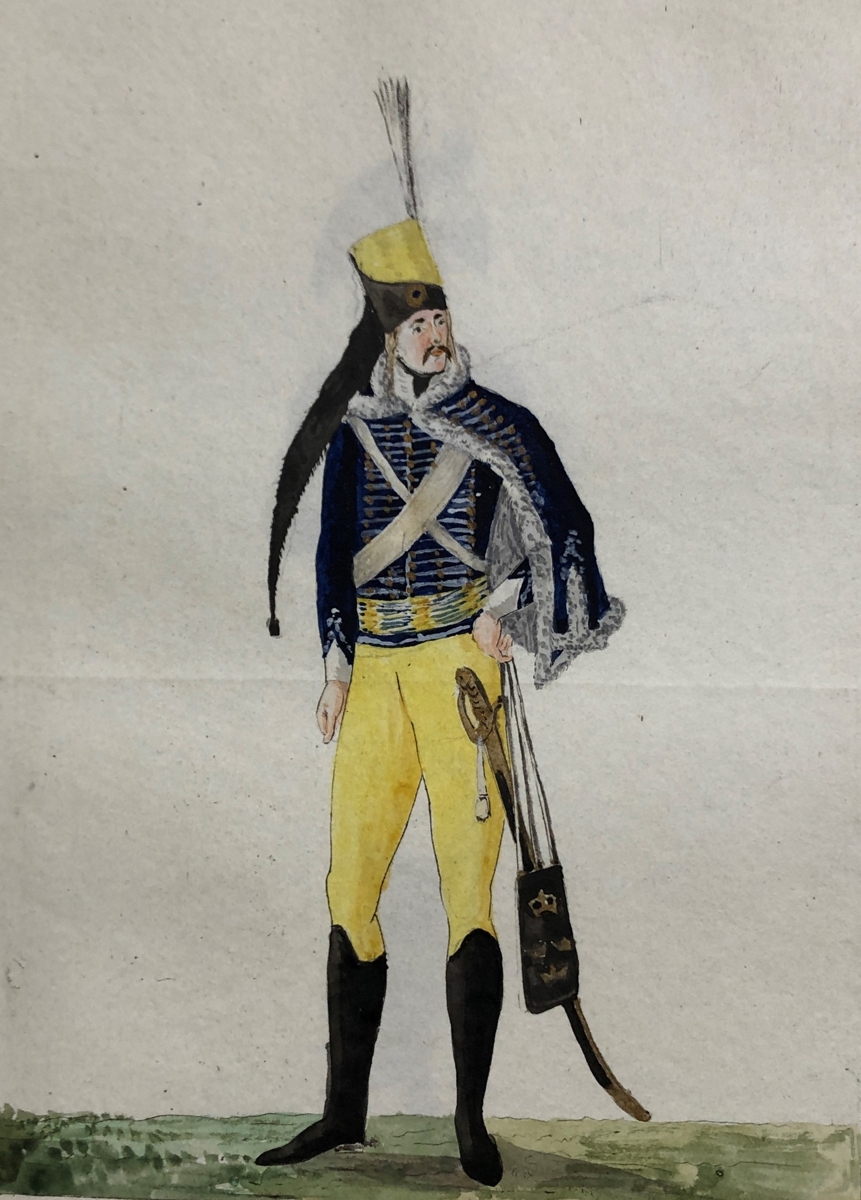
 Livregementet's Hussar Corps  Södra Skånska    
 

The model drawings of the m/1792-uniforms were made by Johan Abraham Aleander (1766-1853), but his work was not completed and most drawings that were finished depict grenadiers. The intention was that the drawings would have a regimental designation in a box below the image, but none of them have one. Instead, we are referred to notes in pencil by Adolf Ulrik Schützercrantz (1802-1854). These are written in French, but are missing from many drawings, which makes it very difficult to identify some of them.

The watermark on the drawings reveals that they were made no earlier than 1794 and according to an article by Arne Danielsson from 1965 they were made before 1797 because Älvsborg's breeches were changed from yellow to white that year. But the end date of 1797 assumes that it was Aleander who coloured them. On the front of the booklets in the Swedish National Museum, where the pictures are kept, it is written that it was probably Adolf Ulrik Schützercrantz who coloured them. If this is true, then the consequence is that the pictures are not really a contemporary source since he was born in 1802, the same year that m/1792 was replaced by a new uniform regulation.

In total, there are 96 contour etchings of m/1792 uniforms, of which 67 are fully coloured and another 6 are partially coloured. Only eight fully coloured pictures depict cavalrymen and even among the infantry pictures, some regiments are missing altogether. Despite this, there are many duplicates and it seems as if they were originally made in two identical series. One with the ground under the shoes coloured green and one with an uncoloured ground. However, the National Museum keeps the coloured pictures in two booklets that have a very irregular sorting. The numbering of the images follows the order in the booklets (numbers 87-134 in the first booklet and 135-164 in the second booklet). A third booklet contains, with one exception, only unfinished pictures (numbers 165-176) and then there are six more unfinished pictures that may constitute a fourth booklet (numbers 592-597). Except for the uncoloured pictures, I have chosen a different and more logical sorting of the pictures on this page than the National Museum's numbering.

Click on the images to see them in larger format.

Svea livgarde


154 – Grenadier


99 – Musketeer


142 – Grenadier officer


143 – Officer


147 – Grenadier officer


146 – Officer


98 – Grenadier


Göta livgarde


100 – Grenadier

101 – Musketeer

162 – Grenadier officer

160 – Officer


152 – Grenadier officer


151 – Officer


163 – Grenadier


Other Enlisted Infantry
(only pictures of grenadiers and jägers)


95


133


96


155


134

Konungens eget värvade regemente (garrison regiment in Skåne)

Stedingk's Regiment
(garrison regiment in Gothenburg)

Änkedrottningens livregemente
(garrison regiment in Sveaborg)

Stackelberg's Regiment
(garrison regiment in Sveaborg)


109


136


124


132


165

Värmland Jäger Battalion

Savolax Foot Jäger Regiment

Karelska Jäger Battalion

Unknown regiment
 

Three regiments lack pictures and these are the Sprengtporten's Regiment in Landskrona and Stralsund's two garrison regiments (Drottningens livregemente and Engelbrecht's). Drottningens livregemente (Queen's Life Regiment) should have had medium blue coats with yellow facings and the other regiments should have had dark blue coats with red facings.

Note that the picture of the Stackelberg's Regiment is incomplete and lacks black colour on the bottom. The unknown regiment (number 165) has, like the Karelska Jäger Battalion, boots and charivades that were actually abolished with m/1792. These items of clothing were never worn by the Stralsund regiments.

Livregementet's
Light Infantry Corps
(the part of the former Livregementet till häst that was allotted in Västmanland)


102 – Private


139 – Private


140 – Officer


161 – Officer

Uppland and Södermanland


104 –
Uppland

153 –
Uppland

105 – Södermanland

Livgrenadjärregementet
(the former Östergötland cavalry and infantry regiments)


97 – Private

141 – Officer

145 – Officer

Note that the pictures above do not have the same colour of the grenadier cap plate as the pictures below. The shape of the officer caps also differs. But while all the officers lack regimental designations, both privates are listed as belonging to the "Grenadiers du corps".

There is an additional picture of number 145 with less shine on the cap.


103 – Private

144 – Officer

149 – Officer

Jönköping, Kalmar and Kronoberg


115 – Jönköping

164 – Jönköping


112– Kalmar


116– Kronoberg


Älvsborg, Västgöta-Dal and Skaraborg


113 – Älvsborg


111 – Västgöta-Dal


156 – Skaraborg

114 – Skaraborg

The colour of Älvsborg's breeches was changed to white in a royal letter from 20 March 1797.

Bohuslän, Närke-Värmland and Västmanland


117 – Bohuslän


108 – Närke-Värmland

106– Västmanland
(Grenadier)

150 – Västmanland
(Musketeer)

Number 150 lacks regimental designation but the uniform corresponds to the Västmanland regiment.

Dalregementet, Hälsinge och Jämtland


107 – Dal Regiment


120 – Hälsinge

135 – Hälsinge


118 – Jämtland

Number 135 lacks regimental designation but is identical to number 120.

Västerbotten, Österbotten and Björneborg


119 – Västerbotten


131 – Österbotten


121 – Björneborg
(Grenadier)


122 – Björneborg
(Light infantry)

The picture of Österbotten is unfinished but the colour of the jacket should be dark blue.

Picture 122 has the text "Infanterie Legere de regiment de Björneborg" which should mean that it does not depict the regiment's two regular battalions but the light infantry battalion which consisted of soldiers who before 1791 had belonged to the Life Dragoon Regiment (old Åbo & Björneborg Cavalry Regiment). However, the other Finnish jäger or light infantry battalions have green colour on their uniforms which deviates from the parent regiment.

Åbo and Nyland


129 – Åbo län
(Grenadier)

128 – Åbo län
(Light infantry)


127 – Nyland
(Grenadier)


126 – Nyland
(Jäger)

The third battalion of the Åbo Regiment was a light battalion that before 1791 had formed the southern half of the Life Dragoon Regiment (old Åbo & Björneborg Cavalry Regiment). Similarly, Nyland Regiment had been expanded that same year with a jäger battalion when Nyland and Tavastehus Dragoon Regiment was also converted to infantry.

Tavastehus and Savolax


123 – Tavastehus
(Jäger)


130 – Tavastehus
(Musketeer)


148 – Unknown regiment


125 – Savolax

The third battalion of the Tavastehus Regiment was a jäger battalion that had formed the northern half of Nyland and Tavastehus Dragoon Regiment before 1791.

Picture number 148 lacks a regimental designation, but its grey uniform must mean that it depicts a Finnish regiment. Tavastehus was the only Finnish regiment with red on its uniform, but it already has a picture with deviating details. There are indeed two enlisted regiments with red distinction colour that lack pictures, but these should have had dark blue jackets.

Livregementet
(Life Regiment)


94 – Cuirassier

138 – Cuirassier

157 – Hussar

91 – Hussar

The Life Regiment was divided into three parts in 1791. The Uppland companies were transformed into the Cuirassier Corps of the Life Regiment, while the companies in Närke and Västergötland were transformed into the Light Dragoon Corps of the Life Regiment, which in 1796 became a Hussar Corps. The companies in Västmanland became light infantry. Initially, the Södermanland Company was part of the Cuirassier Corps, but in 1804 it was transferred to the Infantry Corps.

Other Cavalry


92 – Småland


137 – Småland


110 – Södra Skånska


93 – Västgöta

Generals and Adjutants


87 – General


88 – Major General?


89 – Adjutant General


90 – Adjutant


158 – Adjutant


159 – Adjutant General

Unfinished images


166 – Officer

167 – Officer

168 – Cuirassier

169 – Hussar

170 – Dragoon

171 – Dragoon

172 – Dragoon

173 – Grenadier officer

174 – Officer

175 – Officer

176 – Cuirassier
 

592 – Officer

593 – Cuirassier

594 – Infantryman

595 – Hussar

596 – Dragoon

597 – Adjutant

References

Johan Abraham Aleander's m/1792 drawings are kept in the Swedish National Museum and are available on their website.

Bellander, Erik. Dräkt och uniform. Stockholm (1973)
Danielsson, Arne. Gustavianska uniformsritningar på Windsor Castle (article in MAM 26). Stockholm (1965)